Customize Your Trip


Everest Region Trek
The Everest region trek takes you to Everest’s most iconic base camp. It is all at the foot of the highest mountain in the world, Mount Everest (8848m). This Everest region trek is one of the world’s classic treks. This attracts tourists every year.
The Everest Base Camp area lies in Solukhumbu District. The site is an excellent location for trekking due to the highest peak, Mt. Everest (8848m). Solukhumbu is the place of origin for the inborn mountaineers or sherpas.
Their specific traditional lifestyle and practices make trekking unique. The ethnic stone-housed villages and their sound hospitality will make your trek unforgettable.
Get the best trekking experience.
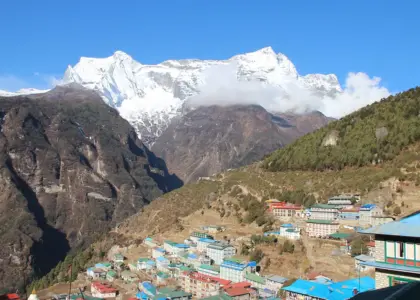
The Everest region trek is a journey through Namche Bazaar. We start from Lukla and reach the base of the highest mountain of the world, Mt. Everest. The whole Solukhumbu vicinity sits in the lap of looming Mt. Everest. Those who take on the challenge of conquering this region can expect the most majestic views of the mountain peaks, enjoy the Dudh Koshi River’s scenic beauty, and the region’s incredible natural scenery. The vicinity of the world’s highest mountain range will make you feel like you’re on top of the world.
Walking through the Everest region trek is certainly once-in-a-lifetime experience. You will trek in a lush flora of deciduous forests and scattered rice terrace fields and also pass by majestic pine forests and blooming rhododendrons. In the spring season, there is the colorfulness of thousands of flowers.
Why visit the Everest region trek?
This area of the Everest region trek has the most exotic fauna. We will trek in Sagarmatha National Park. You can keep your eyes open for Himalayan Tahr, musk deer Pikas, and other wildlife native to the region. Above you, in the sky, you might search for the golden eagle.
We will see the pinnacle-notch Himalayan Monal: the Danphe, the National bird of Nepal. The Everest Khumbu area is also home to leopards and snow leopards. It is also famous for its allegedly fearsome Yeti.
Most of the Everest region trek starts by flying to Lukla. You can go to Everest base camp (EBC) or even visit the sacred lakes at Gokyo. There is an alternative option to reach Lukla via the route of the roadway at Jiri.
You will experience the breathtaking views of the world’s tallest, Mt. Everest, and a stunning view of Ama Dablam, Tawache, Thamserku, Mt. Makalu, and Mt. Lhotse.
Everest region trek highlights
Mt Everest and several other peaks
The world’s highest peak, Mt. Everest(8848m), lies in this region. Although the base camp trek does not involve climbing the highest peak, it does offer a panoramic view of the mountain.
Not only this, but there are other peaks in this region. While on the way, you will see Mt. Makalu (8,485m), Mt. Cho Oyo (8188m), Mt. Lhotse (8,501m), and Mt. Lhotse Shar (8,516m). For those who prefer visiting the mountain, EBC is worth trekking.
Sherpa Culture
The legendary Sherpas populate the Everest region trek. The lifestyle, culture, tradition, and language are distinct from others in Nepal. How they treat and welcome their guests is the beautiful thing you will see on Everest. Likewise, you will even find the diverse taste of food made by Sherpa’s. It is worth embarking on such a journey.
Monasteries and Museum
Most of the monasteries in the Everest region are on top of a hill, from where you can see the mountains. The monasteries in Everest are spiritual and cultural. There is also a Sherpa museum called Sagarmatha National Park Museum. Here, you can visit and learn about the ancient history of Sherpas.
Prayer Flags
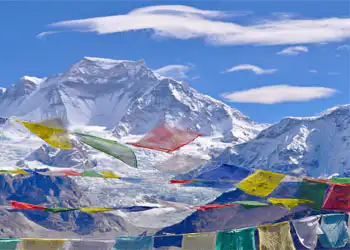
If you are on the Everest region trek, prayer flags are the most common thing you will see on your way. A prayer flag is a rectangular one made of clothes with prayer letters. The view with prayer flags is astonishing to watch. You will love the way it looks there.
Everest Base Camp trek, Gokyo Lake trek, Ebc Chola pass trek, Everest view trek. Other famous tours of the Everest region trek exist. Among all Nepal’s excellent treks, the Everest region trek is one of the most memorable.
You will get the opportunity to experience high-altitude mountain scenery. You will see a traditional lifestyle. You will enjoy several natural wonders of this heavenly country, Nepal.
Facts about the Mt. Everest region trek
It lies in the part of the Himalayan mountain range between the Tibet and Nepal border.
Location: part of the Himalayan mountain range. It straddles the border of Nepal and Tibet.
Mt. Everest was named in honor of Sir George Everest, a British surveyor-general of India.
Age: almost 60 million years old.
Chomolungma is the Tibetan name for “Mother Goddess of the Earth.”
Mt. Everest stands on the border between Nepal and China’s Tibet Autonomous Region.
Edmund Hillary and Tenzing Norgay were the first to climb Mount Everest on May 29, 1953.
Everest region treks some more highlights.
Enjoy the breathtaking view of the world’s tallest mountain – in our Everest trekking.
We are surrounded by the beauty of nature and the mountains of Nepal: Cho Oyu, Lhotse, Nuptse, Ama Dablam, Makalu, and so on.
Experience the hospitality of the Sherpa people. Learn about their community, traditions, and culture.
Experience Buddhist Culture at Tengboche Monastery.
Enjoy tea or coffee at the world’s highest-placed Everest View Hotel.
Discover the beauty of Sagarmatha National Park. It is home to several species of endangered animals.
Enjoy the 360-degree view from Kala Patthar. You will see pictures of Mount Everest, Makalu, Lhotse, and many other peaks.
Take the most exciting and adventurous flights to/from Lukla.
Take a guided city tour of Nepal’s UNESCO-listed World Heritage Sites.
How to reach the Everest region trek
The Everest region trek is in northeastern Nepal. Due to its high altitude and Himalayan regions, most higher areas have lots of snow. While a thrilling plane ride to Lukla is one of the way to reach this region, road-access trekking routes are also available through the lower Solukhumbu area. The flights operate from domestic airports at Kathmandu and Ramechhap.
The small valley of Lukla is busy in the trekking season. Most of the trekking adventures start from here. If you are looking for other alternatives, you can also drive to Jiri or Phaplu from Kathmandu. It is a one-day drive from Kathmandu that will take you to both destinations. From Jiri, you can then take a 4-5 day trek or drive to Phaplu and start the trek.
Popular Everest Region Trekking Routes
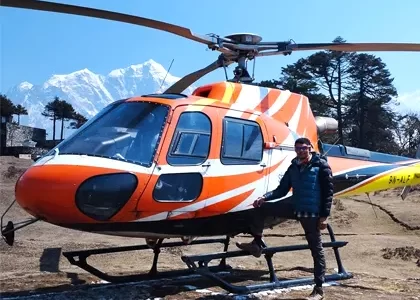
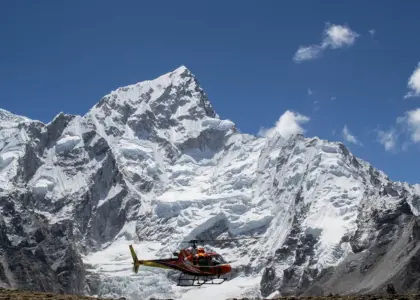
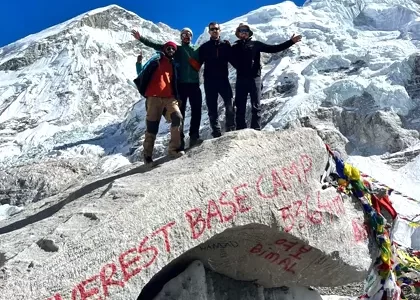
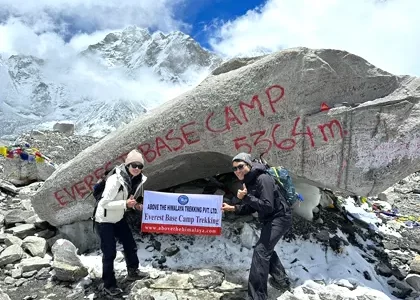
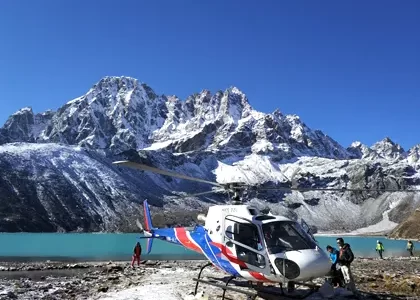
Everest Base Camp Trek is one of the most famous treks in the Everest region. If you want to enjoy the essence of the Everest Region, then Everest Base Camp is the best choice. The trek takes 12 to 14 days, but short-time trekkers can also finish this trek in 7 days using the helicopter for return.
The highest altitude you will reach is Kalapatthar, at 5,554m. It is one of the best viewpoints of Mount Everest. On your trekking, you can see the sunrise and magnificent views of the high mountains.
If you are looking for a more challenging trek, there are different ones. The most famous is the Everest Three Passes Trek, also called the Everest High Pass Trek. This challenging trek in the Everest region spans 15 – 21 days. From the three high passes of Kongma La, Cho La, and Renjo La, you can enjoy a marvelous panorama of the mountains.
All these passes are above 5000 m in height. Another famous trek is the Gokyo Valley. Choose our Gokyo Lakes trek ten-days package if you have a short time. This route gives you a spectacular view of the sparkling high-altitude lakes.
There are easy and short treks also in the Everest Region. You can do a 5-7-day trek around Namche Valley, Khumjung, and Khunde. The less travel and new trek route, Pikey Peak, is also becoming popular.
Most of the short treks in the Everest region are of medium difficulty. You can choose these short treks if you have limited time. Still, you can enjoy the highest mountain view.
Best Time to Visit Everest Region Trek
The best time for the Everest region trek is in the autumn (September–December). October and November are best. During this time, the skies are more transparent, and almost no rain, so the visibility is high. Another good time to visit is during the spring season(March-May). It is the flower-blooming season.
You can also enjoy the rhododendron flowers along the trail during your Everest trekking during spring. You can enjoy the unobstructed views of the spectacular mountain ranges. Monsoon is not a good time to visit as the visibility is poor, and flights get canceled and delayed a lot. In winter, it is okay to trek in the lower part but it is not advisable to trek in the upper part as there will be much snow and the weather will be freezing cold. The high passes are impossible during winter.
Some of the side treks of the Everest region trek
Trekking from Jiri to the Upper region
One of the old trekking routes to reach Mt. Everest is the Jiri route for the Everest region trek. The Jiri Everest trekking offers Everest lowlands. It is also beautiful with its breathtaking Himalayan scenery.
It is suitable for acclimatization and an exceptional experience on lower land. You will get to know the countryside lifestyle of this region and its Buddhist culture.
Hospitable Sherpas populate this area of the Everest region trek. The major attraction of this area is the majestic mountains. There are high mountain villages, charming monasteries, and friendly people. The view of Mount Everest is one of the highlight if this trek. Walking in the alpine forests, glacial rivers, and fantastic rhododendron and pine forests will make your journey worthwhile.
This trek is the oldest route in the Everest region trek.
The trail of this Everest region trek begins from Jiri. We will pass through many attractive villages on the Everest region trek.
The best thing about trekking from Jiri is that you will pass through many villages of different ethnic groups.
Some are Tamang, Jirel, Rai, Brahmin, Chettri, and the Sherpa. While visiting the Buddhist monasteries, we can view different prayer flags. You can see Sherpa and other ethnic villages. They have simple yet affluent mountain lifestyles.
Jiri Everest, Base Camp trekking, is best for acclimatizing. The trail goes higher and higher to reach Namche Bazaar. From there, you will trek all the way to Tengboche.
We will visit Tengboche Monastery, where trekkers can enjoy the best panoramic views. We can see many peaks on this trek, including Everest (8848m). The Cho Oyu (8188m), Lhotse (8516m), Makalu (8485m), Thamserku (6623m) and AmaDablam (6810m).
At Everest Base Camp, you will have the chance to see the spectacular Khumbu Icefall up Close.
Dudh Kunda Trek
Dudh Kunda is a lake at the front of Numbur Himal, known as the Milky Pond of Solu. It is also one of the best destinations in the Everest region trek. Dudh Kunda Lake trekking falls under the lower region of the Everest trekking or Solu region.
Every August, an influx of Hindu and Buddhist devotees comes to perform cleansing rituals at the lake. The local people venerate the sacred lake, which represents a lake of milk.
In this trek, you can enjoy panoramic Himalayan views of Everest, Mt. Numbur, and other Everest Himalayan ranges. Furthermore, the region of Dudh Kunda trekking gets fewer tourists. It gives a refreshing and peaceful place to reconnect with the nature.
The locals, the natural beauty of the area, and the stunning mountain scenery will overawe you. Dudh Kunda is a cultural and nature lover trek in Nepal. The trail to Dudh Kunda Everest trekking starts at Shivalaya. It follows a spectacular, isolated ridge through dense forest. The route follows Bhandar, Sete, Junbesi, Thuptenchholing Gumba, yak kharka and finally Dudh Kunda lake.
The area is remote, and you will likely not meet many people on this rarely-traveled trail. It has a variety of wild animals and birds, such as Mountain Thars. There are also Bears, leopards, jackals, etc.
While at the lake, you can walk around its shore and look for the spring. The high up on the Northeastern side is the source of the holy water. You can experience and interact with diverse cultures of Sherpa. Khaling, Rai, Tamangs, Magar, and Gurungs that will make this journey memorable. The hospitality of the locals is for the most spirit-warming in the Solu Dudh Kunda area.
This Everest region trek trail will also take you through the Pike Peak. You can enjoy panoramic views of the Everest Himalaya range from the lake vicinity.
You can book this new, unique Dudh Kunda trekking trail with us. This trail provides a magnificent view of the high mountains and isolated Solu region.
Rolwaling Trek
It lies between the Everest and Langtang Himalaya ranges. It is below Gauri Shankar (7134m) and the south border of Tibet. This region lies between the Langtang range and the Everest region range. Rolwaling Valley trekking is one of the hard passes in Everest.
This Everest region trek route has alpine lakes and hanging glaciers. You will walk in moraines, high pastures, waterfalls, and an imminent view of snowy peaks in the backdrop. The Rolwaling region is also rich in biological diversity.
The vicinity is rich in flora and fauna, with 16 major vegetation types. There are 34 species of mammals, 16 fish, ten amphibians, eight lizards, 14 snakes, and 235 birds. The main Highlight of the Rolwaling trek is the magnificent forests, including the giant snow peak, Gaurishankar (7134m).
The TshoRolpa is a spectacular glacial lake. It is in the back by terminal moraine on the way during Rolwaling trekking. This Everest region trek offers a fantastic view of the high mountain ranges like Mt. Makalu and Mt. Gauri Shankar and the opinions of Pachermo and Ramdung peaks.
The trek goes via Khumbu Valley.
Experienced trekkers can connect Rolwaling valley with the Khumbu region by crossing the Tashi Lapcha pass. After you finish, you will return to Lukla and fly to Kathmandu. Furthermore, the Rolwaling trek allows you to explore diverse vegetation. It also offers a diverse climate, topography, and many other beautiful places.
The region is very close to the Tibetan border. Here, you can see the people influenced by Tibetan culture. They have adopted unique culture and tradition. People in the villages on the Everest region trek are very warm-hearted and kind.
Ama Dablam Base Camp visit
Ama Dablam Base Camp Trek is an excellent addition to the Everest region trek. You can add an extra day to your Everest base camp trek itinerary and visit the Ama Dablam Base Camp. The base camp offers you the best views of the surrounding snowcapped peaks.
This beautiful mountain in the Himalayas is the best to see in the Everest region trek. It also has superior importance to the Sherpas in the Khumbu region. To reach Ama Dablam Base Camp, you must walk on the classic Everest Base Camp route.
Walking from Tengboche to Dingboche, you’ll come across a village called Pangboche. Here, you’ll have to spend an extra day so that you’re able to explore Ama Dablam Base Camp. You will head east from Pangboche to reach Ama Dablam Base Camp.
A side trip from Dingboche village
As a trekker, you have two alternatives here. Either you can go for the entire Everest Base Camp trek on the Everest region trek. Also, Ama Dablam is a side trip, or you could go there and return to Lukla. This way, you can have all the fun, yet your trek still needs longer.
While you are at the base camp, it offers you the best photo opportunity, observe the mountain, which takes you to the peak base at 4,600 meters. This trek also follows our famous trek route of base camp until Pangboche. From there, with around a two-day hike to the top, the trail turns off on its less congested path.
This trek is an excellent opportunity to learn about the traditional Sherpa lifestyle, religion, and culture. You can relish the panoramic view of the world’s towering peaks.
Khumbu Icefall
Khumbu Icefalls sits on the top of the Khumbu Glacier. The fast movements of the Khumbu Glacier form it. You can see the glacier between Mahalangur and the Kumbhakarna ranges. The view is spectacular in the early morning, especially when the ice has not melted.
The Khumbu icefall is the deadliest and most challenging section of the Mt. Everest climbing route. The mountains like Lhotse and Nuptse are its neighbors. Khumbu Icefall starts from an elevation of 5486 m and goes higher. During our Everest region trek, we will follow the Khumbu Glacier in the final part of the trail. It is one of the more famous and often visited Himalayan glaciers.
Kala Patthar
Kala Patthar means ‘black rock’ in English. It stands at an impressive 5500m above sea level. It is the highest altitude that can be reached on most of our Everest trekking routes. It lies to the south of the Himalayan range above the Gorak Shep. It overlooks the Khumbu Glacier and Everest Base Camp.
It is an incredible viewpoint of Everest, although the trek to the top, especially before sunrise, is strenuous.
Most of the trekkers on the route of Everest region trek don’t miss being here. The walk takes about 2-2.5 hours to reach the top of Kala Patthar from Gorak Shep. If you want the best sunrise view, get there before sunrise.
The top boulder on Kala Patthar is very dangerous. There’s a sheer drop on the other side, so avoiding it on your Everest region trek is best.
Things to pack:
You should take a Flashlight or headlamp, warm clothes, and water. Mountaineers who summit Everest also spend time on Kala Patthar. You can get the best view of Mt. Everest from the Kala Patthar.
Nangkartshang Peak
This peak lies in our Everest region trek village of Dingboche. It is an accessible “walkable” height in the region. It is also one more sub-peak of a higher ridge than an independent mountain. While at the top, you will see the best view of Mount Kangtega. You will also see , Ama Dablam, Nuptse, Lhotse, Makalu, Cho Oyu, Taboche.
In standard Everest Base Camp trek itinerary, you will have an acclimatization day in Dingboche. Acclimatization is excellent for higher places such as Kala Patthar, Everest Base camp, or Island Peak. Climbing Nangkartshang is one way to spend one of the “rest” days and one of the most worthwhile.
It is a more straightforward ascent than some other walks up peaks in the area, and it is also a good fit for other peak climbers. It’s a great half-day excursion.
Hiking Gokyo Ri
Gokyo Peak is at the end of the Gokyo Valley of the Everest region trek in the Khumbu region of Nepal. It is a short day-side trip from Gokyo Lake. You will hike to the top of Gokyo Ri Mountain and the Gokyo Valley. You will explore this region’s calm and lively settlements during this hike.
The Gokyo village is one of the highest-altitude settlements in the world. From the top, you can see the base of the magnificent Mount Everest, Lhotse, Makalu, Cho Oyu, and the Ngozumpa Glacier. It is another famous viewpoint to get spectacular views of Mt.Everest after Kala Patthar. Thus, Gokyo Ri is an ideal alternative place in the Everest trekking region.
Chhukung Village (4730m)
The Chukhung Valley is a small village in the northeast of Dingboche. This village also connects the Pheriche Valley. The trail passes through the vast landscape and stone-walled fields. You will trek in Imja Khola Valley before entering glacier moraines amid the lofty peaks.
We can make an acclimatization day trip to Chhukung valley during the Everest Base Camp trek. The walk is easy and less crowded, with spectacular mountain views. It is the best village to prepare and arrange the climbing equipment.
People plan for the Island peak from this village. You can see the very close-up mountain panorama of Ama Dablam. Also, the Imja Tse (Island peak), Nuptse, Lhotse, and Everest are worth watching from Chhukung.
Thame Village (3800 m)
Thame is a day hike from Namche bazaar. It takes about two and a half hours and is a more traditional village. From here, it is a flat walk with some pleasant scenery. Thame is the birthplace of many record holders climbing Mount Everest.
Thus, this village is an Everest summiteer house. This village is associated with many legendary and famous climbers like Kami Rita Sherpa, Apa Sherpa, and Ang Rita Sherpa.
Hillary Memorial Chorten’s Viewpoint
We can make an easy day excursion from Namche reset day to Khunde. You can also visit Hillary Memorial Chortens (stupas). It is about 20 minutes up the hill behind Kunde Monastery. There are three chortens dedicated to the Everest summiteers. You can enjoy the mind-blowing views of Thamserku Peak. You can also enjoy the colorful sights of Namche Bazaar and Thame Village from here.
Imja Tsho and Amphu Labtsa
While you are in The Chhukung, you can make a detour to the Amphu Labtsa Phedi. It is further away and higher than Imja Tse BC. It will take about 6 hours to go up and back.
If you are an experienced hiker, you can visit Imja Tse BC and Amphu Labtsa Phedi in a day.
Furthermore, it will be a fantastic experience to visit The Imja Tsho Lake and the base of the wall-like Amphu Laptsa Pass. This is a wild and remote high mountain landscape. It is one of the most challenging routes in the Everest region.







Book with Confidence
- Flexible bookings and easy trip date changes
- Personalized service and customized group sizes
- Safe travels with owner-operated services and highly experienced guides
- Best price guarantee for the most value for your money
- Secure & easy online booking
 Have Questions?
Talk to Expert
Meet Mr. Puru Timalsena, Nepal's best trek and tour organizer, who has been working in the Himalayas for more than 15 years.
WhatsApp/Viber +977 98510 95 800