Customize Your Trip





Need Help? Let's Talk
+977 985-1095800



10% OFF
Trip Duration 14 Days
Group Size 2-20 people
Maximum Altitude 5555m
Difficulty Grade Moderate
Start & End Point Kathmandu/Kathmandu
Best Seasons Spring and Autumn
Private Treks with Daily Departures
Note: “We specialize in private Everest Base Camp trekking experiences. Choose your own departure date and enjoy a personalized itinerary with your own trekking guide.
We can run a trip for solo travelers, couples, friends, and family with children. Our private trips run daily. For small group travel, please check the dates below. If the dates below do not suit you, please email us or WhatsApp us at +9779851095800 to travel on your preferred dates.
Small Group Trek Departure Dates for 2027 and 2028
September: 05,10,18,22,30
October: 02,05,08,12,16,20,24,30
November: 04,07,11,14,17,21,25,30
December: 03,07,12,17,21,24,30
Janurary: 02,12
February: 10
March: 03,07,11,14,17,21,25,29
April: 02,06,10,13,16,19,22,28
May: 02,07,11,15,20,28
June: 05,08,15
Highlights of Everest Base Camp Trek
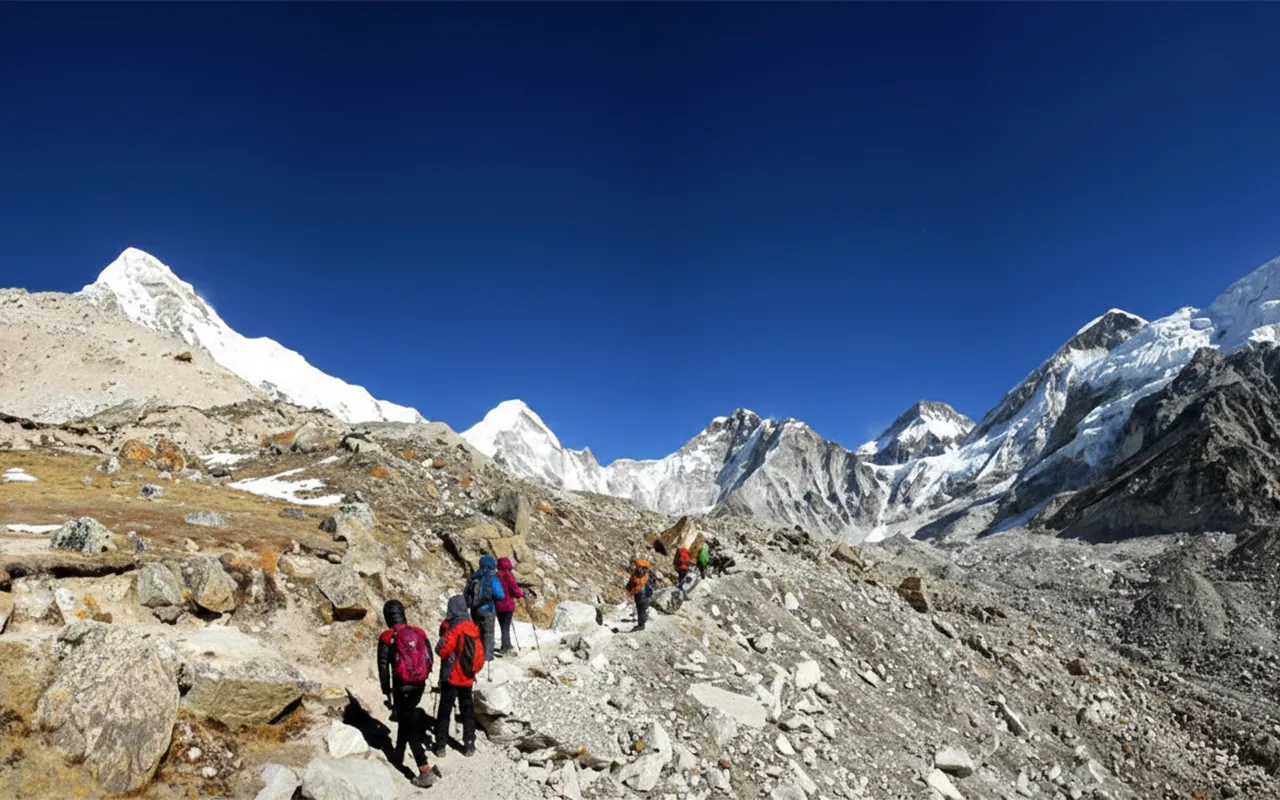
- Exciting short air travel to Lukla airstrip and enjoyment of breathtaking views of the Himalayas.
- Kala Patthar summit with panoramic views of Everest, Lhotse and AmaDablam.
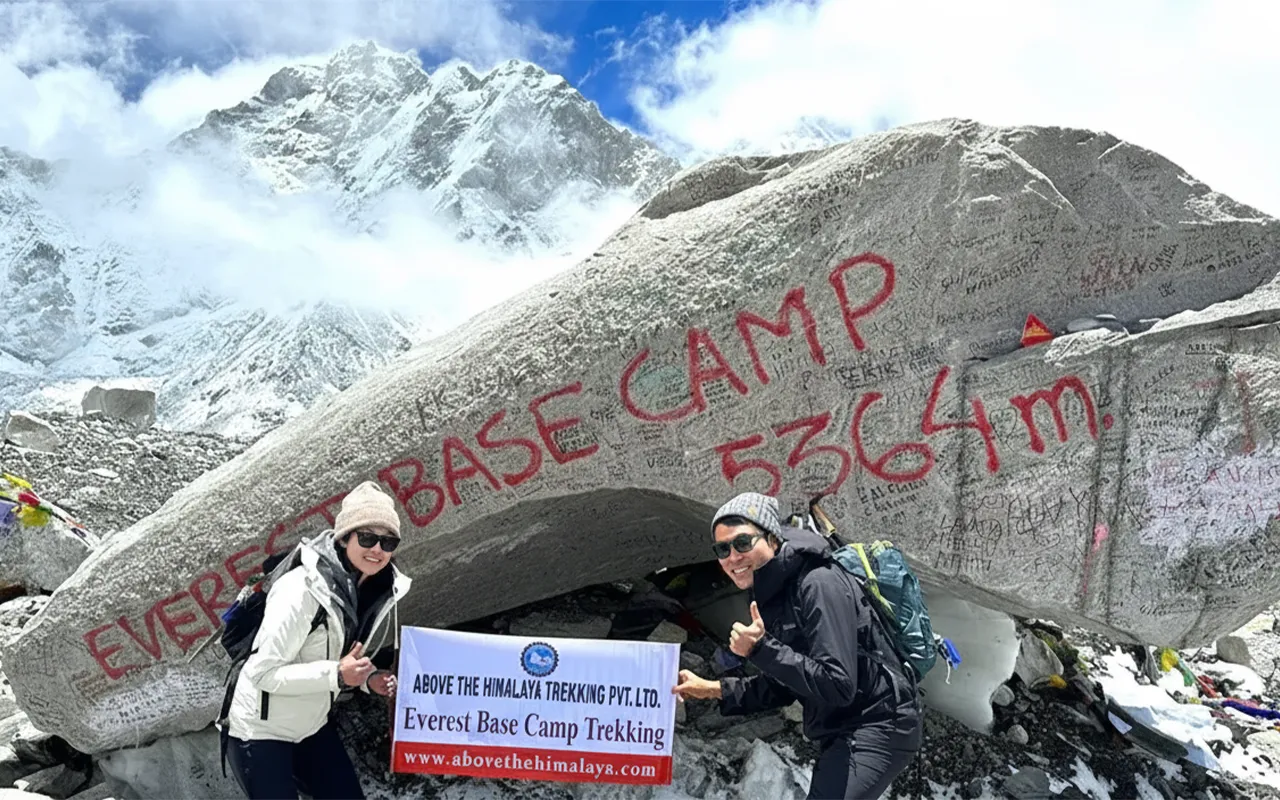
- Arriving to the Base Camp (5,364m) of Everest and standing at the base of Everest.
- Sherpa culture: Namche Bazaar and the mountain villages are colorful and rich in culture.
- Traveling to the old Tengboche Monastery with mountains in the background.
- Hiking on high suspension bridges across the raging DudhKoshi River.
- Trekking in Sagarmatha National Park with the opportunity of wildlife spotting.
- Warm Sherpa hospitality, cozy teahouse stays, and hearty trail meals.
Overview of Everest Base Camp Trek
Everest Base Camp Trek is a classic trip that takes you to the base of the highest mountain in the world. This is a fourteen-day adventure that takes you through the core of the Everest region where you can stroll through mountain trails, visit traditional Sherpa villages and gain insight into daily life in the Himalayas.
The journey starts with a picturesque flight to Lukla where the walking part will begin. After that, the path leads along the DudhKoshi River crossing suspension bridges and forest walks, until it leads to Namche Bazaar, the main trading centre of the Sherpa community. The Everest Base Camp Trek brings about different scenery, serene villages and high Himalayan mountain views each day.
As you ascend further into Sagarmatha National Park the path expands to expansive mountain landscapes and peaceful valleys. You will see some of the key cultural sites like the monastery at Tengboche and you will be staying in local tea houses operated by Sherpa families. Above The Himalaya also plans this trek carefully to ensure that the trekkers are safe, comfortable and well supported during the trek.
The trek is meaningful and enjoyable with our local experienced guides showing their expertise of the region, culture and mountains. This itinerary of Everest base camp trek is set with sufficient acclimatization days at such places like Namche Bazaar and Dingboche to ensure that the body adapts to the altitude naturally.
This Everest base camp trek 15 days itinerary is suitable for travelers with good fitness, including those trekking at high altitude for the first time.Each day, you will cover between five and seven hours of a combination of forest paths and rocky trails and glacial prairies. Simple and hospitable tea houses are used to accommodate, where warm dishes like dal bhat are consumed daily.
The most interesting part of the trek is arriving at Everest Base Camp at 5364 meters where trekkers gear up to take on their expeditions. The trip will also feature an early morning hike of Kala Patthar where close ups of Mount Everest and other surrounding peaks can be easily seen. This Everest base camp trek itinerary will provide an equal measure of adventure, culture and personal accomplishment that will give you a long term memory of the Himalayas.
What to Expect on Your Everest Base Camp Trek
The Everest Base Camp Trek is a physically and spiritually satisfying adventure when you set out on the trip. The average trekking day is five to seven hours at a moderate level. The trail passes pine forests, small villages and rivers crossed by suspension bridges in the lower parts. The environment changes gradually as you ascend. Forests turn out to be open valleys and mountainous roads, and the air is colder and thinner.
Due to the high altitude, the Everest Base Camp Trek schedule is characterized to progress slowly and give your body time to adapt.Trek accommodation is in basic tea houses that are operated by the local families. Rooms are simple, but comfortable typically containing a bed, mattress, and blanket. The food areas will be communal and trekkers will be able to relax and have warm meals together. Some of the villages have facilities like hot showers and internet at an extra fee.
The food is heavy and very high in energy sources, usually rice, noodles, potatoes, soups, and local food. Meanwhile, you will get to know the loving and hospitable nature of the Sherpa people. Every day might be exhausting, but arriving at your teahouse in the afternoon, grabbing a warm beverage, and going to sleep until the next day becomes a nice habit during the Everest Base Camp Trek.
Why the Everest Base Camp Trek Should Be on Your Bucket List
Everest Base Camp Trek is an adventure worth having when one does love mountains and outdoor adventure. It is not merely a destination but also a self-development in the process. The sense of achievement is high when standing at Everest Base Camp at an elevation of 5,364 meters. The fact that you succeeded in climbing to the foot of the tallest mountain in the world by yourself is a moment that many trekkers never forget.
This trek will provide you with an opportunity to challenge your power and will in a natural and calm environment. In addition to the physical difficulty, the Everest Base Camp Trek provides mental clarity and a respite against the daily routine. Life in the trail is plain and direct.
You get up early in the morning, trek up mountain trails, and spend evenings with fellow trekkers discussing their experiences. The relaxing environment and the welcoming nature of local people can make you get even closer to nature and to yourself. The Everest base camp trek 14 days itinerary usually gives one confidence and the memories remain with you even after the trek.
Major Attractions and Himalayan Views
There are numerous natural and cultural attractions on the way to the Everest Base Camp Trek. The close up of Mount Everest through such viewpoints like Kala Patthar at 5545 meters is one of the key attractions. It is here that trekkers will view Everest and Lhotse, and Nuptse among other high peaks. Mornings offer exemplary sights and serene experiences in the mountains.
Another notable experience in the Everest Base Camp Trek itinerary is Sagarmatha National Park. Forests, rivers, and mountain animals like the Himalayan tahr and the Danphe bird are found in the park. Namche Bazaar is a vibrant Sherpas town, where trekking tourists can visit local museums, shops, and bakeries.
The Tengboche Monastery is a serene religious establishment where people can catch some prayer sessions and get to know about the Buddhist culture. Later on as you proceed with the Everest Base Camp Trek, Dingboche valley and Khumbu Glacier, as well as other peaks are seen around you. The trek is not only diverse but also memorable, every day with new mountain landscapes.
Testimonials - Guests Sharing Their Incredible Experiences


Itinerary of Everest Base Camp Trek
DAY
1
1
Day 1: Arrival in Kathmandu
Your Everest Base Camp Trek starts with your arrival at Kathmandu, the capital city of Nepal. Upon arrival at Tribhuvan International Airport, we will receive you and drive you to your hotel. This day is reserved free of any trekking schedules and so you can rest and settle down after the flight and get used to the local environment.
As soon as you arrive at the hotel, you will be able to relax and unpack. In case you come early in the day and feel relaxed you can take a short walk around you, to see the areas around you and you can visit shops in Thamel area. It is high time to purchase any last minute trekking equipment or have a simple lunch. Nevertheless, it is highly advisable to take a break in order to have a rest after travelling.
We will have a briefing of the Everest Base Camp Trek itinerary in the evening. In this meeting, we will introduce the plan of the day, safety rules, and inspect your trekking gear. You will get time to ask questions as well. Have dinner at your own pace after the briefing and have a good sleep. We will start the trip to the mountains tomorrow.
Car
30 min
Accommodation
Hotel
Altitude
1,350m (Kathmandu)
DAY
2
2
Day 2: Fly to Lukla (2,860m) and Trek to Phakding (2,610m)
The day will begin early in the morning with breakfast, and then we will move to the airport to board a flight to Lukla. The flight lasts approximately thirty five minutes and provides sightseeing of hills, rivers and other mountains in the distance. Upon arrival of Lukla, we will meet our trekking crew and begin to prepare to commence the first day in the Everest base camp trek walk.
The walk is not far today and is easy, and it was a good way to get into the walk. Our walk will be down a clear path that follows the Dudh Koshi River. On our way, we will see small villages, agriculture, and prayer wheels. Suspension bridges with prayer flags provide a colorful and appealing appearance to the trail.
After three to four hours of walk, we will arrive at Phakding. It is a quiet village located along the river and it provides a calming environment. After that, we will move into a local tea house and have our first warm meal in the mountains. Afternoon is free to rest or take a little stroll in the village. The night will be in Phakding.
Flight
35-min
Accommodation
Teahouse
Meals
Breakfast, Lunch & Dinner
Trek Distance
8 km
Trek Duration
3-4 hrs
Altitude
2,860m (Lukla)
DAY
3
3
Day 3: Trek from Phakding to Namche Bazaar (3,440m)
We will proceed with our Everest Base Camp Trek in the north of the river after breakfast. The path contains a number of bridges and forests and small villages. We will arrive at Monjo where we proceed to Sagarmatha National Park and perform a permit check.
The trail after Monjo is more difficult. Once past a high suspension bridge, we will start a gradual climb upwards to Namche Bazaar. We will move gradually and have frequent rests to handle the increase of the altitude. We might see Mount Everest in the distance on the way, assuming it is a clear day.
In the midafternoon we will reach Namche Bazaar. It is the lively town which is the central center of the area and provides shopping areas, bakeries and nice lodges. Upon arrival in our tea house, you will be free to sleep or visit the town. Evening meal is one of the ways to get energy back after a day of hard work. We will spend two nights here to aid in proper acclimatization.
Accommodation
Teahouse
Meals
Breakfast, Lunch & Dinner
Trek Distance
10 km
Trek Duration
5-6 hours
Altitude
3,440m (Namche Bazaar)
DAY
4
4
Day 4: Acclimatization in Namche Bazaar (3,440m) – Everest View Hike
Today is an important acclimatization day in the Everest Base Camp Trek. We will have a short hike to a higher elevation after breakfast and go back to Namche to sleep. This assists the body to safely adapt to the altitude.
We will hike toward the Everest View Hotel area. It is a gradual trail, and we will proceed at a gentle pace. We can view Everest and other nearby peaks, weather permitting. We will stay here and enjoy the quiet atmosphere and then go back down.
During the walk back, we can stop at the local villages or cultural places to get to know more about the life of the Sherpas. We will return to Namche, where we will have lunch, and have a free afternoon. You may rest in the lodge, check out the market or have some warm drink.
This day will help sustain your health and comfort even to greater heights. Overnight stay and dinner in Namche Bazaar.
Accommodation
Teahouse
Meals
Breakfast, Lunch & Dinner
Trek Distance
4 km (optional hike)
Trek Duration
3-4 hours
Altitude
3,880m (Everest View Point)
DAY
5
5
Day 5: Trek from Namche Bazaar to Tengboche (3,867m)
Then after breakfast, we will leave Namche and take a picturesque path along a ridge. The trail gives an open view of the mountainous terrain and then leads to the river at PhunkiTenga. Here we will lunch and have a little rest.
Once we cross the river, we will start a gradual uphill trek along the forested trails. This part takes time, and we will take time to adjust to the altitude. The landscape becomes open with the increase in height and we arrive at the Tengboche village.
A popular monastery and a panoramic view of the mountain are found in Tengboche. Upon settling in our tea house, we will be able to go to the monastery to look at the serene environment. During the evening, we will have dinner and rest.
Accommodation
Teahouse
Meals
Breakfast, Lunch & Dinner
Trek Distance
9 km
Trek Duration
5 hours
Altitude
3,867m (Tengboche)
DAY
6
6
Day 6: Trek from Tengboche to Dingboche (4,360m)
We will start the day by making our way down through the forest trails of Tengboche. The route goes across a river, and ascends slowly to Pangboche, a traditional Sherpa village. The trail becomes more open with fewer trees, after passing Pangboche.
We will keep on walking along the Imja Valley, where the land is more open and less noisy. The path becomes increasingly higher and we have frequent rest intervals. The atmosphere becomes thinner, and the environment is rougher.
Afternoon, we will arrive at Dingboche, a high altitude village built by stone walls and open fields. On arrival at the teahouse, we will have a warm meal and take a nap. We will spend the remaining day to relax and hydrate.
To aid acclimatization, we will stay two nights in Dingboche.
Accommodation
Teahouse
Meals
Breakfast, Lunch & Dinner
Trek Distance
9 km
Trek Duration
5 hours
Altitude
4,360m (Dingboche)
DAY
7
7
Day 7: Acclimatization in Dingboche (4,360m) – Hike to Nangkartshang Peak (Nagarjun Hill)
This is another acclimatization day in the Everest Base Camp Trek. Following breakfast we will hike up a ridge nearby Dingboche. The path is rugged and steep, and we will proceed slowly and cautiously.
And as we rise in altitude we can see the valley and the surrounding mountains more broadly. We will arrive at a viewpoint of higher elevation where we have our rest and enjoy the view the landscape. This climb helps prepare the body for the higher sections of the trek.
We will have lunch in Dingboche after spending some time on the viewpoint. Afternoon is at leisure to take rest, take fluids, and enjoy at the teahouse. You can read, write or have the quiet mountain atmosphere.
This is a day that comforts and safety are essential prior to advancing higher. The Overnight and dinner will be in Dingboche.
Accommodation
Teahouse
Meals
Breakfast, Lunch & Dinner
Trek Distance
4 km (round trip)
Trek Duration
4-5 hours
Altitude
5,100m (Nangkartshang Peak)
DAY
8
8
Day 8: Trek from Dingboche to Lobuche (4,940m)
We will depart Dingboche after our breakfast and proceed on our Everest Base Camp Trek to greater altitudes. The trail takes the path of a broad-open valley with slight ascends and open landscapes. Pastures of yak are passed and we walk slowly to save energy. We finally arrive at a small resting place where we have time to take tea and have a brief rest.
Past this point, the trail ascends to a ridge where there are memorials to climbers and Sherpa guides. Here we will take a short pause to think and take rest and then resume. The trail then turns to rocky ground along the glacier, and the air becomes distinctly thin. We will walk gradually and concentrate on slow breathing.
Later in the afternoon we reach Lobuche, a small village, bordered by steep mountains. Then we will have a hot meal and sleep after we have checked in our tea house. It is a quiet night, and it can be cold, and it is recommended to keep warm and hydrated. We will spend the night in Lobuche preparing the main objective of the Everest Base Camp Trek.
Accommodation
Teahouse
Meals
Breakfast, Lunch & Dinner
Trek Distance
7 km
Trek Duration
5 hours
Altitude
4,940m (Lobuche)
DAY
9
9
Day 9: Trek to GorakShep (5,170m), Visit Everest Base Camp (5,364m), and Return to GorakShep
Today is the most important day in the Everest Base Camp Trek. In the morning we will trek along the glacier on a rocky path in between Lobuche and GorakShep. It is a gradual slope with some ascents and descents aso we will walk slowly. When we get to GorakShep we will have lunch and rest before begin our trek again.
We will start our final Everest Base Camp trek itinerary in the early afternoon. The path cuts across glacial rubbles and rocks. We will take our time and keep close together with the group. Some hours later we will arrive at Everest Base Camp at 5364 meters. It is a proud moment and the key accomplishment of the trek.
We willspend some time in Base Camp, taking pictures and sightseeing. We will then carefully go back to GorakShep. Dinner and rest are important tonight after a long and demanding day. We will stay in GorakShep overnight.
Accommodation
Teahouse
Meals
Breakfast, Lunch & Dinner
Trek Distance
12 km
Trek Duration
7-8 hours
Altitude
5,364m (Everest Base Camp)
DAY
10
10
Day 10: Early Hike to Kala Patthar (5,545m), Descend to Pheriche (4,280m)
Our hike will begin before daylight in order to reach Kala Patthar. The path is steep and needs gradual and slow pacing. During climbing we will have breaks when necessary. The peak offers a view of Everest and the surrounding mountains as morning light diffuses over the mountain range.
We will take time to have a look around the view point, and then we will go back to GorakShep to have a breakfast. After a rest, we will go down to Pheriche. The air will get thicker and breathing becomes easier, making it easier to walk downhill.
We will pass along familiar villages and trace the valley as it becomes broader. In the afternoon we reach the village of Pheriche, in a large valley. We will have a warm meal and rest after we check into the teahouse. Many trekkers feel stronger after descending, and this is a good time to recover. Overnight accommodation will be in Pheriche.
Accommodation
Teahouse
Meals
Breakfast, Lunch & Dinner
Trek Distance
12 km
Trek Duration
7 hours
Altitude
5,545m (Kala Patthar)
DAY
11
11
Day 11: Trek from Pheriche to Namche Bazaar (3,440m)
In the morning we will take a walk downwards to the lower levels. The path goes through the village of Pangboche and moves on to Tengboche. We will take a tea or lunch along the way and relax in the quiet environment. The journey back home is more comfortable and relaxed as we traverse through the greener landscapes.
In Tengboche, we will walk down through the trails covered with forests crossing the river and then begin the final upward walk to Namche Bazaar. This part is stable, though the walking is easier now than it was before because the air is better. Towards the end of the afternoon we will reach Namche Bazaar. We can have a hot shower if availavle, after settling in the teahouse, or take a rest in a local cafe. We will spend our night in Namche Bazaar.
Accommodation
Teahouse
Meals
Breakfast, Lunch & Dinner
Trek Distance
15 km
Trek Duration
6-7 hours
Altitude
3,440m (Namche Bazaar)
DAY
12
12
Day 12: Trek from Namche Bazaar back to Lukla (2,850m)
It is our last day of trekking today. We will start the long way down Namche Bazaar after breakfast. At first, the trail is very steep and down, therefore we will walk slowly. Once across the river, the road is smoother since we cross the villages we know.
Before proceeding to Lukla, we will have lunch. The last part involves a short, up-hill walk, just before arriving in the village. We will reach Lukla by afternoon, which is the end of our Everest Base Camp trek. We will have our farewell dinner with our trekking team in the evening. This is a unique occasion to reminisce and celebrate the experience. Overnight will be in Lukla.
Accommodation
Teahouse
Meals
Breakfast, Lunch & Dinner
Trek Distance
18 km
Trek Duration
7 hours
Altitude
3,440m (Namche Bazaar)
DAY
13
13
Day 13: Fly from Lukla back to Kathmandu
On the 13 th day, we will board an early morning flight in Lukla to Kathmandu. It is the final glimpse of the Himalayan mountains and valleys in this picturesque flight. On arrival in Kathmandu, we will pick you up to your hotel.
The remainder of the day is free to relax, have a warm shower, or go shopping or visiting cafes in the area. You can also shop some souvenirs or you can just have some rest after the trek. We will organize a farewell dinner in the night to celebrate the successful completion of your journey.
Flight
30 minutes
Accommodation
Hotel
Meals
Breakfast
Altitude
2,860m (Lukla)
DAY
14
14
Day 14: Departure from Kathmandu
Day 14 is your final day in Nepal. We will also take you to the international airport to board your flight depending on the time of the flight. In case of time, you can have breakfast at your hotel or have a quick stroll at the area.
When you are leaving Nepal, you will bring with you splendid memories of the Himalayas, the local culture, and the Everest Base Camp trek. We shall be pleased to see you in the future, and hope to have you with us again in some other adventure.
Meals
Breakfast
Altitude
1,350m (Kathmandu)
Includes/Excludes
What's Included?
- Transfers from Kathmandu Airport to hotel and back by tourist coach.
- Twin-sharing accommodation in Kathmandu with breakfast included.
- Certified trekking guide licensed by the Government with training in high-altitude sickness and first aid.
- Local trekking porter from Lukla to assist with your luggage.
- Trekking staff salaries, food, accommodation, equipment, insurance, and clothing.
- Round-trip Kathmandu to Lukla flight ticket.
- Twin-sharing accommodation in local tea houses / lodges during the trek.
- All meals during the trek (breakfast, lunch, and dinner) with options from the menu.
- Sagarmatha National Park entry permit and Everest trekking permit.
- Local permit fees for KhumbuGaunpalika.
- Guide carries essential medical supplies and first aid kits.
- Above the Himalaya duffel bag (request in advance).
- Detailed trek itinerary, trip information, and preparation guidance.
- Above the Himalaya gifts and trekking certificate upon completion of the trek.
- One farewell dinner in Kathmandu at a Nepali restaurant.
- Government taxes and service charges.
What's Excluded?
- Meals in Kathmandu except for hotel breakfast.
- Airfare to Nepal
- Nepal entry visa fee (obtainable on arrival at Tribhuvan International Airport).
- Alcoholic drinks, soft drinks, ( Tea & coffee, hot chocolate) hot water, and showers at teahouses (if extra fee).
- Personal expenses including laundry, telephone calls, snacks, beverages, camera battery charging, and other miscellaneous costs.
- Travel insurance covering rescue and medical assistance.
- Personal trekking equipment (can be bought or rented in Kathmandu).
- Tips/gratuities for trekking staff, guide, and driver.
- Any other expenses not mentioned in the “Included” section.
Flexible Booking and Cancellation Policy
At Above the Himalaya Trekking, we understand that travel plans may change. Our booking policy provides clear terms and flexible options to help you plan your Himalayan adventure with confidence.
A 20% non-refundable deposit is required to confirm your booking, with the remaining balance payable upon arrival in Kathmandu/Pokhara before your trek begins. Departure dates can be changed free of charge at least 30 days in advance, subject to availability.
If you postpone your trip at least 30 days before departure, your deposit can be applied toward another trip within one year, subject to availability and any price differences. Date changes are not permitted within 30 days of departure, and no refunds are provided for early departures or unused services once the trip has started.
For complete details, please read our Booking and Cancellation Terms.
Route Map & Altitude Chart

Trek Challenge & Difficulty Explained
The Everest Base Camp Trek is regarded as a moderate to difficult trek and is suitable for physically fit and mentally prepared trekkers. This adventure does not involve technical climbing, however, it involves long walking days, changing landscape, and elevation. In the Everest Base Camp Trek 14 days itinerary, several hours of walking are done each day. and the pathways will mostly be done on stone, forest trails and rocky areas. The higher we go, the thinner the air and hence walking becomes more difficult and proper acclimatization is required.
The base camp Everest trek schedule is well designed and rest days are included to allow the body to acclimatize to the altitude. These acclimatization days play a very huge part particularly in areas such as Namche Bazar and Dingboche. Though there are certain constant uphill components in the trail, the walk is slow and easy. This trek has been successfully completed by many first time trekkers by following the recommendation of the guide and walking at a pace that they are comfortable with.
It is strongly advisable to be well-prepared physically before the trek. Frequent walking, hiking and moderate strength exercises are useful in creating stamina and confidence. In the trek, we promote paying attention to your body, drinking sufficient water, and taking breaks when necessary. The Everest Base Camp Trek is a worthwhile adventure that can be achieved with the proper planning and the right attitude that makes many trekkers complete it successfully and without accidents.
Everest Region Weather & Ideal Trekking Seasons
The weather is a major consideration in the Everest Base Camp Trek as it influences visibility, comfort and flight hours. The Everest region experiences different seasons throughout the year and with the right season determining the trek will be enjoyable. The best periods to do the Everest Base Camp Trek are during spring from March to May and in autumn during the months of late September to November. The weather at these months is usually stable and the skies are usually clear.
During spring, it is fairly mild, and days are longer and one can easily spend time trekking. There are people using the trail, and the weather is good to accomplish the Everest base camp trek 14 days itinerary. Another excellent season is autumn, when the monsoon rains have cleared, and there is fresh air and clear views of mountains. The month of October is particularly popular as the weather is stable and the trails are good.
Summer months between June and August are characterized by monsoon rains particularly at low altitudes. The tracks are not always dry, and the flights to Lukla may be delayed. The period between December and February is a lot colder and especially at night, snow can cover parts of the trail that are higher.
Nevertheless, when properly dressed and equipped, the Everest Base Camp Trek can be undertaken even during the winter season by trekkers who like using trails that are not crowded. Generally, spring and autumn would be the most appropriate seasons to most travelers.
Seasonal Guide for Everest Base Camp Trek
| Season | Months | General Conditions |
|---|---|---|
| Spring | March to May | Fairly mild weather and longer days |
| Autumn | Late September to November | Stable weather and clear mountain views |
| Summer | June to August | Monsoon rain and possible Lukla flight delays |
| Winter | December to February | Colder weather and possible snow |
Eat and Drink during the Everest Base Camp Trek
Meals in the Everest Base Camp Trek are plain, hot, and substantial. During the Everest base camp trek itinerary, we will dine in local teahouses that will serve various dishes. The most traditional and popular food is dal bhat consisting of rice, vegetable lentil soup. This is a nutritious meal which gives sufficient energy to long trekking days and can be found in nearly all teahouses.
Other foods that are served are noodles, fried rice, soups, potatoes, eggs, porridge, and basic pasta meals. With the rise in altitude, the options of food available become fewer and the cost increases since supplies are transported at a low altitude. Nevertheless, hot meals can be served all over the Everest base camp trek 14 days itinerary. We suggest eating vegetarian food, because in higher altitudes meat is not always fresh.
Consumption of sufficient water is highly significant in the Everest Base Camp Trek. Teahouses serve boiled water and hot beverages like tea and coffee. Purification pills or filters should be used to treat all drinking water. Bottled water is expensive along the trail and also contributes to plastic waste.The use of alcohol and excessive caffeine is discouraged because it can have an impact on the hydration and acclimatization. Good food and water also assist in maintaining the energy levels during the trek.
Tea Houses & Accommodation Options on the Trail
In the Everest Base Camp Trek, accommodation is offered in local teahouses. These are family-run small lodges along the trail. Camping is not a requirement in the Everest base camp trek itinerary because teahouses are present on a frequent basis. Rooms are basic and normally contain two single beds, a mattress, a pillow, and a blanket. Rooms are not heated and therefore warm sleeping bags are needed especially in the higher altitudes.
Bathrooms are different, according to location. The western style toilets can be found in the lower villages, whereas the higher villages tend to contain shared basic toilets. Most of the teahouses have hot showers with an added fee and the higher the altitude the higher the prices. Most trekkers prefer to shower once or twice during the trek and wait to get to Kathmandu completely.
All teahouses share a common dining table where they take meals. This is usually warmed up during the night and becomes a social site to the trekkers. Power is scarce and charging equipment is normally expensive. In certain locations, we find internet but it is slow and unreliable. In general, the teahouse form of accommodation is rather simple though comfortable, and it is a significant component of the experience of the Everest Base Camp Trek.
Altitude Sickness: Prevention, Symptoms & Treatment Guide
The issue of altitude sickness is one of the major issues that is likely to arise during the Everest Base Camp Trek. At an altitude that exceeds 3000 meters, the body requires time to adapt to low oxygen concentration. It can cause such symptoms as headache, fatigue, loss of appetite, and sleeping difficulty. To help mitigate these risks, the Everest base camp trek 14 days itinerary will incorporate acclimatization days.
The most effective means of preventing altitude sickness is walking slowly and keeping hydrated and taking the advice of the guide. In the case of mild symptoms it is generally helpful to rest at the same altitude. Severe symptoms require immediate descent and guides are trained to deal with this. Medical posts are situated in such locations as Pheriche and helicopter evacuation can be organized in case of need.
A lot of trekkers have the option of taking altitude medication before going on the trip after consulting a doctor. It is highly recommended that alcohol and smoking should be avoided during the Everest Base Camp Trek. Paying attention to your body and talking with your guide is a way to stay safe during the trek. The destination is never reached before health.
Altitude Sickness Guide for Everest Base Camp Trek
| Category | Details |
|---|---|
| Common Symptoms | Headache, fatigue, loss of appetite, and sleeping difficulty |
| Prevention | Walking slowly, staying hydrated, and proper acclimatization |
| Mild Symptoms | Rest at the same altitude |
| Severe Symptoms | Immediate descent |
| Medical Support | Medical posts and helicopter evacuation if required |
Physical Training & Trek Preparation Tips
The Everest Base Camp Trek may be made more comfortable and fun with good preparation. We suggest that one begins training at least 2-3 months before the trek. To build endurance, pay attention to such activities as walking, hiking, cycling, or climbing stairs. The EBC trek program has extensive days of walking, and physical strength plays a role.
Leg and core strengthening training assists in walking uphill and downhill. By holding the pack and walking around, the body is also trained to be fit in trekking circumstances. Blisters can be avoided by breaking in trekking boots prior to arrival. Mental preparation is also a necessary condition because there are days when it feels long and exhausting.
Preparation includes packing of the right clothing and gear. Good trekking shoes, warm layers and quality sleeping bag are required. We also give a hand-out of our packing list to enable trekkers to prepare adequately. Through regular training and planning, Everest Base Camp Trek is a satisfying and realistic experience.
Nepal Visa Requirements for Everest Base Camp Trek Permit
Before starting your Everest Base Camp Trek, first, you need to arrange a Nepal tourist visa and the necessary trekking permits. Getting a Nepal visa is easy for most travellers. You can get a visa on arrival at Tribhuvan International Airport (Kathmandu). You need to have a passport valid for at least six months and some cash for the visa fee.
A 15 day visa costs USD 30, a 30 day visa costs USD 50 and ninety day visa costs one hundred twenty five US dollars. Since the trek usually needs some extra days for travel and rest, thirty days visa is the safest option. For Everest base camp trek itinerary, there are 2 trekking permits. The first is the Sagarmatha National Park Entry Permit which assists conservation in the Everest region.
The second one is KhumbuPasangLhamu Rural Municipality Permit, which is replacing the old TIMS card in this area. Independent trekkers can purchase them at Kathmandu, Lukla or Monjo. You need to take these permits along during the trek as there are checkpoints on the trail. It is not permitted to trek without permits.
Visa Fee Guide for Everest Base Camp Trek
| Visa Duration | Visa Fee |
|---|---|
| 15 days | USD 30 |
| 30 days | USD 50 |
| 90 days | USD 125 |
Trekking Permit Guide for Everest Base Camp Trek
| Permit | Purpose |
|---|---|
| Sagarmatha National Park Entry Permit | Entry to Sagarmatha National Park |
| Khumbu Pasang Lhamu Rural Municipality Permit | Trekking permit for the Everest region |
Health Safety and Mountain Emergencies on Everest Base Camp Trek
Your health and safety is very important while taking the Everest Base Camp Trek. Trekking in high mountains carries some risks with it, but with adequate planning and expert guides, the journey is mostly safe. Our guides are trained in first aid and high altitude awareness. They carry basic medical supplies and watch trekkers closely on a daily basis.
During Everest base camp trek itinerary it is important to talk about how you feel, especially if you have headaches, dizziness, or unusual tiredness.The trail itself is well marked and does not require climbing skills. Most of the trek is walking on stone paths and trails through the mountains. You should carefully walk, especially on steep sections or rocky sections. When yaks or mules pass on the trail, always stand on the uphill side for safety.
Crime is very rare in the Everest region, but it is still a good idea to keep your passport and money secure. In case of any serious illness like altitude sickness or injury there are health posts in places like Namche Bazaar and Pheriche. If required, helicopter evacuation to Kathmandu can be organised. This is why Travellers insurance is mandatory for Everest base camp trek 14 days itinerary. With proper planning and expert support, you can trek with confidence.
Transportation
Transportation is an important part of the Everest Base Camp Trek experience. The journey usually starts with a flight from Kathmandu to Lukla. This short flight provides beautiful views of the Himalayas and lands at the gateway of Everest region. During busy seasons, flights can be operated from the Manthali Airport instead of Kathmandu. If this is to happen then transportation from Kathmandu to Manthali is arranged prior to the trip.
Once you reach the Lukla it is walking that is the main mode of travel. The Everest base camp trek itinerary consists of daily treks of villages, forests, and the mountain landscapes. Porters transport your main luggage and you will be able to walk comfortably with a small day bag. This support makes the trek more enjoyable and less tiring.
At the end of the trek, you head back to Lukla and fly back to Kathmandu. Flight delays are a possibility because of the weather and you always want to have one or two extra days in your schedule. In rare cases, helicopter flights are taken if the delays are long. All ground transportation in Kathmandu including airport transfer is prepared to make your trip smooth and comfortable.
Travel Insurance
Travel insurance is a must for Everest Base Camp Trek. Because the trek is in a remote and high altitude area, insurance must be taken to trek up to about five thousand six hundred meters. This must also incorporate emergency helicopter evacuation. Medical evacuation in Everest region can be very expensive and hence proper insurance saves you from high costs.
When selecting insurance for the trek, read the insurance policy carefully. Some insurance plans do not cover the high altitude trekking. Be sure your policy specifically mentions cover for trekking up to six thousand meters. This should also be inclusive of medical treatment, hospital treatment, trip interruption.
You should bring with you the copy of your insurance details during the Everest base camp trek 14 days itinerary. Your guide and trekking company also will have a copy in case of emergency. While emergencies are rare, the right insurance provides peace of mind. It makes it possible for you to concentrate on enjoying the mountains, knowing that you are ready for the unexpected.
Alternative Routes & Side Trips around Everest Base Camp
The standard Everest Base Camp Trek is very rewarding, but there are also other routes and other side trips for those who have more time. One of the most popular ones is the Gokyo Lakes trek and you can combine with Everest base camp trek itinerary by crossing Cho La Pass. This route has beautiful lakes and panoramic mountain views.
Another challenging option is the Everest three passes trek. This route comprises Everest Base Camp, Gokyo Valley and three high mountain passes. It is longer and more demanding but it provides a deep exploration of the region. For those trekkers who do not have time to complete the trek, there are shorter versions of the Everest Base Camp Trek that go partially the way and return.
Some trekkers also prefer to fly back by helicopter after reaching the base camp, which saves time and provides comfort. For the experienced adventurers, climbing peaks such as Island Peak could be added to the Everest base camp trek 14 days itinerary. These options can be used to tailor-make your trek depending on your time, fitness and interest.
Extra Expenses on the Trail
While most of the services are included in trekking package in this trek there are some additional expenses during Everest Base Camp Trek. Drinks, Snacks and bottled water is not included and become more expensive as you go higher. Hot showers, internet and charging electronic devices often ask for additional payment at teahouses.
Tipping guides and porters is not required but is appreciated. Many trekkers save a reasonable amount to thank the trekking staff in the end of Everest base camp trek itinerary. You may also want to buy souvenirs in Namche Bazaar or to make small donations at monasteries.
Meals outside of trek in Kathmandu are not usually included. It is advisable to have enough money with you because there are few ATMs along the trail and it may not necessarily work. Planning for these additional expenses makes it easy to enjoy the trek to Everest base camp 14 days trek without stress.
Extra Expense Guide for Everest Base Camp Trek
| Extra Expense | Details |
|---|---|
| Drinks and Snacks | Additional cost |
| Bottled Water | Additional cost |
| Hot Showers | Extra fee at teahouses |
| Internet | Extra fee at teahouses |
| Charging Electronic Devices | Extra fee at teahouses |
| Tips | For guides and porters |
| Souvenirs | Available in places such as Namche Bazaar |
Language and Communication
Communication during Everest Base Camp Trek is generally easy. Most people in the trekking business speak English, especially guides and teahouse owners. The local Sherpa community also speaks Nepali and their own language. Learning a few simple words can help make your experience more meaningful.
Namaste is the most common greeting and is used as a greeting for hello and goodbye. The Nepali word for thank you is Dhanyabaad. Using respectful words such as Dai and Didi is a way of addressing people in a friendly manner. Even if language is limited a smile and polite behavior goes a long way.
Your guide will assist you with the translation whenever required during the Everest base camp trek itinerary. English is sufficient for communicating on a daily basis but an interest in local culture is always appreciated. These little efforts add warmth to your Everest base camp trek 14 days itinerary.
Mobile Network Internet & Electricity
Mobile network coverage is available in some parts of Everest Base Camp Trek, especially in Namche bazar. Nepal Telecom works better in higher areas than other networks. However, the signal is not reliable everywhere and may be lost in valleys.
Internet is available in many teahouses by Everest Link cards. The speed is low and mostly appropriate for messages. Charging of electronic devices typically incurs additional charges, and this is particularly the case at higher altitudes as power is generated from solar energy.
It is best to have a power bank and let family know that communication might be limited during Everest base camp trek itinerary. Many trekkers like to disconnect and focus on nature. Limited connectivity is part of the adventure and makes the Everest base camp trek 14 days itinerary even more special.
Communication and Electricity Guide for Everest Base Camp Trek
| Service | Details |
|---|---|
| Mobile Network | Available in some parts, especially Namche Bazaar |
| Nepal Telecom | Works better in higher areas |
| Internet | Available in many teahouses |
| Charging | Usually available for an additional charge |
| Power Bank | Recommended |
Don’ts during Your Everest Base Camp Trek
- Do not litter: Take your trash with you and clean it up. Do not litter plastic, wrappers or toilet paper on the trail. The maintenance of the trails ensures that the Everest area is retained in its natural beauty to all.
- Show respect to local culture: Walk clockwise around prayer stones, take off shoes and hats in monasteries, and do not touch religious items. Respecting the local practices can be used to create a positive rapport with the Sherpa people that you pay a visit to.
- Always ask permission before taking photographs of people: It is best to ask permission of locals, particularly monks and children. Adhere to photography rules in monasteries. This will ensure that you do not disrespect anyone and your photos will show that you do not disrespect.
- Do not offer handouts to the children: It is better to support schools or charities through proper organizations. Directly giving something may promote begging and leave rubbish along the trails.
- Pay attention to your body: Do not disregard fatigue or altitude sickness symptoms. Travel slowly and only bring what is necessary. Maintaining health is the only way to make the trek safe and get out to base camp in good shape.
- Travel in a group: Do not walk alone, particularly at night. Going outside teahouses a step will need a headlamp. Remaining with the group will also avoid cases of being lost and will offer quick intervention in case of an emergency.
- Be reasonable in price: Do not bargain hard over meals, accommodation, or guide services. Locals are interested in small amounts. The fair pay helps the immediate economy and appreciates the effort to serve in high altitude.
- Conserve the environment and wildlife: Do not pick plants, disturb animals or create noise on the trails. Environmental conservation will assist in sustaining the ecosystem of the Everest region to the benefit of trekkers and wildlife yet to come.
Trip Extensions and Combined Adventure Options
- Chitwan/Bardia Jungle Safari: You can visit Chitwan or Bardia National Park after doing the Everest base camp Trek to have a jungle safari. Jeep and elephant safaris are made available in these parks to view the rhinos, the elephants, crocodiles, and other animals. Safari tours normally take two or four days and offer a good rest of the mountains.
- Pokhara and Annapurna Region: It is a serene city with the lake and mountainous scenery around the city. You will be able to relax after your Everest Base Camp Trek, boat, paraglide or make some short walks like Poon hill. Here is an ideal place to rest and have some light adventure after trekking.
- Kathmandu Valley Cultural Tour: Visit the ancient cities of Kathmandu, Bhaktapur and Patan. Temples, palaces and UNESCO World Heritage Sights include Swayambhunath, Boudhanath and Pashupatinath. This sightseeing is characterized as a journey that will enlighten a tourist who wants to know the Nepalese culture and heritage.
- Peak Climbing or Other Treks: Adventurous visitors can consider climbing such peaks as Island Peak or Mera Peak. It is also possible to organize other treks like the Annapurna Circuit or Manaslu Circuit as standalone trips. These alternatives will further stretch your Himalayan experience and will present more challenging experiences.
- Tours to Bhutan or Tibet: Tourists that wish to see more of the Himalayas can also visit Bhutan or Tibet. Bhutan is the country that gives the opportunity to visit Tiger’s Nest Monastery and its unique culture whereas Tibet will be able to visit Lhasa and its monasteries. These tours are organized as per your time and interests.
- Custom Extensions: Inform us of your interests and schedule. We may propose the most suitable extensions or side trips that can be added to your tour itinerary of Everest Base Camp Trek 14 days. This will enable you to maximize the time you spend in Nepal and the neighboring area.
Photography, Filming & Drone Guidelines
The Everest region is a good place to capture photos and videos. It is okay to take personal photographs, but do not take photographs without permission of the individuals, particularly monks and children. Show respect within monasteries and obey your guide.
It is all right to shoot on a personal basis but commercial shooting must be permitted by the Nepal Government and by Sagarmatha National Park. The use of drones is limited and can not be done without a special approval. It is against the law to fly drones within the vicinity of airports or military areas.
Keep your equipment warm and dry. Batteries have reduced durability, lenses may fog, and condensation may occur. Buy extra batteries and memory cards, keep devices warm and leave them inside at night. These rules will ensure that you capture your itinerary of the Everest Base Camp Trek safely, and at the same time, honor the local culture and the environment.
Cultural Festivals along the Everest Trail
- Mani Rimdu Festival (Tengboche Monastery): This is a popular festival that is held during the fall (in October or November). Monks dance in masks and carry out rituals and locals meet in traditional clothes to rejoice. By taking an extra day at Tengboche, one will get a chance to enjoy Sherpa culture.
- Losar (Tibetan New Year): Losar is celebrated by family meals, prayers, music and dancing usually during the month of February (dates are different). Sherpa traditions are also being provided in such villages as Namche that have communal celebrations and provide trekkers with the understanding of local traditions.
- Dumji Festival: This is celebrated on May or June, Dumji is dedicated to Guru Rinpoche. There are ritual dances and ceremonies in monasteries located in Pangboche and Namche. These colorful events of culture can be observed by trekkers in early summer.
- Saturday Market in Namche: On a Saturday, merchants of lower valleys and Tibet sell products (butter, cheese, clothing, and handicrafts). Going to the market provides an insight into the local economy and the life of the community.
- Festivals Etiquette: wear simple clothes, take photos only after asking permission and watch silently. The festival experience would be made more valuable as your guide will elaborate on the importance of rituals and customs.
First-Time Visitor Tips for Nepal
- Currency and Money: The local currency is Nepali Rupee (NPR). Get money in town at better prices, use small bills, and bear in mind that bargains are the rule in markets, but anything that is bought in restaurants or with a fixed price is not negotiable.
- Cultural Etiquette: Local people greet them with a smile and Namaste. Wear simple clothes when going to temples or villages, especially shoulders and knees. Take off shoes in temples, you have to use your right hand when giving or receiving something, you must not touch heads, and you must not point your feet at people or religious items. Affection in the open is discouraged.
- Health and Food: Do not use tap water, drink bottled or filtered water and brush your teeth. Eat food that is well cooked, peel fruits and carry hand sanitizer. Street food is sensitive to the stomach, so take care when eating such food.
- Safety and Transportation: Kathmandu is not always spacious. Ride a taxi during the night rather than walking along alone, lock the valuables, and carry hotel contacts in case you lose your way.
- Power and Connectivity: Nepal has Type C or D plugs. Cafes and hotels have widespread Wi-Fi and local SIMs are cheap in mobile data.
- Patience and Attitude: Nepalese Schedules can be slow. Be patient and adaptable and keep in mind that locals are hospitable and helpful. The open mind and the attitude of respect will help you make your trek much safer, enjoyable, and enriching to your culture.
Responsible Tourism and Eco-Friendly Practices
An adventure on an Everest Base Camp trek is a memorable experience, yet it is also accompanied by a task to preserve the environment and honor the local communities. When you are trekking in your Everest Base Camp, you should make sure that you carry all your garbage and not use the single use plastic.
Water is limited in the high altitudes, therefore, use carefully when washing or brushing your teeth. Responsible travel also entails supporting the local communities. Being in local teahouses, purchasing handicrafts right in front of local artisans, and treating your guides and porters with respect are all possible to make sure that your trek will help local people of Khumbu region.
Green practices like biodegradable soaps, avoiding open fires and preserving wildlife help to preserve the fragile Himalayan ecosystem. Cultural sensitivity is also noteworthy. Dress honestly, observe regulations in monasteries and seek permission before capturing photos of the locals.
These are the responsible habits you can adopt on your Everest Base Camp trek, thereby preserving the natural beauty of the Himalayas, sustainable tourism, and securing that trekkers in the future will get the same fantastic adventure.
Best Time for the Everest Base Camp Trek
- Spring (March to May)
One of the most popular seasons during the Everest Base Camp trek is during spring. Weather is not extreme and there are more hours of daylight and rhododendrons grow on the path and bring colorful flowers to your adventure. April and May months are very active with the expedition teams moving to the higher peaks, thus making it an exciting time of the year. Nevertheless, this season is popular, so it is better to expect crowds, and some flexibility or bookings in advance are preferred. Late May pre-monsoon clouds may occasionally cause reduced visibility.
- Fall (Late September to November)
The most favorable season to have a clear mountain view during the Everest Base Camp trek is during autumn. The skies are fairly clear after the monsoon, and it is possible to see spectacular panoramas of Everest and the surrounding mountains.There are warm days and cool nights that are bearable. It is a highly popular season and you will meet a large number of other trekkers making it a social and an interactive trekking adventure. Teahouses may be crowded and Lukla flights are popular, so advance booking is recommended.
- Winter (December to February)
In winter, there are few other trekkers to share the Everest Base Camp trek experience and it is very peaceful and quiet. The mountains and even the trail at times are covered by the snow to produce breathtaking views. The air is fresh and outlooks may be extremely clear.
During the nights the weather is very cold and the temperatures go below minus fifteen degrees celsius in places of high altitude and some teahouses might even be closed. Winter trekking involves the necessity of good equipment and a shorter day.
- Monsoon (June to August)
The monsoon season is also not so busy, and the trekkers have a rare chance to experience solitude during the Everest Base Camp trek. The small hills and valleys are rich and green and the wildflowers are blooming. The villages are peaceful and this offers a truer cultural experience with the locals.
But the rain and clouds are common, mountain views are frequently obscured, lower trails are frequently wet or muddy. There are higher chances of flight to Lukla being postponed or cancelled and therefore one should be flexible during this season.
Local Culture and Sherpa Traditions You’ll Meet
The Everest Base Camp trek is not merely about mountains, but also about the encounter with the Sherpa people, and their rich culture. The primary ethnic group in high Khumbu is the Sherpas and will be encountered in virtually every village. They are owners of teahouses, guides, and porters, they are a significant part of the local life.
Sherpas are Tibetan Buddhists. Bridges and hilltops will be covered with colorful prayer flags. The trails are lined with mani stones carved with the line: Om Mani Padme Hum. Every village contains no less than a small gompa or monastery. You can hear the sound of horns or conch shells or singing by monks who are conducting rituals.
You can sometimes observe a puja, prayer ceremony, during which climbers or the community are blessed. Most Sherpa houses have a little prayer room with butter lamps and pictures of Guru Rinpoche or other sacred personalities.
Sherpa language belongs to the family of Tibeto-Burman, but a lot of them speak Nepali and English. The relations within the family and in the community are very strong and Sherpas possess their traditions. As an illustration, they have celebrations of Losar, Tibetan New Year, feasts, prayers, and music.
Mountains are holy, and Everest is referred to as Chomolungma or Mother Goddess of the World. Hospitality is a feature or Sherpas. They can sell butter tea, thukpa or native snacks. The contemporary Sherpa lifestyle is a combination of the traditional and the new. More houses are equipped with solar panels or satellite dishes on top of the conventional decorations.
Smartphones can be used by young Sherpas, whereas older people preserve traditions. Economy is no longer agrarian, instead it is touristic, yet generosity, devotion and communal sense is still valued. During the Everest Base Camp trek, the learning experience of Sherpas life brings significance to your trek and makes it an experience to remember.
Mental Preparation and Trek Mindset Advice
Everest Base Camp trek is not merely a physical experience but a mental one. It can be a lot easier and enjoyable when one is mentally prepared. Always be positive and work step by step, because long days and high mountains are exhausting. Appreciate minor accomplishments, such as the ability to go to the next village or achieve a challenging climb.
Life on the trail is simple. You do not have hot showers and lots of food choices. These are the conditions that are to be considered as a part of the adventure and to have a break in front of the contemporary comforts. The presence of guides, porters, and other trekkers can become very helpful. When you are exhausted or depressed, then tell someone and tell about your experiences. Make achievable goals and do not strain after others.
People move in their own speed, and it is no big deal to take a break when it is necessary. Imagine yourself at Base Camp or Kala Patthar to be motivated, but also appreciate the process itself. The experience includes the villages, waving children, herds of yaks, and changing landscapes. Such attributes as mental flexibility, patience and determination will assist you to cope with difficulties and make your trek worth-living and memorable.
Best Photo Spots and Viewpoints along the Everest Base Camp Trek
The Everest Base Camp trek can provide great opportunities in terms of photography and viewpoints. The Everest View Hotel above Namche Bazaar is one of the earliest great view points where you can view Everest, Lhotse and AmaDablam particularly in the morning light. Syangboche Panorama is located close to National Park Museum and serves good views with a framing of green hills.
The monastery grounds in Tengboche are iconic. The monastery with AmaDablam in the backdrop is a golden-roofed building that forms a beautiful photograph. The Mani Rimdu festival also provides a special cultural shooting as monks in costumes and dancing. Dingboche is approached by a side trip to Nangkartshang Hill to provide a complete view of Makalu, Island Peak, and the Imja Valley. Thukla Pass, its memorials and high peaks, is a very touching and photographic place.
At the Everest Base Camp, trekkers usually have their photographs with the Base Camp sign or Khumbu Icefall as a backdrop. The final point of view of Everest is Kala Patthar and sunrise or sunset gives stunning rays on the mountains. Memorable images are also made on spontaneous moments on the trail. Yaks crossing a suspension bridge, columns of walkers carrying prayer flags over their heads, or children playing in the village all form personal recollections.
Although photography does matter, at times, a mere combination of watching the scenery can be the best experience. The most optimal time of the day is early mornings and late afternoons. Travelling to these perspectives allows you to have memories and enjoy the Himalayan scenery in full.
Wildlife and Flora in Sagarmatha National Park
Sagarmatha National Park, a UNESCO World Heritage site, protects plant life and wildlife and is where the Everest base camp trek goes through. A number of unique species are found in the park. The Himalayan Tahr are wild goats with curved horns and are usually seen grazing in rocky slopes around Namche and Tengboche.
Musk deer are elusive creatures and are normally seen in the quiet forests early in the morning. The national bird of Nepal is a brightly plumaged pheasant called the Danphe, which may be found scavenging in clearings of the forest. You can also observe alpine choughs which are small acrobatic birds that usually fly in the trails.
Snow leopards and red pandas are also found here but due to their rarity, most trekkers can only read about them through the guides or in the park. Along the trail are found yaks and dzopkyo, a breed of yaks and cow and are vital to the life of the Sherpa. The vegetation of the trek varies with the altitude. Lower forests have pine, oak and rhododendron, which are spectacular in spring.
Further up are fir and birch, and above 4,000 meters is scrubby with tough alpine grasses and dwarf rhododendron bushes. During the summer, the alpine meadows are covered with wild flowers such as gentians and edelweiss. Above Dingboche and Lobuche, the vegetation is meager, consisting mostly of lichens on rocks.
Trekking quietly and following trails are some of the ways of protecting this delicate environment. The wildlife and the vegetation will make the Everest base camp trek more interesting as you will get a chance to see not only the mountains, but also a rich and fragile ecosystem of the Himalayas.
How to Choose the Right Trekking Operator
Getting the correct company to take your Everest base camp trek is essential in order to have a safe and enjoyable time. First, check legitimacy and experience. The operator is supposed to be a reputed operator who is registered by the Nepal Tourism Board or the Trekking Agencies Association of Nepal and has years of experience in guiding treks in the Everest region.
Good comments on websites such as TripAdvisor or Google may indicate service and support consistency. Safety is another key factor. An effective business company focuses on acclimatization, trains its guides on first aid and altitude sickness awareness, carries medical kits, and has well-established evacuation strategies.
The quality of guides and staff is also important. Knowledgeable English speaking guides, who are experienced in the local culture, wildlife and have knowledge of mountain geography make a great difference. It is also significant, ethically, to treat porters well, such as with decent weight limits, insurance, decent wages, and good equipment.
Clear costs keep out of sight the unforeseen expenses such as meals, lodging, permits, and flights to Lukla. There must be communication; the operators need to answer questions and engage in special requests such as dietary habits, private treks or side trips.
In the end, follow your gut. An organized, attentive, and loving company during the initial impression is likely to make the trek of the Everest base camp easy and enjoyable. The right operator will help you be in the adventure, experience the beautiful landscape and the cultural diversity of the Himalayas, knowing that the logistics are taken care of in a responsible way.
Finance Tips: How to Cut Costs on the Everest Base Camp Trek
- Trek in a Group: Go on a group trek or create a group with your friends. Splitting up the expenses of guides, carriers and lodging saves individual spending. Group discounts on teahouses and services are also available in most of the local operators.
- Book with a local operator: Booking with a local agency which is reputable will save middleman fees that international companies will charge. You have the same guides, porters, and services at a discounted price.
- Gear Smart: Don’t forget to bring as much gear as you can at home. Buy or rent things that are necessary in Kathmandu, where it is cheaper. Continuous packing also helps to avoid the overweight baggage charges on the flight to Lukla.
- Conserve Water and Snacks: Use water purification in place of purchasing bottled water in order to save money and wastes. Pack snacks and electrolyte powder at home so as not to be charged a fortune along the trail.
- Be Menu Savvy: Have the local foods such as dal bhat that is hearty, healthy and often served free of charge. It is best to avoid costly western food, sodas, or desserts, which become costly at a very fast rate.
- Bargain Respectfully Where It Counts: Set prices Bargain in Kathmandu, either on equipment, souvenirs or taxi fares, but understand that prices in Kathmandu along the trail are largely fixed. Concentrate on urban bargaining as opposed to mountain retreats.
- Time and Comfort: Book Trek in shoulder seasons such as early September or late November to save a bit. Book an additional buffer days so that it does not create costly last minute adjustments particularly when the flights take longer to reach Lukla.
- Spend Wisely: Invest in things that add value, such as good guides and safe accommodation, and cut non-essential extras. With smart budgeting, you can experience the Everest base camp trek without wasting money.
Weather Forecast Tools & High-Altitude Tips
Weather forecasting in the Himalayas is not an easy task, but in the Everest Base Camp Trek case, it is essential to be ready. To access altitude-specific forecasts (such as Namche Bazaar and Everest Base Camp), sites such as Mountain-Forecast.com offer them, and apps (such as Windy and Meteoblue) present models of the area.
Sagarmatha National Park office also keeps local updates regarding the trekkers. Irrespective of these tools, mountain weather is very unpredictable and any forecasts made more than 24 or 48 hours might not be accurate. The knowledge of the experienced guides is local, as they call teahouses en route or monitor Lukla flight status in the morning. Such planning will help in an efficient Everest base camp trek 14 days itinerary.
Trekking in the high altitude also needs care of body and mind. Protective items, such as hats, SPF 50+ sunscreen, and sunglasses, are of necessity. At night, layered clothes and dry thermals serve to keep warm. Water and food maintain energy levels and it is important to listen to your body to prevent altitude sickness.
Simple mind tricks, like slowing down and breathing in a regular manner, and being positive, aid in dealing with the thin air. These tips will guarantee you a safer and more enjoyable adventure during the Everest base camp trek I so that you can enjoy the gorgeous view and the special experience of the mountains as you complete your trek safely.
Classic vs Short Everest Base Camp Trek
The Everest Base Camp Trek may be either a standard itinerary or a shorter one depending on time and physical capacity.
- Classic 12-14 Day Trek: It is the typical itinerary that most trekkers use. It will contain adequate acclimatization days at such villages as Namche and Dingboche where you and your body will become acquainted with the altitude and safely. You will walk gradually to Everest Base Camp and Kala Patthar with their stunning scenery, Sherpas villages and culture. The speed is comfortable, the threats of altitude sickness are reduced, and you have the time to enjoy the environment. This is the path you can take to have the entire adventure and the journey is as memorable as the place. It is most commonly used by travelers who have a sufficient amount of time to complete the Everest Base Camp Trek 14 days itinerary.
- Short EBC Trek (7-10 Days): Short itineraries are developed to meet the needs of time-constrained travelers. They are also characterized by more days of trekking, reduced rests and in some instances helicopter flights to the destination. There are those that merely reach to Tengboche or Dingboche providing panoramic views of Everest without actually reaching to Base Camp.Such treks are more physical and have a greater likelihood of altitude sickness due to less acclimatization. Weather may also influence the scheduling of helicopters, and as such, flexibility is significant. Shorter treks allow less time to rest after exhaustion or other small time diseases, and you can miss Kala Patthar or other excursions.To sum up, the classic trek is the safest and most rewarding because it will provide the full experience of the trek. The reason behind shorter options is that it only suits experienced, fit trekkers who have limited time. Whichever path you follow, the mountains, the villages and the great adventure of the Everest Base Camp Trek will make a permanent impression.
Frequently Asked Questions About the Everest Base Camp Trek
Trekking experience in the past is not obligatory, though it is helpful. The experience of hiking over many days simplifies trail management and managing the change in altitude. You will also enjoy your trek since you will be able to walk long distances.
In case you have to go early because of health or tiredness, your guide will help to rearrange the plans. There are also evacuation options like a helicopter or horse in case of the need. It is always about your safety and the team will make sure that you come back comfortable.
You require a Sagarmatha National Park entry permit and Khumbu Rural Municipality permit. TIMS card is no more necessary in the Everest region. These permits assist in conserving the environment of the park and also promoting the safety of the trekkers.
You must have travel insurance which includes high altitude trekking up to approximately 6, 000 meters. It must cover emergency evacuation, which includes helicopter rescue, and medical treatment in Nepal as well. Proper insurance means that you shouldn’t worry about your safety even when you are in the Everest Base Camp Trek.
Yes, our trekking guides speak English and are experienced in guiding international travelers. They explain effectively regarding the culture, the local life, the conditions of the trail, and the itinerary of the Everest Base Camp Trek so that your trek becomes enlightening and enjoyable.
Teahouse rooms are typically twin-shared, and individual trekkers could be matched to a same-gender partner. At smaller villages there are occasionally private rooms, when there is room, and this will afford you some comfort.
Most teahouses along the Everest Base Camp Trek do not have heating in the bedrooms. There is a general lack of firewood and electricity which means that bedrooms are not heated. During evenings, the only place that gets warmed is the dining hall thus to have a comfortable stay, having a warm sleeping bag is a must.
There are various combinations of Nepali and general Western food in the trail. Foods such as dal bhat (rice and lentils), noodles, soups, momos, pasta, potatoes and eggs are common foods. Spending your time on the local cuisine is very energetic as well as it allows you to feel the original taste of the place.
During the peak trekking season in October and November, nighttime temperatures at Everest Base Camp can drop to around -10°C (14°F). In winter, temperatures may fall below -20°C (-4°F). Daytime temperatures can rise slightly above freezing in sunny conditions, but strong winds can make it feel much colder. Warm clothing and a suitable sleeping bag are essential.
Reviews on Everest Base Camp Trek
Posted on Tripadvisor 

H H
9 December 2025
 Verified
Thank you for the best tour we have ever had!
I planned to stay at the Everest View Hotel this time and travel there because I wanted to see Everest, the highest mountain in the world, slowly, but despite the short schedule due to my children's school, all I got was a response that it was difficult to contact several tour companies. The Himaraya Trekking, Above, has worked out a smooth and safe schedule and had the best experience for me and my family. I will never forget the view of Mount Everest. Thank you very much.
Posted on Tripadvisor

Mike F
26 November 2025
VerifiedAnother Amazing Trip with Above the Himalaya
This is my 3rd trip with Above the Himalaya and Puru. Each trip with Puru has exceeded expectation with the quality of the guides, porters and attention to detail. We were a team of 5 trekker and our ages were all above 67 years of age with the oldest being 73. We are all experienced hikers and trekker and our plan was to trek up the Khumbu Valley to the Cho La pass to Gokyo to the Renjo La pass to return to Lukla. However, the weather altered our plans as Cyclone Montha blanketed the country in rain at lower elevations and significant snowfall at the upper elevations. Due to the weather, no one was trekking and everyone was staying put in their current location during the storm. All the passes were closed due to the deep snow. We were in Namche when the storm was blanketing the country.This is where Above the Himalaya really shines is in the ability to adapt to the changing conditions and our safety. In conversation with our lead guide, we decided to alter our route to trek through the Gokyo valley to reach Gokyo and then do the Renjo La pass. Sitaram our lead guide and Dhurba our assistant guide was both attentive to the changing conditions and always kept a keen eye for how we were doing and feeling on the trek. The pacing was excellent as none of us had any hint of altitude sickness as we reached a maximum elevation of 5,365m.Having trekked and hiked all over the world with different tour companies, Puru’s company is simply the best. The communications, focus on safety, the guides and staff, the accommodations, and the food are all amazing. All you have to do is focus on the beauty of the mountains, enjoy the joyfulness of the Nepali people and have fun exploring the trails. I am planning my next trip with Puru for 2027 as there is no other trekking company to match Puru’s level of service.
Posted on Tripadvisor

Mie K. A.
25 November 2025
VerifiedTake a small step into the Himalayas
I went with Above The Himalaya Trekking’s Everest View Hike in November 2025 and can only recommend with my whole heart!I had never visited Nepal or the Himalayas before and had a life long dream of seeing Mt Everest. I had though, hiked a lot in various parts of the world, but never above 2000 m, so I went with the five day Everest View Trek to take a small step and see how I would handle the altitude. From first enquiry about dates and various questions, to my arrival back from the trip, Puru has been an invaluable help, always standby on mail and WhatsApp, pulling strings and making things happen.Also big shout out to the amazing guide I was teamed with, Kamal, who did everything he could to answer all my curious questions about vegetation, animal life, Nepalese culture and everything in-between :) Kamal was the perfect gentleman, offering little treats and reminding me to take breaks, and all in all I felt very safe and in good hands all the time. He also had good banter and jokes, which lifted the spirit of even the hardest climb.It was cold most nights and mornings and even though the tea houses provided heavy blankets (and I could borrow extra) I was glad I had the sleeping bag with me, which I rented through Puru. But I could definitely have survived without and saved the space in my pack.In total, I’m very pleased I’ve got to experience this lovely country with Above the Himalaya Trekking and if I ever come back for the big leap into the mountains, I’ll chose Kamal and Puru all over again :)
Posted on Tripadvisor

nameless
25 November 2025
VerifiedNepal trek-Gokyo
Second trek with Above the Himalaya, this time to Gokyo and over Renjo La. Our lead and assistant guides (Sitaram and Dhurba) were excellent. Due to several days of rain at lower elevations and snow higher we needed to change our plans while in the midst of our trek. Above the Himalaya accomplished this smoothly and flawlessly, which ultimately resulted in a better experience. We’ll be back!
Posted on Tripadvisor

Yu S
22 November 2025
VerifiedGreat Experience and Friendly people.
We had a great time with Above the Himalayas tour company in Oct. Ajay, the tour guide in Kathmandu is very friendly and knowledgeable. He took us to a lot of places that we can experience local authentic daily life. Puru, the owner, arranged and organized our trip in such way that we really feel comfortable and enjoyable. We are specially impressed by his quick action and management skills. Our flight to Pokhara got cancelled due to bed weather. Within minutes, Puru was able to arrange a car and a driver to drive us to Pokhara! It saved out trip.
Posted on Tripadvisor

Sally M
14 November 2025
VerifiedGlorious trekking experience - ABC
We had the most wonderful experience doing the Annapurna Base Camp trek with our fabulous guide, Tanka, and porter, Ravi. The trek was glorious, despite some rainy days, and although we weren't sure we would get to see the peaks at ABC, the weather cleared just in time and we had an amazing sunrise there. What made the whole trip so special, though, were Tanka and Ravi, who remained cheerful at all times and went out of their way to make everything as good as it could be. This included setting a pace with regular breaks which made the walking completely manageable, modifying the itinerary so we could visit additional villages, getting up in the middle of the night to see if the sky would be clear for sunrise, and bringing a sense of ease and humour to all our interactions. We just loved the whole thing and are keen to return to Nepal for another trek. It was magical!
Posted on Tripadvisor

Peter E
27 October 2025
VerifiedAbove the Himalayas goes above and beyond expectations!
From start to finish everything was perfect! Puru, the managing director, was always quick with his responses to my questions when I first contacted him about planning our trek, and he continued to check to see that everything was going well throughout.Our guide Tanka and porter Ravi were fantastic! Their friendly demeanor kept our experience lively and interesting the entire time and made sure that we were well taken care of. Even small details like Ravi coming in and double checking our rooms to see that we had left nothing behind before leaving each morning, and seeing that meals were prepared the way we liked them weren't overlooked. Tanka was also quite knowledgeable about the mountains, the people, and just about everything "Nepal". He enthusiastically shared stories about his family and Nepalese life in a general way.Although there was a clear itinerary each day, and for the whole trek, Tanka allowed for flexibility in terms of time and where to stay. He was even willing and able to make changes to same-day accommodation based on how far we anticipated hiking that morning. I can't say enough about how much we enjoyed our hike and I would definitely recommend Above the Himalayas for anyone considering a trek.
Posted on Tripadvisor

Akane U
25 October 2025
VerifiedAmazing tour
For me and my son, Pru thought of a four-day trekking tour.His interaction was very smooth.On the first day, I went with my son to Gandrouk, and on the second day, he went to a higher place (mulde view point, Poon hill) with his guide Ashok. Ashok was very kind and took me to various local places. The food was also very good.My guide, Tangka, was very kind and helped me a lot.I recommend this travel agency because it's great.
Posted on Tripadvisor

Daniel F
24 October 2025
VerifiedEverest Base Camp Trek
My friends and I just completed the EBC trek. From the time I met Puru at the Canada Place trade show in Vancouver BC, Canada I felt comfortable going to Nepal. His communications via WhatsApp were seamless answering all our questions. Everything went exactly according to plan. Our guide Suresh was amazing. He took very good care of us the whole time. From guiding us to making sure we had everything we needed to be happy. The food the whole way up and back was amazing! 5 ⭐️. Our 2 porters were great as well. I have a whole new respect and appreciation for what they do. They are the true hero’s to what we can do as a team. We chose the basic trek the lodging was to be expected. If I was to do again I would choose the luxury trek. The hotels in Kathmandu at the Hotel Aloft and the Hotel Lo Mustang were top notch as well as the buffets. Highly recommend this local company!
Posted on Tripadvisor

adrienne h
24 October 2025
VerifiedGreat tour, would recommend!
My friend and I completed the 10 day Annapurna circuit with Above Trekking Himalaya. Buddha our porter was a little mountain goat, pocket rocket. When I got altitude sickness he carried my bag, as well as mine and my friend’s big pack. He was friendly and loved to played cards with us, always with a cheeky smile on his face. Sitaram our guide was very knowledgeable of the area and quite serious. He was always available if we had any questions and went above and beyond to try get us the best/quietest rooms in the tea houses. Puru was fabulous working behind the scenes to ensure our trip was as smooth as possible. He was very quick to respond to any messages. It was a great experience to see Nepal with some locals and I certainly appreciated their support when I succumbed to altitude sickness. They stayed close to us the whole time and checked in frequently making us feeling safe and supported the entire time.
Verified by Trustindex
Trustindex verified that these reviews were published on Above the Himalaya Trekking - Private Day Tours's Tripadvisor profile. Learn more

Victor F
Switzerland
Everest Base Camp Trek That was an awesome experience.

Puru, the tour organizer, has always been available to answer questions. His knowledge of Nepal and the Himalayas is simply unbeatable. He was always ready to assist with places to stay, restaurants, and barbershops. Puru also helped negotiate the rates for extra services, like a helicopter ride, that I needed when Lukla airport was closed to airplanes due to the weather conditions.
Overall, it was an outstanding experience, and I would contact Puru and his team again if I plan another trek in Nepal.
Victor F, Switzerland
10% OFF
Book with Confidence
- Easy Booking: Secure your trip with just a 20% deposit.
- Flexible Date Changes: Free changes at least 30 days before departure.
- One-Year Deposit Credit: Use your deposit for an eligible postponed trip within one year.
- Private & Personalized: Flexible itineraries and group sizes.
- Experienced Local Guides: Professional guidance and support throughout your trek.
- Best Value: Competitive prices with clear package inclusions.
Your Trek Leader
 Enjoy Himalayan scenery with the help of Nepal’s best guides with Government license holders and got training in first-aid, our Trip Leaders, know where you’ll find the best photos, most fascinating wildlife, and the best stream crossings.
US$ 1850 Per Person
Have Questions?Talk to Expert
Meet Mr. Purushotam Timalsena (Puru), Nepal's best trek and tour organizer, who has been working in the Himalayas for more than 24 years.
WhatsApp/Viber +977 98510 95 800



You May Like


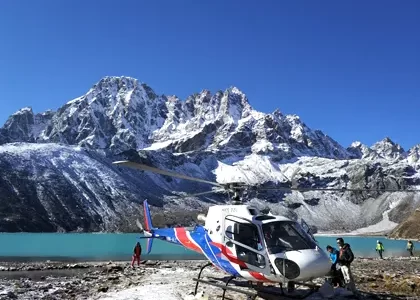

Trips for All
Private Trip
Peaceful tour with your travel buddy and guide
Small Group Travel
Travel with people having similar adventure dreams
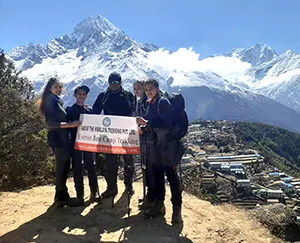
Trips for Kids
Calling all young adventurers - join us for a journey of a lifetime!
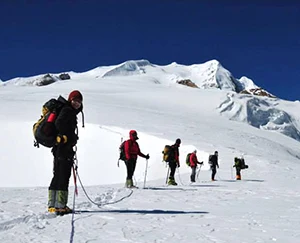
Trips for Adventurers
Climbing & mountaineering adventures for thrill-seekers