Where is mad honey harvested in Nepal?
Mad honey is one of the most famous things you will find in Nepal. The honey is dangerous when consumed in higher doses, and some are likely unable to digest the slightest bit of the honey’s taste. The cliff honey is hunted by local honey hunters in Nepal.
Many have come to Nepal to taste and experience the trip that mad honey leads to. The mad honey in Nepal is harvested in the Annapurna region. Hence, you get the experience of cultural and Himalayan exploration and that of a tradition that is one of the unique yet most lethal ones in the world. We will hunt in the rocks of the small hill of the Annapurna region.
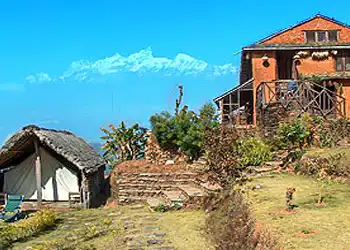
You will stay in a local homestay before going hunting. We will tour Bhujung village, a beautiful small town in the Gurung community that also falls under the Gurung cultural heritage belt in Lamjung. The town has tea gardens, water mills, and rice terraces. Lamjung Peak appears up close, and the Namuna mountain pass is close to the town.
Honey hunters from Nepal
People collect wild honey from the feral bee colonies Apis laboriosa. It lives within the isolated forest in the Himalayan mountains of Nepal. The world’s largest honey bee, Apis laboriosa (the giant Himalayan honey bee), may be a wild bee. It makes its comb cliff overhangs on rocky cliffs.
Within the foothills of the Nepal Himalaya lives a brave tribe of Gurung people. They risk their lives climbing up cliffs to reap honey from one of the most dangerous honey bees in the world. The locals have been following this tradition for many years. It holds great religious and cultural importance to the people here.
A Nepali honey hunter hunts honey within the cliffs or rocks. Most of these hunters are farmers, cultivating rice, corn, and vegetables for their use. According to the local people, about 200 years ago, two tribes of Gurung and Ghale people left Tibet and settled in Lamjung’s honey-hunting site.
From then on, the locals started collecting wild honey from the cliffs and trading it. First, they prepared ropes made from braided strips of bamboo. Some hunters made ladders from those ropes, while others stayed to collect the honey. According to the honey hunters, the highest quality is in May and June.
The honeybees usually made their beehives on gigantic cliffs in the Jungle. They collect nectar from poisonous Jungle flowers, making natural organic honey. The hunters first pray and respect the spirits of the forest. They also perform a ceremony to appease the cliff gods. They preferably offer flowers, fruit, and rice and pray to the spirits for a secure hunt.
Honey Hunting in Nepal tools and equipment
Honeycombs are the nests that honeybees make. This is where honey hunters find the most authentic and purest honey. Due to the hardship one must endure to get the honey, original honey is always expensive in the market.
Honey-hunting tools and equipment are used to extract honey. They ensure that everything goes smoothly from the beginning of the extraction journey to the end.
These tools and equipment are made from traditional materials in the most conventional manner possible. If you are to go and discover the process of honey hunting, you will find that even the honey hunters from modern times do not use modern tools to do their work. Many of the tools and equipment are most possibly unheard of, even. The most common and mandatory tools and equipment for honey hunting include:
- Bamboo fiber ropes
- Prang (long bamboo ladder)
- Tokari (bamboo basket)
- Chhyakhal (basket lining)
- Tango (long bamboo stick)
- Saaton (bamboo stick)
- Chcora (filter)
- Donga (wooden wax pot)
- Dabilo (wooden knife)
These traditional tools are likely to accentuate the taste and maintain the uniqueness of the end product.
Honey hunting techniques
Honey hunting is a thrilling experience, even for Nepal’s most experienced honey hunters. How honey can be extracted from Nepal’s mountain hills in the most dangerous. Since honey is found in the Himalayan regions of Nepal, there is a big chance of getting into a lethal accident during the honey-hunting procedure.
However, honey-hunting techniques include going to the location and extracting honey straight from the honeycomb.
Below are the few techniques form the local honey hunters
Choosing the best possible season
Spring and fall are the most preferable honey-hunting months. This season makes it easier for honey hunters to extract much honey. The honey can be stored for later months as well.
Traditional equipment
The hunters prepare their equipment before approaching the cliff, following techniques passed down through generations.
Smoke and fire
Honey hunters use smoke and fire to calm the bees and prevent as many accidents as possible.
Harvesting
For harvesting, the honey hunters don’t do much other than leave a little honey in the natural habitat for a later population increase.
Enjoy the traditional Nepal Honey Hunting Tour.
A traditional group from a local village carries out Nepal Honey Hunting Tour. Traditional honey harvesting in Bhujung is practiced by experienced local hunters from the Gurung community. This tradition has been passed down for generations, and the locals still follow it. Honey was the primary source of sweets in ancient times when there was no sugar.
Some indigenous Nepali communities, like Gurungs and Magars, are in this process. There are many mountain cliffs in Nepal where you can see wild honeybees. The Manaslu and Annapurna regions hills near the forest have few of them. Nepal honey hunters will mostly go to hunt in the Annapurna and Manaslu regions.
It makes hives on the vertical slopes of these cliffs, so it is a dangerous activity. Some cliff sites have local names of honey hunters who died during honey harvesting. Nepal honey hunting is an ancient tradition in the mountain areas of Nepal. In the past, people used to organize religious ceremonies before collecting honey.
They do this to protect themselves from the honeybee’s attack and any mishaps. The honey hunter from the local village celebrates honey hunting as a festival. They offer flowers, grains, and sheep to God before harvesting. People organize the worship to respect the hard work of honeybees.
They honor their contribution to human survival. Everyone gets excited and curious to watch honey hunters working at the cliffs.
Taste the wild honey.
The well-experienced villagers hang from cliffs as tall as 300 m. They climb with the help of homemade ropes and Bamboo ladders. The leaders of the hunters collect honey in the bucket from the beehives and pass it down to another person. Visitors can learn about the harvested honey and its traditional uses. Some wild honey may contain toxic compounds and should not be consumed without understanding the health risks.
Wild honey has medicinal value and is worth a lot of money in the international market. Nepal honey-hunting tours are interesting for tourists who want to learn the traditional knowledge and skills of honey-hunting in Nepal.
The trekking routes to and from the honey bee hives are exciting and breathtaking. Nepal honey hunting allows guests to see the beauty of the Nepali terrain and nature. At the same time, tourists can experience the culture. Thus, it adds more color to our delight.
Enjoy the Nepal honey hunting tour with the best view in the village of Annapurna region.
We can arrange Nepal Honey Hunting Tour in different parts of Nepal. On this honey-hunting trip, we take you to the Annapurna region, one of the best Gurung villages. Honey hunting in Nepal is usually done in October and November in Autumn. It is also done in springtime from mid-April to May.
You will stay at a local homestay during the tour. We specially arranged the Nepal honey hunting tour in Lamjung District. It is near the famous Ghale Gaon and village, which is a renowned cultural Village. You can ask us for any alternative honey hunting itinerary in different areas.
What to pack for Nepal Honey Hunting Tour
Mad Honey Hunting in Nepal is an easy and short tour that allows you to pack your belongings in your daypack. Below is an idea of what to take.
- Trekking boot
- Flip flop/sandals
- Sleeping bag -10 degree
- Socks
- Walking stick
- Shorts
- Trekking trousers
- T-shirt
- Wind stopper, warm Jacket
- Hat (sun/cold)
- Rucksack/backpack with cover Weatherproof pack cover
- Head torch
- Water bottles
- Sunglasses
- Sunblock
- Raincoat or Umbrella
- Toiletries (toothbrush, toothpaste, deodorant, floss, etc.)
- Small first aid kit, e.g., plasters, paracetamol, antiseptic wipes, etc
- Some snicker, chocolate, candy
Health & Fitness
The Nepal Honey Hunting Tour is suitable for travelers with basic fitness who can manage short walks on uneven village and hillside trails. It is best for families with children and first-time trekkers with limited time. We must walk at medium altitudes (800 m-2500 m) during the hike. Any normal person can undertake this tour as it is a leisurely tour.
There are also transport facilities on the alternate route. So, if you have any problems for trekking or hiking, you can drive back to Kathmandu.
When is the best time for Nepal Honey Hunting Tour ?
Honey Hunting in Nepal is not possible throughout the year. We can do the honey hunting in two seasons, late spring and late autumn. As a result, these are the times when you have the most chances to see the hunters at work. We run the tour two times a year.
The best time for a Nepal honey hunting tour is October/November and mid-April to May. The local people harvest honey during the summer (April to May). They also gather it during Autumn (October or November). Therefore, you can only go on the trip at the mentioned time.
Nepal Honey Hunting Tour Cost
The cost of our Nepal Honey Hunting Tour depends on the group size as the major cost is for the hunters of villagers payment and permit cost. Our Nepal Honey Hunting Tour starts at US$1,550 per person for bookings of two or more travelers. Solo traveler prices are available upon request.
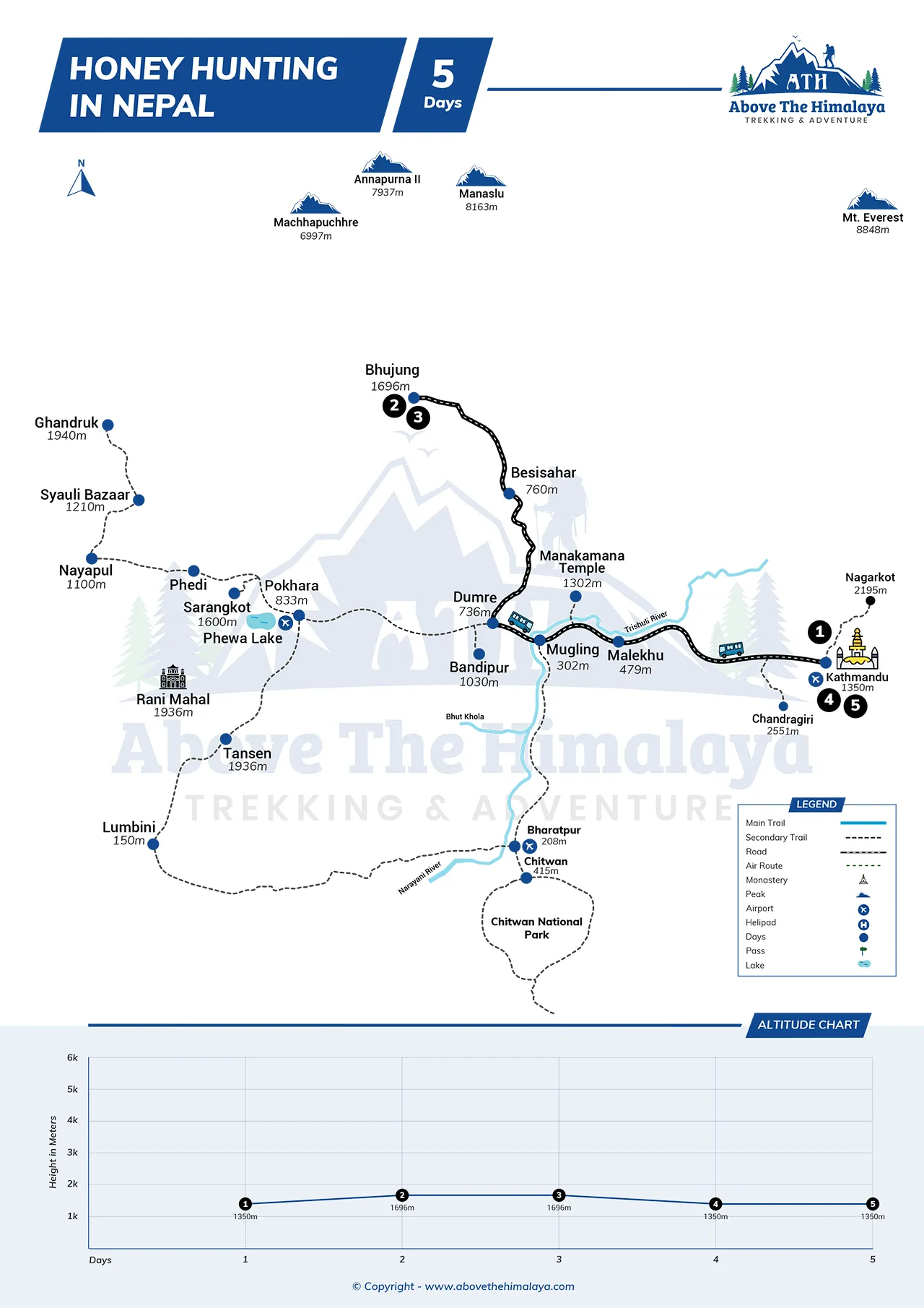
If you are in big group we will offer you some discounted cost. Our Honey Hunting tour begins in Kathmandu, after make the trip preparation, We can then drive to Besisahar and from there can take local Jeep drive to the honey hunting stop with the off-road tracks , Spending two days there with honey hunting activities then drive back to Kathmandu.
Book your Nepal Honey Hunting Tour for 2027/2028
Our Honey hunting tour for 2027/2028 booking is open. The tour is only run in a unique time frame, and limited seats are available. You can book in advance to find the space. We arrange honey hunting tours during the locally scheduled spring and autumn harvesting seasons, generally around April–May and November–December. Exact dates depend on confirmation from the local honey hunting community.
What to Expect on Nepal Honey Hunting Tour
It is a special cultural experience that follows Kathmandu to a Gurung village in the Annapurna region where an ancient tradition of honey harvesting could be observed. Nepal honey hunting tour is a blend of scenic country trip, short walk through villages as well as an unusual experience of watching the cliff honey collection in the wild.
The main highlight is watching the experienced Gurung honey hunters prepare and harvest honey from steep Himalayan rock faces. The activity is seasonal and carefully planned, so that visitors can watch it from a safe viewing area. You will not be required to climb or take physical risks.
Beyond the harvesting event, you will spend time in the village of Bhujung where you will interact with the local families and feel the rural hospitality. This travel also provides cultural richness, stunning scenery and the possibility to establish a significant relationship to the local culture without engaging in strenuous physical activities.
Difficulty & Risk Level Explained
Nepal Honey Hunting Tour is graded as easy because the walking distances are short and the altitude is moderate. Most days consist of easy hiking on village trails and uneven rural paths, which are easy for travelers with normal fitness levels.
The Nepal honey hunting tour is the most physically challenging experience with the long ride to the village. The conditions of the roads may differ according to the season yet there is no technical trekking or climbing to be done.
Although Nepal Honey Hunting Tour does seem to have a dramatic setting because of the cliffs, visitors are in safe areas. The harvest itself is carried out entirely by the trained local experts. As long as you are comfortable spending time outdoors and standing during the viewing time, this experience is good for families and first-time cultural travelers.
Guest Participation & Safety policy
During this cultural experience, guests attend as an observer and not as a participant. The process of harvesting honey is only done by expert Gurung honey hunters who know the terrain of the cliffs as well as the traditional methods.
Visitors are led to a safe viewing point that is selected by the local team. You should not leave this area at any time and should follow instructions carefully. Entering the working zone or moving towards equipment is not allowed due to safety reasons.
Mad Honey Hunting in Nepal requires smoke and active bee colonies, hence it is important to remain calm and keep distance. Children must remain under strict adult supervision and can take instructions. Such organized solution will make the Nepal honey hunting tour a safe and respectful one and make it organized to the concerned.
Safety & Emergency Support
A major part of this experience is safety planning because the harvest is held in an environment that is a natural cliff. Your guide observes the group during the activity and ensures that all the members remain in the correct positions.
Basic first aid support is available for minor problems such as small cuts or minor bee stings. Travelers who have known allergies should bring personal medication and notify the guide in advance. Smoke is used by the harvesting team to control activity by bees, and guests are located away from heavy smoke exposure.
In the event of a more serious issue, the closest road access point is utilized to transport to medical facilities. To remain safe in Honey Hunting in Nepal, there is only one rule, to be careful not to make a sudden step in the area of work and to listen to the instructions of the local team, doing everything possible.
Accommodation & Facilities
On this trip, accommodation will be in a classic village as opposed to the luxury hotels. Guests spend their nights in the homestays or in plain guesthouses operated in Bhujung village by Gurung families.
Rooms are clean, modest and typically arranged on a twin-sharing basis. Facilities are simple and represent the lifestyle of the locals thus you should not expect the standards of a modern hotel as facilities are supposed to represent the older lifestyle of the village. The bathrooms can be shared and the hot showers can be restricted according to the seasons.
Most of the homes have electricity although the charging facilities can be common. The speed of Internet access can be low or unstable in remote areas. When you accept such simple conditions, it will make you concentrate on the cultural worth of the Nepal honey hunting tour as opposed to modern comforts.
Transportation & Condition of Road
Nepal Honey Hunting Tour begins with a drive from Kathmandu to Lamjung District. The initial section of the trail is a highway that has a few beautiful river views and scenery.As you get closer to the village area, roads may be more narrow and less smoothly made.
Depending on the road conditions, part of the Nepal honey hunting tour may be done in private jeep for better comfort and stability on rural sections. Travel time can be long, but stops to rest and eat are made regularly.
Weather conditions may affect the quality of roads, particularly during rainy periods. Patience and flexibility are useful during this stage of the trip. Although the drive is long, it requires no physical exertion, and is still appropriate for those travelers who are looking for an easy cultural adventure.
Food & Drinking Water
Meals while in the village are home-cooked and made with fresh local ingredients. You will generally be given rice, lentils and vegetables and seasonal fare which reflects the traditional mountain cuisine. Portions are filling and meant to give steady energy all day long.
Vegetarian options are readily available on request. If you have any dietary restrictions, it is helpful to let the team know before your arrival, to ensure better meal planning.
For drinking water, it is recommended to drink boiled or properly treated water. It is advisable to carry a reusable bottle and purification method. Some Himalayan wild honey contains grayanotoxins and may cause poisoning even in small amounts. Honey tasting is not part of our standard tour.
Travel Insurance
Although the activity is rated as easy, travel insurance is highly recommended for added security. The Nepal honey hunting tour involves rural travel and outdoor observation so basic medical coverage is useful.
Insurance should ideally cover minor medical treatment, unexpected changes in travel and transportation in case of emergency. While serious incidences are rare, having coverage gives you peace of mind for you and your family.
If you have individual medical issues then make sure your policy covers rural travel. It is a good idea to keep a digital or printed copy of your insurance details with you while Honey Hunting in Nepal. Proper preparation ensures that you can enjoy the experience without worry but with confidence.
Responsible & Ethical Harvesting
Respect for nature and community is an important part of this experience. The harvest of honey is done through traditional knowledge transmitted through generations. The local team adheres to seasonal cycles and community rules to ensure that bee colonies remain protected.
During the Nepal honey hunting tour, the visitors are expected to behave responsibly. Avoid littering, never disturbing the surrounding forest and never try to interfere with the harvesting process. The goal is to observe and learn, but not to influence the natural cycle.
Mad Honey Hunting in Nepal relies on a balance between the human and the environment. The honeycomb is only collected in some sections; this is how the bees are able to keep building and producing in subsequent seasons. By observing these traditions, tourists can conserve this Himalayan tradition, which is quite rare, even in the coming years.
Photography Guidelines
The dramatic cliff environment and traditional harvesting methods provide excellent photo opportunities. You will be welcome to take personal pictures from designated viewing areas, depending on the guidance of the local team. Safety should always be the priority and not taking the perfect shot.
Avoid going closer to the edge of the cliff or getting into the working area for improved angles. Sudden movements can disturb the honey hunters as well as the bee colonies. Keeping a steady position will allow for a safer and more respectful experience.
If you plan to use advanced equipment such as drones, permission must be obtained beforehand from the local authorities. The drones might interfere with the bees and create additional danger in the environs of the cliffs. Careful photography will make you capture the action of Honey Hunting in Nepal without violating the dignity and safety of anyone.
Gurung Culture & Spiritual Ritual
Beyond the physical harvest, this journey has a deep connection to Gurung heritage. The honey hunters treat the forest and cliff sites with respect as part of their ancestral landscape. Before the beginning of the harvest, a simple ritual may be performed to seek protection and harmony.
These moments reflect feelings of thankfulness about the natural environment and cooperation among the community. Mad Honey Hunting in Nepal is not just a job, it is a cultural expression that is informed by belief, experience and collective responsibility.
Visitors are encouraged to watch these rituals in a quiet and respectful way. Listening to local stories and knowing the meaning behind the ceremony makes the Nepal honey hunting tour better. When culture and tradition are experienced with sincere appreciation, the experience is much more meaningful than a mere adventure activity.


 Customize Your Trip






 Enjoy Himalayan scenery with the help of Nepal’s best guides with Government license holders and got training in first-aid, our Trip Leaders, know where you’ll find the best photos, most fascinating wildlife, and the best stream crossings.