Trek guide and staff
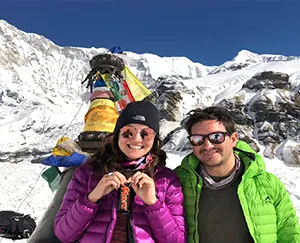
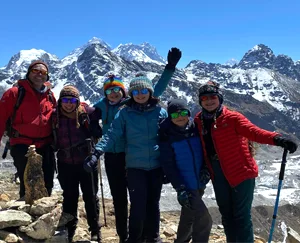
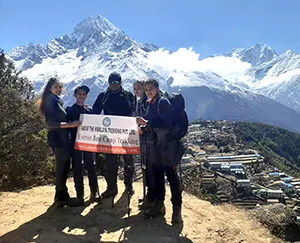
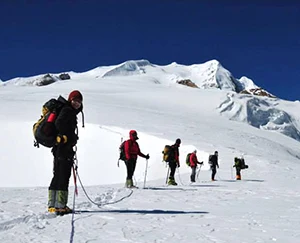
Your Helambu trekking guide for the Helambu Valley trek speaks fluent English. We can also arrange guides who speak French, German, Spanish or Japanese, subject to availability. Your guide will prioritize your safety and well-being throughout the trek.
They maintain health, security, and hygiene before doing anything else. On the tea house trekking, our Guide will find you the best, cleanest guest houses for your comfort.
The local guest house serves organic and hygienic foods on your Helambu trek Nepal. You can have excellent international dishes, including Italian, Mexican, and Indian. There are also other Western foods. Of course, they are always happy to offer you typical Nepalese food! We always use purified water to wash vegetables and fruits.
We use Iodine water to wash dishes and glasses. At the same time, we are trekking at a higher altitude. We encourage trekkers to eat regular, nutritious meals and stay hydrated. However, food alone cannot prevent altitude sickness. After your food, they serve beverages, including Nepali tea, coffee, and hot chocolate. You don’t need to be surprised to see your birthday cake if your birthday is on the mountain.
Our Guide and porters are friendly and helpful. Our porters carry the agreed trekking luggage between overnight stops, subject to the applicable porter weight limits.
Your job is to relax and enjoy your Helambu trek.
Helambu Trekking Group or Solo
We organize private Helambu Treks with flexible departure dates for solo travelers, couples, families and groups of friends. A solo tour is a little more expensive than a group tour. You can book a solitary walk with us. But if you are already two people, you can go on a trek. The price is almost the same.
We can arrange private Helambu Treks for small groups, with guide and porter arrangements based on the number of participants. If there are more than ten people in the group, we will have a discount for group leaders. We can run the trek from 2 people to the above group size. The small group is easier to handle, and you can enjoy the fullest of nature and have a more accessible time.
We will provide one Guide and porter for two trekkers. Our porter is the basis for two trekkers. If your group is above eight people, we will provide an assistant guide for your Helambu trek.
Transportation
The start point of the Helambu trek is Sundarijal, about a one-hour drive from Kathmandu. There are various options for transport to Sundarijal, from a local bus to a car, van, and Hiace. Depending on the group size, we will use a private car, van, and Hiace for our group.
The drive is scenic, crossing the daily life of Kathmandu. We finish the trek in Melamchi Bazaar. The return journey to Kathmandu takes several hours, depending on road conditions, traffic and the departure point. We use local bus transportation but can use a private jeep at a higher cost.
Trekking Permit for Helambu Trek
The Helambu Trek requires the applicable trekking permits and entry fees for the route. Under the current Nepal Tourism Board rules, trekkers on the Helambu route must be accompanied by a licensed trekking guide and have a TIMS card arranged through a registered trekking agency.
The first part of our trek from Sundarijal toward Chisapani passes through the Shivapuri Nagarjun National Park area, so the applicable park entry fee is required. Our team will arrange the necessary permits and entry tickets for you.
| Permit / Requirement | Requirement for Helambu Trek | Arranged By |
| TIMS Card | Required under the current applicable rules | Our Team |
| Licensed Trekking Guide | Required under the current applicable rules | Our Team |
| Shivapuri Nagarjun National Park Entry | Required for the applicable section of the route | Our Team |
| Passport Details | Required for permit processing | Trekkers provide details |
You only need to provide us with the passport details required for the permit process. Our team will complete the necessary paperwork before and during the trek.
Government fees can change, so we recommend confirming the current permit charges with our team when booking rather than relying on old fixed USD amounts published online.
Helambu Trek Weather
Weather changes with altitude and season, so conditions can feel quite different between the lower villages and Tharepati. During spring, days are generally mild and the forests become greener, with rhododendrons flowering in many areas. March, April and May are also popular months for trekking because the trails are usually easier to walk and mountain views are often good.
Autumn brings another favorable period for the Helambu Trek. September can still have some effects from the monsoon, but conditions generally improve as the month progresses. October and November usually have clear mornings, comfortable daytime temperatures and good visibility. Nights become cooler as November progresses.
Winter brings cold mornings and nights, particularly around Tharepati. Snow is possible at higher sections when weather conditions allow it. Trekkers visiting during this period should bring proper winter clothing and be prepared for changes in trail conditions.
The monsoon months are wetter. Rain can make stone steps and forest trails slippery, while clouds can reduce mountain visibility. Landslides or temporary trail problems are also possible after heavy rainfall. If you plan to trek during the rainy season, our team will check the current conditions before departure.
| Month | Weather Conditions | Trekking Conditions |
| January | Cold mornings and nights, with possible snow around higher sections such as Tharepati | Possible with warm clothing and suitable winter gear |
| February | Cold but conditions gradually become milder toward the end of the month | Good for winter trekking with proper preparation |
| March | Mild temperatures, clearer skies and rhododendrons beginning to bloom | Very good |
| April | Pleasant daytime temperatures, generally clear mountain views and spring flowers | Excellent |
| May | Warm conditions with increasing clouds toward the end of the month | Good, although weather becomes less stable |
| June | Monsoon begins, bringing more frequent rain and cloudy conditions | Less suitable due to wet and slippery trails |
| July | Frequent rainfall, cloudy skies and muddy or slippery sections | Generally not recommended |
| August | Continued monsoon rain with limited mountain visibility | Generally not recommended |
| September | Rain gradually decreases and trekking conditions begin to improve | Good toward the latter part of the month |
| October | Stable weather, clear skies and comfortable daytime temperatures | Excellent |
| November | Clear weather with cooler mornings and evenings | Excellent |
| December | Cold conditions, particularly at higher elevations, with possible snow around Tharepati | Possible with suitable winter clothing |
Electricity and wifi
During your Helambu trekking route, most of the teahouses have electric power. You can charge your mobile phone, camera, or other electronic devices. Some places offer solar system power, too. Sometimes, there can be a power cut, so you bring a power bank or solar charger.
Most tea houses have internet facilities and may charge you extra money. You can connect during your trek with WIFI or mobile data. You can get a sim upon arrival at the airport and buy the date package for a mobile date. The mobile data is not expensive so that you can contact your family, loved ones, and friends during the trek.
Trek from Gosaikunda to Helambu
The Helambu Langtang trek is a more demanding route nowadays. It is also the most accessible trekking route from Kathmandu Valley. We will enjoy walking in the forests of sub-alpine vegetation. On the trail, we will pass by the dense oak and pine forests, which look fascinating if you are hiking in Helambu in the spring season. The area has rhododendrons to form a spectacular display.
The people here are of Tibetan origin and call themselves Sherpas. However, they are pretty distinct from the Sherpas of the Everest region in terms of language and customs. We will also encounter large numbers of the Tamang people here. They originated in Tibet but settled in Nepal earlier than the Sherpas.
We will cross the Gosaikunda pass and arrive at the Helambu part. From Tharepati, we can trek to Melamchi Pul bazaar. Here, you will meet monasteries and Sherpa people who differ from the Everest region. We can also come to Timbu and drive back to Kathmandu.
Why Private and Tailor-made Holidays?
Whether you are a single person, couple, or family, we can run your trip. On your Helambu trekking holiday, we cater to your needs. We plan a personalized holiday itinerary that can be a once-in-a-lifetime experience. A private and tailor-made trekking holiday allows you to personalize your holiday. Above The Himalayas, trekking custom designs your holiday to your needs.
The private Tailor-made trips also offer the following:
- Flexible dates
- Only the destinations you want to see
- Your schedule and pace
- Authentic experiences in ‘unknown’ places
- Expert local guides with insider knowledge
- Hassle-free transfers and private drivers
- Peace of mind. We organize everything for you, so you don’t need to worry.
We tailor-made your Helambu trek trip. We will design your trip as per your budget. You can choose luxury or budget accommodation and travel. We will fit tailor-made; on crowded group tours, you must pay the price as per your needs. You will have your Guide, which makes it easier to succeed on your trip.
On crowded group tours, you must wait to get the Guide’s attention. On private trips, the trek guide is only available at your service. You can get all your answers. You can visit the destination without worry. Our trek guide will make your experience blissful and stress-free.
You can travel with your friends and family as we provide extra care and help for older people and children. You feel safe with our personalized service, private travel guides, and tour coordinators. They cater to your individual needs and enjoy high-quality, seamless experiences.
You have complete control over your Helambu trek itinerary. You can tell – when and where you want to go. We ask you what you want to do and where to stay. You can choose the type of transportation and cancel or add activities to your trip.
Trekking in a group or Solo
We organize a group and a private trek on this region. A solo tour is a little more expensive than a group. You can book a solo Helambu trek with us. But, if you are already two people, you can do the tour and the price is almost the same.
Our group size is negligible, up to 12 people. But if there are more than ten people in the group, we will have a discount for group leaders. We can run the Helambu trek from 2 people to the above group size. The small group is easier to handle, and you can enjoy the fullest of nature and have a more accessible time.
We will give one Guide and porter for two trekkers; a porter is the basis for two. We will provide an assistant guide for your Helambu trek if you are above an eight-person group.
Travel Insurance
This trek reaches an excellent height of 3800m. It does not cause a problem from altitude sickness. However, during trekking, there might be a risk of getting injured due to a twisted ankle. Thus, before beginning the walk, you get trustworthy travel insurance.
Travel insurance coverage can support you. If you have any problem, we will evacuate you from Insurance. It would be best to have basic Insurance covering trip air ambulance. It will be best if it covers medical costs, theft, accidents, and natural disasters.
Helambu Trek Accommodation
Accommodation during the Helambu Trek is provided in local tea houses and lodges along the route. These are simple mountain properties designed mainly for trekkers, with basic rooms and shared facilities.
Most rooms are arranged on a twin sharing basis. Facilities vary between villages, so the standard of accommodation should not be compared with hotels in Kathmandu. Some lodges have attached bathrooms, while shared bathrooms are more common in the higher and smaller settlements.
Hot showers may be available at some lodges for an additional charge. Charging facilities and WiFi also depend on the lodge and local electricity supply. It is useful to carry a power bank because access to electricity can be limited during busy periods or power interruptions.
Our team will select suitable lodges according to availability along the route. During the main trekking seasons, accommodation can become busy, so advance arrangements are important.
Food and Drinking Water on Helambu Trek
Meals are available at the tea houses and lodges where we stop during the trek. The menus vary from village to village, but trekkers can usually find familiar meals as well as traditional Nepali dishes.
| Meal | Common Options |
| Breakfast | Tibetan bread, pancakes, eggs, porridge, muesli, tea and coffee |
| Lunch | Dal Bhat, noodles, rice, pasta, momo and soup |
| Dinner | Dal Bhat, noodles, rice, pasta, curry and soup |
| Hot Drinks | Tea, coffee and hot chocolate |
| Drinking Water | Lodge water, refill water and treated water |
Dal Bhat is a practical choice during the trek because it provides rice, lentils and vegetables in a filling meal. Noodles, rice dishes, soups, momo and eggs are also common choices.
Drinking water can be obtained from lodges and other local sources along the route. We recommend carrying reusable bottles and using a suitable purification method for untreated water. Bottled water may also be available, although availability and price can vary between villages.
Helambu Trek Packing List
Packing for the Helambu Trek does not require expedition level equipment, but you should be prepared for changing temperatures and several hours of walking each day. Your clothing should also allow you to adjust easily between warmer lower sections and colder areas around Tharepati.
| Category | Recommended Items |
| Clothing | Thermal layers, trekking shirts, fleece, down jacket and trekking trousers |
| Rain Protection | Rain jacket and backpack rain cover |
| Footwear | Comfortable trekking shoes and extra socks |
| Head and Hands | Sun hat, warm hat and gloves |
| Sun Protection | Sunglasses, sunscreen and lip balm |
| Hydration | Reusable water bottles and water purification |
| Electronics | Headlamp, phone, camera and power bank |
| Personal Items | Toiletries, personal medication and basic first aid supplies |
| Documents | Passport, travel insurance details and required documents |
Keep your main luggage as light as possible and carry only what you need for the trail. A small daypack is useful for water, snacks, a jacket, personal items and valuables. Your packing list should also be adjusted according to the season. Winter trekkers need warmer layers, while monsoon trekkers should give more attention to rain protection.
How to Prepare for the Helambu Trek
Good preparation makes the uphill sections much easier. You do not need to be an experienced mountaineer for this trek, but you should be comfortable walking for several hours on uneven trails.
Start preparing a few weeks before departure with regular walking, stair climbing or hiking. Try to include longer walks on weekends so your legs become accustomed to spending several hours on your feet. Cardio exercises such as jogging, cycling or brisk walking can also improve your endurance.
Pay particular attention to your legs because the route includes repeated uphill and downhill sections. Simple exercises such as squats, step ups and lunges can help build strength. It is also useful to practice walking with the daypack you intend to carry.
Do not wait until the first trekking day to test new shoes or clothing. Wear your trekking shoes during training walks and make sure they are comfortable before leaving Kathmandu.
The climb toward Tharepati is the most demanding part of the standard route. A steady pace is more useful than trying to walk quickly. Take regular breaks, drink enough water and tell your guide if you feel unusually tired or unwell. Preparation, patience and a sensible pace are the main things you need for a comfortable Helambu Trek.
Helambu Trek vs Langtang Valley Trek
Helambu and Langtang are both accessible from Kathmandu by road, but the two treks are quite different in terms of time, altitude and the type of places you see along the way. Helambu suits travelers who want a shorter walking holiday and would rather spend less time on the trail. Langtang requires a longer commitment and takes you farther into the mountain valley.
Our standard Helambu Trek takes 5 days, with Tharepati at approximately 3,650 m as the highest point. The route passes through Chisapani, Gul Bhanjyang, Tharepati and Tarkeghyang before reaching Timbu. The walking days are relatively short in number, although Day 3 includes a sustained climb to Tharepati.
The Langtang Valley Trek usually takes more days and reaches a higher elevation. It is a better fit for travelers who have extra time and want a longer Himalayan trekking experience. Helambu, meanwhile, works well when you want to include a trek in a shorter Nepal holiday.
| Feature | Helambu Trek | Langtang Valley Trek |
| Standard Duration | 5 days | Usually 7 to 8 days or longer |
| Starting Point | Sundarijal | Syabrubesi |
| Journey from Kathmandu | Shorter drive to the trailhead | Longer drive to the trailhead |
| Highest Point | Approximately 3,650 m at Tharepati | Higher than the Helambu route |
| Difficulty | Easy to Moderate | Moderate |
| Trail Experience | Forests, mountain villages and local communities | Himalayan valley, mountain villages and mountain scenery |
| Domestic Flight | Not required | Not required |
| Suitable For | Travelers with limited time | Travelers with more time for trekking |
| Walking Experience | Five day route with a demanding climb to Tharepati | Longer route with more time at higher elevations |
If your main concern is having a shorter trek close to Kathmandu, Helambu may suit your plans better. If you have several extra days and want to spend more time in a Himalayan valley, Langtang is worth considering. The choice can also depend on your preferred walking pace, fitness and the type of scenery and villages you want to see.
Which Trek Should You Choose?
Helambu is a good choice in case you have five days in Nepal. You have time to walk in forests, local villages and mountain views without spending a lot of time commuting between Kathmandu. Certain parts are steep, particularly near Tharepati, so you must be fairly fit.
Langtang Valley is a better choice if you have a week and want to get closer to the high mountains. The route takes the valley to Kyanjin Gompa, whereby there are forests and villages. You will also get an opportunity to visit the surrounding of Kyanjin Gompa provided that you have time.
Both treks have their own appeal. Helambu is more about village life and a shorter walk in the hills, while Langtang Valley offers a longer trek with more dramatic mountain scenery.
5 day Helambu Trek
The 5 day Helambu Trekking region is about 80 km from Kathmandu. This trek should not take more than a week of yours. The route can be best chosen as an extension to your trip to Nepal. If you only have a limited time in the country. Sometimes, the short trip is the best as it does not result in much exhaustion. Thus, the journey is perfect for those with short time and normal health conditions. Or, the Helambu circuit trip might not have a reason at all.
The place is quite remote and filled with the native Hyolmo people. If you’re wondering what Hyolmo people are, they are indigenous people of the Eastern Himalayan Region. By nature, they are friendly and would love to see you visit their homeland. You might find them unfamiliar as they somehow look like Tibetans.
The walking route begins at Sundarijal, approximately 1,350 m above sea level, and finishes at Timbu before the return drive to Kathmandu. During the trek, we will reach the tour’s highest point, Tharepani 3650, where we can see the best mountain views.
Visit the Sherpa Village Langtang Helambu trek
During the Helambu trekking, the main attractions are also The Sherpa village, Tarkeghyang, a charming enclave of farmers and yak herders. The Sherpas of the Khumbu region are different from the Sherpas of the Khumbu region and have a unique culture.
We go along the south ridge through Sermathang. The Kathmandu drinking water project is going from here. It is going to get from this mega-project via a series of tunnels. We can also get the best experience of the Yolmo culture of high mountain villages. Excellent views of lonely high mountains, and watch enthralled—the farmers as they toil in the fields using handmade tools and teams of water buffalo.
Helambu trek altitude
The Helambu valley route is enjoyable and has a moderate altitude—not very high compared to other trekking in Nepal. The altitude of the Helambu trek starts from Sundarijal at 1350 meters. The highest point of our standard itinerary is approximately 3,650 m at Tharepati.
The fantastic countryside has Buddhist monasteries, pilgrimages, and delicious apples. Many teahouse accommodations are available along the route. The trail toward Chisapani begins with a series of stone and concrete steps. We trek alongside the pipeline trail, which brings water to Kathmandu.
The trail climbs further to Chisopani at an altitude of (2300 meters) height. The village of Mulkharka offers fantastic Himalayan views across the valley. The trail runs right down to Paati Bhanjyang at an altitude of (1770 meters). Again, from Chipling (2170 meters). The trail climbs up to a pass at an altitude of 2470 meters.
Before descending to Thodang Bettini’s (2250 meters) forested ridge, we will follow the descending path to the Tamang village of Gul Bhanjyang. Gul Bhanjyang is a hillside village at approximately 2,380 m above sea level. From here, we descended a touch to succeed in Kutumsang village at an altitude of 2470 meters.
The highest point of the Helambu Trek is Tharepati, at approximately 3,650 m.
This is ideal for those people that don’t have much time. Are you in Nepal, or would you like to do short and medium-altitude trekking? People who have less than a week can do the trek.
The views of the mountains are amazing. , We can see the Langtang Lirung, Manaslu range. Very close, we can see Ganesh Himal peak, Rolwaling, and Gauri Shankar on this route map. Enjoy the best views of snow-crowned mountains. If we are also trekking in the winter, we can have a chance to see the Losar celebration. Why is it a part of traditional mountain Nepali life?
Helambu trekking map
While on the trail of the Helambu valley, having an excellent trekking map is essential. The Helambu route is a famous and well-traveled trekking region in Nepal. The Helambu trek map provides detailed information.
It tells you the major things, gives insight and clear pictures of the mountains. You can buy a different map for this trek. The most popular one is the map of The Himalayan Map House. You can buy the Helambu map in the Kathmandu trekking store or online.
an excellent
With the help of a trekking map, you can gain reliable and necessary information. You can also choose your routes. The map gives you an idea of the short and side trips along the trail. There are shortcuts on the course; you can also drive to Kathmandu from various points. So get the best map while you are in the Helambu region.
Helambu trekking 5 days
The 5 days trek is a standard itinerary of the region. This itinerary is best for beginner trekkers and families. The trek routes take you to the beautiful villages of the Helambu region. You will also experience the Langtang National Park.
Suitable for first-time trekkers, beginners, or families, this five-day Helambu Trek is a fascinating short trek. We can enjoy beautiful views all year round. Enjoy the unique culture and traditions with its sweet Helambu apples.
The highest altitude we will reach during the five days of the Helambu Trek is 3650 meters at the Tharepati pass. The trek’s highest point is not as high as other treks in the region. Suppose you want a short walk with exquisite food and magnificent views.
This five days of Helambu Trek is the one for you. One can enjoy the best views of the surrounding mountains. You can see the valleys and rivers and the lifestyle of the people in the region. Get ready and join us; our local team of professionals will guide you on the journey of a lifetime.
Helambu trekking 4 days
4 days in Helambu Valley is possible only with fit trekkers with minimal time. You must trek 7/8 hours to finish in 4 days, especially on days 02,03 and four, which are top. The good thing for you is you can take a jeep drive to shorten the trek, and it makes sense to shorten the trip now.
Our standard five day Helambu Trek reaches approximately 3,650 m at Tharepati. The shorter four-day option requires changes to the walking schedule or transportation arrangements. This route’s main advancer is fewer trekkers than Everest trekking.
Helambu is a comprehensive package of culture and natural beauty. The different races provide you with one of the most enthralling trekking experiences. It is near Kathmandu, so you do not have to waste days reaching the starting point.
Throughout the Helambu trek, you will get amazing views of the pristine Himalayan range, a remote farm with fascinating Buddhist cultures, and Enchanting Rhododendron and Oak woodland. We will also pass by Fascinating old and medieval traditional villages.
The itinerary for the four days trek looks like this below
Day 01: An hour’s drive to Sundarijal (1460 m) and trek to Chisapani (2165m – 4-5 hr walk). From here on day 02
Trek to Kutumsang (2470 m 7-8 hr hike) lunch stop at Chipling (2170 m).
Day 03: Trek via Tharepati toward Melamchi Gaon. Walking time and the overnight destination must be confirmed for the shortened itinerary.
Day 04: Trek to Timbu via Tarkegyang. Drive to Kathmandu by private Jeep.
The above information suggestion is a guide. We can drive to Chisopani by Jeep and tailor-make all our trips as per your time, interest, and group size.
Winter Trek
The Winter season in Nepal is an excellent choice for trekking or hiking in the lower elevations. The temperatures are colder, but you can enjoy walking in the snow with clear skies and fewer crowds. Winter trekking below 4,000 m can still involve freezing temperatures, snow, ice and altitude-related risks, so proper preparation and suitable weather conditions are essential. If you visit Nepal from late December to February, you can do our Helambu trek.
The Helambu region lies at the foot of the mountains. Winter is also considered an excellent time for the tour because the trek is brief and doesn’t reach higher altitudes. Suppose you would like to find some slight snowfall alongside the mountains. This is best as the vegetation is full of snow; this is often the most straightforward time.
The months from December to February are the best time for snow fights. The Helambu region offers snow-covered views. You’ll experience the most straightforward views of the encompassing mountains. Enjoy the area’s valleys, rivers, and people’s lifestyles.
Eco-friendly trekking
Above the Himalaya Trekking (P) Ltd only runs treks and tours in the Himalayas. Awareness and responsibility are the most important things to take with you on your journey. Your behavior affects the local’s attitude towards their culture and environment. Thus, please keep to the legal rules and give your best example.
- Purify drinking water yourself instead of buying it in a plastic bottle.
- Use local toilet facilities wherever possible.
- Adopt local customs, and don’t wear revealing clothes. Save caresses for private moments.
- Ask before photographing people or religious sites. Don’t enter houses uninvited,
- Respect local management, Gompas, and caves. Outsides can close them, or people can access them for a small fee or donation.
- Discourage begging and encourage fair dealing.
Remember that it is illegal to disturb wildlife. Remove animals or plants or buy wildlife products.
Helambu Trekking in Reality
For the first time, the Helambu trek can be a different experience. Each day, you walk into the countryside, accessible from roads. Villages caught in a time warp abound, their terraced fields. We stacked up massive hillsides. We will also pass the pilgrimage routes. The trails go between towns or tracks to high-grazing pastures in our trekking.
The trekking usually starts at 7:00 am. During the Helambu tea house trekking, You have breakfast in your guest house after a light breakfast of bread, jam, Muesli, and Porridge. You can also have boiled eggs, tea, or coffee, depending on your choice. We set off on the day’s walk.
We will have a lunch stop in a small tea house around noon. After lunch, the walk is generally shorter. We usually arrive at our destination in time for late afternoon tea. After refreshments, you have some time to spend exploring the village. You can do a bit of washing, or relax with a good.
There is enough time for spotting wildlife and photography. You can chat along the way and relax over lunch or a refreshing cup of tea.
The practical aspects of trekking are easy. In the villages and along the way, there are tea houses and trekking lodges. We will provide your meals from the English menu. We offer bread, jam, Muesli, Porridge, and a boiled egg for breakfast. You can also have different local bread pieces, pancakes, tea, or coffee. For lunches and dinners, there are other soups.
Enjoy the typical Nepali food, Dal Bhat. You can also have spaghetti, lasagna, and macaroni. They serve different types of curry, pizza, and also other foods. So, trekking is little more than a pleasurable ramble. You will walk through the beautiful village walk. You can also gaze in the wonder at the terraced hillsides. Get the best view and wander amid incredible mountain scenery.
Comfort and Safety for Helambu Trek
Our top priority is our customers and staff’s safety and security during all our trips. Our leaders are all trained and experienced in leading groups through the Himalayas. They all have special training in first aid and crisis management. In the rare case of an incident on the trek, they can organize a rapid medical evacuation.
We carry first aid kits on all our tours, which are available for customers and staff.
We communicate with our field office and monitor all government and weather issues that might affect your trip. Our help is always there for you; nowadays, contact is more accessible. Most of the Helambu trek route has wifi and cellular networks, making communication easy.
Who can do Helambu Trekking?
You don’t need a remarkable degree of fitness for the Helambu trek. There is no age barrier, except in areas over 3000m altitude. You need extra care if you go over 3000m in height. The trek is suitable for travelers with reasonable fitness who are comfortable walking for several hours on consecutive days. Those who have the spirit of adventure to explore can go for it.
Get the exotic and enjoy the thrills of trekking in the hills of Nepal. The route of the 5 day Helambu Trek is easy to moderate level. Beginners with suitable fitness and preparation can complete this trek with an experienced guide. Furthermore, the tour goes less than 4000m in height. Altitude sickness remains possible around Tharepati, so trekkers should monitor symptoms and follow their guide’s safety advice.
One of the main highlights of the Helambu trek is it is more accessible. It is an easy trek compared to other walks within the region. Aside from being a simple trek, It offers the best view. This is often a simple trek of 6 days and is suitable for beginners, too.
The only difficulty you’ll face is if you trek the world during the Summer season. Suppose you do in the monsoon, with the monsoon rain pouring down on you each day. You’ll have problems continuing on the paths as they get muddy and slippery.
Aside from this, you’ll face hardly any difficulties during this short trek. Experience isn’t a rule, but some physical exercises will assist you in finishing the tour without any problems.
Gosaikunda Helambu Trek
Gosaikunda Helambu trek trails start from Dhunche. It goes through the dense forest and lower village of Thulo Syabru to Shin Gompa. This is a famous destination for its oldest monastery. You can find the traditional cheese factory here. From the lower region, the trail traces to the 2nd highest pass of the area, Laurebina Pass.
A key is a serene place from where the green rolling hills are. We will go with scattered villages; coruscating peaks appear fascinating and appealing.
With a cautious walk along the pass, the trail leads to the most sacred lake in the region. National pilgrims even visit Gosaikunda Lake during Janai Purnima in August.
This trek region also has many lakes—the Saraswati Kunda, Bhairav Kunda, Surya Kunda, etc.
We can witness all these lakes while walking through the trails to Ghopte village. Your trek simultaneously returns to Kathmandu from Gosaikunda, trekking Helambu Valley trails. We need to cross some bridges, cliffs, and small passes. We come from Phedi, Ghopte, Tharepati, and Kutumsang villages.
This is a moderate-grade trek crossing 4610 m. Trekking in the Langtang region is blissful. This trek is suitable for everybody. You don’t need any technical training or trekking experience.
Our Gosaikunda Helambu Trek package includes an entire board: the local guest house accommodation, local transport, and an entry permit. We provide three meals daily, and well-experienced guides and trek porters are there.
The climate of this region is pleasant, and the best time to trek is in the spring and autumn. Now, we can expect serene surroundings and a tranquil environment.


 Customize Your Trip


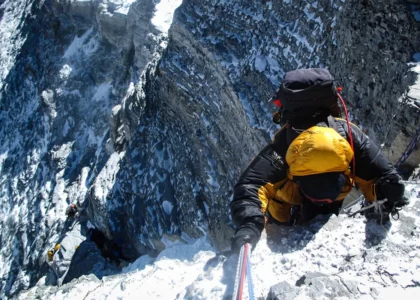

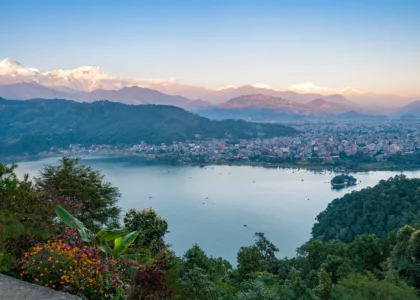
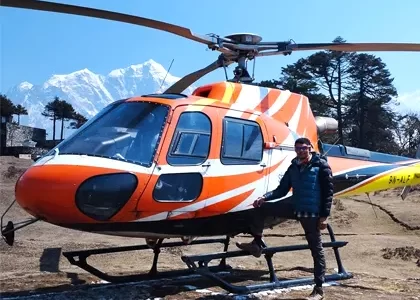


 Enjoy Himalayan scenery with the help of Nepal’s best guides with Government license holders and got training in first-aid, our Trip Leaders, know where you’ll find the best photos, most fascinating wildlife, and the best stream crossings.