Customize Your Trip





Need Help? Let's Talk
+977 985-1095800


10% OFF
Trip Duration 18 Days
Group Size 2-12 people
Maximum Altitude Kanchenjunga Base Camp (5,140m)
Difficulty Grade Difficult
Start & End Point Kathmandu/Kathmandu
Best Seasons Mar-May, Mid Sept-Dec
Highlights of Kanchenjunga Trek
- Home of different wildlife species like musk deer, snow leopard, blue sheep, red panda, blood pheasant, Asian black bear, and many more
- Walking in the beautiful Jungle of rhododendron, Pine, and Oak forests
- The high passes allow you to observe the remarkable views of the Kanchenjunga Range, Rathong, Jannu, and Kabru Range.
- Interact with the locals of Rai, Limbu, and Lhomi with their best hospitality.
- Close-up view of the world’s third-highest mountain, Kanchenjunga and Mt. Makalu
- Open for foreign visitors only from 1988
- A paradise for adventure lovers
- Beautiful glaciers
- Lifestyle and culture of ethnic groups: Limbus and Rais
- A pleasant walk through rhododendron forest and terraced fields
- Encounter Himalayan animals like bears, barking deer, and pandas
Overview of Kanchenjunga Trek
Kanchenjunga Trek is a remote trek in Nepal that lies in the eastern part of Nepal. Mount Kanchenjunga is the third-highest peak in the world. It is standing as the least explored and the least known. The Kanchenjunga base camp is the best choice for adventure lovers.
Our 18 day Kanchenjunga Trek follows the northern route to Pangpema, also known as Kanchenjunga North Base Camp, at approximately 5,140 m (16,864 ft). The journey passes through Ghunsa, Khambachen, and Lhonak before reaching the base camp area. After visiting Pangpema, we return along the northern route. This package does not include Kanchenjunga South Base Camp or the complete Kanchenjunga Circuit Trek.
There are challenges in the less-traveled region in Eastern Nepal, the border of Nepal and Sikkim. You will pass through the majestic Himalayas and waterfalls. We go through thickets of rhododendrons as well as highland forests.
During the hike, we will receive the best hospitality from different ethnic groups and encounter various highland flora and fauna. This Kanchenjunga region is a thrilling place in Nepal. It is a gift of the Earth full of alpine grasslands, rocky outcrops, dense temperate, subtropical forests, and low river valleys.
Along the way, the Kanchenjunga trek commences from Kathmandu. The nearest roads and airports are also far from the mountains. Our 18 day Kanchenjunga Trek begins in Kathmandu and continues through the eastern hills of Nepal toward Kanchenjunga North Base Camp.
The Rai and Limbu tribes live there towards the peaks of Jannu and Khabru and the high wall of Kumbakarna. Kanchenjunga and Rathong pass through some of the most beautiful high mountain scenery.
Visit the Kanchenjunga conservation area
The Kanchenjunga trek in the Conservation Area is the must-see place for this trek. It is spread over 2,035 sq km, the trail’s main attraction. The site has diverse wildlife, including the snow leopard, Himalayan black bear, musk deer, and red panda.
We also meet some Impheyan, pheasant, red-billed blue magpies, shy drongo, etc. It offers an infinite variety of landscapes and cultures. It provides panoramic views of the world’s highest Himalayas, like Everest. The best view of Mount Lhotse, Makalu, and Kanchenjunga helps to make the trek rewarding.
The camping expedition was more unusual and satisfying. During this region’s Kanchenjunga base camp trek, we will explore the untouched wilderness, providing the most beautiful and contrasting scenery.
It offers a variation of their rituals and traditions. The people of the area are cooperative and friendly. Their lifestyle is also simple as they remain untouched by modernity.
Kanchenjunga Base Camp Trek Itinerary at a Glance
| Day | Route | Walking / Travel Time | Accommodation | Meals | Altitude |
| 1 | Kathmandu Airport to Hotel | Airport transfer | Hotel | Dinner | 1,400 m |
| 2 | Complimentary Kathmandu City Tour | Full day | Hotel | Breakfast, Lunch, Dinner | 1,400 m |
| 3 | Kathmandu to Bhadrapur and drive to Taplejung | 45 min flight + 9 to 10 hrs drive | Guesthouse | Breakfast, Lunch, Dinner | 1,442 m |
| 4 | Taplejung to Chiruwa | 5 to 7 hrs | Guesthouse | Breakfast, Lunch, Dinner | 1,190 m |
| 5 | Chiruwa to Sakathum | 5 to 6 hrs | Teahouse | Breakfast, Lunch, Dinner | 1,640 m |
| 6 | Sakathum to Amjilossa | 5 to 6 hrs | Teahouse | Breakfast, Lunch, Dinner | 2,490 m |
| 7 | Amjilossa to Gyabla / Kyapar | 4 to 5 hrs | Teahouse | Breakfast, Lunch, Dinner | 2,730 m |
| 8 | Gyabla / Kyapar to Ghunsa | 4 to 5 hrs | Teahouse | Breakfast, Lunch, Dinner | 3,410 m |
| 9 | Ghunsa to Khambachen | 6 hrs | Camp | Breakfast, Lunch, Dinner | 4,150 m |
| 10 | Acclimatization Day in Khambachen | Rest day | Camp | Breakfast, Lunch, Dinner | 4,150 m |
| 11 | Khambachen to Lhonak | 4 hrs | Camp | Breakfast, Lunch, Dinner | 4,790 m |
| 12 | Lhonak to Kanchenjunga Base Camp and return to Lhonak | 6 to 7 hrs | Camp | Breakfast, Lunch, Dinner | 5,140 m |
| 13 | Lhonak to Ghunsa | 6 to 7 hrs | Camp | Breakfast, Lunch, Dinner | 3,410 m |
| 14 | Ghunsa to Amjilossa | 6 to 7 hrs | Guesthouse | Breakfast, Lunch, Dinner | 2,498 m |
| 15 | Amjilossa to Sakathum and drive to Taplejung | 6 to 7 hrs | Guesthouse | Breakfast, Lunch, Dinner | 1,442 m |
| 16 | Taplejung to Bhadrapur | 8 to 10 hrs drive | Guesthouse | Breakfast, Lunch, Dinner | 91 m |
| 17 | Bhadrapur to Kathmandu | 45 min flight | Hotel | Breakfast, Lunch, Dinner | 1,400 m |
| 18 | Final Departure | Airport transfer | — | Breakfast | — |
Kanchenjunga Base Camp Trek Route
The Kanchenjunga Base Camp Trek takes you into the remote eastern Himalayas of Nepal, following a gradual route from the lower hills toward the high mountain valleys around Kanchenjunga. The path starts at Kathmandu and extends to Bhadrapur then to Taplejung where the trekking part begins. Starting at Taplejung, we pass in order, Chiruwa, Sekathum, Amjilosa, Gyabla and Ghunsa, where as we ascend the terrain transforms to an alpine one.
The trail passes through the higher Kanchenjunga Valley after Ghunsa and is heading towards Khambachen and Lhonak. These parts entail greater downward hikes, rocky paths and colder temperatures. Lhonak is the last step to the North Base Camp region of Pangpema at an elevation of about 5,140 m.
After spending time around the base camp area, we retrace the route through Lhonak and Ghunsa and gradually descend toward the lower villages. The trek eventually connects back with the road at Taplejung before we return to Bhadrapur and Kathmandu. This route gives trekkers time to adjust to the increasing altitude while allowing several days to experience the different landscapes of the Kanchenjunga region.
| Route Section | Main Places | Approx. Highest Altitude |
| Kathmandu to Eastern Nepal | Kathmandu, Bhadrapur and Taplejung | 1,442 m |
| Lower Trekking Section | Chiruwa, Sekathum and Amjilosa | 2,510 m |
| Upper Valley | Gyabla and Ghunsa | 3,410 m |
| High Mountain Section | Khambachen and Lhonak | 4,790 m |
| North Base Camp Section | Pangpema | 5,140 m |
| Return Journey | Lhonak, Ghunsa, Amjilosa and Sekathum | Descending |
| Return to Kathmandu | Taplejung, Bhadrapur and Kathmandu | Lower elevation |
Itinerary of Kanchenjunga Trek
DAY
01
01
Day 01: Greetings at Kathmandu Airport, transfer to hotel.
On your arrival day, we will pick you up at the airport and transfer you to your hotel.
Accommodation
Hotel
Meals
Dinner
Altitude
Kathmandu (1,400m)
DAY
02
02
Day 02: Complimentary day tour of Kathmandu
After breakfast, we will meet for the special permit, check the equipment, and introduce your trek leaders. Furthermore, your tour guide will take you on a complimentary tour of Kathmandu Valley, covering temples, historical sites, and monuments.
Car
Accommodation
Hotel
Meals
Breakfast, Lunch, Dinner
Altitude
Kathmandu (1,400m)
DAY
03
03
Day 03: Kathmandu to Bhadrapur flight and drive to Taplejung
Today, we will pick you up from your hotel to start your Kanchenjunga base camp trek. We will then take you to the airport for your flight to Bhadrapur. Then, we will drive to Taplejung for about 9 to 10 hours. Tara Air also has a weekly flight to Suketar, but this flight is unreliable and gets canceled sometimes.
Multiple
45 min. flight, 9-10 hrs drive
Accommodation
Guesthouse
Meals
Breakfast, Lunch, Dinner
Altitude
Taplejung (1,442m)
DAY
04
04
Day 04: Taplejung – Chiruwa
After breakfast, we will start our Kanchenjunga base camp trek today. We will follow the east bank of Tamur. As the trail dips and rises along the riverside, we will see striking rocky fields and landslides. The trail will lead to a valley populated by the Limbus people.
We mostly trek in the narrow valley. At 1140 m, we descend to a wooden bridge across the Thiwa Khola. From here, the trail winds up and down along the riverbank of Chirwa. We will stay at the local lodge in the pleasant bazaar with a few tea houses and shops.
Walking Day
5-7 hrs
Accommodation
Guesthouse
Meals
Breakfast, Lunch, Dinner
Altitude
Chiruwa (1,190m)
DAY
05
05
Day 05: Chiruwa – Sakathum
We are walking north of Tamor River on a rolling trail to the Chhetri village Tapethok (1320m). This is a Kanchenjunga National Park checkpoint. We continue along the Tamur River valley, passing local settlements and crossing suspension bridges before reaching the junction of the Tamur and Ghunsa Khola rivers near Sekathum.
Trekking down to Tamur River and cross on a new suspension bridge, just above the confluence with the Ghunsa Khola. After walking short along the steep to a riverside, we camp near the Tibetan village of Sakathum.
Walking Day
5-6 hrs
Accommodation
Teahouse
Meals
Breakfast, Lunch, Dinner
Altitude
Sakathum (1,640m)
DAY
06
06
Day 06: Sakathum- Amjilossa
The first part of the Kanchenjunga base camp trek is narrow on the north bank. After a few ups and downs beside the river, you’ll reach some stone steps that scramble above the river to a waterfall. We get to the tiny hamlet of Ghaiyabari (2150m).
We start climbing again from here to the gorge bottom, which passes by Solima. We are walking along the gorge; hence, be careful while walking. We must follow today’s tricky trail, mostly uphill and downhill. We will arrive at the Tibetan settlement Amjilossa.
Walking Day
5-6 hrs
Accommodation
Teahouse
Meals
Breakfast, Lunch, Dinner
Altitude
Amjilossa (2,490m)
DAY
07
07
Day 07: Trek from Amjilossa to Gyabla / Kyapar
We are trekking on the easy trail until the Ghunsa Valley. You’ll feel the mountains getting closer as you climb to a flat ridge. You meander through a forest of bamboo, rhododendrons, and gnarled brown oaks, passing scattered pastures and waterfalls.
The steep climb starts from here and goes to Kyaprut. It is perched in the middle of terraced hills about 350m from the Ghunsa Khola. From there, we started climbing to the Sherpa village of Gyabla, called Kyapar.
Walking Day
4-5 hrs
Accommodation
Teahouse
Meals
Breakfast, Lunch, Dinner
Altitude
Gyabla (2,730m)
DAY
08
08
Day 08: Kyapar – Ghunsa
The first part of the trek is a steep drop. We walk through fir and rhododendron forests along the riverbank. We mostly trek in the yak pastures and potato fields of Phone (3210m).
Above Phone, the valley widens. The trail improves through fields and larch forests. It dips down to the riverbed before crossing to Ghunsa Khola. We cross a bridge to the village of Ghunsa overnight at a local guesthouse here.
Walking Day
4-5 hrs
Accommodation
Teahouse
Meals
Breakfast, Lunch, Dinner
Altitude
Ghunsa (3,410m)
DAY
09
09
Day 09: Ghunsa – Khambachen
Today, we head north, where the trail makes a gradual ascent through a forest of larch and juniper along the river’s east bank. After we cross the river bank, the path crosses a rickety, wood, and stone bridge to the west side of the river at Rambuk Kharka (3720m).
We glimpse the Jannu Glacier and later get a view of Jannu (7710m). Now, it is time to descend to the mountainside for our camp at Khambachen and stay overnight.
Walking Day
6 hrs
Accommodation
Camp
Meals
Breakfast, Lunch, Dinner
Altitude
Khambachen (4,150m)
DAY
10
10
Day 10: Acclimatization day in Khambachen
After almost a week today, we take a rest day to allow your body to adjust to the higher altitude. Get the stunning views of Mount Khabur (6332m), Phone (6645m), and Jannu at the east.
The snowcapped ridges beyond the Kanchenjunga Glacier loom dramatically to the north. Alternatively, you could try some nature Photography.
Accommodation
Camp
Meals
Breakfast, Lunch, Dinner
Altitude
Khambachen (4,150m)
DAY
11
11
Day 11: Khambachen – Lhonak
Today, we enter a desolate landscape gouged by the icy fingers of glaciers. We are trekking on the slopes of the pasture area of Ramtang (4350m).
From here, we trek through the lateral moraine of Kanchenjunga Glacier. We follow the river’s north bank and cross over to the Lhonak Glacier. The crown-shaped Mera Peak is on the valley’s east side (6344m). We arrive at our campsite at Lhonak.
Walking Day
4 hrs
Accommodation
Camp
Meals
Breakfast, Lunch, Dinner
Altitude
Lhonak (4,790m)
DAY
12
12
Day 12: Trek to Kanchenjunga Base Camp and return to Lhonak
After leaving Lhonak, we headed easterly. We remain close to the Lhonak Glacier on the northern ridges until we reach Kanchenjunga Base Camp at Pangpema. You get photo opportunities abound in the vast surrounding mountains. After this breathtaking experience, we return to Lhonak for the night.
Walking Day
6-7 hrs
Accommodation
Camp
Meals
Breakfast, Lunch, Dinner
Altitude
Kanchenjunga North Base Camp (5,140 m)
DAY
13
13
Day 13: Trek from Lhonak to Ghunsa
Today, we return to Ghunsa following the same route we took to reach Kanchenjunga Base Camp. This should take us between five and six hours. We will stay at Ghunsa for the night.
Walking Day
6-7 hrs
Accommodation
Camp
Meals
Breakfast, Lunch, Dinner
Altitude
Ghunsa (3,410 m
DAY
14
14
Day 14: Trek from Ghunsa to Amjilosa
After an hour’s trek, we descend to Phale. This place is home to several monasteries and juniper forests until we arrive at a grassy hillside where the tiny village of Amjilosa lies. The trek today should take about five to six hours in total. We stay in a guest house tonight.
Walking Day
6-7 hrs
Accommodation
Guesthouse
Meals
Breakfast, Lunch, Dinner
Altitude
Amjilosa (2,498m)
DAY
15
15
Day 15: Trek from Amjilosa to Sakathum & drive to Taplejung
Today, we start the day with a short ascent, and from here, the rest of the day, we descend a steep trail. Finally, we will arrive at Taplejung.
After some time, we reach the junction of the Tamur and Ghunsa Khola (rivers). After we arrive at Sakathum, we will take a jeep to Taplejung. We will spend the night at the guest house.
Walking Day
Approximately 6–7 hours, followed by a jeep transfer to Taplejung
Accommodation
Guesthouse
Meals
Breakfast, Lunch, Dinner
Altitude
Taplejung (1,442m)
DAY
16
16
Day 16: Drive from Taplejung back to Bhadrapur
Today, we need to drive long, about 9 to 10 hours after our Kanchenjunga base camp trek. The drive is through many small valleys and villages. We reach Bhadrapur, where we stay in a guest house for the night.
Jeep
8-10 hrs
Accommodation
Guesthouse
Meals
Breakfast, Lunch, Dinner
Altitude
Bhadrapur (91m)
DAY
17
17
Day 17: Bhadrapur flight back to Kathmandu
We fly back to Kathmandu via Bhadrapur in the morning. We will enjoy the Nepali farewell dinner in the evening and decide on the return journey.
Flight
45 min
Accommodation
Hotel
Meals
Breakfast, Lunch, Dinner
Altitude
Kathmandu (1,400m)
DAY
18
18
Day 18 : Final Departure
We will drop you off today at Kathmandu airport. We wish you the best of luck for the rest of your life and hope you have great experiences and adventures.
Meals
Breakfast
Kanchenjung Trek Cost Cover Details
What's Included?
- Airport transfers by private car.
- Accommodation in Kathmandu, including breakfast.
- Kathmandu day tour with expert tour guide and private vehicle
- Government license holder experienced trekking guide with all his expenses, clothing, and insurance.
- Trekking porter to carry your bag with all their expenses, clothing, and insurance.
- Flight ticket for Kathmandu to Bhadrapur and back to Kathmandu.
- Transportation from Bhadrapur to Suketar and Taplejung to Bhadrapur by sharing a Jeep.
- Transportation from Sakathum to Taplejung by sharing a Jeep
- All meals during trekking are three meals a day (Breakfasts, lunches, and dinners).
- Trekking Permit for Kanchenjunga Trek.
- Trekker’s information management system (TIMS) card fee.
- Group medical supplies (first aid kit will be available).
- Above the Himalaya duffel bag. ( If you need to, please let us know before you book the trip and remind us during our pre-meeting at our office.)
- Comprehensive pre-departure information and trip dossiers
- Above the Himalaya Gifts and trekking certificate
- Welcome/Farewell Nepali Dinner in Kathmandu
- All trip info, Official work, Service charges, and all Government Taxes
What's Excluded?
- Lunches and dinners in Kathmandu, except for the meals specifically included in the itinerary, such as the welcome or farewell dinner.
- Nepal entry visa fee: you can get a Nepal visa upon arrival at the Airport.
- International airfare/airport tax and entrance fee for Kathmandu day tour.
- Alcoholic, hot and cold drinks, hot water, hot and cold showers.
- Personal expenses include laundry, telephone calls, sweets, snacks, beverages, bar bills, and camera battery charging.
- Travel Insurance should cover rescue and medical.
- You can rent or buy personal trekking equipment in Kathmandu.
- Gratitude to the trekking staff and driver
- Any other expenses which are not mentioned in the Price Include section.
Flexible Booking and Cancellation Policy
At Above the Himalaya Trekking, we understand that travel plans may change. Our booking policy provides clear terms and flexible options to help you plan your Himalayan adventure with confidence.
A 20% non-refundable deposit is required to confirm your booking, with the remaining balance payable upon arrival in Kathmandu/Pokhara before your trek begins. Departure dates can be changed free of charge at least 30 days in advance, subject to availability.
If you postpone your trip at least 30 days before departure, your deposit can be applied toward another trip within one year, subject to availability and any price differences. Date changes are not permitted within 30 days of departure, and no refunds are provided for early departures or unused services once the trip has started.
For complete details, please read our Booking and Cancellation Terms.
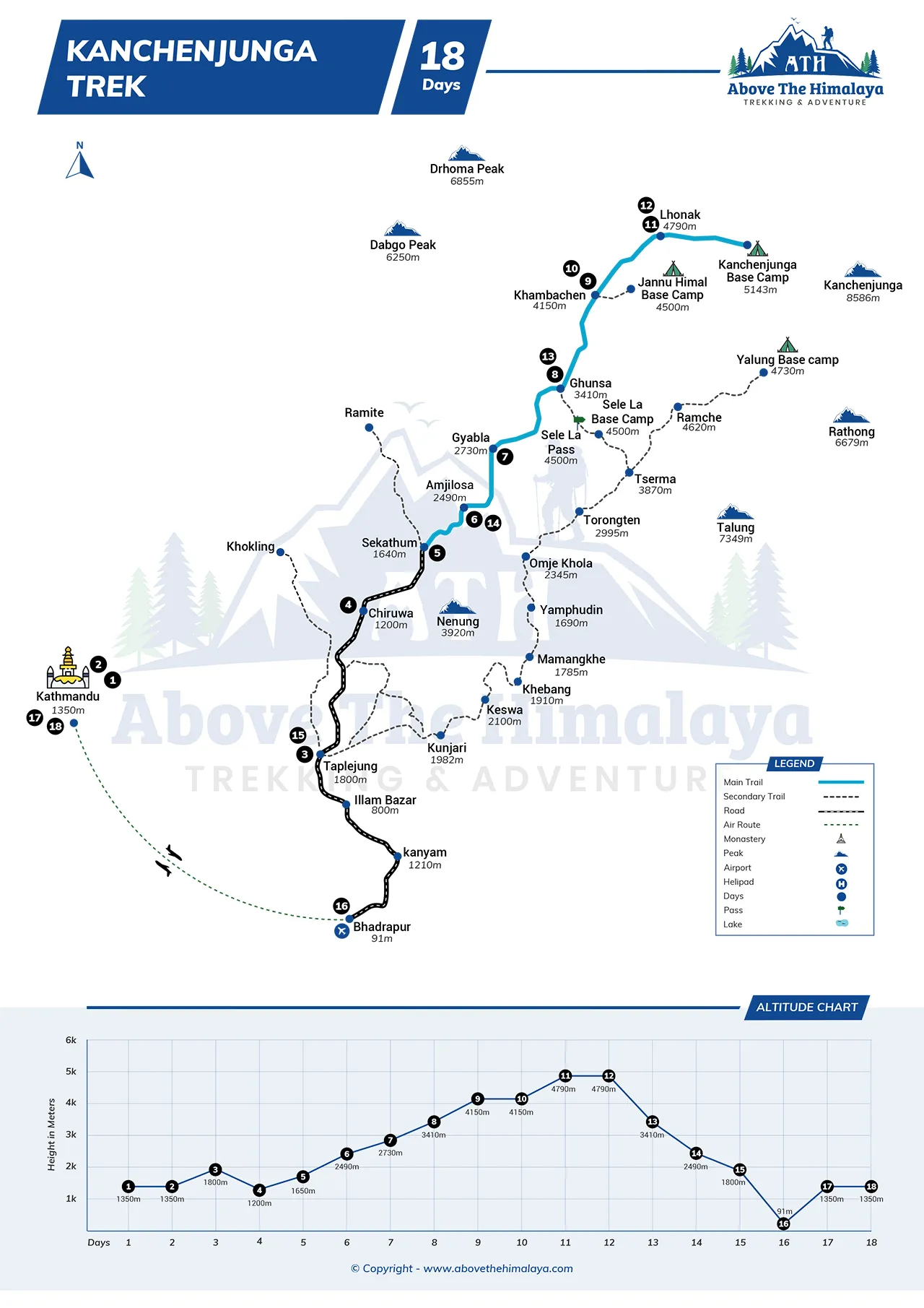
Route Map & Altitude Chart
Kanchenjunga Trek Cost
The cost of our 18 day Kanchenjunga Trek starts at US$2,450 per person for a minimum of two trekkers. The package includes the services listed in our trip inclusions. Prices may vary depending on the number of travelers, departure dates, and any additional services requested. We provide a detailed quotation before confirming your booking.
If you want to get a guide and porter service and arrange a permit, we can also do that and quote you a separate cost. We need a Kanchenjunga conservation area project permit. We also need additional special access for the trek in the region.
Our Kanchenjunga trek cost includes the Guide and Porter costs, too. Nepal has many trekking areas where you can go on a trek without a guide. But for the Kanchenjunga base camp trek, you must have a guide. Our guide and porter’s cost includes their food, accommodation facility, and insurance.
Compared to other treks in Nepal, the cost of food and accommodation is expensive for the guide. The price is similar to tourists. Our Kanchenjunga trek also includes the cost of the flight and transportation services. We can fly from Kathmandu to Bhadrapur or Kathmandu to Suketar, Taplejung. The round-trip flight from Kathmandu to Bhadrapur will cost you USD 270 per person.
If we take a flight to Suketar and Taplejung, the cost will be USD 300-350 per person. From Bhadrapur, we must take a local jeep to the trek’s starting point in Kanchenjunga. So, the high cost of transportation increases the Kanchenjunga base camp price.
| Cost Factor | Details |
| Package Cost | US$2,450 per person |
| Minimum Group | 2 trekkers |
| Guide | Included |
| Porter | Included |
| Meals | Included during trek |
| Permits | Included |
| Flights | Kathmandu to Bhadrapur and return |
| Ground Transportation | Included as specified |
Some Side Trips In Kanchenjunga Base Camp Trail
While on the Kanchenjunga base camp trek route, you can also do some side trips after your camp. These secondary trips can help you explore some hidden gems in the mountains. It is better to take side trips to give your body the time to acclimatize at higher elevations. Here are some significant side trip stops in the Kanchenjunga Base Camp route.
Ghunsa
Ghunsa is a small village in Taplejun District. It is a major checkpoint for Mt. Kangchenjunga and the economic center of the upper Kanchenjunga region. The town is also famous for its modern lodges and facilities.
It lies at an elevation of about 3500 meters. Ghunsa is perfect for the first acclimatization break. Ghunsa Monastery and Nupchu Pokhari are the main side trips from the village. Ghunsa is the highest permanent settlement in the valley and a 5,500-meter high pass north of Tibet.
Khambachen
It is our resting place during the Kanchenjunga base camp trek. It is suitable for exploring around. You have many options for short and moderate side trips from here. The trips to Nupchu Khola Valley and Jannu Base Camp are the most amazing of many. Similarly, the views of mountains and glaciers are majestic from here.
The high peaks are Kanchenjunga, Khabour, Phole, Nango Ma, and Jannu. Climb a ridge above the village for more views, or hike to the Jannu base camp.
Yamphudin
From Yambhudin, we can make a day trip to Timbung Pokhari. A brief exploration of Yamphudin allows you to admire the natural side of the trek. Before starting the tour, we can also explore other popular trips. We can go for the Ilam exploration and the Pathibhara temple hike.
Kanchenjunga trek best time
Weather and temperature are the most critical factors determining Nepal’s best trekking season. March to May and September to November are the busiest Kanchenjunga trek season.
Heavy snowfall occurs in the winter season. Snow falls from December until February in the upper part of the trek trail. So, the course may be inaccessible. June to August is the rainy season. We do not recommend trekking in the winter and rainy seasons for the Kanchenjunga trek. The best time for the Kanchenjunga trek is October and April.
We will visit the more remote villages in the Kanchenjunga trek.
In Kanchenjunga trek villages are more prosperous than elsewhere in Nepal. But the further you go, the more isolated the communities will be. You can join the local people. They welcome you with a heart-warming drink of hot Tongba, the fermented millet drink of the East.
We will trek through the lush farmland and wooded valleys. They give way, higher up, to breathtaking mountain scenery. It includes close-up views of Kanchenjunga Base Camp. We get the distant sights of the mountains of Khumbu. The best things to see along the way are monasteries, chortens, temples, and prayer walls.
While we trek further, we can also see the blue sheep. People believe that the abominable snowman ‘YETI‘ exists in the region. With all its features, this route has been the most popular trekking route among foreigners. It is also one of the most demanded trekking packages.
We will get an in-depth experience of the local people’s lifestyle, flora and fauna. We get the mesmerizing panorama view. We will mainly explore the area of Mount Kanchenjunga (8,586m). It is the third-highest mountain in the world.
The area offers a variety of scenery. You can see lush tropical jungles and rhododendron forests. In the alpine zone, chestnut and oak woods are at higher altitudes. Rai and Tibetan Buddhist people run the local village. We can observe a diversity of Nepalese culture and lifestyles.
The journey to the base of the world’s third peak, Mt. Kanchenjunga, offers an infinite variety of landscapes, cultures, and the Himalayan panorama. We walk on rice-terraced fields in the lowlands of Nepal, passing by beautiful villages and green forests. The trek goes into a ridgeline of rhododendron forests.
Kanchenjunga Base Camp Trek
Kanchenjunga North Base Camp Trek is a short-hour trek. It is best for those who like exploring Nepal and some remote regions. This mountain is the third-highest in the world. It stands at 8586 meters, striding the border between Nepal and India. Mount Kanchenjunga is a remote mountain with eleven peaks higher than 7000 m.
Suppose you are looking for a less explored region of the mountain. The Kanchenjunga base camp trek is one of Nepal’s most beautiful hiking adventures. We can shorten the hike by taking a jeep drive and offer you a peaceful time throughout the adventure. Unlike the Everest or Annapurna regions, fewer trekkers are at the Kanchenjunga base camp. So you will have a wonderfully relaxed walking experience.
We start the trek from the lower middle hills and valleys and go to the high mountain wilderness. While you will explore and enjoy cultural and natural wonders during the walk.
The dramatic views of other mountains reward us during our trek. As we reach a higher elevation, we will explore and experience some isolated but remarkable village cultures. Compared to other trekking in Nepal, it is a long trek, but the adventure is certainly worthwhile. One can experience trekking like nowhere else.
Summary Trek Itinerary
We will take a 45-minute flight from Kathmandu to Bhadrapur to begin the Kanchenjunga trek. From here, we can drive by local jeep to Taplejung. The short itinerary details are as follows.
Meet at Kathmandu Airport. Make permit arrangements. After the Kathmandu sightseeing tour, we fly to Bhadrapur and continue by road to Taplejung, where the trekking journey begins. We will trek to Kangchenjunga base camp and return to Taplejung. Travel back to Kathmandu, have a spare day, and make the final departure to your home.
We will start the trek. The route begins by approaching the north side of Kanchenjunga. You will have great views of Tent Peak, Nepal Peak, and Cross Peak before the bulk of Kanchenjunga becomes visible.
Kanchenjunga Base Camp trek is challenging, as is level trekking.
First and foremost, we would like to address the difficulty of trekking at the Kanchenjunga Base Camp Trek. It is not in the accessible segment of trekking. However, this trail is also relatively easy. We consider the Kanchenjunga Circuit Trail to be a moderately complex trek. The tour is tricky if you only visit Base Camp Trekking in Kanchenjunga, which might take 2 to 4 weeks. This time also makes the trek more challenging than shorter ones. Similarly, the off-the-beaten-track trail could be more populated. There are also a few settlements once we go to the higher elevation.
Considering all these, one must only trek with a local guide. It will make the trek safer and more accessible. We suggest warm-up hikes or shorter treks for physical wellness in the Kanchenjunga area.
Kanchenjunga North Base Camp vs South Base Camp
Kanchenjunga can be approached from both the northern and southern sides, and the two routes provide different trekking experiences. The North Base Camp route leads toward Pangpema and reaches a higher elevation, while the South Base Camp route approaches the mountain through Tseram and Ramche toward the Oktang area.
Our 18 day Kanchenjunga Base Camp Trek follows the northern approach and reaches Pangpema at approximately 5,140 m. The route is known for its high alpine surroundings, glacier views and close views of the northern side of Kanchenjunga. Trekkers looking to visit both sides of the mountain need a longer itinerary that combines the northern and southern routes.
| Feature | North Base Camp | South Base Camp |
| Main Destination | Pangpema | Oktang |
| Approx. Highest Point | 5,140 m | Around 4,700 m |
| Main Approach | Lhonak | Tseram and Ramche |
| Route Character | High alpine valley and glacier terrain | Alpine valleys and southern mountain landscape |
| Your 18 Day Package | Yes | No |
| Suitable For | Trekkers wanting the northern base camp experience | Trekkers wanting the southern approach |
The two routes should not be treated as exactly the same trek. When booking, it is important to check whether the itinerary reaches Pangpema, Oktang or both. Our package specifically follows the North Base Camp route.
Kanchenjunga Trek Package
The Kanchenjunga trek package is one of Nepal’s most isolated and beautiful treks. Due to its isolation, only a few trekkers visit this region, enabling Kanchenjunga Base Camp Trekking to preserve its charm and beauty.
The Kanchenjunga trek package is a treat for adventure-loving people. People who have trekked with us in the past of the slopes and passes in the Kanchenjunga regions have reveled in their success. Trekkers who have taken the challenge and succeeded, and it was a thrilling time for them. The trekking route of this remote part of Nepal offers the best mountain view. It provides its unique Tibetan and Buddhist lifestyle.
We offer the best trekking package for the Kanchenjunga north base camp trek. Our quality services at the best prices make our adventures great value for money. Our trip package cost covers all meals, trekking staff, transportation, and other logistics.
We have been organizing the Kanchenjunga north base camp trek since 2007. We have worked with more than 1000 customers. We are offering an eco-friendly trekking package. Furthermore, this challenging trek underscores our superb logistics and crew in Nepal. It embodies the essence of Above the Himalayas travel philosophy.
Kanchenjunga Base Camp Trek Weather
Weather conditions on the Kanchenjunga route vary with altitude and season. The lower sections around Taplejung and the forested valleys can be warmer, while the upper sections around Ghunsa, Khambachen, Lhonak and Pangpema are considerably colder. There is also a possibility of snow and strong wind impacting the elevated areas of the trail, especially in winter.
The season between March and May usually offers good trekking conditions, as temperatures in the lower regions get progressively warmer, and the mountains are clear when the weather is not changing. Another popular time is autumn, especially September to November, when the skies tend to be clearer following the monsoon. Mid September until December is also included in the recommended travel period listed in your package.
Eastern Nepal receives a lot of rain in monsoon months between June and August. Trails may get muddy and slippery, clouds may make mountains less visible and rain may have an impact on road travel. During winter, it is extremely cold and there may be snowfall at higher altitudes, hence trekkers should be ready to face tougher conditions.
| Season | General Weather | Trail Conditions | Trekking Suitability |
| Spring | Mild lower areas and cold higher areas | Generally good | Good |
| Monsoon | Frequent rain and cloudy conditions | Wet and muddy | Less suitable |
| Autumn | Clearer skies and stable weather | Generally good | Best |
| Winter | Very cold with possible snow | Snow and icy sections possible | More challenging |
Kanchenjunga Base Camp Trek Preparation
Good preparation is important for the Kanchenjunga Base Camp Trek because the itinerary involves several consecutive days of walking and reaches approximately 5,140 m. The trail includes steep ascents and descents, rocky sections and long walking days, so physical preparation should begin well before the trek.
Regular walking is a good starting point. Gradually increase the distance and include uphill and downhill routes in your training. Stair climbing, hiking and other cardiovascular activities can help improve endurance, while simple leg and core exercises can prepare your body for carrying a daypack and walking on uneven terrain.
It is useful to include a few longer walks on consecutive days during your preparation. This helps you understand how your body responds to repeated activity and gives you an opportunity to test your trekking boots, clothing and backpack before departure.
Altitude preparation is also important. The itinerary includes gradual progression through the lower valleys before reaching Ghunsa, Khambachen, Lhonak and Pangpema. Walk at a comfortable pace, stay hydrated and allow your body to adjust as you gain elevation. If you have any existing medical concerns, discuss your planned trek and altitude exposure with a qualified medical professional before travelling.
Mental preparation is equally useful. The Kanchenjunga region is remote, and facilities become more basic as you move farther into the mountains. Being prepared for simple accommodation, limited connectivity and changing weather will make the trek more comfortable.
Accommodation During the Kanchenjunga Trek
Accommodation on the Kanchenjunga Base Camp Trek changes according to the location and altitude. In Kathmandu, we stay in a hotel, while the lower trekking villages generally provide local guesthouses or teahouses. These establishments are simple but provide a place to sleep, eat and rest after each walking day.
As the route moves into the higher and more remote sections, accommodation becomes more basic. Khambachen and Lhonak have limited facilities compared with the lower villages, and camping is used for the remote sections included in our package. The Base Camp area does not have the same accommodation facilities found in larger trekking regions, so trekkers should be prepared for basic mountain camping.
Rooms in the trekking villages are generally simple, with basic beds and shared facilities. Private bathrooms and hot showers are not consistently available, especially at higher elevations. Electricity can also be limited, which is why carrying a power bank and keeping electronic devices charged whenever facilities are available is recommended.
Our team will arrange the required accommodation and camping support according to the itinerary. The accommodation type for each night is also provided in the detailed day by day itinerary so you can understand where you will stay throughout the trek.
Mobile Network, Wi Fi and Charging Facilities
Mobile network coverage on the Kanchenjunga Base Camp Trek becomes less reliable as the trail moves deeper into the mountains. Some lower villages may have mobile service, but coverage can be weak or unavailable in remote sections. Trekkers should therefore avoid relying on a continuous phone signal throughout the journey.
Wi Fi is also limited compared with popular trekking routes in Nepal. Some guesthouses may provide internet access when available, but it should not be considered a dependable service at higher elevations. The remote sections around Lhonak and Pangpema have very limited communication facilities.
Electricity and charging facilities vary between villages. Charging may be available at some teahouses for an additional fee, while remote camping sections may have no regular charging facilities. Carrying a reliable power bank is strongly recommended. If you are carrying a camera, extra batteries are also useful.
It is a good idea to download important travel information, maps and documents before leaving Kathmandu. Your phone should also be kept on low power mode when possible. This is particularly useful during longer periods without access to electricity or mobile network.
Travel Insurance and Emergency Evacuation
Travel insurance is an important requirement for the Kanchenjunga Base Camp Trek because the route reaches approximately 5,140 m and passes through remote mountain areas. Medical facilities are limited once we move away from the lower settlements, so trekkers should have appropriate insurance before starting the journey.
Your insurance policy should cover trekking at the maximum altitude of this itinerary and include emergency medical treatment and evacuation. Helicopter evacuation coverage is particularly important because road access is not available from the higher sections of the route. Before purchasing a policy, check the altitude limit and confirm that trekking in the Kanchenjunga region is covered.
If a serious illness, injury or altitude related problem occurs, our guide will assess the situation and coordinate the appropriate response. Depending on the location and circumstances, this may involve assistance from local health facilities, walking support to a lower elevation, road transportation or helicopter evacuation.
Travel insurance does not replace careful trekking practices. Follow the advice of your guide, maintain a suitable walking pace, stay hydrated and inform the guide immediately if you experience unusual symptoms at altitude. Carrying a copy of your insurance details and emergency contact information is also recommended.
Trekkers should understand that the cost of emergency evacuation may need to be settled through the insurance provider or by the traveller according to the terms of their policy. Always check the exact conditions of your insurance before departure.
Frequently Asked Questions About the Kanchenjunga Trek
Yes, itinerary may be changed based on your time and preference to trek. Before we finalize your trip, we can talk about alterations to the standard route, extra days, or rest days, or private transportation.
Beginners can take into consideration this path in case they are physically ready to spend days walking long distances and being in the mountains, in the distant areas. One should have prior high altitude trekking experience but regular preparation and appropriate pace are more significant than merely having completed another trek.
The mountain visibility is affected by the weather and cloudy conditions. The trail is allowed to enter the higher valleys in which Kanchenjunga and other nearby mountains can be viewed, and the views become increasingly good between the Lhonak and Pangpema areas.
Depending on the circumstances and time, there are also side trips to be made around places like Ghunsa and Khambachen. Ghunsa Monastery, Nupchu Pokhari, the Nupchu Khola Valley and the Jannu Base Camp area have been specifically listed in your package as potential side trips.
Kanchenjunga area does not have many trekkers and remote settlements as compared to popular trekking zones like Everest and Annapurna. It offers traditional mountain villages, diverse landscapes, and views of Mount Kanchenjunga, the world’s third-highest mountain. The trip is also a mix of varied scenery, local people, wild life and high mountainous terrain which lends the trek a more remote aspect.
The Kanchenjunga Trek requires a Kanchenjunga Conservation Area Permit (KCAP) and a Restricted Area Permit (RAP). The restricted area permit must be arranged through a registered trekking agency in Nepal. Our team organizes the required permits before departure, and the permit costs are included in our trekking package.
Yes. The Kanchenjunga region includes restricted trekking areas where independent trekking is not permitted. Travelers must arrange their trek through a registered trekking agency and be accompanied by a licensed trekking guide. Above the Himalaya Trekking provides an experienced local guide throughout the trek.
The 18 day Kanchenjunga North Base Camp Trek is a challenging high altitude trek. The route includes steep ascents, rocky trails, remote mountain terrain, and long walking days. Trekkers reach approximately 5,140 m at North Base Camp (Pangpema). Good physical fitness, previous hiking experience, and proper acclimatization are important. Beginners should consider additional preparation and a longer itinerary with more acclimatization time.
Reviews on Kanchenjunga Trek
Posted on Tripadvisor 

H H
9 December 2025
 Verified
Thank you for the best tour we have ever had!
I planned to stay at the Everest View Hotel this time and travel there because I wanted to see Everest, the highest mountain in the world, slowly, but despite the short schedule due to my children's school, all I got was a response that it was difficult to contact several tour companies. The Himaraya Trekking, Above, has worked out a smooth and safe schedule and had the best experience for me and my family. I will never forget the view of Mount Everest. Thank you very much.
Posted on Tripadvisor

Mike F
26 November 2025
VerifiedAnother Amazing Trip with Above the Himalaya
This is my 3rd trip with Above the Himalaya and Puru. Each trip with Puru has exceeded expectation with the quality of the guides, porters and attention to detail. We were a team of 5 trekker and our ages were all above 67 years of age with the oldest being 73. We are all experienced hikers and trekker and our plan was to trek up the Khumbu Valley to the Cho La pass to Gokyo to the Renjo La pass to return to Lukla. However, the weather altered our plans as Cyclone Montha blanketed the country in rain at lower elevations and significant snowfall at the upper elevations. Due to the weather, no one was trekking and everyone was staying put in their current location during the storm. All the passes were closed due to the deep snow. We were in Namche when the storm was blanketing the country.This is where Above the Himalaya really shines is in the ability to adapt to the changing conditions and our safety. In conversation with our lead guide, we decided to alter our route to trek through the Gokyo valley to reach Gokyo and then do the Renjo La pass. Sitaram our lead guide and Dhurba our assistant guide was both attentive to the changing conditions and always kept a keen eye for how we were doing and feeling on the trek. The pacing was excellent as none of us had any hint of altitude sickness as we reached a maximum elevation of 5,365m.Having trekked and hiked all over the world with different tour companies, Puru’s company is simply the best. The communications, focus on safety, the guides and staff, the accommodations, and the food are all amazing. All you have to do is focus on the beauty of the mountains, enjoy the joyfulness of the Nepali people and have fun exploring the trails. I am planning my next trip with Puru for 2027 as there is no other trekking company to match Puru’s level of service.
Posted on Tripadvisor

Mie K. A.
25 November 2025
VerifiedTake a small step into the Himalayas
I went with Above The Himalaya Trekking’s Everest View Hike in November 2025 and can only recommend with my whole heart!I had never visited Nepal or the Himalayas before and had a life long dream of seeing Mt Everest. I had though, hiked a lot in various parts of the world, but never above 2000 m, so I went with the five day Everest View Trek to take a small step and see how I would handle the altitude. From first enquiry about dates and various questions, to my arrival back from the trip, Puru has been an invaluable help, always standby on mail and WhatsApp, pulling strings and making things happen.Also big shout out to the amazing guide I was teamed with, Kamal, who did everything he could to answer all my curious questions about vegetation, animal life, Nepalese culture and everything in-between :) Kamal was the perfect gentleman, offering little treats and reminding me to take breaks, and all in all I felt very safe and in good hands all the time. He also had good banter and jokes, which lifted the spirit of even the hardest climb.It was cold most nights and mornings and even though the tea houses provided heavy blankets (and I could borrow extra) I was glad I had the sleeping bag with me, which I rented through Puru. But I could definitely have survived without and saved the space in my pack.In total, I’m very pleased I’ve got to experience this lovely country with Above the Himalaya Trekking and if I ever come back for the big leap into the mountains, I’ll chose Kamal and Puru all over again :)
Posted on Tripadvisor

nameless
25 November 2025
VerifiedNepal trek-Gokyo
Second trek with Above the Himalaya, this time to Gokyo and over Renjo La. Our lead and assistant guides (Sitaram and Dhurba) were excellent. Due to several days of rain at lower elevations and snow higher we needed to change our plans while in the midst of our trek. Above the Himalaya accomplished this smoothly and flawlessly, which ultimately resulted in a better experience. We’ll be back!
Posted on Tripadvisor

Yu S
22 November 2025
VerifiedGreat Experience and Friendly people.
We had a great time with Above the Himalayas tour company in Oct. Ajay, the tour guide in Kathmandu is very friendly and knowledgeable. He took us to a lot of places that we can experience local authentic daily life. Puru, the owner, arranged and organized our trip in such way that we really feel comfortable and enjoyable. We are specially impressed by his quick action and management skills. Our flight to Pokhara got cancelled due to bed weather. Within minutes, Puru was able to arrange a car and a driver to drive us to Pokhara! It saved out trip.
Posted on Tripadvisor

Sally M
14 November 2025
VerifiedGlorious trekking experience - ABC
We had the most wonderful experience doing the Annapurna Base Camp trek with our fabulous guide, Tanka, and porter, Ravi. The trek was glorious, despite some rainy days, and although we weren't sure we would get to see the peaks at ABC, the weather cleared just in time and we had an amazing sunrise there. What made the whole trip so special, though, were Tanka and Ravi, who remained cheerful at all times and went out of their way to make everything as good as it could be. This included setting a pace with regular breaks which made the walking completely manageable, modifying the itinerary so we could visit additional villages, getting up in the middle of the night to see if the sky would be clear for sunrise, and bringing a sense of ease and humour to all our interactions. We just loved the whole thing and are keen to return to Nepal for another trek. It was magical!
Posted on Tripadvisor

Peter E
27 October 2025
VerifiedAbove the Himalayas goes above and beyond expectations!
From start to finish everything was perfect! Puru, the managing director, was always quick with his responses to my questions when I first contacted him about planning our trek, and he continued to check to see that everything was going well throughout.Our guide Tanka and porter Ravi were fantastic! Their friendly demeanor kept our experience lively and interesting the entire time and made sure that we were well taken care of. Even small details like Ravi coming in and double checking our rooms to see that we had left nothing behind before leaving each morning, and seeing that meals were prepared the way we liked them weren't overlooked. Tanka was also quite knowledgeable about the mountains, the people, and just about everything "Nepal". He enthusiastically shared stories about his family and Nepalese life in a general way.Although there was a clear itinerary each day, and for the whole trek, Tanka allowed for flexibility in terms of time and where to stay. He was even willing and able to make changes to same-day accommodation based on how far we anticipated hiking that morning. I can't say enough about how much we enjoyed our hike and I would definitely recommend Above the Himalayas for anyone considering a trek.
Posted on Tripadvisor

Akane U
25 October 2025
VerifiedAmazing tour
For me and my son, Pru thought of a four-day trekking tour.His interaction was very smooth.On the first day, I went with my son to Gandrouk, and on the second day, he went to a higher place (mulde view point, Poon hill) with his guide Ashok. Ashok was very kind and took me to various local places. The food was also very good.My guide, Tangka, was very kind and helped me a lot.I recommend this travel agency because it's great.
Posted on Tripadvisor

Daniel F
24 October 2025
VerifiedEverest Base Camp Trek
My friends and I just completed the EBC trek. From the time I met Puru at the Canada Place trade show in Vancouver BC, Canada I felt comfortable going to Nepal. His communications via WhatsApp were seamless answering all our questions. Everything went exactly according to plan. Our guide Suresh was amazing. He took very good care of us the whole time. From guiding us to making sure we had everything we needed to be happy. The food the whole way up and back was amazing! 5 ⭐️. Our 2 porters were great as well. I have a whole new respect and appreciation for what they do. They are the true hero’s to what we can do as a team. We chose the basic trek the lodging was to be expected. If I was to do again I would choose the luxury trek. The hotels in Kathmandu at the Hotel Aloft and the Hotel Lo Mustang were top notch as well as the buffets. Highly recommend this local company!
Posted on Tripadvisor

adrienne h
24 October 2025
VerifiedGreat tour, would recommend!
My friend and I completed the 10 day Annapurna circuit with Above Trekking Himalaya. Buddha our porter was a little mountain goat, pocket rocket. When I got altitude sickness he carried my bag, as well as mine and my friend’s big pack. He was friendly and loved to played cards with us, always with a cheeky smile on his face. Sitaram our guide was very knowledgeable of the area and quite serious. He was always available if we had any questions and went above and beyond to try get us the best/quietest rooms in the tea houses. Puru was fabulous working behind the scenes to ensure our trip was as smooth as possible. He was very quick to respond to any messages. It was a great experience to see Nepal with some locals and I certainly appreciated their support when I succumbed to altitude sickness. They stayed close to us the whole time and checked in frequently making us feeling safe and supported the entire time.
Verified by Trustindex
Trustindex verified that these reviews were published on Above the Himalaya Trekking - Private Day Tours's Tripadvisor profile. Learn more

David jones
USA
Thrilling Experience

The Kanchenjung trek was fantastic. I, with my fiance, enjoyed it a lot during the Trek. The boss, Puru, was accommodating and caring. The guide was fluent and knowledgeable. Thank you for such a great Trip. I will recommend this company to all my relatives and friends.
David Jones
10% OFF
Book with Confidence
- Easy Booking: Secure your trip with just a 20% deposit.
- Flexible Date Changes: Free changes at least 30 days before departure.
- One-Year Deposit Credit: Use your deposit for an eligible postponed trip within one year.
- Private & Personalized: Flexible itineraries and group sizes.
- Experienced Local Guides: Professional guidance and support throughout your trek.
- Best Value: Competitive prices with clear package inclusions.
Your Trek Leader
 Enjoy Himalayan scenery with the help of Nepal’s best guides with Government license holders and got training in first-aid, our Trip Leaders, know where you’ll find the best photos, most fascinating wildlife, and the best stream crossings.
US$ 2450 Per Person
Have Questions?Talk to Expert
Meet Mr. Purushotam Timalsena (Puru), Nepal's best trek and tour organizer, who has been working in the Himalayas for more than 24 years.
WhatsApp/Viber +977 98510 95 800



You May Like





Trips for All
Private Trip
Peaceful tour with your travel buddy and guide
Small Group Travel
Travel with people having similar adventure dreams
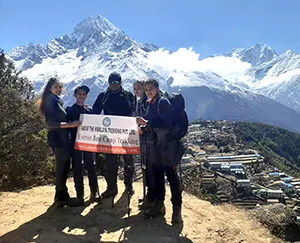
Trips for Kids
Calling all young adventurers - join us for a journey of a lifetime!
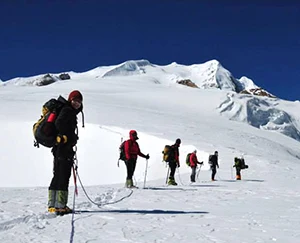
Trips for Adventurers
Climbing & mountaineering adventures for thrill-seekers