Customize Your Trip
 Hiking in Nepal: Best Hiking Trails, Places, Costs & Complete Guide

Nepal is a country of hills, mountains, forests, traditional villages, river valleys and walking routes. The country is known for long walks to the mountains of Everest and Annapurna but that doesn’t mean you have to spend two or three weeks in the mountains to enjoy walking in this country. Hiking in Nepal can be quite different, ranging from a hike around Kathmandu Valley to a trek through the foothills of the Himalayas for several days.
Hiking is ideal for those who want to enjoy the outdoors without the high altitude and long trek involved. Routes may be completed in a few hours or days depending on the route. One can traverse forests, agricultural villages, ridges, monasteries and mountain viewpoints depending on where the hike will lead.
This guide covers the primary hiking trails, fees, times of year, difficulty, permits, lodging, preparation and more about the area to consider before heading out.
Quick Facts About Hiking in Nepal
| Category | Details |
| Best seasons | Spring and autumn |
| Main hiking months | March to May and September to November |
| Typical duration | Half day to 5 days |
| Difficulty | Easy to moderate, depending on route |
| Accommodation | Hotels, guesthouses, homestays and trekking lodges |
| Common starting areas | Kathmandu, Pokhara, Nagarkot, Dhulikhel and villages near major trekking regions |
| Guide requirement | Depends on the route and current trekking regulations |
| Main attractions | Mountain views, forests, villages, temples, monasteries and rural landscapes |
| Typical daily walking | Around 3 to 7 hours |
| Suitable for beginners | Yes, on many lower altitude routes |
Why Go Hiking in Nepal?
One of the reasons why travellers opt for hiking in Nepal is that they can see a range of landscapes within a short distance. You can be in the heart of the city and, after a short drive, walk through a forest, farm or small settlement. This is a benefit to anyone with short time limits who wants to do hiking.
It is also a good intro to the rural lifestyle of the country on the best hiking trails in Nepal. Frequently, trails will cross terraced fields, traditional homes, Buddhist monasteries, Hindu temples, local tea shops and farming communities. These walks provide opportunities to see other parts of Nepal that are not easy to access on the main roads.
The other benefit is flexibility. Several short day hikes are possible or multiple routes can be linked together to make a multi-day hike. A lot of lower elevation walks will not involve as much preparation as a high altitude walk.
Best Hiking Trails in Nepal
Walking trails can be found all over the country but the most available walking routes and short hiking trips are in Kathmandu and Pokhara. Some of the routes are themed around mountains; others are for forests and villages, religious sites or tranquil countryside.
1. Nagarkot to Changunarayan Hike
Nagarkot to Changunarayan is among the popular hiking routes in Nepal around Kathmandu. Nagarkot is located at an elevation of approximately 2175m (7136 ft) and it offers views of the Himalayan ranges when the weather is clear.
The walk goes through rural settlements, fields, forests and on hillside roads and then arrives at Changunarayan. The temple complex is located at a height of about 1500 m and is considered significant both historically and religiously in the Kathmandu Valley.
The hike is completed by most people in about 4-5 hours. There is more down than up on the trail, so it is within the ability of hikers with fair fitness.
2. Shivapuri Nagarjun National Park Hike
Shivapuri is one of the most popular trekking destinations for tourists in Kathmandu to hike. The national park preserves forested hills to the north of the valley and has several walking trails.
The trail runs into the common walk leading to Shivapuri Peak that is about 2732 m (8963 ft). This walk is a gentle uphill hike through woodland and may take as long as the whole day if the walk is a round trip.
It is beneficial for travelers who prefer to do a more physical day hike without venturing far from Kathmandu. Permits are required since the path is in the Shivapuri Nagarjun National Park.

3. Champadevi Hike
Champadevi is one of the ridges located south of Kathmandu. The elevation of the area at the summit is approximately 2278 m (7474 ft) and offers a panorama over the Kathmandu Valley and the surrounding hills.
If you wish to travel for half a day or a full day to have a closer look at the capital of Nepal, this is definitely one of the best hiking trails to choose from. There are also forested paths, ridge walking and sections of uphill climbing.
There are several starting points depending on the route being taken. Typically takes between 4 and 6 hours to walk, depending on the route and speed.
4. Phulchowki Hike
Phulchowki is the highest hill around the Kathmandu Valley, with a height of around 2762 m (9062 ft). It is forested and is home to a range of plants and birds.
If you’re interested in nature, then Phulchowki is a worthy hike outside of a big trekking area in Nepal. The hike usually starts near Godavari and goes for a long ascent towards the peak.
The trail is a bit exhausting due to the consistent rise in altitude. It takes approximately 6-8 hours to go back on a full hike, depending on speed and route conditions.
5. Dhulikhel to Namobuddha Hike
Dhulikhel to Namobuddha is a walk through the countryside and culture of the Buddhist faith. The elevations of the villages of Dhulikhel and Namobuddha are about 1,550 m (5,085 ft) and 1,750 m (5,741 ft), respectively.
This path winds through villages, fields, forests and small settlements, leading to the monastery region. It is one of the more Kathmandu culture-related hikes in Nepal.
The walk is approximately 4-6 hours. Afterwards, travellers can come back to Kathmandu or spend the night at Namobuddha or Dhulikhel.

6. Australian Camp Hike
Australian Camp is a short trek in the hills of Pokhara. The vantage point is at an altitude of some 2060m (6759ft).
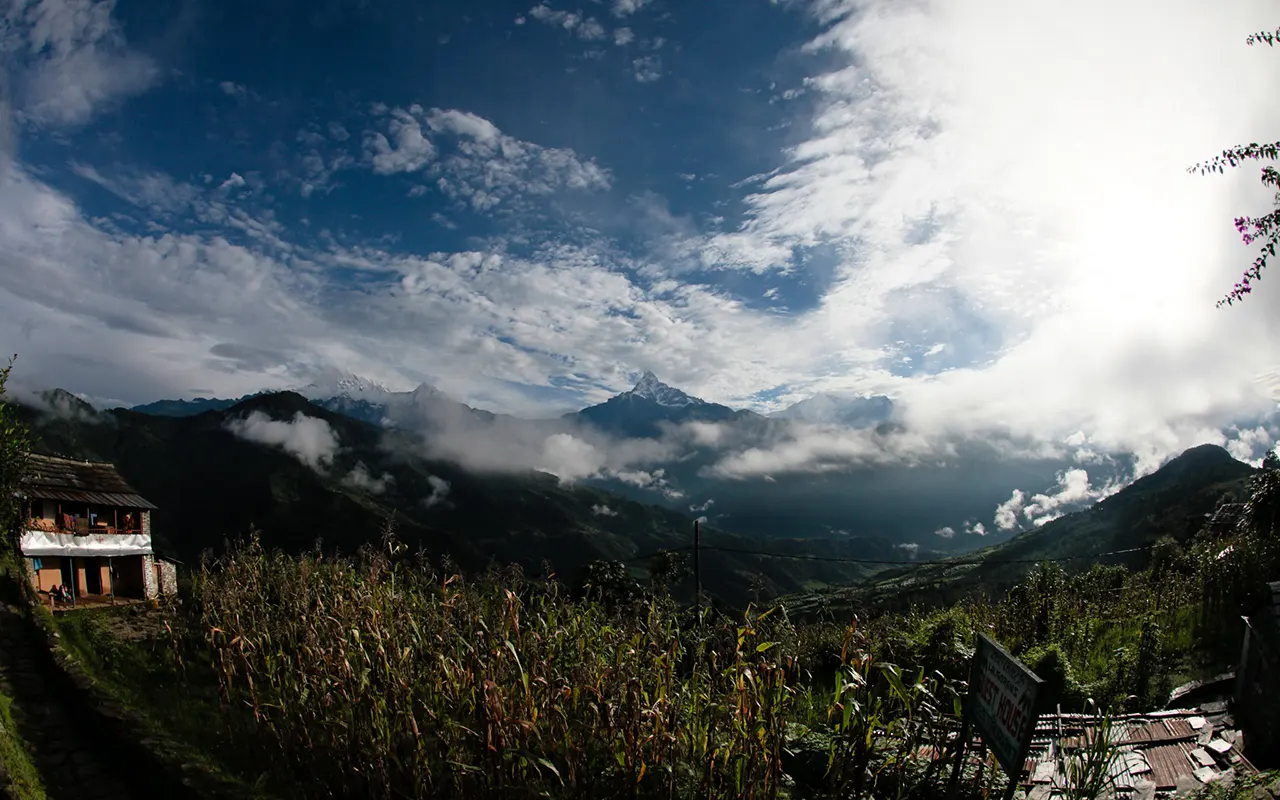
The trail is appropriate for beginner hikers and families that can walk on uphill terrain. On clear days, the area provides views towards the Annapurna and Machhapuchhre ranges.
This is among the best hiking trails in Nepal and are suitable for those who wish to experience the foothills of the Annapurna yet do not have enough time for a longer hike. It may be done as a day trip or as an overnight.
7. Sarangkot and Naudanda Hike
Sarangkot is above Pokhara at an altitude of 1600 m or 5249 ft. It is much frequented for sunrise and towards the Annapurna area.
Combined with walks towards Naudanda and neighbouring villages is the ridge surrounding it. This makes it an ideal option for Hiking in Nepal, which can be modified based on the time and fitness of the hiker.
This trail offers a visit to villages, fields, ridgelines and vistas across the Pokhara Valley. There are some sections that follow local roads that are not as remote as a mountain trail.
8. Panchase Hike
Panchase is a hilly region to the west of Pokhara. Panchase Bhanjyang is approximately 2066 m (6778 ft) and Panchase Hill is approximately 2500 m (8202 ft).
It is one of the less noisy hiking spots in Nepal around Pokhara and can be accessed via various tracks. It takes 2-4 days for many travellers.
The trail runs through forest, villages and agricultural land. Panchese can cater to those who want to take their time walking away from the busier routes and is less popular than the main Annapurna routes.
Best Hiking Places at a Glance
| Hiking Route | Highest Elevation | Typical Duration | Difficulty | Main Interest |
| Nagarkot to Changunarayan | 2,175 m (7,136 ft) | 4 to 5 hours | Easy to moderate | Villages and mountain views |
| Shivapuri | 2,732 m (8,963 ft) | 5 to 7 hours | Moderate | Forest and hill views |
| Champadevi | 2,278 m (7,474 ft) | 4 to 6 hours | Moderate | Ridge and valley views |
| Phulchowki | 2,762 m (9,062 ft) | 6 to 8 hours | Moderate | Forest and birdlife |
| Dhulikhel to Namobuddha | Around 1,750 m (5,741 ft) | 4 to 6 hours | Easy to moderate | Villages and monastery |
| Australian Camp | 2,060 m (6,759 ft) | 3 to 5 hours | Easy to moderate | Annapurna views |
| Sarangkot area | Around 1,600 m (5,249 ft) | Half or full day | Easy to moderate | Sunrise and mountain views |
| Panchase | Around 2,500 m (8,202 ft) | 2 to 4 days | Moderate | Forest and rural villages |
Kathmandu Valley Hiking
The Kathmandu Valley is a good base to start hiking in Nepal as there are a number of trailheads that can be accessed by road. Hikers can hike during the day and then carry their equipment to and from hotel in Kathmandu without having to bring them on an overnight hike.
Hill areas around the valley are linked to one another by some of the best hiking trails in Nepal that include Nagarkot, Dhulikhel, Namobuddha, Shivapuri, Champadevi and others. These routes are great for those who have an extra day prior to or after a longer Nepal trip.
Hiking Around Pokhara
Another popular base for walking trips is Pokhara. The city also has a number of hiking spots, easily accessible by car. Popular places are Australian Camp, Dhampus, Sarangkot, Naudanda and Panchase.
The Pokhara area is especially good for tourists who like to see the mountains. If there are no clouds, multiple viewpoints offer views of the Annapurna range and Machhapuchhre. It is thus possible to enjoy the Annapurna region’s ambiance without going on a lengthy trek around Pokhara.

Best Time for Hiking in Nepal
| Season | Months | Weather & Trail Conditions | Best For |
| Spring | March to May | Mild temperatures, clear mornings and blooming forests. Higher trails can become warmer in late spring. | Forest walks, mountain views and longer hikes |
| Summer / Monsoon | June to August | Frequent rain, cloudy skies, muddy and slippery trails and reduced mountain visibility. | Short lower elevation hikes when weather permits |
| Autumn | September to November | Generally dry weather, comfortable temperatures and clearer mountain views. | Best overall season for hiking in Nepal |
| Winter | December to February | Cold mornings and evenings, with generally dry conditions at lower elevations. Higher areas can be very cold. | Lower elevation hikes, Kathmandu Valley walks and sunny day hikes |
How Much Does Hiking in Nepal Cost?
Hiking in Nepal will cost you for the time you will be hiking, transportation, guide service, entrance fees, accommodation and meals. If you want to go on a short independent walk near Kathmandu or Pokhara, you will spend a little more than the entrance fee and transport cost but it will be more expensive if you take a private guide to go on a multi day trek.
The following table will help you to understand a general budget. These are planning estimates, not fixed prices and costs may be subject to alteration.
| Expense | Approximate Cost |
| Local meals | US$3 to US$10 per meal |
| Basic guesthouse or lodge | US$10 to US$40+ per night |
| Short local transport | US$2 to US$20+ |
| Private vehicle | Varies by distance and vehicle |
| Guide | Commonly US$25 to US$50+ per day |
| Park or heritage entry | Depends on location |
| Multi-day hiking trip | Depends on route and included services |
The cost of trekking on the best hiking trails in Nepal also depends on the level of service. The price goes up with private vehicles, higher category accommodation, private guides and organised packages. Please verify the details of the quoted price before booking.
Permits and Entrance Fees
The walks are permitted in different areas. There are some hiking destinations in Nepal that are not within protected hike areas which might need only local or heritage site entry fee. Routes within a National Park or Conservation area may have extra requirements.
Before starting to hike in Nepal, visitors should confirm the most up-to-date rule of the trekking and protected areas as the rules may change. A short walk around Kathmandu should not be considered a trek in a restricted and/or controlled trekking area.
Do You Need a Guide?
It depends on your route and what you need a guide for. The short walks near Kathmandu or Pokhara are not the same as the trekking routes for the far away. A few travelers rely on a guide for navigation, local information, transport and communication with communities.
A guide can also be useful at other unfamiliar places in Nepal where tracks split or signs are scarce or visibility is affected by weather. Visitors who intend to visit the regulated areas for trekking should check the current guide and permit requirements of the particular area.
Hiking Difficulty and Fitness
In most of the Hiking in Nepal, no technical climbing is required. But not all easy is flat, though. The topography of Nepal has steep hills, stone steps, rough paths and long stretches uphill or downhill.
The most spectacular hiking trails in Nepal are fairly lengthy, taking 3-7 hours to complete. Endurance activities like walking, climbing stairs, cycling, swimming or any other activity that uses the legs before traveling can make the trip more comfortable.
On short hikes up a hill the problem of altitude is not normally a major factor as opposed to on high mountain hikes. Nevertheless, it is important that hikers be aware of the maximum elevation of their hike and don’t take altitude lightly when heading into the higher altitudes.
What to Pack for Hiking
When preparing for a hike in Nepal, the season, route, altitude and duration of the hike should be considered. A day hike doesn’t need to have as much gear as an overnight hike.
Useful items include:
- Hiking shoes that are comfortable and have a good grip
- Small daypack
- Water bottle
- Wear sun hats and/or sunglasses
- Sunscreen
- Light rain jacket
- Warm layer
- Personal medicines
- Small first aid kit
- Snacks
- Power Bank and Phone
- Trekking poles (if wanting to use any)
- Passport copy and required permits
- Cash for rural areas
For multi day walks, additional clothing and personal items will be needed. Pack light but with adequate protection from temperature and weather.
Accommodation and Food
The accommodation in Nepal along the best hiking trails varies from place to place. Hotels and guesthouses are available in popular hill towns and simple lodges/homestays are available in rural routes. There are also some short hikes that do not include overnight stays as the hiker will return to Kathmandu or Pokhara on the same day.
In Nepal, the food available at the main hikes can be either Nepali dishes like dal bhat or noodles, soups, rice dishes, eggs and simple snacks. In smaller settlements, options are fewer and fewer and a snack may be appreciated during longer walking days.
Safety Tips
When you’re hiking in Nepal, it’s important to be safe, even on a simple and easy trek. Weather, altitude and terrain can affect conditions on the trail. Here are a few factors to consider:
- Check the weather forecast before starting your hike
- Get a head start early in the morning
- For longer walks, bring sufficient water and some snacks with you
- Use comfortable hiking shoes that have a good grip
- Bring a light rain jacket and an additional layer, particularly in the hills.
- Do not leave the marked pathway and do not use any alternative paths that have not been marked.
- Inform your hotel, guide or trusted person of your hiking plan
- Use a fully charged cell phone and power bank but do not rely solely on cell phone reception
- Take care on steep, wet, muddy and slippery spots
- If you feel ill, fatigued or dizzy, stop and check in with yourself
- At higher levels give time to acclimatise and watch for signs and symptoms of altitude
- Bring a simple first aid kit and any personal medications
Hiking vs Trekking in Nepal
| Feature | Hiking | Trekking |
| Duration | Usually a few hours to several days | Usually several days to several weeks |
| Distance | Generally shorter | Usually longer |
| Elevation | Often at lower or moderate elevations | Can reach much higher elevations |
| Accommodation | Often returns to a hotel the same day; guesthouses may be used on longer hikes. | Usually involves overnight stays in lodges, teahouses or camps. |
| Difficulty | Usually easy to moderate | Can range from moderate to strenuous |
| Preparation | Basic fitness and day hiking equipment are often enough | Requires more preparation, especially for high altitude routes |
| Examples | Nagarkot, Shivapuri, Champadevi, Sarangkot, Australian Camp | Everest Base Camp, Annapurna Circuit, Manaslu Circuit |
| Best for | Travellers with limited time or beginners | Travellers wanting a longer mountain journey |
Responsible Hiking
Responsible travel helps preserve Nepal’s natural environment and those who live along the trails. Simple things will make a difference:
- Take care to take the trash with you and properly dispose of it
- Do not use or leave single-use plastic, wherever possible
- Follow trails to minimize damage to vegetation
- Avoid disturbing plants, animals or the environment
- Request permission before taking photos of local people
- Respectfully dress when visiting villages, monasteries or temples
- Obey signs/regulations in national parks and conservation areas
- Do not create unnecessary noise in forests and residential land
- Use local guest houses, tea shops, guides and small businesses if possible
- Consume water, especially in rural areas
- Avoid harming religious buildings, prayer flags, stone walls or other local items
- Preserve nature and culture as they are so that future generations may enjoy
Final Thoughts
Not only experienced trekkers but anyone who loves walking can enjoy hiking in Nepal, regardless of the length of the trail. Around Kathmandu and Pokhara are short trails that allow you to explore forests, villages, hills, religious sites and Himalayan views in a few hours or a couple of days.
The selection of the best hiking trails in Nepal is based on their time, fitness, season and interest. For countryside and cultural walks, there are many places like Nagarkot, Namobuddha and for longer forest walks, Shivapuri and Phulchowki are very suitable. The foothills of the Annapurna region are accessible to the travellers around Pokhara, Australian Camp, Sarangkot and Panchase.
As long as you have the right footwear, proper preparation, knowledge of the weather and a path of your ability, hiking in Nepal can be included in many Nepal travel plans. You can enjoy the country’s hills, villages and ever changing scenery, whether you have just one free day or several to explore.
Best Price Guaranteed, Easy to change Date, Instant Confirmation
Book This Trip Have Questions?
Talk to Expert
Meet Mr. Purushotam Timalsena (Puru), Nepal's best trek and tour organizer, who has been working in the Himalayas for more than 24 years.
WhatsApp/Viber +977 98510 95 800