Customize Your Trip





Need Help? Let's Talk
+977 985-1095800


10% OFF
Trip Duration 16 Days
Group Size 2-12 people
Maximum Altitude Kala Patthar (5,644 m)
Difficulty Grade Difficult
Start & End Point Kathmandu/Kathmandu
Best Seasons Mar-May, Sept-Nov
Highlights of Everest Base Camp Trek by Road
- Chance to witness the rural and local life of Sherpas.
- Stunning and scenic landscapes include lush forests, villages, rivers, and streams.
- Sense of accomplishment and pride.
- Avoidance of the risk of the world’s most dangerous flight, the flight to Lukla
- Rare and exotic wildlife of the region.
- Exciting historic sites are on the way.
- More intimate cultural exchange.
- Save the expensive flight cost.
Overview of Everest Base Camp Trek by Road
The Everest Base Camp trek by road without flight is one of the most fascinating treks in Nepal. It allows trekkers to get up close to the highest peak in the world and witness the beauty of Mount Everest. This trek is a dream come true for many Nepalese and foreigners. It offers the perfect blend of adventure and natural beauty.
Besides, trekkers get to trek through the challenging terrain of the Himalayas. We can see the stunning glaciers, peaks, and lakes. This trek also rewards the visitors with an exceptional cultural experience. They can feel the warmth of the traditional Sherpa community.
One can learn a lot about distinctive Sherpa culture while on the trek. Hence, Everest Base Camp Trek has more to offer: adventure and natural beauty. Going on this trek sets a lifetime memory as getting to the lap of the mighty Everest is a matter of pride and dignity.
The Everest Base Camp Trek by Road is a challenging trek that takes you 5,344 meters (17,598 ft) above sea level. The terrain is complex, making reaching EBC a significant achievement.
Besides, this trek can be a transformative experience if you enjoy challenging yourself. It’ll help you develop resilience and push past your limits.
Traveling to Everest Base Camp Trek by road without a flight can make the adventure even more thrilling. You will see breathtaking landscapes, local settlements, diverse local cultures, and rural life.
This road trek provides an experience and lets you see things you might otherwise miss. The expedition starts and ends from Tham Danda.
The Everest Base Camp trek by road is a 15-day trek through some of the world’s most stunning landscapes, like Solukhumbu. The trail passes dense forests of rhododendrons and magnolia trees.
Trekkers will encounter Namche Bazaar, a busy market and a gateway to Everest. They will also pass through traditional villages like Tengboche and Dingboche, which are picturesque villages from which the views of the Himalayas are stunning.
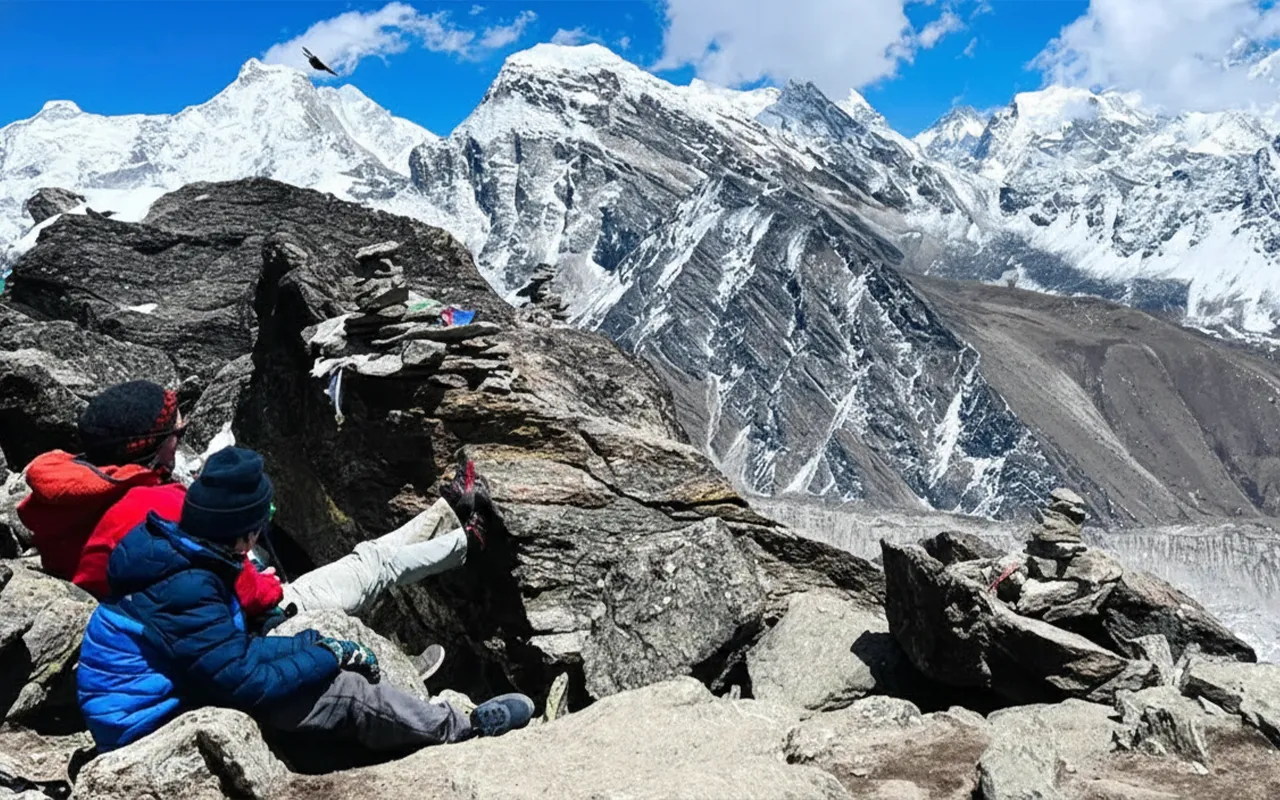
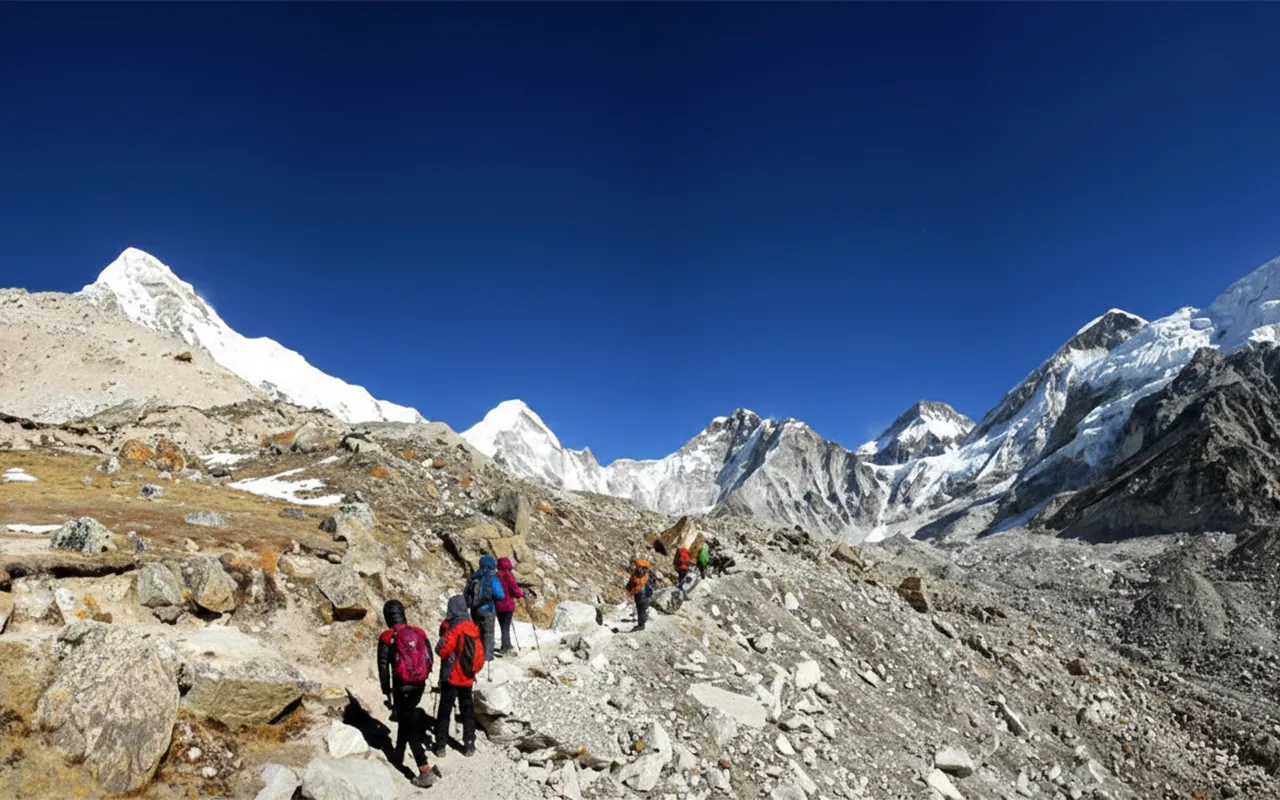
Moreover, Kala Patthar is one of the favored places for trekkers. It offers stunning views of Everest and other peaks in the region. Trekkers are rewarded with sunrises and views of peaks like Lhotse, Nuptse, and many more.
Suppose you’re looking for an adventure that pushes you to your limits. It allows you to experience the region’s natural beauty and rich culture. In that case, the Everest Base Camp Trek by Road is an excellent option. Road travel can enhance the experience and provide a more thrilling adventure.
Why Choose Everest Base Camp Trek by Road?
Everest Base Camp Trek by Road is an ideal tour to be taken by trekkers who do not wish to fly to Lukla to access the Everest region. The journey begins with an overland drive from Kathmandu and continues through the lower Solu Khumbu before joining the main Everest trekking route.
The road route will allow you to see the rural villages and scenery not included in the usual Lukla flight path. It also is not contingent on the Lukla flight schedule that can be influenced by weather in the mountains. However, the road journey involves several hours of driving on mountain roads, so travelers should be comfortable with a longer overland journey.
This alternative can also be applied to the travelers who are rather slow-moving when it comes to the Everest region. After the road journey, the trek continues through Phakding, Namche Bazaar, Tengboche, Dingboche, Lobuche and Gorakshep before reaching Everest Base Camp and Kala Patthar.
Everest Base Camp Trek by Road vs Lukla Flight
Both routes lead to the same Everest Base Camp, but the journey and travel experience are different. The road option replaces the flight to Lukla with an overland journey before joining the trekking trail.
| Feature | Trek by Road | Trek via Lukla Flight |
| Starting transport | Road journey from Kathmandu | Flight from Kathmandu or Ramechhap to Lukla |
| Main access point | Salleri and onward road access, depending on conditions | Lukla |
| Flight dependency | No Lukla flight required | Depends on flight operations and weather |
| Road travel | Several hours of mountain driving | Little or no long road approach |
| Trekking experience | Includes lower Solu Khumbu sections before joining the main trail | Starts directly from the Lukla area |
| Travel time | Generally longer | Generally shorter |
| Cost | Can reduce the cost of domestic flights | Includes domestic flight costs |
| Road conditions | Can vary with season and weather | Flight operations can also be affected by weather |
| Best suited for | Travelers who prefer overland travel and want to avoid the Lukla flight | Travelers who prefer a shorter approach to the main Everest trail |
The road option is not necessarily easier than flying to Lukla. The main advantage is avoiding the flight and experiencing more of the lower Solu Khumbu region. The choice depends on your preferred travel style, available time and comfort with long road journeys.
Itinerary of Everest Base Camp Trek by Road
DAY
01
01
Day 01: Arrival in Kathmandu
Upon reaching Tribhuvan International Airport, one of our representatives will receive you. They will drive you toward the hotel.
You can freshen up, eat something and rest in the hotel. In the evening, you can set out from the hotel to explore Kathmandu’s nightlife. You can try some local Kathmandu cuisine to satisfy your taste buds. You will spend the night in Kathmandu.
Accommodation
Hotel
Meals
Dinner
Altitude
Kathmandu (1400 m)
DAY
02
02
Day 02: Explore Kathmandu
On the second day of your Everest base camp trek by road itinerary, you can explore the vibrant city of Kathmandu. It is Nepal’s cultural and political hub. This city is home to many temples, palaces, and ancient buildings. They have stood the test of time and offer a glimpse into Nepal’s rich cultural heritage.
Your first stop will be Kathmandu Durbar Square, a UNESCO World Heritage Site. The square is surrounded by temples and palaces that were once the residences of Nepalese royalty.
Next up on your list is Patan Durbar Square, another UNESCO World Heritage Site in Lalitpur. The square has many temples, including the Krishna, Bhimsen, and Golden Temple.
After exploring Patan Durbar Square, you will visit the Boudhanath Stupa. It is one of the world’s largest stupas and a significant Buddhist pilgrimage site. The stupa is in the heart of the Tibetan community, around many monasteries and souvenir shops.
Your final stop for the day will be Swayambhunath Stupa, at the top of a hill. Many small temples and shrines surround the site. After a full day of sightseeing, you can retire to your accommodation in Kathmandu. Rest up for the next day’s adventure.
Car
Accommodation
Hotel
Meals
Breakfast, Lunch, Dinner
Altitude
Kathmandu (1400 m)
DAY
03
03
Day 03: Drive from Kathmandu to Salleri
The Everest base camp trek by road journey from Kathmandu to Salleri is long and exciting. It takes you through some of the most scenic parts of Nepal. You will leave the hustle and bustle of the city behind and explore the stunning natural beauty.
The drive takes 10 to 11 hours, but the time passes as you take in the magnificent countryside views.
Once you arrive in Salleri, you will love the warm and welcoming nature of the local community. The city is the administrative headquarters of Solukhumbu district. It is home to diverse ethnic groups, including Kulungs, Kirants, Rais, and Chhetris.
The local customs and traditions reflect cultural diversity, making Salleri a fascinating place to explore. One of the highlights of Salleri is its stunning natural beauty. The city is 2362 meters above sea level, giving you a breathtaking view of the surrounding Himalayan landscape. As the sun sets over the mountains, you will see a display of colors and shadows, leaving you in awe.
Salleri is a popular starting point. It entices trekkers and mountaineers who want to explore the Everest region. From here, you can start your journey toward the Everest Base Camp. You pass through various landscapes and settlements.
Salleri uniquely blends natural beauty, cultural diversity, and warm hospitality, leaving a lasting impression on anyone who visits. It is the place to start your journey toward the world’s highest mountain.
Car
10-11 hrs
Accommodation
Guesthouse
Meals
Breakfast, Lunch, Dinner
Altitude
Salleri (2,362m)
DAY
04
04
Day 04: Drive from Salleri to Surke and Trekking to Phakding
On the fourth day of our Everest base camp trek by road, you will drive from Salleri to Surke. The drive will take 5 hours and cover approximately 64 kilometers. This beautiful place provides a clear view of Okhaldhunga headquarters, Rumjatar.
From Surke we will have a short trek about 2 hours to Phakding. As you trek, you will love the beauty of the surroundings. The popular trekking trail is entire of rocky paths and steep ascents. Still, you will have the company of horses throughout the journey. Adding to your trek’s beauty, you will come across several authentic local tea shops.
Here, you can take a break and indulge in local delicacies. You will also encounter a few traditional-style houses. They reflect the culture and lifestyle of the locals.
You will trek alongside the Dudh Koshi River, which adds charm to the journey. You will then cross a suspension bridge over the Dudh Koshi River.
Further, you will pass by many prayer wheels reflecting local culture and tradition. You will come across charming villages like Musey and Charikharka. They offer a glimpse of the local way of life.
Once you reach Phakding, you will see several souvenir shops and an Irish Bar. They are pretty popular among foreigners. Phakding is famous for its local cuisine, which will tickle your taste buds. You will spend the night in Phakding amidst the natural beauty of the surroundings.
Multiple
Accommodation
Guesthouse
Meals
Breakfast, Lunch, Dinner
Altitude
Tham Danda (2,350 m), Paiya (2,730 m)
DAY
05
05
Day 05: Phakding to Namche Bazaar
Today, our Everest base camp trek by road is from Phakding to Namche Bazar. This popular spot among trekkers is perfect for altitude acclimatization. To reach Namche Bazaar from Phakding, you must climb for approximately 5 to 6 hours.
The distance to cover is around 9.4 kilometers. This trail is steep as well as rocky. You will be crossing some beautiful bridges on the way. You will come across local people carrying bamboo in doko for household purposes.
You will pass through scenic routes, which consist of traditional houses, lush forests, and exciting ways. As you climb up, you will see glimpses of the mountain. On this day, you will cross Larcha Dovan at an altitude of 2935 meters, another adventure for the day.
About 45 minutes from your destination, you will achieve the most challenging part of the trek. You have climbed two hours of continuous incline.
Since you will be at a higher altitude, you will notice the weather changes; hence, pack and use your layers. This part of the trek will test your physical and mental strength.
As you reach the destination, everything will be worth it. You will see the superb and colorful Namche Bazaar. It is a town built amidst the Himalayas, which can make you wonder about the beauty of nature.
As you reach Namche Bazaar, you will notice the mountains covered with clouds. When the clouds are happy, they embrace the hills with fluffy white arms. They create a stunning contrast between the blue sky and the snow-capped peaks. The mountains, in turn, seem to bask in the love and attention of the clouds, looking gracious and proud.
But when the clouds are unhappy, they can be moody and unpredictable. They may shroud the mountains in a blanket of fog, hiding their majestic peaks from view. The mountains, in turn, can look sad and melancholy, as if they are yearning for the affection of their cloud companions.
Namche Bazaar is commercial; thus, if you need anything, you can buy it from the local shops. You will enjoy the charming Namche Bazaar, have dinner, and spend the night there.
Walking Day
Accommodation
Hotel
Meals
Breakfast, Lunch, Dinner
Altitude
Namche Bazaar (3,440 m)
DAY
06
06
Day 06: Acclimatization at Namche Bazaar
Acclimatization is an essential part of high-altitude trekking. It is a process by which the human body adjusts to the decreased oxygen levels in the air. It is a significant part of the trek as it helps the body adapt to the surroundings. Moreover, it reduces the risk of any health issue, especially altitude sickness.
So, this day will be your day of acclimatization. You can walk around the town and visit the local museums, monasteries, and temples. Also, buy and stock up on stuff for the rest of the trek, and so on.
Trekkers can also visit Sagarmatha National Park and see the area’s exotic flora and fauna. They can also visit charming villages nearby to experience the rural lifestyle of locals, which will help in cultural exchange to the fullest.
You can take some time to enjoy the stunning views of Mount Everest, Ama Dablam, Lhotse, and other peaks. Enjoy a sip of tea or a coffee with the idea. You can click some snaps and take them as a memory for life. Many activities are available around Namche Bazaar to keep yourself active.
Remaining hydrated can help avoid headaches, dizziness, and altitude sickness. You can also consume fluids such as herbal tea, soup, and other drinks to maintain your body’s water level. However, it is better to avoid alcohol during acclimatization.
Hence, you will spend the night in Namche Bazaar on our Everest base camp trek by road.
Accommodation
Hotel
Meals
Breakfast, Lunch, Dinner
Altitude
Namche Bazaar (3,440 m)
DAY
07
07
Day 07: Namche Bazaar to Tengboche
On the eighth day of our Everest base camp trek by road, you will trek from Namche Bazaar to Tengboche. It is a small village famous for Tengboche Monastery. Trekking distance from Namche Bazaar to Tengboche is around 5 to 6 hours. The trail is now more accessible, but since the air gets thinner, you might be out of breath; thus, take it slow.
You will come across an abandoned airport. The Nepal Government has stopped using it due to a few accidents. Now, there is an open space where you can rest and enjoy panoramic views of the Himalayas.
As you make your way, you will love the grandeur of the Himalayas. Towering peaks on both sides will surround you. As you look up, you will see the majestic Mount Everest. It is the highest mountain in the world, looming in the distance.
The views are breathtaking, and you will feel humbled by the sheer size and beauty of the mountains. As you reach Tengboche, you can visit the Tengboche monastery of the 19th century.
This monastery is the largest in the region. You can visit the prayer room, where you can pray and meditate. It is a sacred destination that lies within the Sagarmatha National Park.
From here, you can see the unique views of Ama Dablam, Tawache, Mount Everest, Lhotse, and Nuptse. You can enjoy this sacred place and feel the spiritual energy within you. You will have local cuisine in the area, prepare for the next day, and
Walking Day
Accommodation
Guesthouse
Meals
Breakfast, Lunch, Dinner
Altitude
Tengboche (3,860 m)
DAY
08
08
Day 08: Tengboche to Dingboche
The ninth day of the Everest base camp trek by road is one of the most picturesque days as you trek toward Dingboche from Tengboche. It is a long day of trekking, but the trail is easy and comfortable. You will love the breathtaking views of the Himalayas that surround you.
Throughout the day, you will feel as if you are walking on the lap of the Himalayas, which is a humbling experience. As you approach Dingboche, you will come across small and big waterfalls.
The sound of the cascading water against the rocks will soothe your senses and provide a much-needed respite from the arduous climb. The trail is natural and isolated, surrounded by lush greenery and dense forests.
You will encounter a few yaks on the way, adding to your trek’s charm. These magnificent creatures are an integral part of the local culture. They have worked for centuries to carry goods and supplies in the mountainous terrain.
The most significant highlight of this trek is seeing the majestic Mount Everest. As you proceed toward Dingboche, it gets closer and closer to you. It is an awe-inspiring sight that will leave you feeling humbled and grateful. The closer you get to the world’s highest peak, the more inspired you will be to continue and complete the Everest base camp trek by road.
As you reach Dingboche, you can rest and eat something to rejuvenate yourself. The village is charming and peaceful, with a warm and hospitable local community. You will spend the night there.
Walking Day
Accommodation
Guesthouse
Meals
Breakfast, Lunch, Dinner
Altitude
Dingboche (4,410 m)
DAY
09
09
Day 09: Acclimatization at Dingboche
This is the second spot for acclimatization on the Everest base camp trek by road. You will allow your body to adjust to the changing surroundings. You can explore the village of Dingboche by walking to the hilltop viewpoints.
You can visit local villagers and try to have conversations with them. Make sure to have plenty of water and healthy food during this period. You can enjoy the rural lifestyle of Dingboche and try out local food. You will spend the night there.
Accommodation
Guesthouse
Meals
Breakfast, Lunch, Dinner
Altitude
Dingboche (4,410 m)
DAY
10
10
Day 10: Dingboche to Lobuche
On the eleventh day, you will climb to Lobuche from Dingboche. You will pass through Thukla to reach Lobuche, a village near the base of the Khumbu Glacier. Going to Lobuche, only 8.5 kilometers from the Everest Base Camp, will inspire you even more.
This village needs to be more modernized. So, it might have little modern facilities. Yet, it has decent accommodation facilities in basic hotels, homestays, and tea houses. The Sherpa families own them.
On the way from Dingboche to Lobuche, you will see stunning views of nature. If you’re lucky enough to have a clear sky, but if not, the weather gets foggy. On this day, you can take in incredible scenes of hills and mountains. You will cross a fast-flowing river through a wooden bridge, which is also a kind of adventure.
You will again see colorful flags and yaks on the way. The temperature might drop on the way; thus, wear proper layers and eat. As you reach Lobuche, you can treat yourself to bakery items such as pies, hot chocolates, and tea. You can enjoy the evening and spend the night there.
Walking Day
Accommodation
Teahouse
Meals
Breakfast, Lunch, Dinner
Altitude
Lobuche (4,950 m)
DAY
11
11
Day 11: Lobuche to EBC to Gorakshep
On this day of our Everest base camp trek by road, you will be trekking to Everest Base Camp, your destination for the entire journey. It will be a big day as you will cover a distance of about 15 kilometers on the rocky and steep trail. After 3 to 4 hours of trekking, you will reach Gorakshep, another charming village at an altitude of 5164 meters.
This is a final push to the base camp. “Gorakshep” comes from the bird known as the Himalayan Monal or the Impeyan Monal. It is also known as the “gorak” in Nepali. You can rest and eat before you climb to EBC. From Gorakhsep, you will trek through rugged and rocky rail to reach the Everest Base Camp.
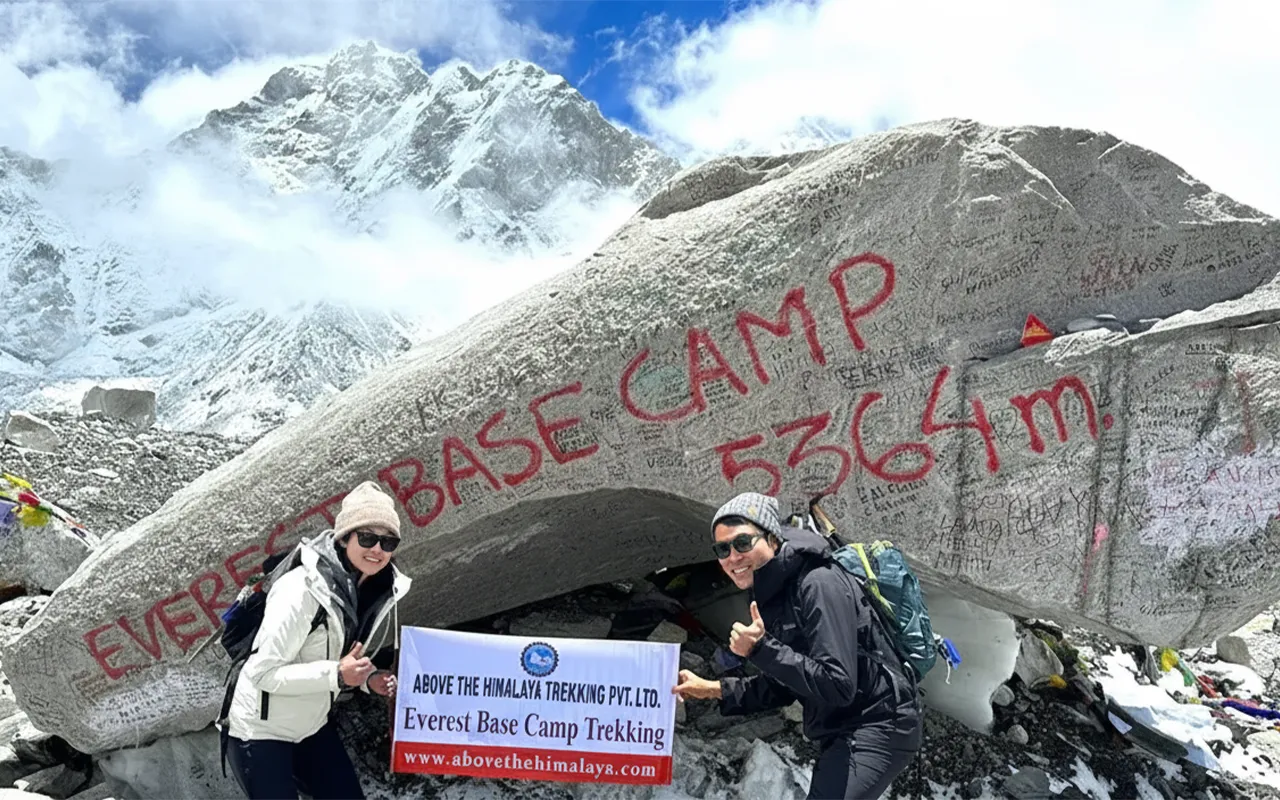
You will have to travel through the Khumbu Glacier, an absolute beauty of Mother Nature. After covering 3.5 kilometers from Gorakshep, you will finally reach the EBC. There, you can feel your dream come true. You will witness the majestic Everest from the closest distance.
You will need more of the snow-capped Everest. You can enjoy the 360-degree scenic view of Everest. Take some space and time to accept that you are on the base of the world’s highest peak. After spending some time there, you will descend towards Gorakshep. You will spend the night here.
Walking Day
Accommodation
Teahouse
Meals
Breakfast, Lunch, Dinner
Altitude
EBC (5,364 m), Gorakshep (5,164 m)
DAY
12
12
Day 12: Gorakshep to Kala Patthar to Pheriche
On this day, you will trek to Kala Patthar, a popular point, to get stunning views of Mount Everest and other peaks.
The distance between Gorakshep and Kala Patthar is about 6 kilometers. After spending some time in Kala Patthar, you will trek to Pheriche. It is a small village located 4779 meters above sea level. You will spend the night there in Pheriche.
Walking Day
Accommodation
Teahouse
Meals
Breakfast, Lunch, Dinner
Altitude
Gorakshep (5,164 m), Kala Patthar (5,644 m), Pheriche (4,379 m)
DAY
13
13
Day 13: Pheriche to Namche Bazaar
On this day of our Everest base camp trek by road, you will trek for about 5 to 6 hours to reach Namche Bazaar from Pheriche. You will cover a distance of around 16 kilometers. You will enjoy the impressive views of different mountains and hills.
Walking Day
5-6 hrs
Accommodation
Hotel
Meals
Breakfast, Lunch, Dinner
Altitude
Namche Bazaar (3,440 m)
DAY
14
14
Day 14: Namche Bazaar to Surke
Surke is a small village in the Khumbu region. On the fifteenth day of the Everest base camp trek by road, you will trek down to Surke from Namche Bazaar. You will again trace your way back through the rural lifestyle and warm locals living in that area. You will spend the night in Surke.
Note: If you don’t want to miss what Lukla offers, you can trek to Luka from Namche Bazaar instead of Surke.
Walking Day
Accommodation
Teahouse
Meals
Breakfast, Lunch, Dinner
Altitude
Surke (2,535 m)
DAY
15
15
Day 15: Surke Drive to Salleri and drive backto Kathmandu
After completing the trek to Surke, we will continue the journey by road toward Salleri. The drive can go through Tham Danda and proceed to Salleri depending on the conditions of the roads and accessibility of the vehicle.
At Salleri, we will begin the drive back towards Kathmandu. The trip lasts approximately 10 or 11 hours based on the road conditions, road traffic, and the road stops. After reaching Kathmandu, you will check into your hotel and have time to rest after the long journey.
In the evening, we will enjoy a farewell dinner to celebrate the completion of the Everest Base Camp Trek by Road. You will stay at a Kathmandu hotel overnight.
Multiple
Full Day
Accommodation
Hotel
Meals
Breakfast, Lunch, Dinner
Altitude
Kathmandu (1,400 m)
DAY
16
16
Day 16: Final Departure
On this day, one of our representatives will drive you to Tribhuvan International Airport. The representative will ensure you reach the airport comfortably.
Includes/Excludes
What's Included?
- Transfers from Kathmandu Airport to hotel and back by private vehicle.
- Twin-sharing accommodation in Kathmandu with breakfast included.
- Private jeep transportation from Kathmandu to Salleri or Tham Danda and return as per itinerary.
- Certified trekking guide licensed by the Government with training in high altitude safety and first aid.
- Local trekking porter to assist with your luggage during the Everest Base Camp Trek by Road.
- Trekking staff salaries, food, accommodation, equipment, insurance, and clothing.
- Twin-sharing accommodation in local tea houses or lodges during the Everest Base Camp Trek by Road.
- All meals during the trek (breakfast, lunch, and dinner) with options from the menu.
- Sagarmatha National Park Entry Permit and Khumbu Pasang Lhamu Rural Municipality Permit.
- Guide carries essential medical supplies and first aid kits.
- Above The Himalaya duffel bag (request in advance).
- Detailed trek itinerary, trip information, and preparation guidance.
- Above The Himalaya gifts and trekking certificate upon completion of the trek.
- Government taxes and service charges.
What's Excluded?
- Meals in Kathmandu except for hotel breakfast.
- International airfare to Nepal and any city sightseeing entrance fees (if you do tours).
- Nepal entry visa fee (obtainable on arrival at Tribhuvan International Airport).
- Alcoholic drinks, soft drinks, hot water, Wi Fi, charging, and showers at teahouses (if extra fee).
- Personal expenses including laundry, telephone calls, snacks, beverages, camera battery charging, and other miscellaneous costs.
- Travel insurance covering rescue and medical assistance.
- Personal trekking equipment (can be bought or rented in Kathmandu).
- Tips or gratuities for trekking staff, guide, and driver.
- Any other expenses not mentioned in the “Included” section.
Flexible Booking and Cancellation Policy
At Above the Himalaya Trekking, we understand that travel plans may change. Our booking policy provides clear terms and flexible options to help you plan your Himalayan adventure with confidence.
A 20% non-refundable deposit is required to confirm your booking, with the remaining balance payable upon arrival in Kathmandu/Pokhara before your trek begins. Departure dates can be changed free of charge at least 30 days in advance, subject to availability.
If you postpone your trip at least 30 days before departure, your deposit can be applied toward another trip within one year, subject to availability and any price differences. Date changes are not permitted within 30 days of departure, and no refunds are provided for early departures or unused services once the trip has started.
For complete details, please read our Booking and Cancellation Terms.
Route Map & Altitude Chart

Everest Base Camp Trek by Road – Cost
Everest Base Camp Trek by road cost depends on the group size, facilities, and trekking season. Besides, there are some significant costs covered by the pricing. It would help if you carried extra cash for your expenses, but it is an economic trekking experience.
Cost Covers:
Ground Transportation Cost
The package covers the transportation expenses on land. It includes taking the customer to and from the airport. And all the other places mentioned in the itinerary.
Licensed Guide
You will have a professional tour guide throughout the trek. They will make your journey easier and hassle-free and help you deal with different language barriers. The package also includes the cost of a professional tour guide. Foreigners must have licensed guides throughout the trek per the prevalent government rules.
Local and government taxes
The quoted price covers all relevant taxes, charges, and fees imposed by the local or national government. It includes the trekking permit fees, national park fees, VAT on meals, transportation, accommodations, and other related expenses.
Fooding on Everest base camp trek by road
The package covers the expenses of the meals offered by the hotels where you will be staying. Yet, if you decide to dine outside the hotel, we will not include the cost of the food in the package. Also, the package price only covers the cost of the main course, tea, and coffee provided by the hotel. It does not cover any other types of food you may have.
Accommodation during the Everest base camp trek by road
The cost of the hotels that you will be staying at in different places throughout this journey is in the package.
Cost doesn’t cover:
Alcoholic Drinks
The cost of alcoholic drinks you might want on this journey is not included in the package. This comes under your price.
Porter
You might feel tired during the Everest Base Camp Trek by Road trek and sometimes get injured. You might need the help of a porter to carry your bags, but the porter’s cost isn’t included in the package. The charges for porters depend upon the distance they have your bags.
Medical and rescue expenses
The cost that arises due to unforeseen circumstances isn’t included in the price. This comes under your price.
Cost for extra days during your Everest base camp trek by road
If you plan on staying for more than the prescribed number of days, you must pay extra costs.
Some Tips for the Everest Base Camp Trek by Road
Stay hydrated
Staying hydrated is essential throughout the trek. As you climb up, the water level in your body will decrease. So, you might be feeling tired, dizzy, and have a headache. To avoid this, you should always keep a bottle to stay hydrated.
Carry Necessary Equipment
Since it is one of the most challenging treks, be careful about the equipment that you need to carry. You may have a trekking stick, headlamp, torchlight, map, compass, etc.
Be prepared for the trek. This trek is challenging. Thus, ensure you have a good fitness level before starting this journey. Focus on working out, keeping fit, and eating healthy before a few months of trekking.
Pack rationally
You will need base layers, insulated jackets, windproof and waterproof outer layers, trekking pants, and comfortable shoes. You may also take gloves, leg warmers, and a warm cap. Considering your hygiene, it would help if you carried many sets of socks and underwear.
Pack a few T-shirts as well. Remember to pack light because carrying excessive weight during the trek becomes tough.
Pack a first aid kit.
You might get injuries or minor health issues during the Everest base camp trek by road, so you should carry a first aid kit. In it, you can keep the last bandages handy, medicines for altitude sickness, Dettol, cotton, etc.
Be respectful
You will come across distinct cultures and traditions that might be new to you. Don’t do or say anything offensive to the locals. Remember to respect everything and everyone that you come across.
Don’t litter the environment.
Please don’t recklessly throw away packets of food you consume on the way. Instead, please keep them in the pocket of your bag and throw them in the dustbin when you reach the hotel. Be respectful of the environment.
Elevation and Distance
The Everest Base Camp Trek by Road begins with a scenic drive from Kathmandu to Salleri and continues toward Surke or Tham Danda, depending on road conditions, before joining the classic Everest trail. The trekking part slowly ascends the lower Solu villages to Namche Bazaar, 3,440 meters, then to the Everest Base Camp, 5,364 meters. The peak of the trip is the Kala Patthar of 5,644 meters, where one of the best panoramic views of Mount Everest and other peaks can be seen. At this altitude, oxygen levels are nearly 50 percent lower than at sea level, which makes proper acclimatization essential.
The approximate trekking distance is about 130 to 140 kilometers round trip, depending on the exact road endpoint and side hikes. Also, it includes a lot of road trips between Kathmandu and Salleri, thus distinguishing this variant as compared to the flight one. The increase in height is gradual yet considerable hence there should be adequate pacing and acclimatization. The Everest Base Camp Trek by Road provides a gradual and rewarding ascent without relying on flights to Lukla.
| Location | Altitude | Travel Type |
| Kathmandu | 1,400 m | Road |
| Salleri | 2,362 m | Road |
| Tham Danda | 2,350 m | Road / trekking connection |
| Paiya | 2,730 m | Trekking |
| Namche Bazaar | 3,440 m | Trekking |
| Tengboche | 3,860 m | Trekking |
| Dingboche | 4,410 m | Trekking |
| Lobuche | 4,950 m | Trekking |
| Gorakshep | 5,164 m | Trekking |
| Everest Base Camp | 5,364 m | Trekking |
| Kala Patthar | 5,644 m | Hiking |
| Pheriche | 4,379 m | Trekking |
Altitude Sickness and Challenge
The Everest Base Camp Trek by Road is graded as difficult due to its high altitude, long walking days, and rugged mountain terrain. Technical climbing skills are not needed but trekkers should be ready to climb steep heights, rocky trails, suspension bridges and cold weather at the higher altitudes. This is a strenuous process that requires physical training and the right attitude.
One of the major issues in this trek is altitude sickness which occurs above 3,000 meters. The symptoms might be headache, nausea, dizziness, or dyspnea. The itinerary has acclimatization days in Namche Bazaar and Dingboche which will allow your body to acclimatize slowly. Deliberate pacing, adequate fluid intake, and alcohol will decrease risks to a large degree. With proper preparation and guidance, the Everest Base Camp Trek by Road can be completed safely by healthy and determined trekkers.
Maximum and Minimum Walking Hours daily
During the Everest Base Camp Trek by Road, daily walking hours generally range from five to eight hours depending on altitude and trail conditions. The most common long days are the Everest Base Camp and the hike to Kala Patthar whereby the trekkers may walk up to eight hours in their journey up and down the mountain. These working days need slow pacing and frequent breaks.
The shorter walking days tend to be on a downward part like Namche to Surke or acclimatization hikes. The terrain can have irregular tracks and downhill knee pressure even on shorter days. Comfort is maintained by wearing the right shoes and walking slowly. The itinerary is meant to be equal between the exertion and the relaxation enabling trekkers to enjoy the Everest region without any doubt or fear.
Trekking Permits
To complete the Everest Base Camp Trek by Road, trekkers are required to obtain specific permits for the Everest region. The major permits are the Sagarmatha National Park Entry Permit and the Khumbu Pasang Lhamu Rural Municipality Permit. These are permits that are inspected at different access points to the trail and are necessary to conserve and administer locally.
The majority of the trekking organizations will secure these permits on your behalf, prior to the commencement of the journey. The individuals who want their passport copies and passport sized photos should carry them along as independent trekkers. The rules of permits can vary and it is, therefore, better to verify new permits before traveling. Having the proper documents ensures a smooth and organized experience throughout the Everest Base Camp Trek by Road.
Travel Insurance
Travel insurance is strongly recommended for the Everest Base Camp Trek by Road due to the high altitude and remote mountain conditions. The expedition reaches a height of more than 5,500 meters in Kala Patthar and that is the reason why your insurance policy must be specifically to the high altitude trekking and emergency helicopter evacuation. The weather in the mountains is variable and there are very few medical facilities in the villages up the mountain.
Helicopter evacuation can be necessary in case of severe altitude sickness, injury or disease to access adequate medical assistance in Kathmandu. In the absence of appropriate insurance, the cost of evacuation and treatment can be high. Before reaching Nepal, it is also necessary to organize a detailed travel insurance and to have a copy of your policy in the trek. Proper insurance gives peace of mind and allows you to focus fully on enjoying the Everest Base Camp Trek by Road experience.
Accommodation, Food and Drink
The Everest Base Camp Trek by Road follows a tea house style trekking system, where trekkers stay in local mountain lodges along the trail. The accommodation is basic and comfortable of a twin sharing basis with simple beds, blankets and shared bathrooms. Services are better at lower altitudes like Salleri and Namche Bazaar and worse at higher villages like Lobuche and Gorakshep because of remoteness.
The tea house has a dining hall where meals are served and they are mostly Nepali, Indian and simple western food. Commonly available are Dal Bhat, noodles, fried rice, pasta, soups and pancakes. The higher the altitude, the higher the prices of food since it has to be carried either by porters or by animals. During the trek, drinking water, tea, and coffee are accessible. The Everest Base Camp Trek by Road offers a simple yet authentic mountain hospitality experience.
Transportation
The Everest Base Camp Trek by Road begins with a long but scenic drive from Kathmandu to Salleri, which takes approximately 10 to 11 hours depending on road conditions. Another route that leads to Surke thence starting with a trekking section is a drive that starts at Salleri. The given road path provides an opportunity to the trekkers to pass by Lukla flight, still exploring rural environment and villages on the way.
There may be changes in the road condition based on the season of the year, particularly during the monsoon months when it might be paddling on some parts. Once you have done the trek, you go back through the road route through which you arrived to Kathmandu. The Everest Base Camp Trek by Road is ideal for travelers who prefer overland travel and want to avoid domestic flights while still experiencing the classic Everest trail.
Current Road Route to Everest Base Camp
The road approach begins in Kathmandu and continues toward Salleri before connecting with the Everest trekking route. From Salleri, road access toward areas such as Tham Danda or Surke can vary according to road conditions and local transportation arrangements.
From the roadhead, the journey continues on foot toward Phakding and then follows the classic Everest Base Camp trail through Namche Bazaar, Tengboche, Dingboche, Lobuche and Gorakshep. The return follows the lower Everest trail before connecting with the road for the journey back toward Kathmandu.
| Section | Main Travel Mode | Main Route |
| Kathmandu to Salleri | Jeep | Kathmandu → Salleri |
| Salleri onward | Jeep and trekking | Salleri → road access toward Tham Danda or Surke |
| Lower Everest trail | Trekking | Roadhead → Phakding |
| Main Everest trail | Trekking | Phakding → Namche → Tengboche → Dingboche |
| High altitude section | Trekking | Dingboche → Lobuche → Gorakshep |
| Everest Base Camp | Trekking | Gorakshep → Everest Base Camp |
| Kala Patthar | Trekking | Gorakshep → Kala Patthar → Pheriche |
| Return route | Trekking and road | Pheriche → Namche → lower trail → roadhead → Kathmandu |
The exact road endpoint can change because mountain road conditions are affected by weather, maintenance and local access. Our team will confirm the practical road access before departure and adjust the transportation plan when necessary.
Road Conditions and Travel Experience
The road journey is an important part of this version of the Everest Base Camp Trek. The drive from Kathmandu toward Salleri takes several hours and passes through changing landscapes, including hills, river valleys, villages and mountain roads. Travel time can vary depending on traffic, road conditions, weather and stops along the way.
Road conditions can be different during the dry and rainy seasons. Some sections may be rough, particularly farther into the mountain region. During periods of heavy rain, road travel can also be affected by mud, landslides or temporary blockages.
Travelers should therefore expect a long mountain drive rather than a smooth highway journey. A private jeep provides greater flexibility for stops and departure times, while shared transportation may be used depending on the package arrangement and road access.
If you are prone to motion sickness, it is useful to carry appropriate medication and keep water available during the drive. The road journey is best suited to travelers who are comfortable with changing road conditions and want to avoid flying to Lukla.
Private vs Group Everest Base Camp Trek by Road
The Everest Base Camp Trek by Road can be arranged according to your preferred travel style and group size. A private trek gives your group more flexibility, while a group departure allows you to share the trekking experience with other travelers.
| Feature | Private Trek | Group Trek |
| Group composition | Your own family, friends or selected travelers | Travelers joining the same departure |
| Departure date | More flexible | Based on scheduled departures |
| Pace | Can be adjusted to your group | Follows the planned group pace |
| Transportation | Arranged for your group | Shared according to the package |
| Itinerary | Can be customized where practical | Follows the standard itinerary |
| Best for | Families, couples, friends and small private groups | Solo travelers and travelers looking for a social experience |
Our team can discuss the available arrangements based on your preferred dates, group size and itinerary requirements.
How to Book the Everest Base Camp Trek by Road
In order to book the Everest Base Camp Trek by Road, you will confirm your desired travel days and number of individuals. We then can verify the means of transportation and accommodation arrangements that you have chosen to leave.
Once you are sure about the itinerary, you may submit the necessary traveler details, and cover the booking fee as per our booking terms. The concluding details of the trip and preparation will then be given by our team prior to reaching Nepal.
You should also carry a good passport, relevant travel insurance and trekking gear needed in high altitude areas before you travel. We will also provide the necessary information about transportation, accommodation, permits and the daily trekking plan.
Guides and Support Staff
Hiring a licensed guide for the Everest Base Camp Trek by Road is highly recommended for safety and better overall experience. In the local villages, the services of a professional guide help with navigation, daily pacing, accommodation, and communication. They also keep track of your health and assist in the administration of altitude issues during the trek.
Porters are also there to assist you in carrying your large luggage, normally two trekkers. This will enable you to walk freely having just a light daypack. A trekking company with a good reputation offers insurance and adequate support to their employees. It is normal culture in Nepal that the porters and the guides are tipped and it is a form of gratitude. With experienced support staff, the Everest Base Camp Trek by Road becomes more organized, safe, and enjoyable.
Internet and Charging Facilities, Mobile Network.
During the Everest Base Camp Trek by Road, communication facilities are available but become limited as you gain altitude. In the lower regions of Salleri, Phakding and Namche Bazaar, NTC and Ncell have mobile network coverage. Nevertheless, higher villages such as Lobuche and Gorakshep have lower signal strength and connection can be unreliable.
In most tea houses, they have WiFi services at an extra cost, particularly in busy places like Namche Bazaar and Tengboche. The internet speed is also low as a rule caused by remote location. Most lodges have charging facilities, which are normally powered by small hydro or solar energy, and which can be charged a small fee. Carrying a power bank is a good thing so that you have your devices charged all through the trek. Informing family members about limited connectivity will help you enjoy the Everest Base Camp Trek by Road without unnecessary concern.
Best Season for Everest Base Camp Trek by Road
The best time for the Everest Base Camp Trek by Road is during spring and autumn, when the weather is generally stable, trails are in good condition, and mountain views are clearer. Spring from March to May brings mild temperatures and comfortable trekking conditions. Autumn from September to November is also a preferred period, with dry trails and clear skies. The monsoon months can bring rain, cloudy weather, slippery trails and road disruptions, while winter requires preparation for cold temperatures and possible snowfall at higher elevations.
| Season | Months | Conditions | Suitability |
| Spring | March to May | Mild temperatures, clearer mountain views and good trekking conditions | Excellent |
| Summer / Monsoon | June to August | Rain, cloudy conditions and possible road disruptions | Less suitable |
| Autumn | September to November | Stable weather, clear views and good trail conditions | Excellent |
| Winter | December to February | Cold temperatures, snow at higher elevations and shorter daylight | Possible with proper preparation |
Common Risks During the Trek
The Everest Base Camp Trek by Road is a high altitude journey, so trekkers should be aware of potential mountain related risks. One of the primary issues concerns altitude sickness, particularly once one goes higher than 3500 meters. Headache, nausea, dizziness and fatigue are some of the symptoms that should never be overlooked. This can be significantly reduced with the help of proper acclimatization days in Namche Bazaar and Dingboche.
The weather at the Everest area is very fast changing. At high altitudes, cold temperatures, heavy winds, and sudden snowfalls are usually experienced. There are also rocky beds, steep slopes, and suspension bridges in the trail which have to be walked carefully. During monsoon periods, road transport to Salleri is occasionally impacted by heavy downpour. With good preparation, proper pacing, and guidance from experienced staff, the Everest Base Camp Trek by Road remains a safe and rewarding Himalayan adventure.
A Typical Day on the Everest Base Camp Trek by Road
A typical day on the Everest Base Camp Trek by Road begins early in the morning with breakfast at the tea house. Trekkers tend to begin walking between 7 or 8 AM when the weather is clear in the morning. The path goes through the woods and rivers, small towns and bare mountain terrains. The breaks are taken regularly to rest, drink water, and take pictures.
A tea house typically serves lunch on the trail before moving on to the next place of stay. Trekking takes about 5 to 6 hours and by mid afternoon, the trekkers are at their lodge where they have time to relax, view the village or the mountain. Dining room is where evenings are spent, taking meals and talking about the trek with other trekkers. The structured rhythm of walking and resting helps maintain energy levels throughout the Everest Base Camp Trek by Road.
What to Expect from the Everest Base Camp Trek by Road
The Everest Base Camp Trek by Road offers a complete Himalayan experience combined with rural road travel. You will find a wide variety of landscapes, including terraced hills, river valleys, alpine forests, and high altitude glaciers. The trip offers direct glimpses of Everest, Lhotse, Nuptse, Ama Dablam and other renowned peaks.
This overland access to the Lukla Valley, unlike the air route, provides more cultural engagement with the local communities during the road part. The climb is not only tough but also very rewarding as one arrives at the Everest Base Camp and Kala Patthar. It is easy to accommodate, food is substantial and mountain setting is motivating. The Everest Base Camp Trek by Road is ideal for travelers seeking both adventure and authentic cultural exposure without taking a domestic flight.
Frequently Asked Questions About Everest Base Camp Trek by Road
If you plan to trek to Everest Base Camp, choosing the right time of the year is crucial for a safe and enjoyable experience. The best times to undertake this trek are September to November and March to May, when the weather is clear and sunny.
During this period, the skies are usually clear, and the temperature is mild. It provides excellent visibility and panoramic views of mountains, landscapes, and wildlife. However, the monsoon season runs from June to August. We do not recommend trekking to Everest Base Camp.
The weather during this season is dangerous, with heavy rainfall, muddy trails, and a high risk of landslides. Moreover, fog, clouds, and mist often obscure the views, affecting the trekking experience.
When trekking to Everest Base Camp, you must note that the food on the trail is low. And you cannot expect to find lavish junk food options. But, the food is healthy enough to energize you during the trek.
The staple food on the trek is Dal Bhat. It is a traditional Nepali dish comprising lentil soup, steamed rice, and vegetables. This dish is an excellent source of carbohydrates, proteins, and vitamins. It is available at almost every tea house or lodge on the trek.
If you prefer non-vegetarian food, you can have some chicken. It is available in some lodges or teahouses. You can also try local delicacies such as Tibetan bread, a flatbread made from wheat flour. There’s also Thukpa, a hot noodle soup containing vegetables, meat, and eggs.
The network connectivity may need improvement in some remote areas along the Everest Base Camp trek. This can make making phone calls, sending messages, or accessing the internet challenging. The main reason is proper infrastructure, including cell towers and limited bandwidth availability.
This is a tough trek because it involves high altitude and lengthy trekking days. Kala Patthar is at 5,644 meters which needs good stamina, mental will and acclimatization.
The road to Salleri is scenic and long in length, but may be rough in places. The road conditions also differ according to the season particularly during the monsoon season.
Yes, the schedule could be changed as per your time schedule, physical condition and interests. The private visits have a greater level of flexibility in terms of the pacing and accommodation options.
You must be physically healthy and able to walk 5-7 hours a day in a few days. Good strength, stamina, and psychological determination to press are required in situations involving elevation and long ascents.
A porter is optional, however, extremely useful in the long and steep parts. Having a porter shared by two trekkers enables you to enjoy a light day pack as you walk.
The Everest Base Camp Trek by Road is a tea house trek in which trekkers reside in mountain lodges. In most cases, rooms are twin sharing and have plain beds, blankets, and bathroom facility.
Yes, the trip is mostly safe, with the correct preparation and reasonable program. It is safer to follow the acclimatization strategy and be guided on a trek.
A good quality sleeping bag, hat, gloves, hat, down jacket, layered clothing, and trekking boots that are strong and sturdy should be considered essential. The weather at high altitude is unpredictable and thus the layering is highly essential.
The trip starts with a long yet beautiful start of Kathmandu to Salleri and further on to Surke , depending on the state of the road. This road alternative allows trekkers to avoid the Lukla flight while enjoying rural landscapes and local villages along the journey.
Reviews on Everest Base Camp Trek by Road
Posted on Tripadvisor 

H H
9 December 2025
 Verified
Thank you for the best tour we have ever had!
I planned to stay at the Everest View Hotel this time and travel there because I wanted to see Everest, the highest mountain in the world, slowly, but despite the short schedule due to my children's school, all I got was a response that it was difficult to contact several tour companies. The Himaraya Trekking, Above, has worked out a smooth and safe schedule and had the best experience for me and my family. I will never forget the view of Mount Everest. Thank you very much.
Posted on Tripadvisor

Mike F
26 November 2025
VerifiedAnother Amazing Trip with Above the Himalaya
This is my 3rd trip with Above the Himalaya and Puru. Each trip with Puru has exceeded expectation with the quality of the guides, porters and attention to detail. We were a team of 5 trekker and our ages were all above 67 years of age with the oldest being 73. We are all experienced hikers and trekker and our plan was to trek up the Khumbu Valley to the Cho La pass to Gokyo to the Renjo La pass to return to Lukla. However, the weather altered our plans as Cyclone Montha blanketed the country in rain at lower elevations and significant snowfall at the upper elevations. Due to the weather, no one was trekking and everyone was staying put in their current location during the storm. All the passes were closed due to the deep snow. We were in Namche when the storm was blanketing the country.This is where Above the Himalaya really shines is in the ability to adapt to the changing conditions and our safety. In conversation with our lead guide, we decided to alter our route to trek through the Gokyo valley to reach Gokyo and then do the Renjo La pass. Sitaram our lead guide and Dhurba our assistant guide was both attentive to the changing conditions and always kept a keen eye for how we were doing and feeling on the trek. The pacing was excellent as none of us had any hint of altitude sickness as we reached a maximum elevation of 5,365m.Having trekked and hiked all over the world with different tour companies, Puru’s company is simply the best. The communications, focus on safety, the guides and staff, the accommodations, and the food are all amazing. All you have to do is focus on the beauty of the mountains, enjoy the joyfulness of the Nepali people and have fun exploring the trails. I am planning my next trip with Puru for 2027 as there is no other trekking company to match Puru’s level of service.
Posted on Tripadvisor

Mie K. A.
25 November 2025
VerifiedTake a small step into the Himalayas
I went with Above The Himalaya Trekking’s Everest View Hike in November 2025 and can only recommend with my whole heart!I had never visited Nepal or the Himalayas before and had a life long dream of seeing Mt Everest. I had though, hiked a lot in various parts of the world, but never above 2000 m, so I went with the five day Everest View Trek to take a small step and see how I would handle the altitude. From first enquiry about dates and various questions, to my arrival back from the trip, Puru has been an invaluable help, always standby on mail and WhatsApp, pulling strings and making things happen.Also big shout out to the amazing guide I was teamed with, Kamal, who did everything he could to answer all my curious questions about vegetation, animal life, Nepalese culture and everything in-between :) Kamal was the perfect gentleman, offering little treats and reminding me to take breaks, and all in all I felt very safe and in good hands all the time. He also had good banter and jokes, which lifted the spirit of even the hardest climb.It was cold most nights and mornings and even though the tea houses provided heavy blankets (and I could borrow extra) I was glad I had the sleeping bag with me, which I rented through Puru. But I could definitely have survived without and saved the space in my pack.In total, I’m very pleased I’ve got to experience this lovely country with Above the Himalaya Trekking and if I ever come back for the big leap into the mountains, I’ll chose Kamal and Puru all over again :)
Posted on Tripadvisor

nameless
25 November 2025
VerifiedNepal trek-Gokyo
Second trek with Above the Himalaya, this time to Gokyo and over Renjo La. Our lead and assistant guides (Sitaram and Dhurba) were excellent. Due to several days of rain at lower elevations and snow higher we needed to change our plans while in the midst of our trek. Above the Himalaya accomplished this smoothly and flawlessly, which ultimately resulted in a better experience. We’ll be back!
Posted on Tripadvisor

Yu S
22 November 2025
VerifiedGreat Experience and Friendly people.
We had a great time with Above the Himalayas tour company in Oct. Ajay, the tour guide in Kathmandu is very friendly and knowledgeable. He took us to a lot of places that we can experience local authentic daily life. Puru, the owner, arranged and organized our trip in such way that we really feel comfortable and enjoyable. We are specially impressed by his quick action and management skills. Our flight to Pokhara got cancelled due to bed weather. Within minutes, Puru was able to arrange a car and a driver to drive us to Pokhara! It saved out trip.
Posted on Tripadvisor

Sally M
14 November 2025
VerifiedGlorious trekking experience - ABC
We had the most wonderful experience doing the Annapurna Base Camp trek with our fabulous guide, Tanka, and porter, Ravi. The trek was glorious, despite some rainy days, and although we weren't sure we would get to see the peaks at ABC, the weather cleared just in time and we had an amazing sunrise there. What made the whole trip so special, though, were Tanka and Ravi, who remained cheerful at all times and went out of their way to make everything as good as it could be. This included setting a pace with regular breaks which made the walking completely manageable, modifying the itinerary so we could visit additional villages, getting up in the middle of the night to see if the sky would be clear for sunrise, and bringing a sense of ease and humour to all our interactions. We just loved the whole thing and are keen to return to Nepal for another trek. It was magical!
Posted on Tripadvisor

Peter E
27 October 2025
VerifiedAbove the Himalayas goes above and beyond expectations!
From start to finish everything was perfect! Puru, the managing director, was always quick with his responses to my questions when I first contacted him about planning our trek, and he continued to check to see that everything was going well throughout.Our guide Tanka and porter Ravi were fantastic! Their friendly demeanor kept our experience lively and interesting the entire time and made sure that we were well taken care of. Even small details like Ravi coming in and double checking our rooms to see that we had left nothing behind before leaving each morning, and seeing that meals were prepared the way we liked them weren't overlooked. Tanka was also quite knowledgeable about the mountains, the people, and just about everything "Nepal". He enthusiastically shared stories about his family and Nepalese life in a general way.Although there was a clear itinerary each day, and for the whole trek, Tanka allowed for flexibility in terms of time and where to stay. He was even willing and able to make changes to same-day accommodation based on how far we anticipated hiking that morning. I can't say enough about how much we enjoyed our hike and I would definitely recommend Above the Himalayas for anyone considering a trek.
Posted on Tripadvisor

Akane U
25 October 2025
VerifiedAmazing tour
For me and my son, Pru thought of a four-day trekking tour.His interaction was very smooth.On the first day, I went with my son to Gandrouk, and on the second day, he went to a higher place (mulde view point, Poon hill) with his guide Ashok. Ashok was very kind and took me to various local places. The food was also very good.My guide, Tangka, was very kind and helped me a lot.I recommend this travel agency because it's great.
Posted on Tripadvisor

Daniel F
24 October 2025
VerifiedEverest Base Camp Trek
My friends and I just completed the EBC trek. From the time I met Puru at the Canada Place trade show in Vancouver BC, Canada I felt comfortable going to Nepal. His communications via WhatsApp were seamless answering all our questions. Everything went exactly according to plan. Our guide Suresh was amazing. He took very good care of us the whole time. From guiding us to making sure we had everything we needed to be happy. The food the whole way up and back was amazing! 5 ⭐️. Our 2 porters were great as well. I have a whole new respect and appreciation for what they do. They are the true hero’s to what we can do as a team. We chose the basic trek the lodging was to be expected. If I was to do again I would choose the luxury trek. The hotels in Kathmandu at the Hotel Aloft and the Hotel Lo Mustang were top notch as well as the buffets. Highly recommend this local company!
Posted on Tripadvisor

adrienne h
24 October 2025
VerifiedGreat tour, would recommend!
My friend and I completed the 10 day Annapurna circuit with Above Trekking Himalaya. Buddha our porter was a little mountain goat, pocket rocket. When I got altitude sickness he carried my bag, as well as mine and my friend’s big pack. He was friendly and loved to played cards with us, always with a cheeky smile on his face. Sitaram our guide was very knowledgeable of the area and quite serious. He was always available if we had any questions and went above and beyond to try get us the best/quietest rooms in the tea houses. Puru was fabulous working behind the scenes to ensure our trip was as smooth as possible. He was very quick to respond to any messages. It was a great experience to see Nepal with some locals and I certainly appreciated their support when I succumbed to altitude sickness. They stayed close to us the whole time and checked in frequently making us feeling safe and supported the entire time.
Verified by Trustindex
Trustindex verified that these reviews were published on Above the Himalaya Trekking - Private Day Tours's Tripadvisor profile. Learn more

Corey Mackevicius
Canada
Everest base camp trek by Road- We had great time.

Trekking above the Himalayas is highly recommended. Puru took outstanding care of us and made sure everything was okay. Our experience started 10/10 when They picked us up at the airport.
I would only go with Above the Himalayan Trekking. Our trip to base camp was very successful because of Above the Himalayan Trekking. MAKE SURE TO ASK FOR SURESH AS A GUIDE as well!
He will take the best care of you and ensure you have a lifetime trip.
Corey Mackevicius
Canada
Michal Liang
USA
Everet base camp trek by Road - Best Trip Ever
Puru, Thanks so much for your help with the Everest Base Camp trek by road. The Guide, the food, and the service were excellent, and Phaplu to Phakding was beautiful.
It was a trip to remember, and I plan to return with a group of my own next time. People were friendly and polite, inviting us.
I felt good. Bhala, my Guide, was true to his word and a good friend.
Michal Liang
USA
10% OFF
Enjoy the best prices, flexible date changes, and instant booking confirmation.
Book This TripBook with Confidence
- Easy Booking: Secure your trip with just a 20% deposit.
- Flexible Date Changes: Free changes at least 30 days before departure.
- One-Year Deposit Credit: Use your deposit for an eligible postponed trip within one year.
- Private & Personalized: Flexible itineraries and group sizes.
- Experienced Local Guides: Professional guidance and support throughout your trek.
- Best Value: Competitive prices with clear package inclusions.
Your Trek Leader
 Enjoy Himalayan scenery with the help of Nepal’s best guides with Government license holders and got training in first-aid, our Trip Leaders, know where you’ll find the best photos, most fascinating wildlife, and the best stream crossings.
Have Questions?Talk to Expert
Meet Mr. Purushotam Timalsena (Puru), Nepal's best trek and tour organizer, who has been working in the Himalayas for more than 24 years.
WhatsApp/Viber +977 98510 95 800



You May Like




Trips for All
Private Trip
Peaceful tour with your travel buddy and guide
Small Group Travel
Travel with people having similar adventure dreams
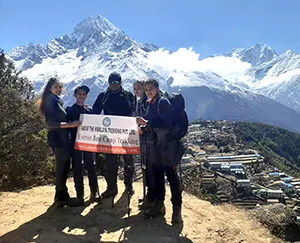
Trips for Kids
Calling all young adventurers - join us for a journey of a lifetime!
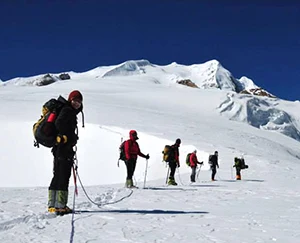
Trips for Adventurers
Climbing & mountaineering adventures for thrill-seekers