Customize Your Trip
 Need Help? Let's Talk
+977 985-1095800Mount Kailash tour from Lhasa

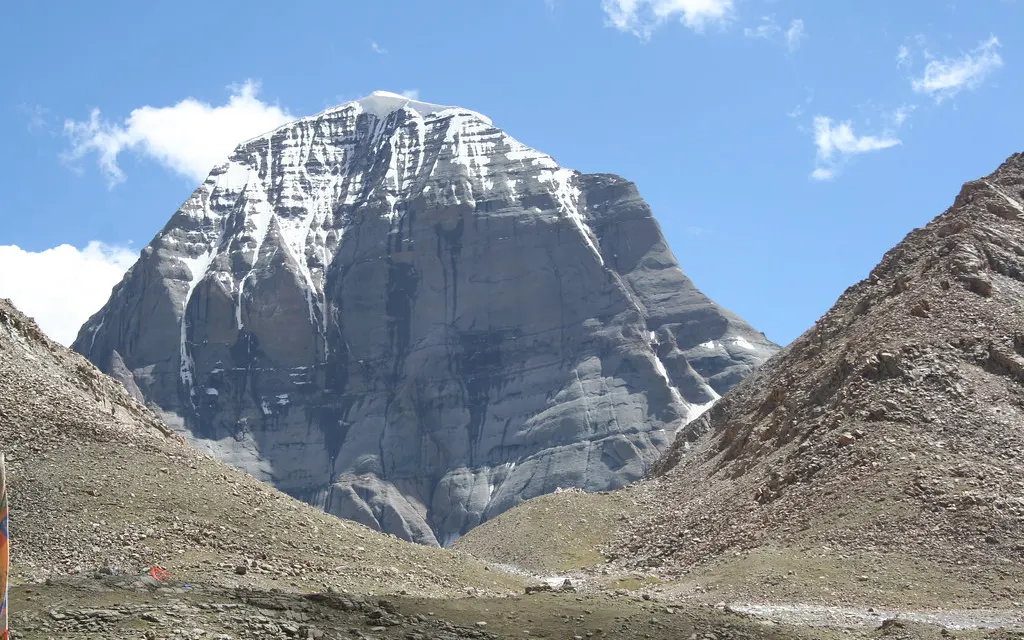
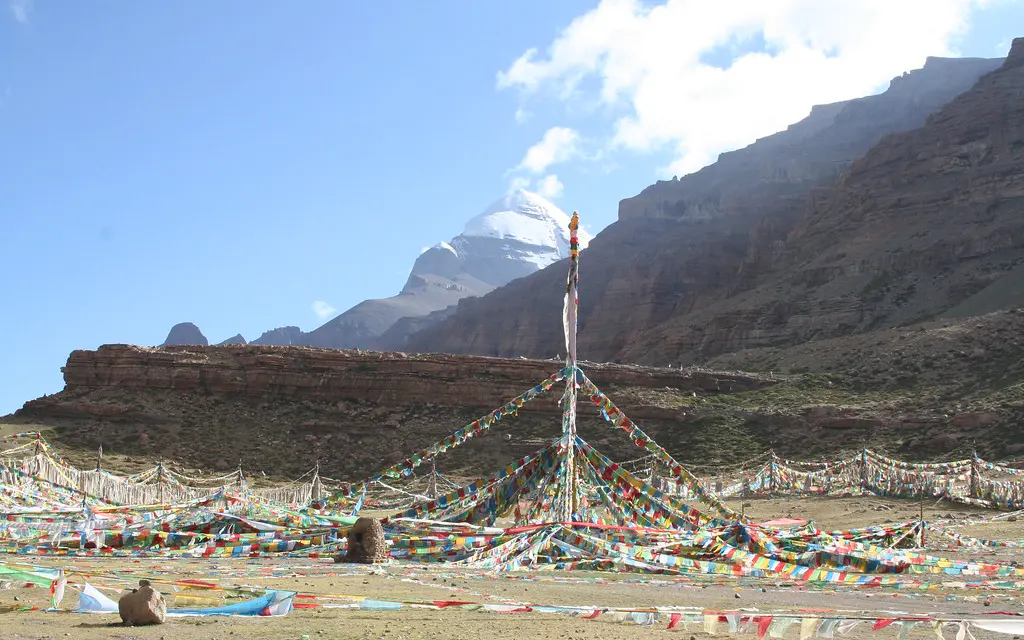
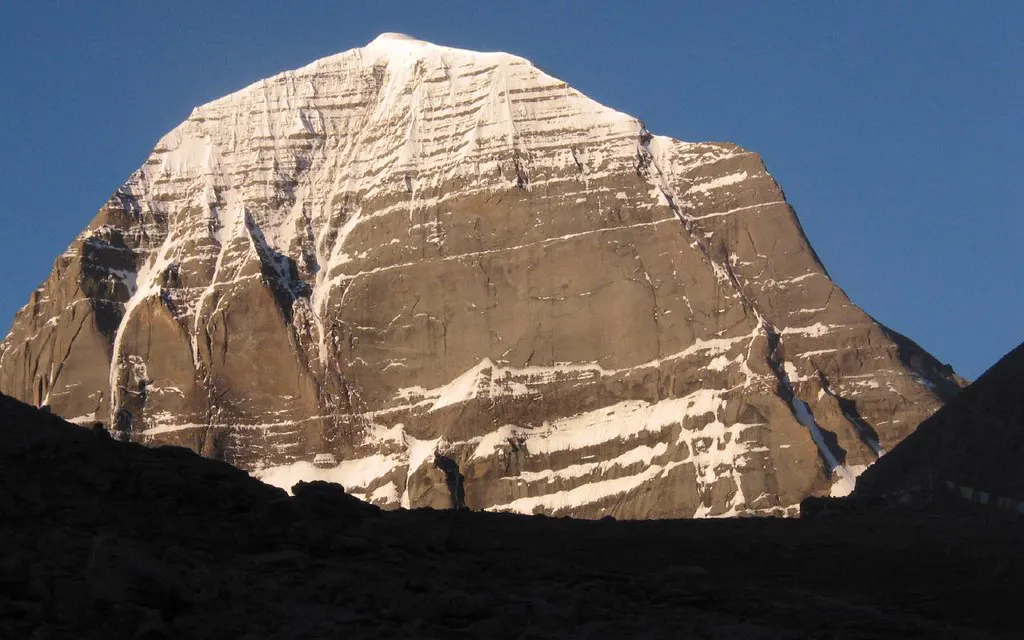
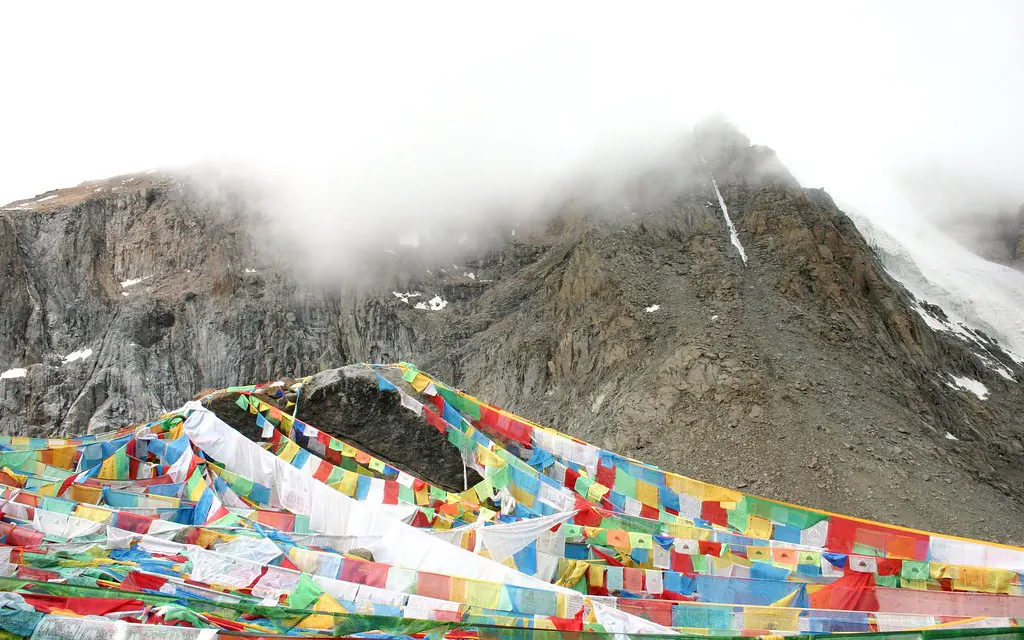
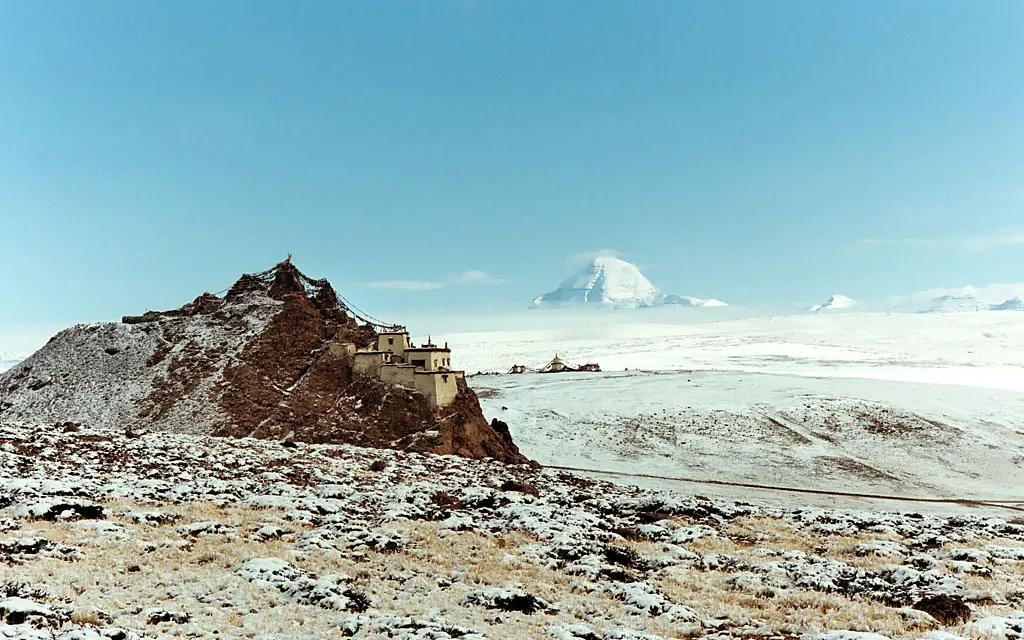
Trip Highlights of Mount Kailash tour from Lhasa
- Visit the culture and historical sites in Lhasa.
- Visit the famous Potala Palace and Jokhang Temple.
- Cross the Tibetan Plateau with variable terrain.
- Visit the holy Lake Mansarovar.
- Complete the famous three-day Kailash Kora.
- Explore Tibetan monasteries and towns of interest.
- Cross high mountain passes with panoramic views of Tibet.
- Explore Tibetan Buddhism and the local culture.
- Experience a well-planned Kailash Mansarovar yatra from Lhasa.
- Explore some of the best pilgrimage sites in Asia.
Trip Extension
Suppose you have more time in Nepal after this trip. In that case, we can help you to extend your trip by running different treks in Nepal, tours in Bhutan and Tibet, Jungle safari tours at Chitwan, Bardia, and other National parks, Nepal luxury hotel booking, Rafting, Ultra-light flights, or any other travel-related services. You can get more information here.
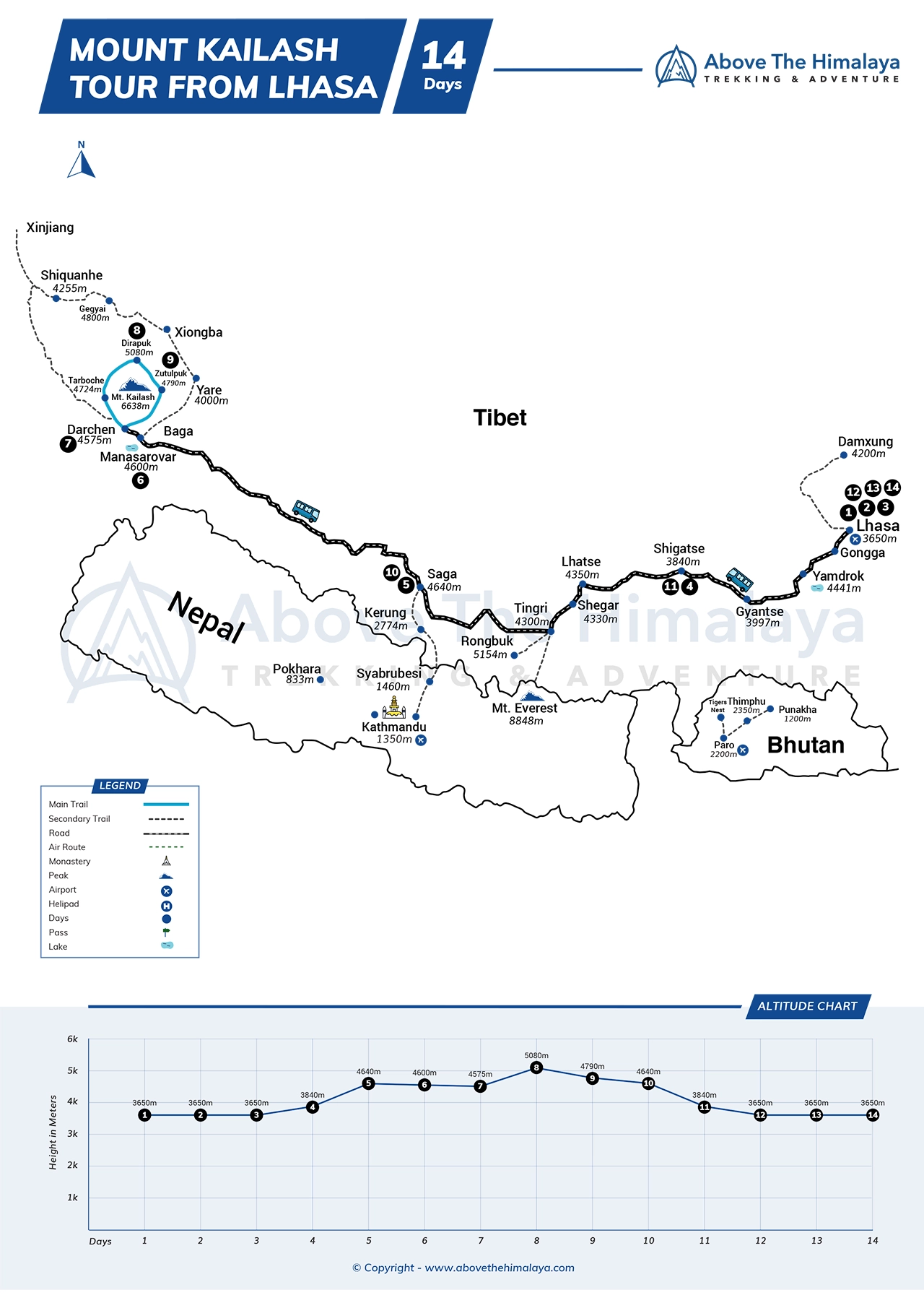
Route Map & Altitude Chart
Most Asked Questions by Travellers
 General
The initial days in Lhasa allow the tourists to familiarize with the high altitude and visit the significant cultural and religious locations and then proceed on the way to Mount Kailash tour from Lhasa.
The tour is a combination of Lhasa cultural sightseeing, Lake Mansarovar and the entire Kailash Kora which provides the perfect balance of Tibetan culture, pilgrimage, and high altitude scenery.
The peak of the Kailash Kora is Dolma La Pass which is around 5,630m above sea level.
No, it is not allowed to climb Mount Kailash. The mountain is believed to be holy and the pilgrims complete the pilgrimage by going round the mountain instead of climbing it.
Mount Kailash tour from Lhasa It can be both. Most of the tourists come to the tours for religious reasons and some come to see the culture and scenery of Tibet and its special traveling experiences.
Yes, the tour is available for all travellers. History, scenery, culture and the travelling experience are some of the reasons that attract many visitors.
The main highlights of theMount Kailash tour from Lhasa is the Kailash Kora, Lake Mansarovar, and the cultural attractions of Lhasa.
 Preparation & Fitness
Reasonable fitness level recommended. Most of the journey is completed by vehicle, but the Kailash Kora involves several days of walking at high altitude.
Trekking experience is desirable but not required. Most travelers will find that good preparation and a regular speed are enough.
The Kailash Kora is considered to be a moderately challenging trek due to the altitude and the crossing of the Dolma La Pass. Proper acclimatization helps reduce difficulties.
Stamina can be improved with regular walking, hiking, jogging or cycling. It also helps to get ready for high altitude and longer trips.
Absolutely, anyone who is in good condition and is prepared for the trip can do it.
Endurance and leg strength will be developed with the help of walking, hiking, climbing stairs, cycling, and light strength training.
The age limit is not mentioned, but visitors should be healthy and be able to handle the altitude.
Be flexible and have an understanding that travel plans may be impacted by weather, roadway conditions, and altitude make travel more enjoyable.
 Permits
Most travelers require a Chinese visa before entering Tibet. The visa requirements depend on the nationality of the traveller, so please verify the most up-to-date visa regulations prior to travelling.
Travelers need a Tibet Travel Permit and additional local permits for visiting western Tibet, Mount Kailash, and Lake Mansarovar.
Yes, all necessary travel permits to Tibet are usually secured as a package.
Typically, it takes a few days to a few weeks to process a permit. It is advisable to book early to ensure they will be able to arrange all documents in due time.
No, you are not allowed to travel independently in Tibet usually. Travelers have to enter an organised tour with the authority of the guide and permits.
Normally a valid passport and a Chinese visa are required. More information may be required according to the current regulations.
Permit fees are typically local, and may not be refunded after processing. Conditions vary by tour operator/permit.
Yes, passengers must have their passports with them at all times. Identification and permits may be checked at various checkpoints throughout Tibet.
 Insurance and Visa
It is highly advisable to have travel insurance for everyone on the Kailash tour from Lhasa. It offers monetary coverage if there is a medical emergency, cancellation or any unforeseen travel disruptions.
Where possible, if your trip gets delayed or canceled, medical treatment is required, emergency evacuation, and personal belongings are involved, your policy should cover all of these.
Yes, it is necessary to have travel insurance above 5000 meters as the tour ascends above this during Kailash kora.
There are differences between rescues in Tibet and Nepal. Comprehensive insurance is essential for emergency services because they can vary in location, weather, local laws and procedures.
It is recommended to buy insurance prior to travelling. This means a trip will be covered before you begin it.
Guides will help to organize appropriate medical support. Medical transportation to a facility might be necessary.
There are many policies that cover delays and interruptions, however, coverage differs between providers. Please check policy carefully before travelling.
This tour passes through the remote areas of Tibet where health care facilities may be scarce. Insurance provides additional safety and peace of mind on the trip.
 Guides & Support Staff
Yes, the group will be accompanied by an experienced English speaking Tibetan guide who will take care of the logistics, sightseeing and local information and guide the group throughout the trip.
Yes, guides are familiar with the route and understand the local culture and the high altitudes as well as how to lead tourists around Tibet.
Yes, guides speak English and are able to explain to travelers the history, culture and religious meaning of the areas visited.
Yes, there are support arrangements in place for the kora. Guides arrange trips and help hiker on the trekking part.
Normally professional trekking and support staff are covered under local regulations and company policies.
Private guide services can be arranged upon request if available and tour arrangements.
Tipping is not mandatory but highly appreciated as a token of gratitude for the excellent service you have received from guides, drivers and support staff.
Above the Himalaya will process permits, arrange transport, book stays, and handle other arrangements for the trip.
 Accommodation and Facilities
Accommodation consists of hotels in Lhasa, Shigatse and Saga and simple guesthouses in the region of Mount Kailash and Lake Mansarovar.
Yes, most hotels in bigger towns offer reasonable rooms with standard amenities like individual baths, heating and meals.
The guesthouses in the remote places are basic and simple. Accommodations are less luxurious than those found in larger cities.
In some accommodations, private rooms might be available upon request and availability. Requests will, wherever possible, be made in advance.
Hot water can usually be found in hotels, although it might not be as readily available in remote guesthouses in the vicinity of Mount Kailash.
Hotels usually have individual baths and some guesthouses have shared bathrooms.
Electricity will be available in most hotels and guesthouses, although sometimes this may be interrupted in remote areas.
Wi-Fi is usually provided in hotels in large towns, but may be slow or unavailable in remote areas close to Mount Kailash.
 Food and Drinks
There are different Tibetan, Chinese and basic international dishes available during the tour. Away from the city, meals will be simpler, and in bigger towns, there will be a greater variety of restaurants.
Absolutely: There are plenty of vegetarian options along the way! Check the specific types of items, and they can generally be arranged for rice, noodles, vegetables, soups and tofu dishes.
Vegan meals may be offered in bigger cities and towns. It’s good to let your guide know of dietary needs beforehand.
Bottled water can be found in most villages and towns on the way. Many travellers also bring water purification tablets or water bottles that they are able to reuse.
Yes, snacks can be purchased in larger towns. It is a good idea to carry some extra snacks for long driving days and trekking sections.
The majority of hotels, restaurants and guesthouses will have tea or coffee facilities. In many places Tibetan butter tea is also served.
Food from hotels, restaurants and guest houses is usually safe to eat. Most meals made at the time are the best, particularly in remote areas.
Depending on the accommodation, bread, eggs, porridge, noodles, tea or coffee are served at breakfast, or simple Tibetan and Chinese dishes.
 Weather & Seasons
May to September is typically the best time for the weather to be more agreeable and travel is usually easier.
Temperatures vary depending on season and altitude. Even in the summer, nights can get cold near Mount Kailash and Lake Mansarovar.
Yes, depending on weather and weather conditions, it is possible to travel in winter, but weather conditions and snow may impact the overall experience.
The amount of rainfall in Tibet is lower than that in some neighbouring regions. But on occasional rainy days in summer months.
All main roads are open but access may be impacted by weather and local restrictions at times.
Weather in Tibet generally becomes pleasant in April, with comfortable temperatures and relatively clear skies.
Autumn is really a great time to travel, trekking, and enjoy the weather and conditions it offers.
Absolutely, weather conditions can impact trail conditions, visibility and general enjoyment of the kora. The travellers should always be ready to encounter varying mountain conditions at any time.
 Health & Safety
Anyone can suffer from altitude sickness, no matter their age or fitness. The tour will have high altitudes above 5000 metres, so it is very important to acclimatize properly.
Headache, dizziness, nausea, fatigue, shortness of breath and loss of appetite are common symptoms. If there are any symptoms, report these to the guide immediately.
Maintaining hydration, walking in a steady pace, adequate rest and careful adherence to the itinerary will help minimize the risk for altitude-related issues.
Medical facilities are available in the larger towns, but services are scarce in remote areas close to Mount Kailash. If a traveller requires their own medication, they should bring these with them.
Emergency arrangements will be made with Guides and coordination for transportation to the nearest available medical facility, if necessary.
Emergency oxygen is usually stored in the support vehicle, and may be used if necessary during the trip.
Yes, the route is considered safe to do when accompanied by an experienced guide, appropriate permits, and a good understanding of high altitude conditions.
Yes, travelers should bring any medicine that they need during their trip, including personal medicine and basic first aid items.
 Packing & Gear
Multiple layers of clothing should be worn, such as thermal undergarments, fleece jackets, a warm down jacket, waterproof outer layers, gloves and a hat.
Yes, comfortable and well broken-in trekking boots are strongly recommended particularly for Kailash Kora.
Trekking poles are helpful for the kora, especially for steep passes near Dolma La Pass.
For nights in basic guesthouses near Mount Kailash a warm sleeping bag is recommended.
A small daypack will typically hold water, snacks, extra clothes, personal papers and other daily needs.
Yes, a power bank is certainly recommended because in some remote locations there can be no power source or not enough supply of power.
Sunglasses, sun cream, lip balm, reusable water bottle, personal medicines, toiletries and wipes will be useful items to carry around.
Rental equipment might be available, but if possible, it is best to pack all necessary trekking gear at home.
 Booking & Payment
A tour can be booked by contacting the tour operator, verifying travel dates and sending the necessary paperwork to be processed for a permit.
Yes, generally a deposit is necessary to hold your booking and start the permit application process.
We accept bank transfers and other accepted payment forms. During the booking, the available options will be provided.
The final payment is generally required before the start of the tour. The specific date of payment will be indicated when you book.
Yes, it can be canceled, however, the policy of cancellation and the amount of funds back will depend on the time of cancellation and the permit status.
Date changes may be available subject to permit requirements, hotel availability and local requirements.
Yes, you will receive a confirmation when you have completed the booking, deposit and necessary documents.
Additional costs may apply to the personal expenses, travel insurance, visa fees, tips and services not included in the section below.
 Transportation & Flight
Travelers can fly into Lhasa from any major city in China or train from Beijing/Shanghai through Tibet Railway Network.
Yes, according to the itinerary, there will be airport or railway station transfers in Lhasa.
It is done with private tourist vehicles which are able to travel long distances across Tibet.
The duration of the drive will depend on the day and the weather conditions, some days may be 5 to 8 hours depending on the destination.
Yes, vehicles are selected to provide reasonable comfort during long travel days across the Tibetan Plateau.
Itinerary does not need any domestic flights. The route is mostly by road once in Lhasa.
Yes, driving schedules can be impacted by weather, road maintenance, traffic and local conditions.
Guides and support staff will make necessary adjustments to the itinerary, where possible and assistance during the journey will be provided.
Reviews on Mount Kailash tour from Lhasa
Be first to post a review in this trip.




Book with Confidence
- Flexible bookings and easy trip date changes
- Personalized service and customized group sizes
- Safe travels with owner-operated services and highly experienced guides
- Best price guarantee for the most value for your money
- Secure & easy online booking
Your Trek Leader
 Enjoy Himalayan scenery with the help of Nepal’s best guides with Government license holders and got training in first-aid, our Trip Leaders, know where you’ll find the best photos, most fascinating wildlife, and the best stream crossings.
US$ 3700 Per Person
Have Questions?Talk to Expert
Meet Mr. Purushotam Timalsena (Puru), Nepal's best trek and tour organizer, who has been working in the Himalayas for more than 24 years.
WhatsApp/Viber +977 98510 95 800



You May Like


Trips for All
Private Trip
Peaceful tour with your travel buddy and guide
Small Group Travel
Travel with people having similar adventure dreams
Trips for Kids
Calling all young adventurers - join us for a journey of a lifetime!
Trips for Adventurers
Climbing & mountaineering adventures for thrill-seekers