Customize Your Trip
 Need Help? Let's Talk
+977 985-1095800Mount Kailash Yatra by Helicopter




10% OFF
Trip Duration 11
Group Size 2-16 People
Start & End Point Kathmandu / Kathmandu
Trip Highlights of Mount Kailash Yatra by Helicopter
- Flights and helicopter transfers are faster and save time on long road journeys to reach the mount Kailash.
- Take the three-day spiritual journey around the mountain Kailash Kora at a high altitude.
- Traverse the difficult 5,630 m (18,471 ft) pass Dolma La, which has spectacular views.
- Behold the calm beauty of the sacred Manasarovar Lake, 4,599 m (15,089 ft).
- Experience pilgrims in Saga Dawa or full moon nights to enjoy the spiritual vibe.
- Flight over deep gorges, rough mountains, and expansive Tibetan plateaus.
- Every visa, permit, and logistics done, guides, porters and emergency back-up.
Overview of Mount Kailash Yatra by Helicopter
The Mount Kailash Yatra by helicopter is the most convenient and fulfilling method of accomplishing this religious pilgrimage within a limited time without sacrificing the spiritual meaning of the same.
Mount Kailash is considered to be one of the sacred mountains in the world and is highly venerated by Hindus, Buddhists, Jains and Bon followers. To a great number of followers, the pilgrimage to Mount Kailash and Lake Manasarovar is their dream. This well-planned Mount Kailash Yatra by Helicopter by Above the Himalaya allows that dream to be a reality even for travellers with less time or those who need to have a more comfortable journey.
The Kailash Yatra is traditionally a lengthy journey of about a couple of weeks that includes numerous road trips and high-altitude walking. Mount Kailash Yatra by Helicopter from Kathmandu saves a lot of time by merging flights and helicopter flights across Nepal and into the Tibetan plateau.
Pilgrims will not spend days on uneasy roads. They can take scenic flights over the Himalayas, the valley of deep rivers, and the remote mountain villages. This not only saves time, but also minimises physical exertion, allowing older pilgrims and those who have never visited high altitude areas before to make the trip. Above the Himalaya will organise everything in such a manner that you can immerse into the spiritual journey to the maximum.
The trip starts in Kathmandu, which has a lot of spirituality and old temples. Pilgrims get a chance to visit sacred Hindu locations before going to Tibet so that they can be psychologically and spiritually prepared to go on the yatra.
The path goes on through Nepalgunj and Simikot, and then, it is followed by an amazing helicopter flight. This air travel is a spectacular journey, on which one can get breathtaking views which cannot be had on the normal routes.
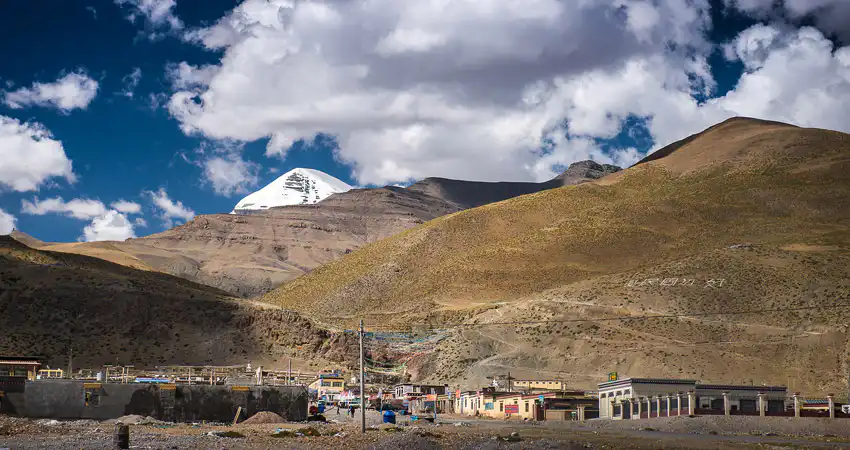
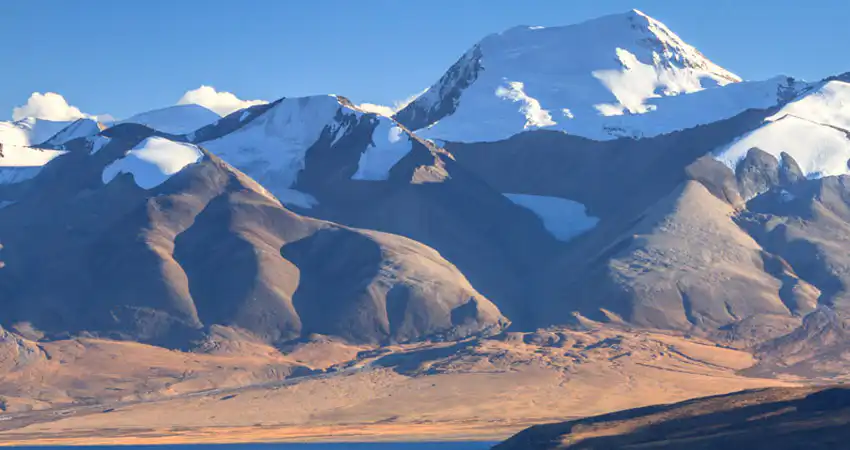
After reaching Tibet, pilgrims visit the beautiful Lake Manasarovar, which is ranked among the highest freshwater lakes in the world. There is a very peaceful and spiritual atmosphere by the still blue waters with their snow-capped mountains.
The Kailash Parikrama, or the three-day circumambulation of Mount Kailash, is the most significant component of the journey. At an elevation of 5,630 m (18,471 ft) during this walk, pilgrims pass through the sacred Dolma-La Pass, which is considered to be a tough but deeply rewarding experience that is believed to wash away the sins of the past and liberate the spirit.
Mount Kailash Yatra by Helicopter from Kathmandu provides a good combination of spirituality, comfort and adventure as a whole. It retains the holy nature of the pilgrimage and makes it more approachable, where pilgrims can concentrate on prayer, reflection and the strong sense of spirituality of Mount Kailash itself.
Itinerary of Mount Kailash Yatra by Helicopter
DAY
01
01
Day 01: Arrival in Kathmandu – Gateway to the Sacred Journey
Mount Kailash Yatra by Helicopter from Kathmandu starts with your arrival at Tribhuvan International Airport. Upon arrival, our representative from Above the Himalaya will receive you and help to transfer to your hotel. The journey is approximately 20-30 minutes, and you have your first glimpse of Kathmandu and its crowded streets and traditional buildings.
After the hotel and check-in are done, the remaining day is spent at a leisurely pace. The location of Kathmandu is 1,345 m (4,413 ft) height and most tourists can relax with it, but it is better to have some rest after your international journey.
When you are feeling energetic, you can have a stroll about the locality, shop locally or purchase any last-minute necessities like warm clothing or personal items, along with any other last-minute items.
During the night, have a specially organised welcome dinner, where you get to meet other pilgrims and get a general briefing on the rest of the journey. Stay overnight in Kathmandu with anticipation of the holy days ahead.
Car
20–30 minutes transfer
Meals
Dinner
Altitude
1,345m (Kathmandu)
DAY
02
02
Day 02: Kathmandu Sightseeing and Flight to Nepalgunj
The second day of your Mount Kailash Yatra by Helicopter from Kathmandu is a spiritual sightseeing in Kathmandu. The first place to visit is the Pashupatinath Temple, which is the most holy Hindu temple in Nepal and is dedicated to Lord Shiva. This sacred place, which is linked closely with the spiritual meaning of Mount Kailash, sits along the Bagmati River. Here, pilgrims have a great feeling of devotion and peace.
Then there is the Budhanilkantha Temple, where there is the reclining image of Lord Vishnu that is famously referred to as the Sleeping Vishnu. It is a peaceful and holy spot where one can pray and meditate. These visits to the temples serve to provide a spiritual background to the whole Mount Kailash visit via Helicopter.
Afternoon, you arrive at the domestic airport to have a scenic one-hour flight to Nepalgunj. As you get down to 152 m (499 ft), the scenery slowly becomes flat plain instead of hills. Nepalgunj is a commercial town that is near the Indian border and a major transit center of Kailash pilgrims. Once you have checked into a hotel, you undergo a briefing on the following mountain flights.
Multiple
Half-day city tour & 1 hour flight
Accommodation
Hotel
Meals
Breakfast, Dinner
Altitude
1,345m (Kathmandu) / 152m (Nepalgunj)
DAY
03
03
Day 03: Flight from Nepalgunj to Simikot – Entering the Himalayas
The day is significant in your Mount Kailash Yatra by Helicopter from Kathmandu as you head into the deeper Himalayan region. You take a morning flight from Nepalgunj airportto Simikot. The flight takes about 45 to 50 minutes and has breathtaking aerial sights because the scenery is steeped high out of the plain ground to mountain ranges.
The administrative center of the Humla district is Simikot, which is at an altitude of 3,224 m (10,577 ft), which is one of the most important entry points in the Mount Kailash Yatra by Helicopter route.
Upon landing, the first thing that you will notice is the cooler air and the serene mountain environment. You are moved into a local guesthouse where simplicity and warmth are easy to come by.
The remaining day is dedicated to acclimatisation primarily. This is quite essential because you have to allow your body time to acclimatise to the elevated altitude. You can walk around the Simikot village shortly and mildly, study the life of the locals, and have a sightseeing of the surrounding hills. Dine on hot vegetarian food and sleep in the evening.
Flight
45–50 minute flight (weather dependent)
Accommodation
Guest House
Meals
Breakfast, Lunch & Dinner
Altitude
3,224m (Simikot)
DAY
04
04
Day 04: Helicopter to Hilsa and Drive to Taklakot (Purang)
This is the most exciting day of your Mount Kailash Yatra by helicopter from Kathmandu. In the morning, you take a helicopter fromSimikotto Hilsa. It lasts around 20 to 25 minutes, and it is full of spectacular scenery of deep valleys, rivers, and snow-covered ridges. It is a short but dramatic flight that actually gives credit to the choice of Mount Kailash Yatra by Helicopter.
The Nepal-side border point is called Hilsa and is at 3,640 m (11,942 ft). Once landed, you cross a suspension bridge over the Karnali River to enter Tibet.
Immigration and permit checks are filled out in the presence of our Tibetan guide. After formalities, you go on by vehicle to Taklakot, or Purang, as it is called.
The 30 km drive will take an hour and take you across the expansive Tibetan plateau. Taklakot is located at 3890 m (12762 ft) and is a key acclimatisation city for pilgrims of Kailash. The rest of the day following hotel check-in is at leisure.
Accommodation
Hotel
Meals
Breakfast, Lunch & Dinner
Altitude
3,890m (Taklakot/Purang)
DAY
05
05
Day 05: Acclimatisation Day in Taklakot (Purang)
The fifth day of the Mount Kailash Yatra by Helicopter from Kathmandu is fully occupied by acclimatisation, and this cannot be ignored before ascending further into the Tibetan plateau. Taklakot is a place that is at 3890 m (12762 ft) above sea level, which is the best place to give your body some time to adjust to the altitude. The day is maintained as a relaxed day and does not involve any long travelling or hard work.
A slight fatigue, light headache or shortness of breath is also not unusual at this altitude. Our guides are really attentive, and they recommend you take a lot of warm fluids, eat, and sleep. This day is the most significant day to have proper acclimatisation to be more comfortable and safer when doing the Kailash Parikrama, which is the most significant event of the Mount Kailash Yatra by Helicopter.
Unless you feel bored halfway through the day, you can take a little and easy stroll with your guide around Taklakot or the surrounding hills. These strolls are beneficial to enhance the blood flow and aid in acclimatisation without excessive stress. You also get to see the huge Tibetan landscape, grazing yaks, and snow-covered mountains in the distance.
The rest of the day may be devoted to checking the trekking equipment, packing personal belongings and preparing mentally for the spiritual trip in the future. Pilgrims usually perform evening prayers, meditation or silent thinking.
Accommodation
Hotel
Meals
Breakfast, Lunch & Dinner
Altitude
3,890m (Taklakot)
DAY
06
06
Day 06: Drive from Taklakot to Lake Manasarovar
It is a highly spiritual day of Mount Kailash Yatra by Helicopter from Kathmandu. A scenic journey of approximately 90km to the Holy Lake Manasarovar starts after an early breakfast. The trip is a two-hour ride across the expansive and open Tibetan plateau with the dramatic mountain scenery all around.
On the way, you can see the Gurla Mandhata soaring into the air at 7,694 m (25,243 ft). It is also possible to have the first glimpse of Mount Kailash on clear days, and it is a really emotional experience for most pilgrims doing the Mount Kailash Yatra by helicopter.
Lake Manasarovar is 4,599 m (15,089 ft) in height and is regarded as one of the most sacred lakes in the world. As you arrive, you stay in a basic guesthouse along the lake. The serene environment and the water that is crystal clear form a strong spiritual ambience.
During the afternoon, pilgrims hold holy practices like prayers and puja by the lakeside. The person is welcome to take a short dip in the holy water, but it must be done very cautiously since the water is very cold.
You can also have a glimpse of the immense beauty of the lake by taking a brief tour around a section of the lake. In the evening, one can watch a beautiful sunset on the lake with Mount Kailash in the background.
Bus
2 hours driving
Accommodation
Hotel
Meals
Breakfast, Lunch & Dinner
Altitude
4,599m (Lake Manasarovar
DAY
07
07
Day 07: Drive to Yam Dwar and Trek to Dirapuk – Start of Kailash Parikrama
Your breakfast place is at Lake Manasarovar on this day, then you drive to the main base town of the Mount Kailash pilgrims, Darchen, at 4,660 m (15,289 ft). A short drive from Darchen is the official starting point of Kailash Parikrama, Yam Dwar or Tarboche.
The Gateway of the god of Death, or Yam Dwar, is a very sacred site where pilgrims make prayers before initiating the walk. You set out after brief ceremonies towards Dirapuk. The distance is approximately 12 km, and the walk takes time, of 5 to 6 hours, at a slow and steady pace.
The path takes the Lha Chu River, and slowly climbs up a broad valley. When walking along, the grand north face of the mountain Kailash slowly enters your sight, which forms a very emotional and spiritual encounter. The path is surrounded by prayer flags, rocky cliffs, and flowing streams.
Towards the end of the afternoon, you arrive at Dirapuk at 4,909 m (16,106 ft). The guesthouse in this place is a simple one, though due to the proximity to Mount Kailash, it will be memorable.
Bus
1.5 hours drive
Accommodation
Hotel
Meals
Breakfast, Lunch & Dinner
Trek Distance
12 km
Trek Duration
5–6 hours
Altitude
4,909m (Dirapuk)
DAY
08
08
Day 08: Trek from Dirapuk to Zuthulpuk via Dolma-La Pass
It is the hardest and most spiritual day in the Mount Kailash Yatra by Helicopter from Kathmandu. You leave quite early in the morning, because today is a day of crossing the top of the trip, Dolma-La Pass, 5,630 m (18,471 ft). The ascent fromDirapuk is tedious and gradual, and one should proceed at a slow pace during which the breaths should be steady and gentle.
The summit of Dolma-La Pass is a spiritual experience. Colourful prayer flags cover the area, and pilgrims pray to be cleansed and blessed. People think that when one passes this pass, it symbolises rebirth.
Once past, you come down to Gauri Kund, a sacred lake that is 5,608 m (18,399 ft) in altitude, and is related to Goddess Parvati. The trail is sharp and jagged, and must be taken slowly and cautiously. Beyond this part, the road is smoother and goes along a quiet river valley.
The rewarding walk is a long, but worthwhile, 22 kmwalk to Zuthulpuk. This is called the cave of Saint Milarepa and is a spiritual relaxation after a stressful day.
Accommodation
Hotel
Meals
Breakfast, Lunch & Dinner
Trek Distance
22 km
Trek Duration
9–10 hours (strenuous trek day)
Altitude
5,630m (Dolma-La Pass)
DAY
09
09
Day 09: Complete Kailash Parikrama and Drive Back to Taklakot
The Kailash Parikrama is completed when the parikrama ends on day nine of the Mount Kailash Yatra by Helicopter from Kathmandu. After an early breakfast at Zuthulpuk, you move on to the last 10 km of the trek. The walk today is much easier than it was yesterday, and at a general level, going along the meandering river through a large valley. At a leisurely pace, the hike normally involves a time span of 2 to 3 hours.
With the endpoint coming close to Darchen at 4,730 m (15,518 ft), you get the strong feeling of relief, joy, and spiritual satisfaction. The entire process of going around Mount Kailash is regarded as a great ritual of spiritual worship, and a lot of pilgrims stop at this point and take some time to meditate and pray silently. It is one of the biggest attractions of the Mount Kailash Yatra by Helicopter.
After the walk, you will meet your vehicle at Darchen, with any of the other members of the group who remained behind. The journey back to Taklakot is approximately 3-4 hours, and the road crosses Lake Manasarovar one more time, which is the last opportunity to enjoy the calm beauty of the lake.
Accommodation
Hotel
Meals
Breakfast, Lunch & Dinner
Trek Distance
10 km
Trek Duration
2–3 hours
Altitude
4,730m (trek end near Darchen), then descending to 3,890m
DAY
10
10
Day 10: Return to Kathmandu via Hilsa, Simikot, and Nepalgunj
It is the last day of your Mount Kailash Yatra by Helicopter from Kathmandu. You can drive after breakfast to Taklakot to the border of Tibet-Nepal, Hilsa, a distance of approximately 30 km, and take one hour. Having made the Chinese exit formalities, you get back onto the bridge and into Nepal.
At Hilsa, you have a helicopter to Simikot. This brief flight of 20 to 25 minutes is again overwhelmed by the thrilling scenery of deep gorges and jagged mountains. On reaching Simikot, 3,224 m (10,577 ft), you proceed by fixed-wing aircraft to Nepalgunj, down into warmer air.
Once you arrive in Nepalgunj, you are linked to a one-hour flight back to Kathmandu. Towards the end of the afternoon, you land at Kathmandu at 1,345 m (4,413 ft), where you officially complete the Mount Kailash Yatra by Helicopter from Kathmandu. Spend a lazy night and a festal good-bye meal after transfer to the hotel.
Multiple
1 hour drive, 25 min helicopter, 50 min Simikot flight, 1 hour Nepalgunj flight
Accommodation
Hotel
Meals
Breakfast, Lunch & Dinner
Altitude
3,890m (Taklakot) then progressively lower
DAY
11
11
Day 11: Departure from Kathmandu – Journey Ends
This day of the Mount Kailash Yatra by Helicopter from Kathmandu is a thrilling day towards the end of the Mount Kailash Yatra. Free time after breakfast at the hotel, and it depends on the flight schedule. You can either sleep, pack up and even do some last-minute shopping for souvenirs and prayer items in Kathmandu.
When you are ready to leave, there is much inner peace and satisfaction for the pilgrims who have made this holy journey. You will always remember the memories of Mount Kailash, Lake Manasarovar and the overwhelming experience of the parikrama even when the trip is over.
As per the schedule, our representative will take you to Tribhuvan International Airport. The migration lasts between 20 and 30 minutes. We wish you a safe homecoming trip, and the spiritual good wishes of Mount Kailash keep on escorting you in life. We are happy that you have selected Above the Himalaya in this once-in-a-lifetime pilgrimage.
Car
20–30 min airport transfer
Meals
Breakfast
Altitude
1,345m (Kathmandu)
Trip Extension
Suppose you have more time in Nepal after this trip. In that case, we can help you to extend your trip by running different treks in Nepal, tours in Bhutan and Tibet, Jungle safari tours at Chitwan, Bardia, and other National parks, Nepal luxury hotel booking, Rafting, Ultra-light flights, or any other travel-related services. You can get more information here.
Includes/Excludes
What's Included?
- In Kathmandu (2 nights in a 5-star hotel), Nepalgunj (1 night in a 3-star hotel), Simikot (1 night), Taklakot/Purang (2 nights), and basic guesthouses at Hilsa,Lake Manasarovar, Dirapuk, and Zuthulpuk, all accommodations will be on a sharing basis as per the itinerary.
- All domestic flights, such as Kathmandu-Nepalgunj-Kathmandu and Nepalgunj-Simikot-Nepalgunj with fixed-wing aircraft.
- Helicopter flights between Hilsa and Simikot according to the program (shuttle-basis).
- All road travel in Tibet is by private and comfortable tourist 4×4, with a support truck to carry luggage and equipment.
- Breakfast, lunch and dinner throughout the trip according to the itinerary, and they are all vegetarian.
- Trip supplied services of a qualified Tibetan, English-speaking guide in the Kailash region, as well as a support staff of Nepali guides, cooks and assistants.
- Any travel permits of Tibet/China, Humla region Restricted Area Permit, and government royalties.
- First aid kit and backup oxygen for the team.
- Alltransfers of a private vehicle at Kathmandu airport, pick-up and drop-off.
- Duffel bag, backpack, cap, passport holder, windcheater jacket and completion certificate of the Mount Kailash Yatra as souvenirs.
- The taxes and service charges.
What's Excluded?
- Airfare to and fromNepal
- Nepal visa charges on foreign nationals and Chinese Group Visa charges on Tibet (visa processing is done in advance, but the fees are to be paid separately according to embassy requirements).
- Travel insurance, such as treatment and emergency evacuation (compulsory).
- Individual, horse or yak hire in the Mount Kailash parikrama.
- Guide, driver, and support staff tips (not a mandatory activity, but a custom).
- Personal costs like laundry fees, phone calls, extra snacks, bottled beverages, hot showers that are not included with the set meals, etc.
- Additional accommodation, catering, or transport due to delays on flights, weather conditions, border closures, or other unexpected events.
- Additional expenses will be incurred when one of the participants quits the group prematurely or fails to finish the parikrama, such as the fines that have been enforced by the Tibetan officials.
- Expenses incurred due to natural conditions, political unrest or something that is out of our control, which necessitates a change of itinerary.
- Any service that is not listed in the section of cost includes.
Route Map & Altitude Chart

Trek Difficulty
The Mount Kailash Yatra by Helicopter from Kathmandu is structured in such a way that it gives one this sacred pilgrimage and, at the same time, provides them with a significant trekking experience. Helicopters and flights do not require long and tiresome journeys over land, and save energy and time.
Nonetheless, it involves a three-day trek at high altitude around Mount Kailash known as Kailash Parikrama. The pilgrims cover a distance of 10-22 km per day over rough and rocky paths, and their altitude usually ranges between 4,500 and 5,000 m (14,764-16,404 ft).
Its hardest part is the Dolma-La Pass at 5,630 m (18,471 ft), which is challenging due to the thin air, steep ascents, cold and windy weather that demand stamina and mental concentration. T
The trek is moderate. Through good acclimatisation, pacing and advice from well-experienced directions, the majority of reasonably fit travellers can get through the pilgrimage. It is easier with the emergency oxygen, medical support, and the possibility of hiring horses or porters.
Hydration, constant movement and attention to the guides make the trek not only something to complete, but also something to get spiritual out of.
Weather and Best Season for the Mount Kailash Yatra by Helicopter from Kathmandu
The weather also has a great influence on the Mount Kailash Yatra by Helicopter from Kathmandu since the path is on low plains to the high Tibetan plateau. The most appropriate time to visit this place is May to September, when the weather is usually calm. May and June are mild and spiritually significant as they are known as the Saga Dawa festival, which attracts a lot of pilgrims.
In Nepal, the months of July and August coincide with the monsoon, and thus flights to Simikot might be delayed, but less rainfall falls on Tibet.
The autumn months of August and September are clear skies, the air is crisp, and the mountain views are spectacular.
The temperatures at Lake Manasarovar (4,599 m / 15,089 ft) during the day can be 10-20 °C, and at night may drop to below freezing. It is cold, windy and at times snowy even in high season at Dolma-La Pass (5,630 m / 18,471 ft).
The season is not good during the winter months, from late October to April, since it is snowy. Multi-layered clothing, warm clothes and flexibility are also a necessity to enjoy this pilgrimage safely and comfortably.
Food and Drink
In the Mount Kailash Yatra by Helicopter from Kathmandu, food is purely vegetarian as this is in accordance with the religious practices, as well as the fact that high-altitude food is easily digested.
In Kathmandu and Nepalgunj, one can take meals in comfy hotels with the Nepali, Indian and simple continental vegetarian cuisine. Food becomes less complex as the trip proceeds to isolated places like Simikot (3,224 m / 10,577 ft) and Taklakot (3,890 m / 12,762 ft): rice, dal, vegetable curries, chapati, noodles, soups, and porridge continue to be adequate eats.
Hot food is made by the support team to sustain energy during the Kailash Parikrama, and near Lake Manasarovar (4,599 m / 15,089 ft). There is safe drinking water, which is boiled or bottled. High altitudes are very important in hydration; intake of water should be taken at regular intervals.
Alcohol and excessive caffeine should not be taken. People who have special diets, such as gluten-free or Jain meals, are required to inform the team beforehand. All in all, the Yatra is a guarantee of healthy, energetic, and comfortable nutrition in high-altitude treks.
Altitude Sickness
The Mount Kailash Yatra by Helicopter from Kathmandu is a serious case in terms of altitude sickness since the pilgrimage takes one to high levels. The itinerary enables slow acclimatization which begins in Kathmandu (1,345 m / 4,413 ft), then to Simikot (3,224 m / 10,577 ft), Taklakot (3,890 m / 12,762 ft), and finally Lake Manasarovar (4,599 m / 15,089 ft), culminating at Dolma-La Pass (5,630 m / 18,471 ft).
Symptoms like Mild headache, dizziness, nausea or loss of appetite are common but normally manageable. Guides accompany pilgrims and have medical supplies and oxygen. The rest days, especially in Taklakot, facilitate adaptation.
In order to be risk-averse, one should walk slowly, drink enough water, eat enough, and not overwork. Visit physicians to take altitude sickness preventive medicines.
With these measures, the majority of pilgrims will make it through the Mount Kailash Yatra without any issues. Understanding, patience and slow moving can make the altitude obstacles manageable, and this will enable the travellers to concentrate on the spiritual and cultural meaning of this holy journey.
Preparation and Fitness for the Mount Kailash Yatra by Helicopter from Kathmandu
Mount Kailash Yatra by Helicopter from Kathmandu is a smooth journey, which requires preparation. Although you do not have to be a sports person, the three-day high-altitude Kailash Parikrama, which involves trekking up to altitudes of 5,630 m / 18,471 ft., requires you to be of adequate fitness, so to gain stamina at least two months before the trip, you have to engage in cardio activities such as walking, jogging, cycling, or swimming.
Walking for a few hours and uphill hiking or stairs help in strengthening legs and lungs. Endurance and recovery improvements are provided by the use of light strength training of core and leg muscles, and stretching or yoga.
Basic accommodations, simple food, and delays caused by weather are also not exempt from mental preparation.
The right gear is also necessary, like trekking boots, warm layered clothing, gloves, a hat, sunglasses, sunscreen, a waterproof jacket, and trekking poles.
Safety, confidence and enjoyment are increased by proper preparation, and the pilgrims may get the full spiritual and cultural value of the unique journey.
Visa and Permits
Mount Kailash Yatra by Helicopter from Kathmandu involves certain visas and permits. However, all arrangements are done by Above the Himalaya on your behalf. The majority of foreigners require a Nepal entry visa. A multiple-entry visa is suggested as the route for leaving and entering Nepal. Indian citizens do not require a Nepal visa, but other people can receive it upon arrival or at a Nepal embassy.
All visitors, including Nepali citizens, are required to have a Chinese Group Visa and a Tibet Travel Permit to enter Tibet. We apply for these permits as soon as you are in Kathmandu. The package includes other documents like the Ngari and Humla region permit (Restricted Area Permit) to Simikot and Hilsa.
Checkpoints are common in checking the permits; hence, it is necessary to keep up with the group. Having all the paperwork in place on a professional level, the pilgrims can enjoy a trouble-free and hassle-free pilgrimage from Kathmandu to Mount Kailash, and focus on the spiritual experience and not on the administrative issues.
Health and Safety
The Mount Kailash Yatra by Helicopter from Kathmandu has health and safety as its priority. Itinerary is designed such that it is gradual in terms of climbing the altitude and rest days to minimise risks. Well-trained and professionally trained guides accompany the group and carry medical kits and emergency oxygen.
The greatest issue in high-altitudes is altitude sickness, which is frequently observed at Dolma-La Pass (5,630 m / 18,471 ft). It is necessary to be hydrated, eat healthy, walk slowly, and take time to rest to be safe. Food is cooked and is vegetarian, whereas drinking water is boiled or bottled.
Pilgrims will need to bring along personal medications, hand sanitiser, and a simple first aid kit. In case of difficulty in walking, horses and porters can be hired.
Generally, helicopter rescue is not available in Tibet, and travel insurance is highly advisable. Through the advice of the trained personnel, health care, and support services, pilgrims will be able to accomplish the Mount Kailash Yatra safely without emphasising the physical issues, but the spiritual ones.
Transportation for the Mount Kailash Yatra by Helicopter from Kathmandu
Mount Kailash Yatra by Helicopter from Kathmandu is a combination of flights, helicopter, road transport, and trekking. Domestic flights fly from Kathmandu to Nepalgunj and from Nepalgunj to Simikot, saving days of long road journeys and providing scenic air travel.
The best is the helicopter trip between Simikot and Hilsa, flying over chasm gorges and the rugged land that would have required days on foot. Helicopters are efficient for small group numbers.
In Tibet, travellers are transported by private vehicles such as coaches and jeeps to Taklakot, Lake Manasarovar (4,599 m / 15,089 ft) and Darchen, in which the luggage is transported in support trucks so that pilgrims are only required to bring small daypacks.
The three-day Kailash Parikrama is done on foot; however, porters or horses are available options. Everything is arranged by Above the Himalaya, and transportation is quite efficient and planned. This system of flights, vehicles, and trekking makes the yatra safe, time-efficient, and comfortable and gives access to the sacred high-altitude places.
Travel Insurance
Mount Kailash Yatra by Helicopter from Kathmandu goes through remote locations and high-altitude travel, as well as complex logistics, making travel insurance essential.
A well-rounded policy offers coverage in case of a medical emergency, altitude sickness, and evacuation. Helicopter evacuation is incredibly expensive in Simikot, and medical evacuations are by road to the nearest facility, which is also expensive in Tibet.
Trip delay, cancellation, baggage loss, and theft should be covered by insurance.
Make sure that your policy covers high altitude travel up to 6,000 m (19,685 ft) in Nepal and Tibet (China), since most policies do not cover these conditions.
By disclosing insurance information to the tour team before the trip, one would be assisted easily in case of an emergency.
Travel insurance is not a risk-factor- it is a clever and conscientious move to ensure a safe and stress-free pilgrimage. With adequate coverage, pilgrims do not have to worry about the spiritual journey as they are sure that unexpected circumstances will be handled in a professional and competent manner.
Alternative Routes
Although the Mount Kailash Yatra by Helicopter from Kathmandu is the most efficient and quickest, other paths can be taken by a traveller who has more time.
The inland option via the Kerung border will require 13-15 days, which includes a long route by road but with a scenic view and slow acclimatisation.
The other way is to fly to Lhasa and travel overland via Shigatse among other Tibetan cities, visiting monasteries and cultural sites. This makes it an excellent cultural experience, but it takes more time and is more costly.
Before the introduction of helicopter services, pilgrims had to walk from Simikot to the Tibetan border, taking one week of high-altitude hiking, which is only possible for very fit individuals.
Although both routes have their own benefits, the helicopter journey is the favourite of most pilgrims nowadays because it offers them speed, comfort, safety, and spiritual experience. It enables entry to the holy Mount Kailash and other sacred places without the wear and travel difficulties of a long overland or walking trail.
Your Extra Expenses on the Mount Kailash Yatra by Helicopter from Kathmandu
Despite the fact that this tour package, Mount Kailash Yatra, includes most services, the travellers are advised to anticipate some extra expenses. The visa fee in Nepal is not included, and foreigners will be required to pay visa fees either upon arrival or beforehand. Indian citizens are exempt.
The travel insurance is obligatory and should be organised separately.
In Kathmandu or Nepalgunj, some of the meals, especially lunches or additional meals due to delays, are not covered. There are also personal expenses like snacks, bottled water, soft drinks, laundry, phone calls and take-away food which are not covered.
The hiring of a horse or a porter is optional but translates to an additional expense, and it is usually paid in Chinese Yuan during the three days of the Kailash Parikrama.
The guides, drivers, and support staff are credited with a tip, which is not compulsory.
Delays or permit problems with the weather can cause extra accommodation or meal expenses, and it makes sense to have contingency money. The shopping costs, religious objects and souvenirs should even be planned separately in order to go through the pilgrimage smoothly without any stress.
Language and Communication
Mount Kailash Yatra by Helicopter from Kathmandu offers an experience of various languages and a lack of connectivity. In Nepal, Nepali is the local language, which includes Kathmandu, Nepalgunj and Simikot, although English is also widely used in the hotels and tourist spots. The Nepali guides speak English language and that is why coordinating with them is not a difficult task.
Tibet is a country with its own language, Tibetan, and the official one, Mandarin Chinese. Your Tibetan guide will also speak English, Tibetan, and Chinese to facilitate the communication process since most of the locals in the Kailash region do not speak English.
Internet connectivity and mobile networks are extremely low in secluded places, and applications such as WhatsApp, Facebook, or Gmail might not be available without a VPN.
Guides use satellite phones and local communications in case of an emergency. Regardless of these shortcomings, professional guidance makes the communication process go unhindered, as you will be able to concentrate on the spiritual and cultural experience of the Yatra.
Charging, Internet and Mobile Network Facilities.
During the Mount Kailash Yatra by Helicopter from Kathmandu,connectivity is poor, as it is considered to be a high-altitude area and isolated. Mobile networks and Wi-Fi are good in Kathmandu and Nepalgunj, and the internet in hotels can be trusted. Signals in Simikot are poor and unreliable. Once the Nepali SIM card is crossed into Tibet at Hilsa and Taklakot, it becomes unusable.
There are only Chinese networks, and international roaming can be expensive or untrustworthy. Short-term Chinese tourists might find it challenging to get local Chinese SIM cards. The internet in Taklakot can be slow and limited, whereas at Lake Manasarovar, at Darchen and around Kailash Parikrama, there is no internet.
In Kathmandu, Nepalgunj and Taklakot, hotels have electricity, although in Simikot and trekking guesthouses, the power is solar-powered and has a low capacity. It is necessary to have power banks, extra batteries, and keep devices warm. Poor connectivity provides an opportunity to experience the spiritual journey to the fullest.
Don’ts on This Trip
Mount Kailash Yatra by Helicopter from Kathmandu is a religious journey, and it is important to observe traditions. It is also advisable not to misbehave and be very loud and disrespectful towards the holy places like Mount Kailash and Lake Manasarovar.
Wear simple clothes, avoid swear words and do the parikrama in a clockwise direction, as it is customary between Hindus and Buddhists.
At the border checkpoints, immigration offices and military locations, photography is prohibited; it is always necessary to request permission at monasteries. Drones are completely forbidden.
One should not litter, pollute or dispose of anything in holy lakes or rivers. Alcohol and smoking are discouraged because of the height and religious sensitivity. Do not overwork in the high places; warn your guide when sick.
Remain with a group and obey all directions. Do not talk politics with Tibet or China. Adherence to these guidelines is a guarantee of safe, respectful and spiritually satisfying pilgrimage.
Trip Extension for the Mount Kailash Yatra by Helicopter from Kathmandu
A lot of pilgrims take a Helicopter extension to Mount Kailash Yatra to relax or travel. Nepal can present alternatives such as Pokhara, a tranquil lakeside town with the view of Annapurna, which is the perfect place to relax, take a light sightseeing trip, and make short hikes.
Jungle safari and wildlife are other popular activities in Chitwan National Park that include rhinos and birds.
In terms of culture, additional days in Kathmandu Valley can be spent in the UNESCO sites such as Bhaktapur, Patan and Durbar Square.
Pilgrims are able to keep the spirit alive by paying a visit to Muktinath Temple, Mustang at 3,800 m (12,467 ft), which is regarded as sacred by Hindus and Buddhists.
Depending on permits and time, some of the travellers can go all the way to Lhasa or Bhutan.
There are also wellness facilities, spas, cozy cafes to have a rest in Kathmandu. The extensions can be made before travel and accommodation planning so that travelling and accommodation arrangements become easy, and the pilgrimage, being rigorous, is followed by a more enriching and relaxing experience.
Photography and Drone Rules
Photography on the Mount Kailash Yatra by Helicopter from Kathmandu enables pilgrims to take beautiful scenery and religious shots, but strict rules have to be adhered to.
Photography can be made in open spaces, such as Mount Kailash and Lake Manasarovar, but is highly forbidden at border crossings and immigration points, as well as in proximity to a military area.
Photography can be prohibited in monasteries or temples, and a small donation can be made; never forget to ask your guide.
In a situation involving the photographing of the locals, you need to seek permission to show respect, and especially when the locals are praying, you should not use flash.
The use of drones is strictly forbidden by the authorities of the Kailash and Lake Manasarovar area; it is possible to be confiscated, fined or even prosecuted due to the possession of a drone or even trying to fly it.
Insulate camera gear against dust, cold and elevation, as batteries in high altitudes run out of power more easily. Although you need to capture memories, make sure you take time and immerse yourself in the spiritual experience of the journey.
Cultural Festivals on the Trail
Precisely scheduling your Cultural Festivals on the Trailincreases the experience. The most important one is Saga Dawa, which commemorates the birth, enlightenment, and parinirvana of Buddha, typically in May or June on the fourth month of the Tibetan lunar year.
Thousands of pilgrims flock around the mountain of Kailash, and the ritual of raising and lowering the giant prayer-flag pole at Tarboche near Darchen is a sight, full of chanting, incense and devotion.
The full moon nights at Lake Manasarovar also have a spiritual significance and provide peaceful and favourable environments to meditate and pray.
Even in Taklakot (Purang), there are traditional market days in which Tibetan and Nepali merchants can be found, since the culture of cross-border trade is centuries old.
Interactions with other pilgrims could be the most unforgettable cultural experiences, even beyond the major festivals. These events allow observing the spiritual and cultural customs of the area.
Tips for First-Time Visitors
Mount Kailash Yatra by Helicopter from Kathmandu, pilgrims ought to prepare well and develop the appropriate attitude. Early booking is also a necessity because the flights, helicopters, and permits are not numerous, especially during peak season or festivals.
Acclimatisation, pacing, hydration, and customs are all essential factors towards safety and comfort, and your guide gave you instructions on them. Keep hydrated, take frequent meals that are easily digested, so that you will be energetic at high altitudes.
Wear clothes in layers to shield against the sun, wind, and cold, and use sunscreen, sunglasses, and gloves.
Take your time during the Kailash parikrama to walk slowly, but comfortably, bearing in mind that it is not a race but a pilgrimage.
The psychological training also plays a significant role; there is a delay, inadequate facilities, and exhaustion involved in the process. Being patient, positive and respectful to the other yatris improves the experience. Through some preparation, humility and awareness, your initial Mount Kailash Yatra can be a very life-changing spiritual experience.
Most Asked Questions by Travellers
The Mount Kailash Yatra by Helicopter from Kathmandu is a 11 day trip that involves flights in Nepal, a helicopter flight to the Tibet border, overland in Tibet and a 3-day parikrama trek of Mount Kailash.
The highest season to hold the Mount Kailash Yatra using a helicopter is May to September, when the weather is relatively calm, and the trekking route is open.
Experience in trekking either before or during the trek is optional, but the Mount Kailash Yatra through Helicopter is not an extreme one and can be handled by fairly fit pilgrims.
There is a risk of altitude sickness, but the itinerary will have gradual acclimatisation, rest days and close supervision by trained guides who will have oxygen and medical backup.
The accommodation will be between comfortable hotels in Kathmandu and Nepalgunj, and simple guesthouses and dorm-like lodges in Simikot, Toklakot, Manasarovar, and the Kailash trek.
Yes, vegetarian meals are provided throughout the Mount Kailash Yatra by Helicopter Kathmandu, covering the meals even during the trekking days.
We, Above the Himalaya, do all the visas and other permits related to Tibet, but foreigners need to get their Nepal visa elsewhere.
Yes, one may get horses and porters at Darchen at a little extra expense over the three-day parikrama.
Cold weather, layered clothes, good trekking shoes, a warm sleeping bag, personal medications and a small daypack are to be included.
In Kathmandu and Nepalgunj, there is a mobile network and internet access; however, there is very limited or no connectivity at Simikot and Tibet.
Indeed, numerous elderly visitors manage to complete the Mount Kailash Yatra by Helicopter as long as they are healthy and medically sound.
Yes, only limited luggage weight is permitted on mountain flights and helicopter transfers, and light packing is highly recommended.
There might be weather-related delays, particularly in Simikot, and it is recommended that travellers reserve buffer days after the vacation.
Nighttime temperatures may fall below zero in the trek, particularly in high altitude places such as Dirapuk and Dolma-La Pass.
No, there will be no hot shower amenities during the trek or at Lake Manasarovar.
Taking a dip in Lake Manasarovar is only optional, and it all comes down to belief and comfort.
In Nepal, one uses Nepalese Rupees and in Tibet, one uses Chinese Yuan, because credit cards cannot be used in the remote places.
Trained guides, first aid kits, oxygen canisters and evacuation plans are also part of emergency aids, but travel insurance is compulsory.
Yes, there are also trip extensions like sightseeing in Nepal or other pilgrimage touring, which can be done when requested.
Photography is not usually restricted to Mount Kailash and Lake Manasarovar but is strictly forbidden in border regions and military locations, as well as the use of drones.
The Mount Kailash Yatra is holy to the Hindus, Buddhists, Jains, and Bon faiths, and the accomplishment of the parikrama is thought to imbue profound spiritual merit and spiritual change.
Reviews on Mount Kailash Yatra by Helicopter
Be first to post a review in this trip.
Posted on Tripadvisor
 H H9 December 2025
Verified
Thank you for the best tour we have ever had! I planned to stay at the Everest View Hotel this time and travel there because I wanted to see Everest, the highest mountain in the world, slowly, but despite the short schedule due to my children's school, all I got was a response that it was difficult to contact several tour companies. The Himaraya Trekking, Above, has worked out a smooth and safe schedule and had the best experience for me and my family. I will never forget the view of Mount Everest. Thank you very much.Posted on Tripadvisor Mike F26 November 2025Another Amazing Trip with Above the Himalaya This is my 3rd trip with Above the Himalaya and Puru. Each trip with Puru has exceeded expectation with the quality of the guides, porters and attention to detail. We were a team of 5 trekker and our ages were all above 67 years of age with the oldest being 73. We are all experienced hikers and trekker and our plan was to trek up the Khumbu Valley to the Cho La pass to Gokyo to the Renjo La pass to return to Lukla. However, the weather altered our plans as Cyclone Montha blanketed the country in rain at lower elevations and significant snowfall at the upper elevations. Due to the weather, no one was trekking and everyone was staying put in their current location during the storm. All the passes were closed due to the deep snow. We were in Namche when the storm was blanketing the country.This is where Above the Himalaya really shines is in the ability to adapt to the changing conditions and our safety. In conversation with our lead guide, we decided to alter our route to trek through the Gokyo valley to reach Gokyo and then do the Renjo La pass. Sitaram our lead guide and Dhurba our assistant guide was both attentive to the changing conditions and always kept a keen eye for how we were doing and feeling on the trek. The pacing was excellent as none of us had any hint of altitude sickness as we reached a maximum elevation of 5,365m.Having trekked and hiked all over the world with different tour companies, Puru’s company is simply the best. The communications, focus on safety, the guides and staff, the accommodations, and the food are all amazing. All you have to do is focus on the beauty of the mountains, enjoy the joyfulness of the Nepali people and have fun exploring the trails. I am planning my next trip with Puru for 2027 as there is no other trekking company to match Puru’s level of service.Posted on Tripadvisor
 Mie K. A.25 November 2025Take a small step into the Himalayas I went with Above The Himalaya Trekking’s Everest View Hike in November 2025 and can only recommend with my whole heart!I had never visited Nepal or the Himalayas before and had a life long dream of seeing Mt Everest. I had though, hiked a lot in various parts of the world, but never above 2000 m, so I went with the five day Everest View Trek to take a small step and see how I would handle the altitude. From first enquiry about dates and various questions, to my arrival back from the trip, Puru has been an invaluable help, always standby on mail and WhatsApp, pulling strings and making things happen.Also big shout out to the amazing guide I was teamed with, Kamal, who did everything he could to answer all my curious questions about vegetation, animal life, Nepalese culture and everything in-between :) Kamal was the perfect gentleman, offering little treats and reminding me to take breaks, and all in all I felt very safe and in good hands all the time. He also had good banter and jokes, which lifted the spirit of even the hardest climb.It was cold most nights and mornings and even though the tea houses provided heavy blankets (and I could borrow extra) I was glad I had the sleeping bag with me, which I rented through Puru. But I could definitely have survived without and saved the space in my pack.In total, I’m very pleased I’ve got to experience this lovely country with Above the Himalaya Trekking and if I ever come back for the big leap into the mountains, I’ll chose Kamal and Puru all over again :)Posted on Tripadvisor
 nameless25 November 2025Nepal trek-Gokyo Second trek with Above the Himalaya, this time to Gokyo and over Renjo La. Our lead and assistant guides (Sitaram and Dhurba) were excellent. Due to several days of rain at lower elevations and snow higher we needed to change our plans while in the midst of our trek. Above the Himalaya accomplished this smoothly and flawlessly, which ultimately resulted in a better experience. We’ll be back!Posted on Tripadvisor
 Yu S22 November 2025Great Experience and Friendly people. We had a great time with Above the Himalayas tour company in Oct. Ajay, the tour guide in Kathmandu is very friendly and knowledgeable. He took us to a lot of places that we can experience local authentic daily life. Puru, the owner, arranged and organized our trip in such way that we really feel comfortable and enjoyable. We are specially impressed by his quick action and management skills. Our flight to Pokhara got cancelled due to bed weather. Within minutes, Puru was able to arrange a car and a driver to drive us to Pokhara! It saved out trip.Posted on Tripadvisor
 Sally M14 November 2025Glorious trekking experience - ABC We had the most wonderful experience doing the Annapurna Base Camp trek with our fabulous guide, Tanka, and porter, Ravi. The trek was glorious, despite some rainy days, and although we weren't sure we would get to see the peaks at ABC, the weather cleared just in time and we had an amazing sunrise there. What made the whole trip so special, though, were Tanka and Ravi, who remained cheerful at all times and went out of their way to make everything as good as it could be. This included setting a pace with regular breaks which made the walking completely manageable, modifying the itinerary so we could visit additional villages, getting up in the middle of the night to see if the sky would be clear for sunrise, and bringing a sense of ease and humour to all our interactions. We just loved the whole thing and are keen to return to Nepal for another trek. It was magical!Posted on Tripadvisor
 Peter E27 October 2025Above the Himalayas goes above and beyond expectations! From start to finish everything was perfect! Puru, the managing director, was always quick with his responses to my questions when I first contacted him about planning our trek, and he continued to check to see that everything was going well throughout.Our guide Tanka and porter Ravi were fantastic! Their friendly demeanor kept our experience lively and interesting the entire time and made sure that we were well taken care of. Even small details like Ravi coming in and double checking our rooms to see that we had left nothing behind before leaving each morning, and seeing that meals were prepared the way we liked them weren't overlooked. Tanka was also quite knowledgeable about the mountains, the people, and just about everything "Nepal". He enthusiastically shared stories about his family and Nepalese life in a general way.Although there was a clear itinerary each day, and for the whole trek, Tanka allowed for flexibility in terms of time and where to stay. He was even willing and able to make changes to same-day accommodation based on how far we anticipated hiking that morning. I can't say enough about how much we enjoyed our hike and I would definitely recommend Above the Himalayas for anyone considering a trek.Posted on Tripadvisor
 Akane U25 October 2025Amazing tour For me and my son, Pru thought of a four-day trekking tour.His interaction was very smooth.On the first day, I went with my son to Gandrouk, and on the second day, he went to a higher place (mulde view point, Poon hill) with his guide Ashok. Ashok was very kind and took me to various local places. The food was also very good.My guide, Tangka, was very kind and helped me a lot.I recommend this travel agency because it's great.Posted on Tripadvisor
 Daniel F24 October 2025Everest Base Camp Trek My friends and I just completed the EBC trek. From the time I met Puru at the Canada Place trade show in Vancouver BC, Canada I felt comfortable going to Nepal. His communications via WhatsApp were seamless answering all our questions. Everything went exactly according to plan. Our guide Suresh was amazing. He took very good care of us the whole time. From guiding us to making sure we had everything we needed to be happy. The food the whole way up and back was amazing! 5 ⭐️. Our 2 porters were great as well. I have a whole new respect and appreciation for what they do. They are the true hero’s to what we can do as a team. We chose the basic trek the lodging was to be expected. If I was to do again I would choose the luxury trek. The hotels in Kathmandu at the Hotel Aloft and the Hotel Lo Mustang were top notch as well as the buffets. Highly recommend this local company!Posted on Tripadvisor
 adrienne h24 October 2025Great tour, would recommend! My friend and I completed the 10 day Annapurna circuit with Above Trekking Himalaya. Buddha our porter was a little mountain goat, pocket rocket. When I got altitude sickness he carried my bag, as well as mine and my friend’s big pack. He was friendly and loved to played cards with us, always with a cheeky smile on his face. Sitaram our guide was very knowledgeable of the area and quite serious. He was always available if we had any questions and went above and beyond to try get us the best/quietest rooms in the tea houses. Puru was fabulous working behind the scenes to ensure our trip was as smooth as possible. He was very quick to respond to any messages. It was a great experience to see Nepal with some locals and I certainly appreciated their support when I succumbed to altitude sickness. They stayed close to us the whole time and checked in frequently making us feeling safe and supported the entire time.Verified by TrustindexTrustindex verified badge is the Universal Symbol of Trust. Only the greatest companies can get the verified badge who has a review score above 4.5, based on customer reviews over the past 12 months. Read more
10% OFF
Book with Confidence
- Flexible bookings and easy trip date changes
- Personalized service and customized group sizes
- Safe travels with owner-operated services and highly experienced guides
- Best price guarantee for the most value for your money
- Secure & easy online booking
Your Trek Leader
 Enjoy Himalayan scenery with the help of Nepal’s best guides with Government license holders and got training in first-aid, our Trip Leaders, know where you’ll find the best photos, most fascinating wildlife, and the best stream crossings.
US$ 4700 Per Person
Have Questions?Talk to Expert
Meet Mr. Purushotam Timalsena (Puru), Nepal's best trek and tour organizer, who has been working in the Himalayas for more than 24 years.
WhatsApp/Viber +977 98510 95 800



You May Like


Trips for All
Private Trip
Peaceful tour with your travel buddy and guide
Small Group Travel
Travel with people having similar adventure dreams
Trips for Kids
Calling all young adventurers - join us for a journey of a lifetime!
Trips for Adventurers
Climbing & mountaineering adventures for thrill-seekers