Customize Your Trip

Need Help? Let's Talk
+977 985-1095800


15% OFF
Highlights of Ghandruk Trek
- This is the best short and easy trekking holiday.
- It is the perfect route for short-time trekkers and families with children.
- Enjoy panoramic views of Mt. Dhaulagiri, Mt. Annapurna, Mt. Fishtail, Mount Manaslu ranges, and Lamjung Himal.
- Trekking through rice fields, terraces, rhododendron forests, the Mountian River, and beautiful villages
- Explore Nepal’s Gurung community’s traditional lifestyle and culture during the hiking.
- We can walk through the nice terraced paddy and wheat fields.
- Enjoy the view of Nepali-style stone roof houses in rows.
- Enjoy the early sunrise view over the Himalayas from the Ghandruk trek.
- Visit Ghandruk village, the best Gurkha village in Nepal
Trip Extension
Suppose you have more time in Nepal after this trip. In that case, we can help you to extend your trip by running different treks in Nepal, tours in Bhutan and Tibet, Jungle safari tours at Chitwan, Bardia, and other National parks, Nepal luxury hotel booking, Rafting, Ultra-light flights, or any other travel-related services. You can get more information here.
Route Map & Altitude Chart

Most Asked Questions by Travellers
 General
The distance between Ghorepani and Ghandruk is 15 to 17 km. And, it takes you 6 to 7 hours to trek from one point to another. You will pass through scenic Rhododendron forests, villages, and stone stairs during this journey. Further, you will be able to explore Gurung culture during the trek.
The elevation of Ghandruk village is 1,940 meters (6,365 feet) above sea level. You’ll get the most beautiful views of Hiuchuli, Annapurna South, and Machhapuchhre when here. It is not very high as to cause altitude sickness. But, it is high enough to give you the most breathtaking views and an overall amazing trekking experience.
There are many peaks that are visible from Ghandruk, including Machhapuchhre, Annapurna South, and Dhaulagiri. You can get a brilliant view of sunrise and sunset from the destination amid the majestic peaks. The snowy tops of these mountains are instant attractions when you’re in Ghandruk.
Yes, both cellular networks in Nepal, namely Ncell and NTC, are available along with a good internet connection on the trail. While certain points in your travels may not have a good network connection, you can get both a solid cellular network connection and internet by the time you reach your accommodation spot.
 Preparation & Fitness
Yes, the Ghandruk trek is suitable for beginners. In fact, unlike most other Annapurna region treks, you won’t have to stress too much about having to spend excessive days on the trails. Also, families and beginners often go on this trek because it does not take a trekker to extreme altitudes.
The distance between Tikhedhunga and Ghorepani is around 12 km. The uphill trails will take you from 5 to 6 hours to complete. To reach Tikhedhunga, trekkers will also cross the stone steps of Ulleri, which makes for an interesting adventure in itself.
The Ghandruk trek can be considered easy to moderate, depending on your experience as a trekker. You can be assured that the trek is easy to complete, as even children and beginner-level trekkers often go on this journey without difficulty.
 Permits
You will mandatorily need two permits to trek in Ghandruk, including the TIMS (Trekkers’ Information Management System) card and the ACAP (Annapurna Conservation Area Permit). Both permits are useful in the conservation area to ensure the safety of the trekkers and to conserve the region.
Yes, both a TIMS card and an ACAP permit are necessary for the Ghandruk trek. You will need these permits regardless of where you are trekking when you’re within the proximity of the Annapurna Conservation Area. These permits are checked strictly at the entry point.
 Insurance and Visa
While it is not a compulsion for you to have travel insurance for the Ghandruk trek, it would still be great if you get one before your trek. Travel insurance often covers any possible risk and gives you peace of mind when you travel.
You need a tourist visa for trekking in Nepal. For 15 days, you’ll have to pay USD 30, for 30 days the price is USD 50, and for 90 days the cost is going to be USD 125.
 Guides & Support Staff
As of 2025, you need to take a licensed guide and a porter on the Ghandruk trek. However, the trek’s ease does not quite require either, given you are not carrying too much load. Taking both is going to ensure safety and comfort from beginning to end if you’re looking for a convenient trek.
Trekking solo to Ghandruk may not seem like the riskiest idea because of how easy it is to complete the journey. However, it is banned for solo trekkers to take on just about any trekking journey, including the Ghandruk trek, without a licensed guide.
 Accommodation and Facilities
Ghandruk has accommodation facilities such as teahouses and lodges with basic to luxurious facilities. Furthermore, Ghandruk is not too far from urban areas, making it easy to enjoy comfortable, clean, and adequately facilitated accommodation services.
Yes, there is basic medical or clinic access in Ghandruk. A medical post takes care of all the trekkers who visit the village due to either minor injuries or some health conditions that need serious and urgent medication and/ or treatment. It would, however, be best for trekkers to carry a first aid box with painkillers, prescribed medicines, etc., on their own.
 Food and Drinks
You can enjoy Nepalese traditional cuisine, especially daal bhaat with meat and vegetable curries at each teahouse or food stop in your trails. Other food items you can enjoy are momo, chowmein, thukpa, bread, soup, instant noodles, biscuits, pasta, pizza, etc. For drinks, you can also enjoy hot tea, coffee, juice, etc.
 Weather & Seasons
The best time to go on the Ghandruk trek is during spring (March to May) and autumn (October to November). These are the seasons when the rhododendrons bloom beautifully while the sky remains clear. You can also get the best view of the surrounding mountains like Dhaulagiri and Annapurna.
 Health & Safety
No, you don’t necessarily have to worry about altitude sickness on the Ghandruk trek. The trek does not take you to a very high altitude location as do most other Annapurna region treks. Therefore, even beginners don’t have to be overly concerned about altitude sickness in this journey. But, staying careful throughout will be of good help.
You need to follow health and safety tips that will keep you secure throughout the journey. Some tips include drinking safe water by using water purification tablets each time you fill your bottle up, carrying enough medications along the journey after getting treated by a physician, getting vaccinated, and doing a proper research on remote trekking.
 Packing & Gear
You need to pack comfy layers, a warm jacket, good trekking shoes, rain gear, a water bottle, snacks, basic medications, your permits, and cash for your Ghandruk trek. This trek does not require fancy trekking gears.
 Booking & Payment
You can easily book the Ghandruk trek by getting in touch with the Above The Himalayas team. Either you can prefer to visit our location in Thamel, or you can directly call us or send us an email.
The payment method is quite flexible at Above The Himalayas. Hence, you can simply use any payment method that you find convenient.
 Transportation & Flight
Yes, you can easily drive or take a jeep to Ghandruk directly from Pokhara. You will have to begin your journey from Pokhara to Nayapul and head towards Kimche to finally reach Ghandruk. The journey won’t take you more than 3 to 4 hours.
Reviews on Ghandruk Trek





Larry clark
UK
Ghandruk Loop Best Trek

Fantastic travel experience. From a very transparent and a very respectable professional tour consultant. There was help at every moment, the proper guidance. During route planning, they can change it if you want. The entire tour & trek (Ghandruk trek) went quite well.
Our trek guide was Pushpa, and he was pretty friendly. He ensured personal safety and comfort on the tour and made the changes on the trek at the customer level.
In short, Puru is very reliable, honest, and knowledgeable. All his staff are professionals who transport vehicles. He ensures the complete satisfaction of the customer and provides the service with utmost happiness, honesty, and completeness.
Thank you for such a memorable trip and experience.
Best of luck, Puru.
Larry Clark
UK
Paul Villan
Spain
Great organization
From Above The Himalaya Trekking, we have made different treks. Excellent support from Mr. Puru Timalsena. From the start of the planning to the completion of the trip. They cater to the perfect itinerary at an affordable price range.
Trekking guides are excellent, knowledgeable, and friendly. I will recommend Ghandruk Trek with this agency to anyone.
Paul Villan
Spain
Madhuri Bhatia
Dubai
Thank you for everything
We had a fantastic travel experience on our Ghandruk trek. It was from a very transparent and respectable professional tour consultant. There was help at every moment. Puru provided the proper guidance on route planning.
The Ghandruk trek itinerary was quite flexible. The entire tour & trek (Ghandruk Loop trek) went quite well.
Our trek guide was Pushpapretty, and he was pretty friendly. He ensured personal safety and comfort on the tour and made the changes on the trek according to customer needs.
In short, Puru is very reliable, honest, and knowledgeable. All his working staff are professionals who transport vehicles. He ensured complete customer satisfaction with utmost happiness, honesty, and completeness.
Thank you for such a memorable trip and experience.
Best of luck, Puru.
Madhuri Bhatia
Dubai
Maria Sheldon
USA
Amazing Trip ! Caring trekking company
My friend and I returned from the Ghandruk trek with Above The Himalaya Trekking Company. I was a bit worried at first as two women were traveling.
But there was no reason to worry! They cared for us and made us feel safe, secure, and welcome. Omit a great trip and 5-star service.
We are more than happy, and our guide and porter were terrific. A journey of a lifetime!
Maria Sheldon
USA
Rhonda Hall
USA
Great Organization
We had a fantastic Ghandruk trek. These guys are amazing at arranging every small thing. They looked after us throughout the trip.
We like Nepal’s culture and people. This is a place I would be returning to!
Rhonda Hall
USA
Darius Tumasionis & Dalia
LITHUANIA
Annapurna Ghandruk Loop Trek - November
Dear Puru, Thank you very much for a pleasant trek. Everything was organized excellently. Thank you for your kind attention! Grow up. We would like to ask for good, better, and better years for you.
Darius Tumasionis & Dalia
Lithuania
Chris Hickey
Turramurra Australia
Annapurna Ghandruk Trekking with Jungle Safari at Chitwan National Park
I need more time to organize my trip to Nepal. Puru from Above the Himalayan Trekking helped me make the most of my short time here.
I took the best view of the Annapurna Ghandruk trek. After my trek, I went to the Chitwan National Park.
They both were spectacular, and I recommend them to anyone visiting Nepal. They arrange every aspect of pick-up and drop-off, food, accommodation, and activities.
I enjoyed my time here and owe much of that to Above the Himalayan Trekking.
Thank you
Chris Hickey
Turramurra Australia
Marcia Valdujo
Ilhabela, Sao Paulo , Brazil
Ghandruk Trekking the best trip in Annapurna
Puru suggested a Ghandruk trek that suits me very well. All the guides that were with us were very professional. They knew everything about Nepal´s culture, and all the places I saw were excellent.
The agency officials were very polite and competent. The tour guide, Anju, was excellent, showing us Kathmandu, the temples, and the stupas; we loved her! During the trek, Phurba and Sunil were perfect.
They told us all about the small villages and the local culture. Even though we went during a season considered not the best time to visit Nepal, we were lucky.
The weather was great; it did not rain. I had a great view of Annapurna South, Machapuchare, and Annapurna III. Meeting the local people during the trekking was the most exciting experience.
Come back very soon!
Marcia Valdujo
A.J. Andrews
Bangalore, Karnataka, India
Annapurna Ghandruk Trek in May
I had a great trekking experience with Puru and his staff. I spent a day in Kathmandu exploring the city. After going for three days, Ghandruk treks through the Annapurna region.
The tour guide in Kathmandu was terrific. He was upbeat and friendly, had tons of good info, and made for a delightful day around the city.
On my Ghandruk trek, I went with Hari as my guide, and he was awesome. We are about the same age, and he was easy to joke with, so we got along incredibly. As well, he knew all the good places to stop for views. He chooses the best place to eat and to stay overnight.
Puru himself also did a great job checking in with me. He made sure I had everything I needed. He answered any questions and made sure everything went well. All the accommodations were always up to or exceeding expectations.
Thanks again, guys! I’ll get back there someday to see you again.
A.J. Andrews
India
Michelle Lafferty
Australia
Annapurna Ghandruk Trek - Best trip
I had only six days in Nepal, so I contacted Above the Himalayas to see if they could arrange a trip for me.
Puru promptly replied and organized everything, including internal flights, airport transfers, and hotels. I didn’t need to worry about a thing. I also found the prices quoted to be reasonable.
I did the three-day Ghandruk loop in the Annapurna region and had a fantastic time. My guide, Jyoti, was amiable and helpful.
I wasn’t very keen on my first hotel in Kathmandu (Shree Tibet), and when Puru came by to say hello, I mentioned it.
After my hike, he booked a different hotel for me when I returned to Kathmandu. Overall, I was pleased with the level of service. Puru listened to all of my comments and queries and took action in response.
That’s not always the case, and it was very much appreciated!
Michelle Lafferty
Australia
Danielle and Mathew Lomax
Dubai
Annapurna Ghandruk Trek + Pokhara And Kathmandu Tour April
We only had time for a brief holiday (10 days) in Nepal—an idea to have at least a little trekking. We looked on their website for information on short trekking for kids.
They include ones suitable for kids (our daughter is 7 yrs). We contacted them with a brief outline of what we wanted to do. Ghandruk Trek is ideal for kids.
Surprisingly, we got the same evening response (despite the time difference). We enjoyed his comments/suggestions. From then on, it was some “fine-tuning,” and we felt very comfortable.
We’d arranged to begin & end Accommodation in Kathmandu and used their day trips. Upon arrival in Kathmandu, they agreed on everything. Even some very last-minute changes (such as squeezing in a flight to Mt Everest. They arrange it before departure for Pokhara) flight.
The accommodation organized was full as promised. (during trekking rooms with own bathroom). The guide had good English knowledge.
Both he and the porter were very friendly and helpful. We had a splendid holiday and recommended Above the Himalayas.
Danielle and Mathew LomaxDubai
15% OFF
Book with Confidence
- Flexible bookings and easy trip date changes
- Personalized service and customized group sizes
- Safe travels with owner-operated services and highly experienced guides
- Best price guarantee for the most value for your money
- Secure & easy online booking
Your Trek Leader
 Enjoy Himalayan scenery with the help of Nepal’s best guides with Government license holders and got training in first-aid, our Trip Leaders, know where you’ll find the best photos, most fascinating wildlife, and the best stream crossings.
US$ 320 Per Person
Have Questions?Talk to Expert
Meet Mr. Purushotam Timalsena (Puru), Nepal's best trek and tour organizer, who has been working in the Himalayas for more than 24 years.
WhatsApp/Viber +977 98510 95 800



You May Like




Trips for All
Private Trip
Peaceful tour with your travel buddy and guide
Small Group Travel
Travel with people having similar adventure dreams
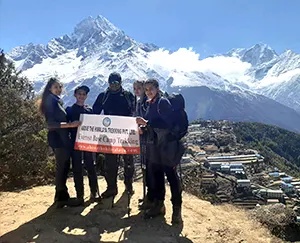
Trips for Kids
Calling all young adventurers - join us for a journey of a lifetime!
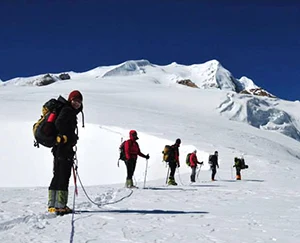
Trips for Adventurers
Climbing & mountaineering adventures for thrill-seekers