Customize Your Trip

Need Help? Let's Talk
+977 985-1095800


20% OFF
Highlights of Annapurna Circuit Short Trek
- Complete the Short Annapurna Circuit trip in 10 days on shorter Annapurna circuit short trek route.
- Trek through green valleys to high Thorong La Pass in 5,416 meters.
- View huge Himalayan mountains such as Annapurna, Dhauligiri and Manaslu.
- Visit local culture at Manang, Mustang, and traditional mountain villages.
- Go to Muktinath which is a holy place of both Buddhists and Hindus.
- Complete the 10 days Annapurna circuit trekking adventure with a scenic drive back to Pokhara via Jomsom.
Testimonials - Guests Sharing Their Incredible Experiences

Trip Extension
Suppose you have more time in Nepal after this trip. In that case, we can help you to extend your trip by running different treks in Nepal, tours in Bhutan and Tibet, Jungle safari tours at Chitwan, Bardia, and other National parks, Nepal luxury hotel booking, Rafting, Ultra-light flights, or any other travel-related services. You can get more information here.
Route Map & Altitude Chart

Most Asked Questions by Travellers
 General
The Short Annapurna Circuit trek skips some lower sections by using road transport and focuses on the main highlights. It is normally completed in 10 days with its end point at Jomsom after passing Thorong La. The complete circuit is longer and usually has additional sections such as Tatopani and Poon Hill.
You are expected to walk for about 7 to 8 days. The complete trip is 10 days including driving to the start point and back from Jomsom. Most of the trekking is from Chame or Dharapani to Jomsom through Thorong La.
Yes, if you are in good shape and prepare well. Altitude makes it challenging so it is important to walk slowly and follow the guide. Many first time trekkers do it quite successfully with good support.
Manang helps your body adapt to the thinner air before attempting a higher altitude. This giving rest, reduces the risk of altitude sickness and makes you more comfortable. Skipping it can be risky, especially prior to the pass day.
Thorong La Pass is 5,416 meters. It is the hardest day due to the altitude and walking hour. With an early start and constant pace, most trekkers cross in approximately 7 to 9 hours.
Yes, you can store the extra bags at your hotel or with us in Kathmandu or Pokhara. This is to help you trek lighter and more comfortably. We can advise you about the things you should carry.
You stay in simple teahouses along the trail. Rooms are typically twin sharing and with basic beds and blankets. Toilets are often shared and heating is mostly in the dining room.
While on a group trek you will trek with other travellers and our staff. In a private trek, it can be just you and your guide team. Even then, you will encounter other trekkers on the trail during busy seasons.
Yes, it is relatively safe to trek with a good company. We have experienced guides and request for a female guide if available. Teahouse villages are accustomed to trekkers and are friendly places.
 Preparation & Fitness
You need to be reasonably fit because you walk 5 to 8 hours most days. The terrain of up and down hills and the altitude add difficulty. The more physically fit you are, the more you will enjoy it.
Do some cardio activity such as walking, jogging, cycling or swimming 3 times a week. Add leg and core exercises such as squats, lunges and planks. Practice doing a couple of longer walks with a small backpack, if possible.
It helps but is not necessary if you prepare. Many first time trekkers complete it by walking steadily and resting well. It is important to be prepared for basic facilities.
It is not necessary for the majority of people. Normal fitness training helps, but acclimatization on the trek is most important. Follow the itinerary, drink enough water and do not rush.
It can be done with good preparation by fit beginners. The major difficulty is Thorong La Pass and the altitude. A slow pace and support from a guide goes a long way.
The guide keeps the pace easy and does not leave anyone behind. If you require more breaks, let your guide know in advance. The emphasis is safety and steady progress rather than speed.
There is no strict limit regarding your age provided you are healthy and ready. The trekkers who are older should do a medical checkup before taking the trek. For children we generally recommend about 12 to 13 with a guardian.
Expect long days and simple conditions and focus on one day at a time. Be flexible because weather and health may impact plans. A calm and positive mind helps you enjoy the trek more.
Please consult your doctor before undertaking a high altitude trek. If you have your condition under control, it may still be possible. Tell us and your guide so that we can properly support you.
 Permits
You require two permits to do this trek, first Annapurna Conservation Area Permit and secondly the TIMS card. These are compulsory in the Annapurna region trekking. Both the permits are part of our package and organized by our team.
You do not have to worry about permits. All the paperwork is done prior to the commencement of the trek. All you have to do is to submit a copy of passport along with a few passport size photos.
Yes, permits are inspected in a number of areas on the trail. Popular roadblocks occur at such destinations as Dharapani, Chame, Manang and Jomsom. These checkpoints will be taken care of by your guide.
In case of the loss of a permit, it should be reported to your guide. The guide may describe the circumstances at the checkpoints, as well as assist to organize the replacement in case of necessity. To prevent this problem, it is better to keep permits in a waterproof pouch.
Yes, there are permits to carry on trek. Usually, the guide keeps them safely, but it is good to know where they are in case officials ask.
Permit fees are not refundable once they have been issued. If the trek is canceled prior to processing of permits then fees may not be charged.
Yes, children will also need ACAP and TIMS permits. The process is the same as with adults, by using their passport details.
No extra permits are required for common side trips in the Annapurna region such as Tilicho Lake. These areas are already covered by the ACAP permit.
 Insurance and Visa
Yes, travel insurance is compulsory. It has to include trekking at high altitude and emergency evacuation by helicopter. This is to ensure safety in remote mountain areas.
You should have insurance that covers you up to at least 5500 meters trekking. This is important because Thorong La Pass is at a height of 5,416 meters.
Yes, your full time in Nepal, not just the trekking days, should be covered by insurance. This includes travel days either side of the trek.
It is advisable to purchase insurance before coming to Nepal. Local insurance companies do not normally insure foreign trekkers for high altitude trekking.
Most travelers can obtain visa on arrival at Kathmandu airport. You need valid passport, photo and visa fee in cash.
Your passport should be valid at least for 6 months from your date of entry into Nepal. It should also have at least one blank page.
Yes, tourist visas can be extended in immigration offices in Kathmandu or Pokhara. The process is easy and is typically finished in a day’s time.
It is safer to leave your original passport at the hotel and take a photocopy on your trek. You will need the original passport again if you are traveling out of Nepal.
 Guides & Support Staff
Yes it is an inclusive package of a licensed and experienced trekking guide. The guide will control day by day walking speed, safety as well as general coordination throughout the trek.
Yes, our guides do speak good and practical English. They are able to describe the route, culture as well as communicate with ease.
Yes, all the guides have first aid and high altitude sickness training. They watch over trekkers carefully and are fast acting in case of any health problems.
Yes, there are porters who are offered to carry primary luggage. This enables trekkers to walk with daypack only.
Luggage is normally carried by one porter serving two trekkers who have safe weight. We adhere to the porter welfare rules strictly.
Yes, every guide and porter is completely insured, according to the government standards. Safety and wellbeing are a priority to them.
Yes, personal guides or extra porters may be ordered. This assists in the comfort of an individual or additional luggage.
Tipping is not obligatory but it is welcomed as a good service. It is typically offered at the end of the trek.
 Accommodation and Facilities
The trek is accommodated in local teahouses. These are basic mountain lodges that are operated by locals.
the rooms tend to be twin sharing with two single beds. At prices lower than that of multi-room, individual rooms might be offered, although not on all altitudes.
Bedrooms are not heated, particularly at higher altitudes. There is only heating in the common dining area in the evenings.
The teahouses are mostly equipped with simple blankets. Nevertheless, it is highly advised to carry a sleeping bag because of cold nights.
There are normally shared toilets which may be squat or western in some cases. At high altitudes, the facilities are more primitive.
There are also teahouses which offer hot showers at a fee. There may be no hot water or little of it at higher elevations.
Incorporating electricity into most of the villages is feasible, primarily by solar or hydropower. There is an additional fee in charging phones or cameras.
Wi-Fi exists in certain villages but it is slow and unreliable more frequently. It is typically offered as an extra fee.
 Food and Drinks
Teahouses offer basic filling food such as dal bhat, noodle soup, fried rice, momos, pasta and potatoes. Breakfast options include: porridge, eggs, pancakes and bread. Menus are simplified at higher villages.
Generally yes, especially if you eat your teahouse cooked fresh food. Avoid raw salads and consume boiled or-treated water. Your guide will be able to recommend food items that are safe to eat.
Vegetarian is easy this trek. Vegan is possible but you should clearly ask for no milk, butter or cheese or eggs. Dal bhat and many dishes of rice or noodles can be made vegan.
Meat is available particularly in low areas. Above Manang, many trekkers cannot eat meat because of storage and digestion at altitude. You can eat meat again safer in Jomsom.
Tea, ginger tea, lemon tea and instant coffee are common. There is soft drinks available but gets expensive higher up. Boiled water is available in all the teahouses for drinking purposes.
Yes, alcohol is available, but it is best to avoid it during the high altitude part. It can interfere with acclimatization and sleep. Save it for after the pass like Jomsom or Pokhara
Yes use boiled water from teahouses or tablets, drops or a filter to treat water. This saves money and also reduces plastic waste. Many a trekker does the whole trek without bottled water.
Yes, you can purchase snacks such as chocolate, biscuits and noodles in villages. Apples and apple pie are common in some areas. Prices are higher at altitude so it helps to carry a few snacks.
Typical breakfasts are porridge, pancakes, eggs, Tibetan bread, toast and tea or coffee. It is almost always served early so that you can begin walking on time. You can vary your choice every day for variety.
 Weather & Seasons
Spring between March and May and autumn between September and November are the best seasons. These seasons have predictable weather conditions, mountain clear views and favorable trekking weather.
Spring is mild and colder in the lower region and cold in the upper. Rhododendron trees are blooming and the path is bright and picturesque.
The weather is dry and sunny in the autumn and trails are dry following the end of the monsoon. The season is the most popular as there is good visibility and favorable temperatures during the day.
In winter (December to February) winter trekking can be done but it is very cold at the higher altitudes. Thorong La Pass may be blocked by snowfall, hence it is a season when the trekkers should be highly experienced and well prepared.
June to August is the time of monsoon season, which is followed by heavy rainfall in the lower parts and cloudy scenery. The trails may be muddy, although the Mustang side does not get a lot of rain.
At higher elevation the night temperatures are considerably low particularly past Manang. Sleeping bags and multiple clothing are needed to keep warm.
Yes, the weather in the mountains may change dramatically even during one day. Trekkers must be ready to cold wind, snow or sudden clouds.
November and early March are the off seasons, and have few trekkers. Weather is fairly consistent even not during peak seasons, and may be colder.
 Health & Safety
Yes, the Short Annapurna Circuit trek is safe when done with proper acclimatization and an experienced guide. The trail is well established and much used by trekkers.
The major risk to health is altitude sickness resulting from elevation gain. Minor problems such as fatigue, dehydration and blisters are also commonplace if care is not taken.
There is an acclimatization day in Manang as part of the itinerary to help the body acclimatize. Guides watch the trekkers closely and encourage them to walk slowly, stay hydrated and rest.
In cases of seriousness, immediate descent is arranged as the first response. Helicopter evacuation can be organized if required and is covered by travel insurance.
Basic health posts are available in places like Manang, Jomsom. For serious conditions treatment is done in hospitals in Pokhara or Kathmandu cities.
Yes, trekkers should carry their own medication and prescription in case they need it. It is also useful to tell the guide beforehand about any medical conditions.
Untreated tap water is not safe to drink on the trail. Boiled water or purified water by tablets or filters is recommended.
Eating well, drinking water, and walking at a constant pace is the key to being healthy. Proper rest and following the advice of the guide also minimize the health risks.
 Packing & Gear
You must bring a layered clothing that will fit both hot lower areas and cold high areas. It is important to have thermal layers, a down jacket, and a waterproof outer layer.
Yes, strong and well used trekking shoes with good ankle support are very strongly recommended. Blisters and foot pain may be experienced on long walking days when the boots are new or painful.
Yes, it is important to have a good quality sleeping bag that has low temperature rating, particularly when at the higher altitudes. The tea house covers are offered but not usually sufficiently warm.
A size medium daypack (25-35 liters) should be used on a day-to-day basis. A porter will carry your main luggage as you carry such essentials as water and snacks.
Trekking poles are very helpful to provide balance and take strain off the knees and especially in steep descents. They are optional, but highly recommended for comfort and safety.
Sunglasses, sunscreen, lip balm, and a headlamp are very important (due to strong sun and early morning starts). Toiletries, wet wipes and hand sanitiser are also handy to have on the trail.
Yes, a power bank is useful because the charging facilities are limited and the use of charging facilities is extra at the tea houses. Cold temperatures can eat up the battery charge quickly, so keep devices warm at night.
Yes, most of the trekking gear can be purchased or hired in Kathmandu or Pokhara. Renting is a good option if you do not want to invest in equipment for one trek.
 Booking & Payment
It is possible to book the trek by email, WhatsApp, or using the inquiry form on our site. Our crew will provide you with availability, dates and confirmation.
We generally need a little advance deposit to confirm your booking and trekking personnel. The rest of the balance will be payable upon arrival in Nepal.
We can take bank transfer, online, and cash in Kathmandu or Pokhara. Payments with credit card can be made but there are extra bank fees charged.
The rest is usually given after your arrival in Nepal prior to the commencement of the trek. We will clarify the time of payment to our team during booking.
Refund policies are based on the proximity of the cancellation date to the date of the trek. Some expenses such as permits and staff arrangements cannot be refunded when they have been issued.
It can be changed depending on the availability of staff and season. We are flexible, however, requests to change it should be requested as soon as possible.
We already booked at the price which will not be changed. Any additional services or upgrades are also discussed separately.
Yes, upon confirmation of this you will get a confirmation of booking and trek details through email. This has itinerary details and preparation instructions.
 Transportation & Flight
The trek generally begins with the drive from Kathmandu or Pokhara to Besisahar or Dharapani. The journey is made by private vehicle or shared jeep depending upon the road conditions.
Yes, transportation as per the itinerary is in the package. This includes transfer from/to by road to the trekking route.
We use tourist buses, private cars or four wheel drive jeeps depending on the condition of the road. Mountain roads are rough, so it is common to see jeeps in higher sections.
From Kathmandu the usual drive time is 8 to 10 hours considering the traffic and road condition. From Pokhara the route is shorter and more comfortable.
After completing trek at Jomsom or Muktinath you go back to Pokhara via road or flight. The option depends on the weather and availability and what you want.
Depending on the package, the flight will be included or it can be an optional upgrade. Weather conditions have a strong impact on flights in this area.
Domestic flights in mountain regions are carried out by seasoned pilots that are used to short runways. Delays can occur due to weather, so it is important to be flexible.
In case of delays, our team takes care of the best available alternative. Safety is always the priority, even if the plans must be altered.
Reviews on Short Annapurna Circuit Trek 10 Days





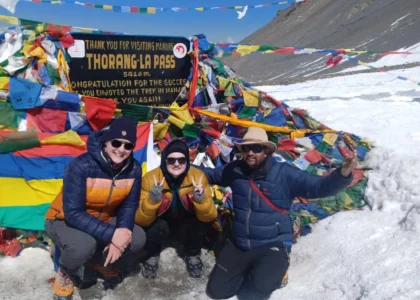
Karl, Callum, Sara
Western Australia
Great experience in Annapurna circuit trekking trail

Today, my friends and I went around the Annapurna Circuit short trek with our guide, Purna.
We had a great time and got lots of help up and down the mountains. We had a few altitude problems, and our guide helped us a lot. He answered all our questions and let us order breakfast from our bed.
The porters were ever cheerful, carrying all our gear and keeping us dancing each night.
Karl, Callum, Sara
Australia.
Shiloah Ravit and Levine Talia
Alone Habashan, Israel.
Annapurna circuit trek with Jomsom Muktinath Trek March/April
Dear Puru
We very much enjoyed the Annapurna circuit short trek you arranged for us.
We very much appreciate your services. We appreciate your willingness to change plans according to our wishes.
The guide you sent us was very considerate and gave us the best service. It was an excellent decision to come here without any worries and arrange to let you take care of everything so well.
Shiloah Ravit and Levine Talia.
Tel Aviv, Israel.
Roger Phillips
UK
Annapurna Circuit Trek with best guide.
The Annapurna Circuit short trek with Phurba, Ram, and Sunil was excellent! Phurba is a wonderful, patient, and knowledgeable guide.
He was a great leader throughout eight days. He gave us many options on the trail and picked the best accommodation. I recommend Phurba and the team to others.
Rogers Phillips, London, UK.
Simone Borghesi
Italy
Annapurna Circuit trek (Round) in August.
I have hiked in the Annapurna circuit trek from Besi Sahar to Jomsom. Puru chose an excellent guide and organized the land-air connections. Everything went smoothly.
The guide was very knowledgeable, experienced, and helpful. I had a wonderful rainy season experience in Nepal.
Simone Borghesi
John-paul Wash
USA
Annapurna Circuit Trek with best company.
The Annapurna Circuit short trek has been a fantastic experience. Thanks to Puru and his guys, Kc, Mithu, and Sujan. They made the trip enjoyable and rewarding and were always there to help us out.
All the accommodations and meals were of good quality. Himalayans always ate well to have enough energy for the next trekking. The guys were also flexible with us so that we could make the trek shorter to accommodate a rafting trip.
I recommend Above the Himalayan trekking and hope you are lucky enough to have a good time as we did!!
Thanks, Guys!!
John-paul Wash
Judy Westbrook
Canada
Annapurna Circuit Trek In March
Annapurna Circuit short trek from March to April. I started my web-based trekking inquiries with another Katmandu trekking company. Communication with this company was sporadic and unclear.
After that, I switched to Above the Himalayas. Puru answered each email inquiry. I also used Skype. I explained my idea of doing the Annapurna circuit short trek solo to Puru. It was a risky journey for me.
I am 65 years old, with post-cancer and post-heart attacks. So why would I choose this challenging trip?…… Because I needed this challenge?
Puru matched me with guide/porter Suresh. We traveled together for 15 days for our Annapurna circuit trek. I was free as a bird to listen and watch all around me. Suresh took care of all the details that might stress a foreign trekker.
He carried my backpack and knew the quiet and clean lodges. He expedited the meal orders and ensured tea stops. He handled all the paperwork at police checkpoints. These things were not my concern.
He was my mentor in Nepali customs. Traveling in large groups diminishes one’s connection with the local environment. Traveling alone, I was more inclined to hear and see all the subtleties around me.
I remember the language and moods of the people of the Nepali village. The smells of the pine forest and the spring flowering trees are excellent—the aromas of incense and simmering curries, the roar of wind and rivers.
Yes, I took away more than I expected from this journey. It was a challenging Annapurna circuit short trek. But the satisfaction and education I received were priceless! With the support of AHT, the trip worked for me. , I felt safe and cared for. THANK-YOU AHT
Notes:
The upper Pisang to Manang was a favorite section. You can stop in Kalopani, and Sikha would make a more pace. Extra night in Pokhara was an exciting addition.
I traveled the same route with like-minded solo Trekkers for several days. We shared daily experiences over an evening meal.
Judy Westbrook
Aaron Kaplan
The U.S.A.
Annapurna Circuit Trek in May.
Thanks to Puru, Bharat, and Hari, My first journey around the Annapurna Circuit short trek.
Puru was right on with his excellent skills. My guide and porter were charming. Bharat mountain knowledge is vast and impressive.
I was also happy with how flexible Bharat was when trekking with him solo.
Thanks again
I can’t wait to do another Trek!
Aaron Kaplan
Doreen Diehl
Düsseldorf, Germany
Annapurna Circuit Trekking April
We booked the Annapurna Circuit short trek with Puru for 13 days and ten days of hiking. They picked up from the airport and started the Nepal vacation with a city tour.
Very comfortable start! The following day, a bus and jeep to Syange to start the hike.
Very friendly and helpful and a very reliable guide and porter. They speak English okay and have good tea houses in which to sleep. Beautiful mountain scenery and an apple pie if needed. Awesome trip.
Doreen Diehl
Tan Soo See
Singapore
Annapurna Circuit Trekking September.
Puru has been very prompt and patient with all the pre-trip inquiries I sent. They are also able to customize the trip schedule according to my preference. Yet, I could still complete the trek I chose- ACT.
The trek itself is excellent. The guide/porter assigned, Sitaram, is knowledgeable and professional. They were caring and patient and pointed out the mountain views. (which I would have missed out on) along the Annapurna circuit trek.
The duration of the Annapurna circuit short trek was planned for each day according to my fitness level. He gave options on which village to stop over for rest, etc. He even got me a bamboo stick as the walking stick, as I did not manage to buy one.)
I am already planning my next trek with them!
Tan Soo See
Alen Bernstein
USA
Annapurna Circuit trek - We loved it.
Phurba Sherpa was an excellent guide, and Ram and Sunil did a great job as our porters. Phurba was attentive throughout the entire Annapurna Circuit short trek trip and took excellent care of us on the trail and at each night’s stop.
He always took our orders at the hotel and helped communicate with the hotel staff. We enjoyed the route and hoped to trek again with him. Thanks, Phurba
Alen Bernstein
Fariz L
UK
Annapurna circuit trek an awesome Experience.
My girlfriend and I completed the Annapurna Circuit short trek in March and LOVED it. We have had excellent paragliding, river rafting, trekking, and sightseeing experiences.
The best part was the hospitality shown by the whole team, including the tour coordinator, guides, drivers, etc.
I recommend this team for a trekking Tour and adventure. It is comfortable and cheap. For a Nepal Annapurna Circuit short trek and tour,” Above The Himalaya Trekking (P)Ltd.”
Fariz L
20% OFF
Best Price Guaranteed, Easy to change Date, Instant Confirmation
Book This TripBook with Confidence
- Flexible bookings and easy trip date changes
- Personalized service and customized group sizes
- Safe travels with owner-operated services and highly experienced guides
- Best price guarantee for the most value for your money
- Secure & easy online booking
Your Trek Leader
 Enjoy Himalayan scenery with the help of Nepal’s best guides with Government license holders and got training in first-aid, our Trip Leaders, know where you’ll find the best photos, most fascinating wildlife, and the best stream crossings.
Have Questions?Talk to Expert
Meet Mr. Purushotam Timalsena (Puru), Nepal's best trek and tour organizer, who has been working in the Himalayas for more than 24 years.
WhatsApp/Viber +977 98510 95 800



You May Like


Trips for All
Private Trip
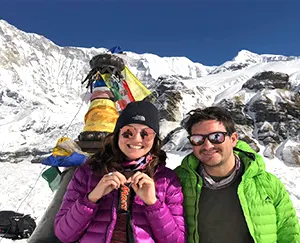
Peaceful tour with your travel buddy and guide
Small Group Travel
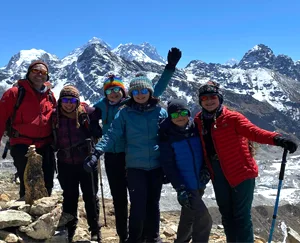
Travel with people having similar adventure dreams
Trips for Kids
Calling all young adventurers - join us for a journey of a lifetime!
Trips for Adventurers
Climbing & mountaineering adventures for thrill-seekers