Customize Your Trip

Need Help? Let's Talk
+977 985-1095800Everest View Trek
A short trek with fabulous views of Everest


10% OFF
Highlights of Everest View Trek
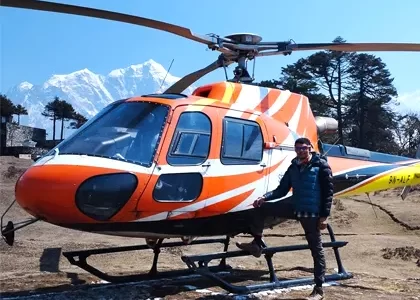
- Get the real Himalayan flight experience to Lukla.
- Enjoy the Sherpa settlements of Khumbu Valley.
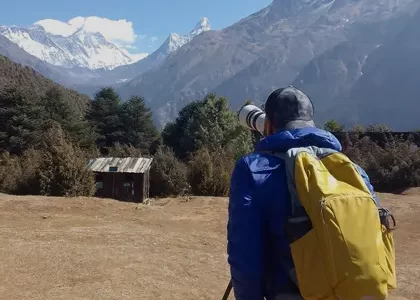
- Magnificent view of Mount Everest massif and its stunning landscapes on Everest easy trek.
- Enjoy your stay at Namche Bazaar.
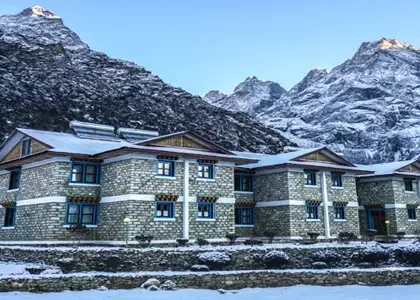
- Take a short hike to Everest View Hotel– the highest-placed hotel in the world.
- The Everest View Trek is suitable for people of all ages, including families with children.
Testimonials - Guests Sharing Their Incredible Experiences

Trip Extension
Suppose you have more time in Nepal after this trip. In that case, we can help you to extend your trip by running different treks in Nepal, tours in Bhutan and Tibet, Jungle safari tours at Chitwan, Bardia, and other National parks, Nepal luxury hotel booking, Rafting, Ultra-light flights, or any other travel-related services. You can get more information here.
Route Map & Altitude Chart

Most Asked Questions by Travellers
 General
There is no hard limit in age, but they should be in good health and be capable of walking for several hours a day. Children and older travelers can participate if they are physically comfortable doing so.
This trek is popular among the travellers who have limited time and still want to see Mount Everest. It is also ideal for those who want to have a shorter and less demanding Himalayan experience.
Yes, the schedule can be changed according to your schedule and choice. Additional days in Namche or visits to villages may be included on request.
Yes, there are private departures year round. You are free to select your own dates and travel at your own pace.
Yes, you will pass through traditional Sherpa villages and you will see monasteries and prayer wheels. The trek provides meaningful cultural interaction as well as mountain scenery.
There are ATM machines in Namche Bazaar, however, they may not be functional. Better to carry enough local money there Kathmandu.
Tipping is not mandatory but is appreciated as a sign of appreciation. It is a reflection of satisfaction with the service that guides and porters provide.
Yes, it is used by many travelers with jungle tours, city tours or other short walks. That way, you will be able to see more of Nepal on one trip.
 Preparation & Fitness
It is recommended to begin light training at least one month before your trip. Gradual preparation makes you stamina and walking more comfortable.
Yes, being positive and patient does help you enjoy the journey more. Mountain travel is required to be flexible because of weather or flight changes.
Short weekend hikes or long walks help to get your legs prepared for uphill sections. It can also help to practice with a small backpack.
No, a porter carries your major luggage. You just have a light day pack with personal necessities.
Yes, climbing on stairs is good since some of the trails have steps made of stones. It makes your legs stronger and assists you to enhance endurance.
It is also good to wear your trekking shoes prior to the journey to prevent blisters. Broken-in and comfortable shoes are pleasant to step in.
Special breathing techniques are not required but it helps to walk slowly and regularly. Regular breaks are beneficial in the natural adaptation to the high altitude.
The relaxed and composed mood is part of the total experience. It is more fulfilling to enjoy the scenery rather than just thinking about the destination.
 Permits
Above The Himalaya arrange all your trekking permits on your behalf. This makes it a simple process and will save time before the trek starts.
Yes, all trekkers should have permits, no matter how old they are. Nepali citizen and SAARC nationals may however have different permit fee.
Permits are checked at the gate points such as Monjo and other gate points along the route. They should also be available during the trek.
Yes, it is possible to get the permits in Kathmandu or in the route, should it be necessary. Delay is however avoided by prior arrangement.
A copy of your passport is required to register for your permit. It is useful to carry additional passport-sized photos which are not always needed.
Permit fees are normally not refundable once issued. It is advisable to check your travel plans before processing them.
The TIMS card is not necessary for the Everest region. It has been replaced by local permit of Khumbu rural municipality.
Permits help to manage tourism and provide support for conservation in Sagarmatha National Park. They also make a contribution to the development of the local community in the Khumbu region.
 Insurance and Visa
Yes, travel insurance is highly advisable for all trekkers. It should include trekking activities and emergency evacuation.
Your policy should cover high-altitude trekking and should cover medical assistance. Emergency Helicopter evacuation coverage is also important.
Better to take up insurance in your home country before leaving. Some international policies might not come into force after travel has begun.
This short trek and extended sightseeing should be easily covered by a 15-day tourist visa. In case you intend to spend more time a 30 day visa is more convenient.
Yes, tourist visa may be extended at Immigration Office of Kathmandu. Renewal costs will be paid based on the days that one wants to have.
Yes, it’s a good idea to take a digital and printed copy of your insurance details. Your guide may also keep a copy in case of emergency.
Flight delays in mountain areas can occur due to changing weather conditions. It is advisable to take out travel insurance that includes trip delays and trip interruptions and to check your policy details prior to going on your journey.
Visa fees are not ordinarily included in trekking packages. They are paid directly on arrival in the airport.
 Guides & Support Staff
Yes, our guides are licensed and trained according to the standard of Nepal government. They possess experience as guides in trek covering the Everest region.
Typically, a porter carries the bags of two trekkers. This is to make sure there is equal loading and equal working conditions.
It is strongly recommended to hire a guide to be safe and supported in the country. A guide is also useful in terms of navigation, accommodation organization and communication.
Yes, our guides speak English well. They also facilitate the communication with the local societies where necessary.
Your guide takes care of logistics on a daily basis, cleans up the accommodations and monitors your comfort during the trip. They, also, give some insights regarding the culture and life in the mountain.
Yes we provide insurance and appropriate gear for their porters. Ethical treatment of staff is an important part of sustainable trekking.
Yes, arranging female guides is possible upon request, based on availability. It is best to let the company know in advance.
Tipping is typically done at the conclusion of the trek. It is given directly to guides and porters, as a sign of appreciation.
 Accommodation and Facilities
Rooms are generally twin-sharing, but it may be possible to get a private room in some villages. Availability is seasonal and occupancy.
Bedrooms are not normally heated. Warm blankets are provided and a sleeping bag is offered for extra comfort in the colder nights.
Attached bathrooms are available in some of the lower villages. In higher areas shared bathroom is more prevalent.
Hot showers are available in many of the teahouses for extra charge. Depending on the weather and the location, availability may vary.
Yes, charging facilities are available in most of the villages. A small fee is often charged, particularly at higher levels.
Wi-Fi can be found in many teahouses at a fee. The connection can be slow because of the mountain location.
Yes, there are basic blankets provided by the teahouses. Bringing or renting a sleeping bag provides extra warmth.
Yes, there is boiled drinking water for sale. Many trekkers use purification tablets or filters as an alternative option.
 Food and Drinks
Yes, there are also lots of vegetarian options in the teahouses. Vegetarian meals are more popular among many trekkers on the higher altitude due to freshness and easy digestion.
Yes, majority of teahouses are able to modify meals to simple eating requirements. Beforehand, you should notify your guide of any special needs.
Yes, the breakfast is included every day in the trek. The menu typically consists of easy and sustaining items to begin the day.
Yes, there are small stores in villages which sell snacks and energy bars. Transportation costs can cause prices to rise with an increase in the altitude.
Yes, it is a good idea to carry your favorite snacks. This is also useful in minimizing unnecessary expenditure in the path.
Teahouses have boiled water at a low fee. Most trekkers have purification tablets or water filters as an extra precaution.
Yes, there are alcoholic beverages in most villages. During trekking at high altitudes, however, it is recommended to limit alcohol.
Yes, most lodges serve hot tea and coffee. Hot beverages are mostly consumed during colder mornings and evenings.
 Weather & Seasons
Spring and autumn are the most common clear sky seasons. Stable weather and visibility are the characteristics of these seasons.
Yes, it can be done in winter as long as you are equipped with cold weather. The trails are less busy at this time of the year.
The monsoon months are also likely to cause consistent precipitation, particularly at the lower elevations. This could be the time when mountain visibility is poor due to cloud cover.
Night temperatures can drop below freezing, especially above Namche Bazaar.During early mornings and evenings, warm clothes are a must.
Yes, spring is the time of blooming rhododendrons and new greenery. The scenery is very colorful and vivid at this period.
Yes, the weather can occasionally slow down a flight in the mountains. It is suggested to plan travels flexibly.
In dry months, some of the trail can be dusty. During the rainy seasons one might have muddy areas.
The weather during the day is usually pleasant to walk. The trekking under the sun normally does not require more than light layers.
 Health & Safety
Yes, the Everest View Trek is generally safe when guided by experienced professionals. The trails are clearly marked and frequently used by trekkers.
You must report it to your guide immediately in case you are not comfortable. Early notifying your guide about the minor problems can help to avoid serious consequences.
Health posts are also available in villages such as Namche Bazaar which are basic. In severe situations, evacuation may be organized.
Purification or boiled water should be used. Stomach problems can be prevented by simple precautions.
Slips are minimized by stepping on stone steps and irregular paths. Stability is also enhanced by wearing appropriate shoes.
The animals of the area are usually timid and do not want to be near people. Trekkers are unlikely to have any form of animal attacks.
Guided trekking is highly encouraged and ensures more safety and help. Guided trekking provides more coordination in situations of emergencies.
It is highly recommended to be well hydrated to be generally healthy and comfortable. Guidelines on drinking water help in energy and acclimatization.
 Packing & Gear
You will carry a small daypack with personal requirements. A porter normally carries your main luggage.
Trekking poles are not compulsory but useful in the uphill and downhill parts. They offer additional support and take the pressure off the knees.
Multi-layered dressing is suggested to change the temperatures. Light and breathable materials are better when walking in the daytime.
It is also advised to have a sleeping bag to keep warm and comfortable. It particularly comes in handy when it is colder.
Yes, a waterproof jacket and rain cover are helpful in case of unforeseen rain. Weather in the mountains may be unpredictable.
Yes, it is best to carry a fair amount of local currency. Mountain villages do not have many payment methods.
Good and comfortable trekking shoes are strongly recommended. Trekking shoes should be properly worn in before the trip.
Yes, strong sun at high altitude can affect your skin and eyesand sunscreen are essential products.
 Booking & Payment
It is advisable to make bookings well in advance and especially during the seasons. Early reservation assists in getting flights and accommodation.
Yes, you are expected to deposit to secure your reservation. The rest of the balance is normally paid before or on arrival in Nepal.
Bank transfers, online payments or cash are accepted by most companies in Nepal. Before making payment, it is advisable to verify about the available options.
Booking can be made at the last minute and it will depend on the availability of flights and rooms. Nevertheless, it is always better to plan ahead.
The cancellation policies differ according to the company. Before booking it is essential to review the terms and conditions.
No, we will give you a clear information about inclusions and exclusions. It is advisable to read the package information in order to prevent confusion.
Changes in date can be subject to availability. Making the company aware at an early stage enhances flexibility.
Yes, you will get written confirmation and trip details upon payment. Such documents contain the information of itinerary and services.
 Transportation & Flight
The flight takes a typical duration of 30-35 minutes. It provides stunning air shots of mountains and Himalayan ranges.
The weather at the mountains may vary rapidly and influence the visibility. Flights are only undertaken under favorable conditions due to their safety.
Flights can be rebooked to the next possible time. In other situations, helicopter options might be made at an extra cost.
Yes, it is best to check-in early because of limited seating and weather schedules. Your guide will help in coordination of the airport.
Yes, there are limits to weight of the checked and hand luggage. Additional charges might be charged on additional baggage.
The Most packages include airport transfers in Kathmandu. The trekking company should verify this.
Yes, flights can leave Ramechhap Airport in season times. In this case, a road transfer is provided.
Yes, it is better to have a buffer day in case of delays by weather. This assists in the prevention of stress as far as international flight connections.
Reviews on Everest View Trek





Laura Algren
USA
Everest view trek - Great options for short trek in Everest

Puru was the best! From greeting us at the airport with a flower lei to delivering us to the airport with some local souvenirs.
He handled every minute detail. He introduced us to our guide before our Everest view trek began. He was on call 24/7, even when we encountered travel delays out of his control.
The trek was beautiful and memorable, but beware, it is not for the meek and weak.
Trek with a sense of adventure and need to prepare to rough it. The local villages, people’s views, and charm will be worth any inconvenience.
Laura Algren
USA
Michael Legg
Lausanne, Switzerland
Easy Everest view trek - best trip
As others have mentioned, Puru responded to all email inquiries. This is the main reason we chose Above the Himalayan Trekking.
This efficiency flowed through the whole trek, thanks to Puru’s advice and help. We also appreciate the professionalism of our excellent guide, Sam, who catered to our every need.
The genial porters often ran ahead to ensure we had suitable daily accommodation. Also, Sam and the porters watched over us.
They help us avoid grumpy Yaks, loaded porters, and other hazards on the trail. We were very well fed and much enjoyed the pleasant company of the trekking staff. We recommend Above the Himalayan Trekking for a hassle-free and fun Everest view trek.
Michael Legg
Canada
Melanie Rose
France
Best Short and Easy Everest view trek
The Everest view trek is a short and sweet trek around the region. My friends and I went on this trek and enjoyed it. We flew to Lukla and started the tour with the local people and their respectful attitude.
We had a glimpse of the mountain on the way to Phakding. On the second day, we saw Mount Everest before arriving at the Namche Bazaar.
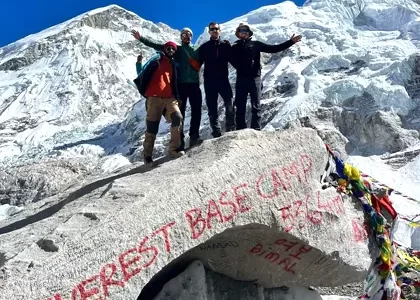
The best part of the trek was the Everest View Hotel. We went there for a cup of coffee, and the views were spectacular. We didn’t have enough time to reach Everest base camp, but we were delighted with the mountain view of this easy trek.
This is the best trek for people with a short walk and regular fitness. I recommend this trek with the Above Himalayan team.
Melanie Rose
Niki Maric
Perth, Australia
Everest view trek - trip of a life time
I can recommend Above The Himalayan Trekking for the Everest view trek. They took care of me from start to finish, and it was great to have flexibility with my itinerary.
My guide was excellent! He was always available to answer my questions and went out of his way to accommodate my needs.
Niki Maric
Australia
Richard Ferrara
USA
Everest view Trek to Family
My family wanted to see Mount Everest. We had kids 12 and 15 years old after consulting with Above the Himalaya Trekking Mr. Puru, the owner.
He suggested we take the Everest View Trek. We had no problem doing so, went to the Everest region quickly, and had a fun trekking experience.
My kids enjoy trekking; they love the mountain view, local food, and local culture. The trek is easy for the second day to climb Namche Bazaar. Most of the facilities are there, and daily services are accessible.
Thank you, Above The Himalayas, for helping me with the remarkable trip.
Richard Ferrara
USA
Chris Woodard
USA
Everest view trek - Trip of a life time
The Everest View Trek is a perfect short trek. We enjoy the incredible views of Mt. Everest, Lhotse, Nuptse, and Tawache.
From Namche Bazaar, we saw many other mountains. The short trekking along the way passed the most incredible suspension bridges, which was the best part of it.
The view of the mountains was always there and was the most amazing sight to see. If you are looking for a short trek in Everest, then go for This easy Everest trek.
Our Thanks go to Above The Himalaya Trekking. They arrange everything we need, from flights to hotels. Trekking guide and porter who made the tour simple but lots more fun.
Chris Woodard
USA
Jessica Ricci
New York, USA
Great company for Everest easy trek
I recently returned from a trip to Nepal and had a fantastic trek with Above the Himalayas. I traveled with strict time restraints and could only do part of the Everest view trek on specific dates. Puru and Phurba’s attention and warmth
No problem, Puru hooked me up with a custom trek to Tengboche and back. I am a solo female traveler and picked Above the Himalaya because of other reviews from lone ladies.
They are all true; I could not have asked for a more professional guide (Phurba Sherpa – request him if you can!) or company. Phurba’s knowledge of the trail is excellent. He knows the best tea houses in the region.
They were perfect, as was his care when my knee got inflamed. They were Prefecture and Phurba’s attention and warmth.
When we returned to KTM, the Maoists demonstrated, and the city was on lockdown. Puru offered to help me find a hotel with generators and a restaurant. (which my guest house did not have), He also checked in with me a few days later to ensure everything was okay.
I will be returning to Nepal to finish the EBC trek. I will book with Above the Himalayas again. Puru and Phurba’s attention and warmth will stay with me long.
Jessica Ricci
USA
Claudia Nassim
Dubai
Great Everest view trek with a best local guide
The Guide and Porter service was excellent for our Everest view trek. They were above my expectations. They were responsible, helpful, friendly, and punctual. Thank you very much for the service. The agency is very well organized and responds quickly.
Very safe all the time. I also liked the food recommendation for the best health during the trekking.
The schedule was perfect and well-organized. I want to thank you all for this fantastic experience.
Thank you very much, Puru, Basu, and Porter.
Claudia Nassim
Dubai
10% OFF
Book with Confidence
- Flexible bookings and easy trip date changes
- Personalized service and customized group sizes
- Safe travels with owner-operated services and highly experienced guides
- Best price guarantee for the most value for your money
- Secure & easy online booking
Your Trek Leader
 Enjoy Himalayan scenery with the help of Nepal’s best guides with Government license holders and got training in first-aid, our Trip Leaders, know where you’ll find the best photos, most fascinating wildlife, and the best stream crossings.
US$ 1490 Per Person
Have Questions?Talk to Expert
Meet Mr. Purushotam Timalsena (Puru), Nepal's best trek and tour organizer, who has been working in the Himalayas for more than 24 years.
WhatsApp/Viber +977 98510 95 800



You May Like




Trips for All
Private Trip
Peaceful tour with your travel buddy and guide
Small Group Travel
Travel with people having similar adventure dreams
Trips for Kids
Calling all young adventurers - join us for a journey of a lifetime!
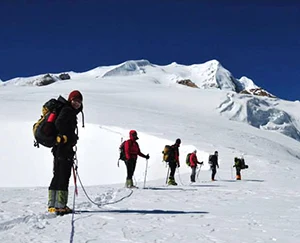
Trips for Adventurers
Climbing & mountaineering adventures for thrill-seekers