Customize Your Trip

Need Help? Let's Talk
+977 985-1095800


10% OFF
Highlights of Tsum Valley Trek
- Amazing Landscapes and vegetation.
- Stunning mountain views.
- Trek through the silent and green routes.
- It is an excellent way to explore Buddhism.
- Peaceful trekking experience.
- We walk through the off-the-beaten path of the Manaslu region.
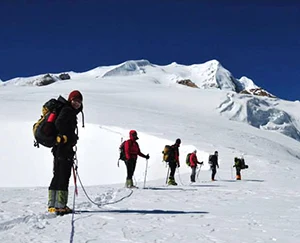
- The most beautiful view of Mount Ganesh Himal. We also see Hiunchuli, Manaslu, Churen Himal, and Poshyop Glacier.
- Tsum Valley is a Great cultural and spiritual experience.
Trip Extension
Suppose you have more time in Nepal after this trip. In that case, we can help you to extend your trip by running different treks in Nepal, tours in Bhutan and Tibet, Jungle safari tours at Chitwan, Bardia, and other National parks, Nepal luxury hotel booking, Rafting, Ultra-light flights, or any other travel-related services. You can get more information here.
Route Map & Altitude Chart

Most Asked Questions by Travellers
 General
Yes, Tsum Valley Trek is perfect for those who desire to have a deep cultural immersion experience. You will experience traditional Tibetan Buddhist lifestyle of which is still kept in daily village life.
No, this region gets fewer trekkers when compared to Everest and Annapurna. It provides a better atmosphere of trekking with less noise and more peace.
You will walk through river valleys, waterfalls, forests and traditional mountain villages. The scenery changes gradually with you moving toward higher terrain of Himalayas.
The trek has a richness of culture as well as beautiful mountain scenery. However, it is particularly known for its spiritual atmosphere and ancient monasteries.
Yes, this trek is enjoyed by families who have active members. Good walking ability is required before children and older members join.
Yes, the trail goes through small farming villages where you can see daily rural life. You can observe locals in such areas, spinning prayer wheels or visiting monasteries.
Yes, the valley is a good landscape and cultural photography.Monasteries, mountain landscapes and village life provide beautiful photo moments.
Yes, the valley is peaceful and less developed as compared to other trekking regions. Basic facilities and poor connectivity enhance the authenticity of its Himalayan experience.
 Preparation & Fitness
If you live in a flat area focus on long walks with a back pack to build endurance. You can also use stairs or treadmill incline settings to simulate uphill walking.
It is best to begin preparation at least 4 to 6 weeks before your trip. Gradual training helps to improve stamina and try to control fatigue during the trek.
Yes, cardio activities such as brisk walking, cycling, or swimming help to improve breathing and endurance. Better stamina for daily walking at high altitude.
Yes, trekking boots can help to prevent blisters from forming when you train with them. It also gives your feet time to adjust to the boots before long walking days.
Light strength training of legs and core muscles is helpful. Stronger muscles put less strain on knees on downhills.
It helps to know that facilities are basic and that the region is isolated. Keeping a flexible and patient attitude will make your experience more enjoyable.
You may walk at a steady pace and take short rest breaks when necessary. The guide will support you and vary the speed of walking if needed.
Yes, older travelers can do this trek with proper preparation. Regular walking, consultation with a doctor before traveling is recommended.
 Permits
Tsum Valley is near to the Tibetan border and has conserved the cultural heritage. For this reason, government controls access to the region to preserve the area and its traditions.
You will need to have a valid copy of a passport and details of Nepal visa with you. These documents are necessary before the permit application is made.
It is best to submit your copy of the passport at least a few days before the trek starts. This helps to avoid delays in the permit process.
Yes, they check the permits at various police and conservation checkpoints along the route. You must also bring your permit papers with you during the trek.
Trekking without proper permits may result in fines or being denied entry in checkpoints. It is important to fill out all paperwork before beginning on the trek.
Yes, permits are necessary for all foreign trekkers of any age. The same rules apply to those who are adults and children.
Permit fees are normally non-refundable when issued. It is advisable to verify the dates of your travel before processing the permits.
Permits are available all year long unless there are special government notices. In some special cases natural events or regulations may have some impact on access.
 Insurance and Visa
The trek is in a remote area of the mountains, where medical facilities are limited. In case of emergency, evacuation support can be expensive without insurance.
Your policy should clearly mention about high altitude trekking. This is to ensure that there is a cover if there is any issue related to the altitude.
Yes, it is useful to share the copy of your insurance with your trekking company. This enables fast action in case emergency help is needed.
It is recommended that you buy insurance in your home country before travelling. Policy purchased locally may not give 100% coverage for trekking activities.
If your condition requires urgent evacuation your insurance provider will be contacted for approval. The rescue team will liaise with your guide to give immediate support.
Yes, it is a good idea to consider a policy that covers trip cancellation and delay. Weather and road conditions in mountain areas occasionally can influence travel plans.
Your visa should be valid for your entire stay in Nepal including extra buffer days. It is better to apply slightly longer in order to avoid complications.
Yes, tourist visas can be extended at the immigration office in Katmandu. The process is simple, if it is done before your current visa expires.
 Guides & Support Staff
Your guide counters the history and spiritual significance of monasteries and villages. This helps you understand the local traditions better.
Yes, guides speak English and the local languages. They help you to communicate easily with villagers and lodge owners.
Yes, the guide checks your condition throughout the trek. If necessary they will recommend rest and/or adjust the plan for safety.
Most of the guides have guided several groups in the Manaslu and Tsum region. Their regional knowledge is useful to ensure a better trekking experience.
Porters carry the main luggage so that you can walk comfortably. They play an important role to support your journey behind the scenes.
Yes, when guides are with the group they usually remain in the same lodge. This allows the ease of coordination and support throughout the entire journey.
Yes, private excursions are possible with a private guide. This gives you additional flexibility in pace and schedule.
Guides are trained to react calmly and quickly in difficult situations. They liaise with local authorities or rescue services if needed.
 Accommodation and Facilities
Teahouses are very basic, but offer basic comfort to trekkers. Bringing proper warm clothing and a good sleeping bag helps you be comfortable at night.
Yes, most of the teahouses have a common dining room. This is usually the main gathering place where trekkers relax in the evening.
Most lodges provide basic blankets. However, it is advised to carry your own sleeping bag for increased warmth and hygiene purposes.
Mobile network is available in some of the lower villages. In higher and remote areas, you may not receive a strong signal or signal at all.
Charging is possible in many villages but may be dependent on solar power. Power availability may be low in cloudy weather.
Both kinds can be available depending on the village. In more remote areas, more traditional squat toilets are common.
Some dining rooms have the central stove in the evening. This makes the trekking area a warm and social place for trekkers.
There are very few laundry services in remote areas. It is better to bring quick-dry clothes, which you can wash yourself if necessary.
 Food and Drinks
Yes, meals are freshly cooked in every teahouse. Food is prepared after you place your order and therefore may take a little bit of time.
Yes, meals are meant to have sufficient energy for trekking. Traditional dishes such as rice, lentils, and vegetables are filling and nutritious.
Yes you can ask in a polite way for mild or less spicy meals. Lodge owners are typically very willing to adjust the taste when possible.
Dairy products such as tea and milk or simple cheese are commonly consumed. If you are a person with a sensitive stomach, then it is best for you to consume simple and freshly cooked food.
Fresh fruits are restricted in higher villages because it is difficult to transport. You may find some apples or packaged fruit products in some places.
Yes, Boiled water is available in most teahouses. It is one of the safest options regarding drinking during the trek.
Soft drinks and packaged juices are available in some villages. Prices rise going up because of transport costs.
Local alcoholic drinks are available in some villages. It is best to consume them in moderation, especially at elevated altitudes.
 Weather & Seasons
Yes, mountain weather can change suddenly, particularly at the higher elevations. It is important to be ready for the combination of sunshine and cold winds on the same day.
Spring and autumn are usually the most stable seasons. These seasons typically have clearer skies and pleasantly walking temperatures.
Mornings are usually clear and nice to walk. The evenings get colder as the sun sets, especially in higher villages.
Visibility is usually best during the early morning hours. After midday, clouds may be formed depending on the season.
Yes, heavy rains during monsoon can make the roads muddy and rough. Travel time may increase because of the condition of the roads.
Yes, the wind may be stronger in open and higher areas. Windproof jacket is useful for protection.
Trails can get slippery during monsoon and winter as a result of rain, mud, or snow. Good trekking boots with grip are important for safety.
Yes, it is warmer and more humid in lower areas than in the higher villages. Temperatures actually go down as you gain altitude.
 Health & Safety
Trekkers can face fatigue, mild headaches or stomach upsets on the way. Proper rest, hydration and pacing generally help to manage such issues.
Walking at a steady pace and staying hydrated is very important. It is also helpful not to rush, listen to your body carefully.
Medical facilities are very poor in remote villages. Simple health posts can be found at the lower zones, yet severe cases need to be evacuated.
Report to your guide in case you feel ill. The guide will identify the situation and decide whether you needs rest or descent.
It is safer to treat all drinking water before it is consumed. Using purification tablets or filters is useful in preventing stomach infections.
Yes, suspension bridges are regularly used by the locals and trekkers. It is important to cross with calmness, and to follow the instructions of your guide.
Yes, the region is generally safe and the local communities are respectful. Trekking with a licensed guide is an added security and support.
The use of trekking poles can help take pressure off of your knees. Taking slow and steady steps also reduces the risk for slips or strain.
 Packing & Gear
Day to day necessities will require a comfortable daypack of about 25-35 liters. Your primary baggage is going to be done separately and therefore keep your daypack light.
Yes, a rain cover and waterproof jacket is highly suggested. During the dry months, weather in the mountains changes very fast yet it may be raining.
Trekking poles come in very handy when you are in a hilly terrain or when you are on down hill.They raise the level of balance and reduce the amount of burden on the knees.
Warm and moisture-wicking trekking socks are best to carry. Wearing a pair or two so that you can switch frequently and prevent blisters.
Yes, a portable charger is very useful in the remote villages. Charging facilities can be restricted, or can be provided at a fee.
Yes, there are waterproof bags or dry sacks that can be used to cover the clothes or electronics.They are particularly handy during rainy or dusty weather.
Yes, it is more intense in the sun in high elevations. Sunglasses, Sunscreen and lip balm are helpful in shielding your skin and eyes.
Yes, Kathmandu does have numerous shops that rent out equipment to use in trekking. Before renting it is best to verify the quality and fit.
 Booking & Payment
The trek may be reserved by emailing us through sites or whatsapp or simply a form on the company site.After confirmation of the availability you will be made instructions on bookings.
Yes, there usually is a deposit that is required to ensure your reservation. One can pay the balance either prior to arrival in Kathmandu or before the arrival.
The payments are normally made via bank transfer or online payment. Kathmandu cash payment might as well be available.
Yes, last minute booking can be done, as far as time can permit process permits. It is better to make sure a couple of days before.
Deposits at the permit and administrative arrangements are not normally refundable. Confirmation will be communicated in terms of cancellation policies.
Yes you will get a written confirmation with trip details once your booking is secured. It is important to go through all the information carefully.
The date changes depending on the availability. It is best to tell the company as early as possible.
All the inclusions and exclusions are clearly mentioned in the trip details. It is recommended to go through the include and exclude section carefully before booking.
 Transportation & Flight
The journey starts with a drive from Kathmandu to the trek starting area. Transportation is arranged as a part of trekking plan.
The drive consists of both paved and rough roads on mountain terrain. Travel time can be more or less, depending on road and weather conditions.
No domestic flights are needed for Tsum Valley Trek. The trip is carried out by road transport.
Yes, private vehicles are available on request. This option is more comfortable and flexible.
In rare cases of road blockage, the itinerary may be changed. The trekking company will make the safest alternative arrangement.
The drive generally begins early in the morning. Early leaving allows avoiding traffic and long waiting.
Airport pickup may be included depending upon the package arrangement. It is best to be sure of this while booking.
It is advised to check the dates you are going trekking first. Once you have confirmed, you can book your international flights.
Reviews on Tsum Valley Trek





Marcia Pobete
Spain
Tsum valley trek - Less travel area of Nepal

We liked The landscapes of the Tsum Valley trek, which were terrific. It is in the Manaslu region, and it offers a lot to visitors.
It is a lot more different with less pollution and population. The services we got from Above The Himalayas were superb. Their price was reasonable, and the help we got before planning the trip was the best.
The Helambu trek mountain views and trekking trail local culture were fantastic. All in all, the l experience was beautiful and more than expected.
The guides and porer were so enthusiastic and caring. We highly recommend our Guides, Sitaram and Porter Bikram, for the Tsum valley trek.
Marcia Pobete
Spain
Natalie Wise
Australia
Tsum valley trek is best trek ever
The Tsum Valley trek gave us spectacular views of mountains and waterfalls, and we enjoyed walking in rhododendron forests.
It restricts area and less travel area, so peaceful and relaxing. We found the trek was easy to moderate, and anybody can do this trek.
We had a great time with our guide and felt comfortable with him. We will contact you again Above the Himalayas for our next trek to Nepal.
Natalie Wise
Australia
Feliz Marquis
USA
Tsum Valley Trek - Best trip ever
Puru and Sam did a great job of helping organize the Tsum Valley trek at the last minute to put me in touch with local Buddhist historians and teachers in the Manaslu trek regions.
Sam is a very knowledgeable and caring guide with a knack for conversation and the ability to find good places to stay for reasonable rates. His knowledge of the trails and villages was impeccable.
Puru had quick responses from the beginning and helped me to feel very much at ease on this trip. I highly recommend this trekking company to anyone looking to be treated concerning their needs and wants.
Thanks for the great experience, guys, and I will see you next time I am in the country.
Feliz Marquis
Danny Cohen
Australia
Tsum valley - A trek in the hidden paradise
Above the Himalaya, Trekking took care of every detail for our Tsum Valley trek. The arrangements were easy to set up from home in Australia.
We appreciated our guide and porter, who made this trip a success. They were Very professional and communicative. I look forward to doing the Everest base camp trek with these guys on our next visit.
Danny Cohen
10% OFF
Book with Confidence
- Flexible bookings and easy trip date changes
- Personalized service and customized group sizes
- Safe travels with owner-operated services and highly experienced guides
- Best price guarantee for the most value for your money
- Secure & easy online booking
Your Trek Leader
 Enjoy Himalayan scenery with the help of Nepal’s best guides with Government license holders and got training in first-aid, our Trip Leaders, know where you’ll find the best photos, most fascinating wildlife, and the best stream crossings.
US$ 1350 Per Person
Have Questions?Talk to Expert
Meet Mr. Purushotam Timalsena (Puru), Nepal's best trek and tour organizer, who has been working in the Himalayas for more than 24 years.
WhatsApp/Viber +977 98510 95 800



You May Like




Trips for All
Private Trip
Peaceful tour with your travel buddy and guide
Small Group Travel
Travel with people having similar adventure dreams
Trips for Kids
Calling all young adventurers - join us for a journey of a lifetime!
Trips for Adventurers
Climbing & mountaineering adventures for thrill-seekers