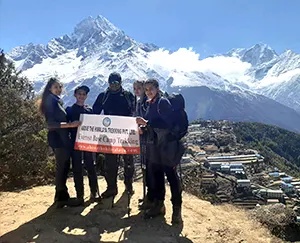
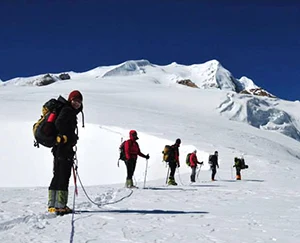
Best Time for Ganesh Himal Trek
In the springtime, the Ganesh Himal trekking trail adventure is truly magical. This season brings the trail alive with lush greenery, blooming flowers, and crisp, refreshing mountain air.
The temperature increases to a quite pleasant level, usually ranging from 10 to 20 degrees Celsius during the day, perfect for comfortable trekking with clear skies and blooming flowers. However, at higher heights, the temperature can drop drastically to 0 to 5 degrees Celsius, especially at night.
Most hikers consider that the optimal season for the Ganesh Himal Trek is from mid-September to November. This season is usually pleasant and comfortable for trekkers. However, it can be unexpected at times due to the higher elevations we will be travelling at. Autumn is known as the “crimson canopy,” offering a breathtaking setting.
Summer, from June to August, is full of life and offers celebration and relaxation, with its long days and blazing sun. At the same time, it is also wet and muddy. The heat and rain make the trails muddy and slippery, and, of course, there are leeches.
If you don’t mind the clutter, the air is filled with natural sounds and the fragrance of fresh grass. You’ll lose out on seeing clear mountains, but after the rain, hikers can see misty mountains, rich foliage, and beautiful waterfalls.
Conversely, as summer fades, so does its warmth. Winter in Ganesh Himal is cold and snowy, with early nightfall and quiet trails. It’s a more challenging trek, but the frosty beauty and peaceful atmosphere make it worth it. You’ll also get a real glimpse of Himalayan life, away from the crowds.
Elevation and distance
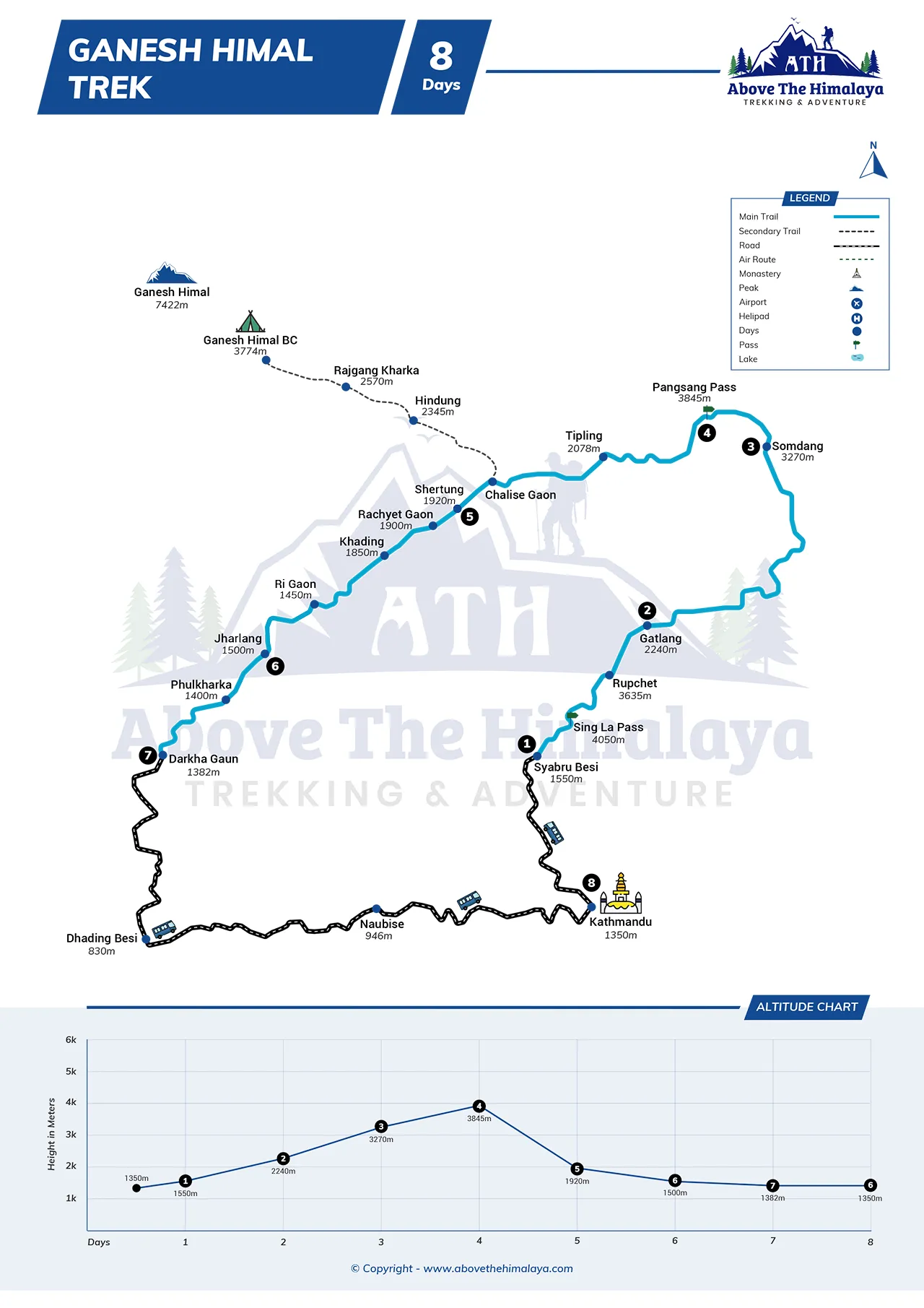
On this incredible eight-day journey in the Ganesh Himal region, your trekking excursion begins in the Syabru Besi Village at 1,550 meters. From there, you will each day gain higher elevations, reaching different Tamang villages, such as Gatlang at 2,240 meters and Somdang at 3,271 meters.
You will cross the Pangsang La Pass, sitting at a height of 3842 meters above sea level, which is the highest place you will reach on this mountain trip. From here, you will descend and lose elevation each day at different settlements, such as Shertung at 1875 meters, Jharlang at 946 meters, and Darkha Gaon at 850 meters.
Similarly, you will drive 122 kilometers from Kathmandu to Syabru Besi Village in a jeep. You will trek a total of 70 kilometers (43.5 miles) in six days, visiting different villages with overnight stays. From Somdang, you will need to cover 9 kilometers to reach the Pangsang La Pass, one of the primary attractions of this trek.
Difficulty and altitude sickness on the Ganesh Himal trekking
Whether you know this or not, the gentle paths with challenging difficulties, providing a well-purposed trekking experience, can be the Ganesh Himal trek. This trek is not particularly difficult, with no problems of AMS (Acute Mountain Sickness). Trekking through the forest, you can experience the birds chirping and feel the warm breeze gently rustling the leaves around, which can alleviate your difficulties.
Even if some parts of this trek involve sharply inclined paths, it’s generally considered less demanding than popular routes like EBC (Everest Base Camp) or the Annapurna Circuit. But it doesn’t mean it doesn’t require a good level of training, fitness & mental preparation, especially if you are not used to long-distance trekking at higher elevations.
However, if you are not accustomed to hiking and trekking or it’s your first time going to a higher elevation, altitude sickness or lack of acclimatization can be a problem for you after reaching 3500 meters. The symptoms include headache, fatigue, and difficulty breathing, so if you experience any of these, it’s best to descend to a lower altitude.
Maximum and minimum walks per day
On this journey, you will trek daily for approximately 5 hours along the trails, which are filled with breathtaking scenery. The lowest hours you will walk on this journey will be about three to four hours when you trek to Pangsang La Pass from Somdang Village on the fourth day.
Similarly, the highest hours you will walk on this trip will be about six to seven hours when you trek to Somdang from Gatlang, passing through Parvati Kunda and Yuri Kharka on the third day, and to Darkha Gaon from Jharlang Gaun on the seventh day.
Accommodation, Food and Drink
Your tour begins in Kathmandu, where you will check into a nice standard hotel. Rooms are often shared on a twin basis and feature basic amenities, as well as a quick breakfast to get you started. Once you reach the Ganesh Himal trekking path, your lodgings will change to delightful tea houses and lodges nestled in the natural surroundings.
Please keep in mind that the food options offered during the walk may differ depending on where you are. Breakfast, lunch, and supper are all inclusive. This is an excellent chance to immerse oneself in authentic Himalayan culture by sampling traditional cuisine made with organic ingredients. Trekkers should include some snacks or energy bars to keep them going between meals.
When it comes to drinks, each morning will begin with a complimentary cup of tea or coffee to keep you warm and invigorated. Soft drinks, herbal tea, and specialty beverages are not included in the package but can be obtained along the way at tiny tea shops and lodges. Avoiding alcohol and sugary drinks benefits your health by keeping you hydrated.
Can a beginner join this trip?
The Ganesh Himal Trek is an ideal option for beginners seeking to explore the Himalayas. This trek doesn’t require previous high-altitude trekking experience, as moderate preparation and fitness are sufficient. You just need to be bold enough to explore and delight in the views of the breathtaking mountains.
The trail is peaceful, less crowded, and less challenging than routes like Everest Base Camp or the Annapurna Circuit. Though it’s an 8-day Ganesh Himal trek itinerary, you hike for only 6 days. Each day includes around five to six hours of trekking through traditional villages, forests & terraced fields. It is ideal for beginners who are comfortable walking at a steady pace and handling some uphill climbs.
The risk of altitude sickness is lower since the trek doesn’t go too high; it’s not too high, and the route allows enough time for your body to adjust. If you are a beginner looking for a rewarding Himalayan adventure with manageable challenges, Ganesh Himal offers the perfect blend of culture, nature, and hiking.
Preparation and fitness
For the 8-day Ganesh Himal trek itinerary, the secret to enjoying and safely finishing the hike is preparation. Because the route is remote and can be physically demanding, having a plan before you go makes a significant difference, as physical fitness is essential for any circumstances during trekking that involve uneven paths, unforeseen weather, and rugged terrain.
A decent level of fitness is essential, which means you don’t have to be a professional athlete; you simply need to be able to walk 5 to 7 hours a day. If you’re accustomed to light hiking, you’re already on the right track. Strength and stamina should be well built before the trek to make the journey more comfortable.
To prepare for a healthier and better shape, focus on exercises like brisk walking, jogging, stair climbing, or hiking with a backpack that minimizes muscle cramps. Opt to start training at least 4 to 6 weeks before the trek. Conversely, packing the essential gear is also another crucial part of preparation.
Without a good understanding of what you need to pack for your journey, problems can arise. With a well-prepared backpack, you can travel comfortably, for example, with a good pair of trekking shoes, a hat, sunscreen, or a down jacket. However, what you pack relies on the season in which you plan to travel.
A typical day on Ganesh Himal Trek
A typical day on the Ganesh Himal Trek begins at sunrise, when the direct sunlight creates a relatively soft halo around the nearest peaks. A light breakfast at a teahouse or homestay is followed by a daily walk that can last from five to seven hours, depending on the route.
You pass through pine and rhododendron woodlands, walk on the suspension bridges over the clear rivers, and go uphill through terraced hillsides with traditional Tamang villages. The paths are so peaceful that you can enjoy the far and expansive views of the rows of mountain peaks, such as Ganesh Himal, Langtang Lirung, and Manaslu.
A lunch break right in the middle of the day usually happens in a quiet village or an open meadow. The afternoon walk involves easy up-and-down path parts and ends by the village, where you can stay in a lodge or a tent. The evenings are quiet and beautiful with a taste of local dishes during dinner and listening and exchanging stories with your fellow trekkers, and finally gazing at the dark sky of the Himalayas.
Trekking Permits for Ganesh Himal Trek
As you’re aware or not, obtaining a permit for the Ganesh Himal trek is pivotal, as trekking without it can result in severe penalties, including fines, being turned back, or even a ban. Permits have more weight than just the printed word; they encourage trekking that is safer and more ethical. You must obtain the three essential permits.
Restrictive Area Permit (RAP), which helps explore specific areas designated by the government or local authorities. Secondly, the Annapurna Conservation Area Project permit (ACAP), which is also a mandatory permit for trekkers to explore the Annapurna conservation area with the iconic routes like the Annapurna circuit, Annapurna base Camp, and Ghorepani Poon Hill trek.
Last but not least, TIM’s Card (Trekkers Information Management System), which ensures your safety, is available individually or as part of a group.
Transportation
The trek cost package for the 8-day Ganesh Himal Trek itinerary includes all transportation expenses. One advantage is that wherever you need to travel, it is paid for, and you don’t require any extra transport. For instance, on the initial day, a jeep will be kept so we can come from the city to Syabru Besi village. In a case where you prefer to trek alone or in a small group, the jeep will need to be shared with some other trekkers.
The jeep is more preferable if someone is considering comfort, as it saves the fatigue of bouncing around on a local bus. If you are mindful of your budget, you can cut costs even more by taking a local bus rather than a jeep, which is not as comfortable. Similarly, on the return journey, you will travel by jeep from Dhading Besi back to Kathmandu, marking the end of your adventure through the Ganesh Himal region.
Travel Insurance
If you plan to hike on the 8-day Ganesh Himal trek itinerary adventure, it’s essential to obtain comprehensive travel insurance that explicitly covers trekking activities. Since this activity involves certain risks, such as altitude sickness, injuries, or unexpected emergencies, ensure your insurance policy includes coverage for treks reaching elevations between 4,000 and 5,000 meters.
A good travel insurance policy should protect you from unforeseen expenses during crises, such as air ambulance services, hospital bills, or regimens, which are common when trekking in remote areas. It is also advisable to have coverage for common setbacks in Nepal, such as airport delays, tour cancellations, or misplaced equipment. With reliable insurance in place, you can start your vacation with confidence.
What to expect from this trip?
Get ready for an amazing trip through Nepal’s hidden Ruby Valley, just north of Kathmandu. You’ll wake each morning among blooming pine and rhododendron trees, then visit remote Tamang and Gurung villages with their stone homes and friendly people.
The trek’s most memorable and treasured experiences include visiting the sacred Parvati Kunda lake, traversing the 3,842-meter-high Pangsang La Pass, which offers stunning Himalayan views, and encountering animals such as musk deer and snow leopards.
The trail is magnificent as it winds past terraced farms to reach alpine meadows, and the streams from the slopes meander to complement the scenery. Peaks like Ganesh I-IV, Langtang, Manaslu, and Annapurna dominate the landscape with their sheer size. It’s simply the ideal combination of beautiful landscape, ongoing cultural connections, and unspoiled serenity away from the hustle and bustle of city life to have a great alpine journey.
So, embark on the 8-day Ganesh Himal Trek itinerary during the best season in Nepal for the ultimate experience in the Himalayas, which will reward you more than you expect on this journey. Every moment created during the trek is priceless—an experience that will leave you feeling proud and truly fulfilled.
Language & Communication on the Ganesh Himal Trek
The Tamang and Gurung people are found in the Ganesh Himal region. The primary language is Nepali, with most villages having their own dialect.
Communication is easy even though you do not speak Nepali. The guides are fluent in English and usually assist in translating for trekkers. Villagers and teahouse owners tend to be young and might grasp simple English expressions.
It is such a long way to learn several words, such as Namaste to say hello and Dhanyabad to say thank you. Gestures and smiling are also welcome.
Language is not a hindrance on this distant journey. With good self-interaction, intimate dialogues, and experiences, trekkers usually discover that the whole experience is enriched.
Mobile Network, Internet & Charging Facilities
Keeping in touch in the Himalayas cannot be easy, yet possible. During the 8-day Ganesh Himal trek, you will go across villages where there is patchy mobile network coverage. NTC and Ncell, which are the primary operators in Nepal, have towers in select locations, and your guide will be able to recommend which SIM is optimal to use.
In small villages and on top of hills, the signal is not generally good, but it can be lost in deep valleys or in areas of high passes. Internet access is minimal, and slow Wi-Fi is provided by some lodges at a low fee. It is better to inform the family about your mostly being offline.
Charging is available at homestays and tea houses, being solar or micro-hydro power dependent. Lodges either charge on a per-device or a per-hour basis. Always have a power bank and backup batteries in order to be safe. Planning allows you to test in a little as you really go on a digital holiday.
Important Don’ts for the Ganesh Himal Trek
Exploring the Ganesh Himal nature requires consideration and appreciation. Always remember the local culture. Seek permission before taking snapshots of villagers and never point your feet at shrines and hearths in homes.
Keep the trails clean. Dispose of all non-biodegradable rubbish and restrict one-use plastics. This environment is delicate, and every trekker contributes to its preservation.
Keep to the trail and keep up with your group or mentor. It is very remote and easy to lose track of the path when you are alone. Pay attention to altitude sickness symptoms, such as headache or dizziness, which can begin above 3,000 m. Allow time to acclimatize or move downwards in case of necessity.
Don’t have to rush and move slowly. Be quiet; loud music or yelling irritates the wild animals and fellow visitors. When purchasing things locally, be courteous; little gestures are far-reaching. These few simple don’ts will allow safety, respect, and an experience to remember in a trek.
Trip Extension Options After the Ganesh Himal Trek
In case you still have some days in Nepal, you can extend your adventure in several ways. One of the most popular options is taking a Chitwan Jungle Safari, where one would get to view the rhinos, elephants, and deep green forest of the lowlands.
Another popular one is Pokhara, where a few days off by the lake can be spent taking short day hikes to scenic spots such as Sarangkot, where sunrise views can be made.
To those interested in the culture, a visit to the UNESCO sites of Kathmandu Valley can provide a greater insight into the history and art of Nepal by visiting Patan, Bhaktapur, and Boudhanath.
When you are still in the mood to trek, other shorter alternatives such as Langtang Valley or an overnight retreat to Nagarkot are close by. More extreme tourists can go up to the Tamang Heritage Trail or the Tsum Valley, which is a restricted area and needs special permits and a licensed guide.
Since you are already used to climbers in the Ganesh Himal trek, you may also consider several days of rafting or paragliding in Pokhara. These extensions provide wildlife, culture, or adventure to your trip to Nepal.
Photography & Drone Rules for Trekkers
The Ganesh Himal landscape is also a photographer’s heaven with terraced lands, traditional villages, and massive peaks at every turn. You are free to take images of landscapes, and freedom is observed; still, it is advisable to enquire first of all people before taking pictures of locals.
There are strict regulations introduced for the use of drones in Nepal. The use of drones requires special permits from CAAN, the Ministry of Home Affairs, and sometimes local authorities or national parks.
The process of filming near villages, conservation territories, or cultural sites might require obtaining extra permits. If you want to carry a drone, be sure to discuss with your trekking company in advance so as to get all the approvals.
Fly responsibly even in the case of permits. Stay out of villages, livestock, and sacred areas, and keep at a distance from people and animals. Certain places can be strictly restricted for privacy or safety reasons; your guide will inform you about them.
Overall, photography and drones are acceptable provided that the privacy and cultural values are not violated. Best of all, get the breathtaking Ganesh Himal sceneries, but then again, have time to take pictures with your camera.
Tips for First-Time Nepal Visitors
Nepal is very welcoming to travelers, although some tips will help you have a smooth ride. Tourist visas are available on arrival at the airport- carry a passport and USD. Bring enough Nepali Rupees (NPR) as ATMs are very limited in the mountains, and the trek happens to be cash only.
Be respectful of local culture: wear something modest, take off shoes in homes or monasteries, and say Namaste. Health matters, drink clean water, eat freshly prepared food such as dal bhat, and carry a simple first-aid kit and personal medicines.
Get ready for Nepali time- keep in mind that timetables are not always strict, and thus patience is important. Road networks are not well-maintained, and the weather can hamper plans. Show respect to nature and sacred places: do not feed wildlife, do not point to sacred objects, and adhere to site policies.
These tips help first-time visitors get to their homes very fast. Be ready to have an adventure, be flexible, and experience the beautiful landscapes, culture, and hospitality in Nepal.
Common Risks During the Ganesh Himal Trek
The Ganesh Himal trek is moderately difficult, and it takes one through a remote area. The most common risk is above 3500 m altitude sickness (AMS). The symptoms consist of headache, nausea, and dizziness. Guarantee your guide even when you feel bad.
The weather can change quickly. During spring and autumn, the trails are fairly stable, but the winter trails can be snowy or icy. During the monsoon, it pours a lot, the roads are very muddy, and sometimes there are leeches in the lower forests–salt or insect repellent is useful. In trekking, poles are used to enhance stability in the slippery or steep parts.
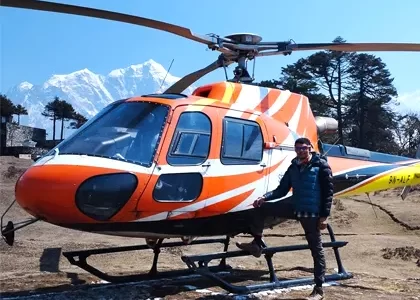
The area is isolated, making medical assistance to be minimal. Helicopter evacuation usually takes the shortest time during emergency cases. It is necessary to have travel insurance and a guide. Wildlife encounters are rare, although keep a distance between the Himalayan Thar, monkeys, or other larger animals.
Keep hydrated, eat healthy, and sleep every night to prevent fatigue, which predisposes one to injury. With your guide and as long as you follow his or her instructions and take a few careful measures, you will be able to enjoy your trek, enjoying the gorgeous views of Ganesh Himal and the peaceful villages.
Solo Ganesh Himal Trek – Is It Allowed?
Technically, solo trekking is permissible in Ganesh Himal because it is not a restricted region. It is, however, definitely not recommended. The path is devious and has numerous little and unmarked crosses in the woods and villages. Even the skilled trekkers may get lost without local knowledge.
Hiking with a guide or group will enhance safety and experience. Guides can lead you through confusion junctions, can set up homestays, and translate on your behalf. During emergencies, such as when one gets injured or when a person catches a cold, support will be extremely important since few people will be able to assist them in this area.
TIMS cards are given by registered trekking agencies, and individual trekking in remote areas is highly discouraged. Individual hikers also have logistical problems with food, lodging, and communicating locally in such a remote region.
Simply put, individual trekking can be done, but the better option is to invest in a guide or a trek group. You will feel safer, obey the rules, and get more familiar with the culture, villages, and natural beauty of Ganesh Himal, and be assisted and guided by the experts on the journey.
Cultural Festivals on the Ganesh Himal Trek Trail
The sheer experience of local culture in its purest form is one of the highlights of the Ganesh Himal trek. When you are at the Tamang and Gurung villages, you will encounter vibrant festivals during the time you are trekking.
In the month of Dashain and Tihar (October-November), villages are places of music, dance, and rituals. You will find the Maruni dance or the singing of children singing Deusi-Bhailo in the evenings. Trekkers can also be invited to participate or even attend the celebrations.
The Ghatu dance in March-April is done in Chandi Purnima. Girls dressed in colorful outfits at a young age retell old tales as they get into a trance, a rare insight into Gurung culture. Passing by a gompa at the right moment, Local Buddhist ceremonies and seasonal rituals may be observed.
During winter (in January-February), there is a feast, rituals, and traditional clothes during the Tibetan New Year, Losar. The trail is lined with prayer flags, chortens, and meeting places, even when not in full swing of the festivals. It is a source of constant cultural background information.
Trekkers are also advised to interact respectfully, and guides can translate the meaning of rituals and ceremonies. Attending these festivals gives one an immensely rich insight into local traditions, religion, and everyday life. Your Ganesh Himal trek is not just a mountain experience, but also a trip into the spiritual and cultural core of the area.


 Customize Your Trip


 General
 Preparation & Fitness
 Permits
 Insurance and Visa
 Guides & Support Staff
 Accommodation and Facilities
 Food and Drinks
 Weather & Seasons
 Health & Safety
 Packing & Gear
 Booking & Payment
 Transportation & Flight





 Enjoy Himalayan scenery with the help of Nepal’s best guides with Government license holders and got training in first-aid, our Trip Leaders, know where you’ll find the best photos, most fascinating wildlife, and the best stream crossings.