Need Help? Let's Talk
+977 985-1095800
Highlights of Ama Dablam Climbing
- A unique mountaineering experience of the world’s prominent peaks, Mt. Ama Dablam (6,814 m / 22,356 ft)
- Attempt the pyramid-shaped summit of Ama Dablam through demanding technical climbing.
- The best Himalayan views include Mount Everest, Lhotse, and Makalu.
- Climbing through the rocky sections, ice walls, and snow slopes.
- Explore the culture and lifestyles of the local Sherpa people.
- Trekking through Prayer wheels, colorful flags, mani stones, and high-suspension bridges reveals a Wide range of flora and fauna.
- Passing by one of the active monasteries in Tengboche (3,867m / 12,687ft).
Overview of Ama Dablam Climbing
Ama Dablam Climbing is a technical expedition that involves mountaineering in the Khumbu region of Nepal, south of Mount Everest and Lhotse. Rising 6,814 m (22,356 ft) high, Ama Dablam is the Matterhorn of the Himalayas due to its unique shape, steep rock walls, and exposed ridges. The mountain is a challenging climb that requires previous rock and ice climbing experience.
The name Ama Dablam means “Mother’s Necklace.” The mountain’s long ridges resemble a mother’s arms protecting her child, while the hanging glacier represents the dablam, a traditional pendant worn by Sherpa women. The mountain is also famous due to the sight of Everest, Lhotse, Makalu and Cho Oyu as well as other Himalayas.
The first ascent of Ama Dablam was made on March 13, 1961, by Mike Gill, Barry Bishop, Michael Ward, and Wally Romanes using the Southwest Ridge. The ascent took place during the 1960–1961 Silver Hut Expedition.
Itinerary of Ama Dablam Climbing
01
Day 01: Greetings at Kathmandu Airport
We will meet you at Tribhuvan International Airport in Kathmandu for your Ama Dablam Climbing trip. We will transfer to your hotel from the airport. You will have time to settle in and freshen up after your long flight. We will invite you to our office for a briefing about your program.
You will meet with your Ama Dablam Climbing guide. We will discuss the equipment needed for the trekking and process the trekking permits. If you arrive at night, we will have the same discussion the following day after breakfast.
02
Day 02: A full day sightseeing tour of Kathmandu, the capital valley
After breakfast, you will take a full-day sightseeing tour around Kathmandu Valley. You can visit the sacred Pashupatinath Temple and Swayambhunath. They are very ancient and essentially enlisted in UNESCO World Heritage sites.
The biggest Buddhist Stupa is Boudhanath. Kathmandu Durbar Square’s fine arts and historical architecture reflect the ancient Nepalese culture. We highlight them on our guided tour.
03
Day 03: Rest day and legal formalities
Today might be a rest day of Ama Dablam Climbing for you. We will finalize the climbing and trekking permits, expedition paperwork, and necessary preparations. You will have time to explore the local area and have dinner. You can perhaps stroll through the famous streets.
04
Day 04: Flight from KTM to Lukla and trekking to Phakding
Today, we will fly to Lukla from Kathmandu or Ramechhap, depending on seasonal flight operations and weather conditions. When flights operate from Ramechhap, we will arrange the necessary road transfer to Manthali Airport. We enter the deep gorge of the Dudh Kosi valley. With clear weather, we get fantastic views of the mountains, including Everest. You begin your trek from Lukla.
You will follow a gentle climb up the mountainside on the left bank of the Dudh Koshi River. You will also view Mt Nupla (5885m), Kusum Kangaru (6367m), and Mount Kwongde Range. We then walk for approximately 3–4 hours to Phakding village.
05
Day 05: Phakding trekking to Namche Bazaar
We follow the Dudh Koshi River, crossing suspension bridges before reaching Monjo. Then we reach the village of Monjo. It is the entrance gate of the Sagarmatha National Park. Along the way, we may enjoy views of Kusum Kanguru, Thamserku, Everest (8,848.86 m), and Nuptse (7,861 m).
After a final steep ascent of about two hours, we get the first sight of Mt. Everest, peering over the Lhotse-Nuptse ridge. Then, we take a steep climb up to the beautiful village of Namche bazaar (3440m). It will provide spectacular views and a comfortable place to spend the second night of the trek.
06
Day 06: Acclimatization day in Namche
We spend the day acclimatizing to the altitude of Namche Bazaar. You gained considerable altitude during the previous day’s trek from Phakding to Namche Bazaar. Set in a natural amphitheater, Namche Bazaar is one of the most attractive settlements in the Khumbu region. Look across to the jagged ridge of Kongde Ri (6187m).
This acclimatization day helps your body adjust to the altitude, although altitude sickness can still occur. You have full-day leisure with fantastic panoramic views. You can stroll around the market and enjoy the splendid views of Everest, Ama Dablam, Thamserku, Nuptse, Lhotse, Tawche, and Kwangde.
07
Day 07: Namche Bazaar trek to Tengboche
We start our Ama Dablam Climbing trek with a pleasant walk through the forest, with magnificent views of the mountains. The trail climbs past some water-powered prayer wheels. Then, a sustained climb through a forest of tall, mature rhododendrons begins.
The village has a vast, grassy saddle at the start of the Tengboche (3870m). It lies below a crescent-shaped ridge covered by scrub pines and firs. From the viewpoint at the top of the hill, there are awe-inspiring views of distinctive peaks.
We can see Ama Dablam (6,814 m) rising above the surrounding Khumbu Valley, with Mount Everest (8,848.86 m) in the distance.
We also enjoy views of Nuptse (7,861 m), Lhotse (8,516 m), and surrounding Himalayan peaks. We visit the Buddhist Monastery at Tengboche, the largest in the Khumbu region.
08
Day 08: Trek to Ama Dablam Base camp
From Tengboche, we trek through Deboche and Pangboche before ascending toward Ama Dablam Base Camp at a steady pace. Basecamp is at 4650 meters/15,300 feet.
09
Day 09: Base camp preparation
Today is the day for acclimatization or rest. On the day of our expedition, we will make all the necessary preparations. Our climbing team will inspect the technical equipment and review climbing techniques and safety procedures before the expedition.
10-24
Day 10-24: Climbing period
During these 15 days, we will complete acclimatization rotations, prepare technical equipment, and climb toward higher camps along the Southwest Ridge. The summit attempt will depend on weather, route conditions, and the team’s acclimatization. We will return to Base Camp after the climbing period. The climbing schedule and higher camp arrangements may change depending on weather, route conditions, and the team’s acclimatization. The summit attempt may be postponed or canceled if conditions are unsafe.
25
Day 25: Ama Dablam BC to Tengboche
It takes approximately four hours to get to Tengboche. It is a small village with a famous monastery offering splendid views of Mt. Ama Dablam, lush green hills, and river views.
26
Day 26: Tengboche to Namche
From Tengboche, we descend to Phunki Tenga before ascending toward Kyanjuma and continuing to Namche Bazaar. Inside the rhododendron forest, you can find dense wildlife, including some species of pheasants, Himalayan Griffons, musk deer, and wild goats. Evening explores the small surrounding area with magnificent scenery.
27
Day 27: Namche Bazaar trekking back to Lukla
The trail descends steeply from Namche Bazaar before continuing through several villages, with uphill sections toward Lukla. Once you cross the high suspension bridge, the route runs mostly level. We will walk through rhododendron and pine forests. We walk with a view of a distance of snow-covered peaks before arriving at Phakding.
Enjoy the lush green scenery. Pass through the incredible mountain scenery and local Sherpa village arrival in Lukla. You’ll have time to stroll around the local areas.
28
Day 28: Flight from Lukla to Kathmandu
Weather permitting, we will take a return flight from Lukla to Kathmandu or Ramechhap, followed by a road transfer to Kathmandu when required. Poor weather may delay or cancel flights.
29
Day 29: Free day in Kathmandu
Today, you will have a free day in Kathmandu Valley. Rest in your Hotel. Stroll the streets and buy souvenirs and memories from Nepal. In the evening, we will have a typical Nepali dinner accompanied by cultural shows in the Hotel.
This day also serves as a buffer in case of delays to the return flight from Lukla.
30
Day 30: Final departure
We will drop you off at the international airport to catch your flight to your onward destination.
Includes/Excludes
What's Included?
- Airport pickup and drop-off in Kathmandu by private vehicle.
- Hotel accommodation in Kathmandu with breakfast as mentioned in the itinerary.
- Kathmandu sightseeing tour with private transportation.
- Round-trip flights between Kathmandu and Lukla, or Ramechhap and Lukla when required, including road transfers between Kathmandu and Ramechhap.
- Accommodation in teahouses during the trek.
- Tent accommodation at Ama Dablam Base Camp and higher camps.
- Breakfast, lunch, and dinner during the trek and climbing period.
- Experienced English-speaking climbing guide and Sherpa support throughout the expedition, including summit support.
- Porters to carry luggage and climbing supplies.
- Ama Dablam climbing permit and required government permits.
- Sagarmatha National Park entry permit and Khumbu Pasang Lhamu Rural Municipality fee.
- Food and kitchen support during the climbing period.
- Group climbing equipment, including ropes and technical protection equipment required for the planned climbing route.
- Salary, meals, accommodation, and insurance for guides, Sherpas, and porters.
- Basic first aid kit during the trek and climb.
- Welcome and farewell dinners in Kathmandu.
- All applicable government taxes and service charges.
- Assistance with emergency communication and rescue coordination when required. Rescue, evacuation, and medical expenses are excluded.
What's Excluded?
- International flights to and from Nepal.
- Nepal visa fees.
- Compulsory personal travel insurance covering technical mountaineering up to at least 7,000 meters, emergency medical treatment, and helicopter evacuation.
- Personal climbing equipment such as climbing boots, crampons, ice axe, harness, helmet, down suit, and sleeping bag.
- Personal oxygen bottles, masks, and regulators, if required.
- Personal expenses such as snacks, bottled drinks, and alcoholic beverages.
- Lunch and dinner in Kathmandu, except for the meals mentioned in the itinerary.
- Extra hotel nights in Kathmandu due to early arrival, late departure, or flight delays.
- Hot showers, Wi-Fi, laundry, phone calls, and battery charging during the trek.
- Personal medicines and medical expenses.
- Helicopter rescue and evacuation costs.
- Tips for climbing guides, Sherpas, and porters.
- Extra costs caused by bad weather, flight delays, natural disasters, or other unexpected situations.
- Entrance fees for monuments and heritage sites during Kathmandu sightseeing.
- Any extra services or expenses not mentioned in the Cost Includes section.
Flexible Booking and Cancellation Policy
At Above the Himalaya Trekking, we understand that travel plans may change. Our booking policy provides clear terms and flexible options to help you plan your Himalayan adventure with confidence.
A 20% non-refundable deposit is required to confirm your booking, with the remaining balance payable upon arrival in Kathmandu/Pokhara before your trek begins. Departure dates can be changed free of charge at least 30 days in advance, subject to availability.
If you postpone your trip at least 30 days before departure, your deposit can be applied toward another trip within one year, subject to availability and any price differences. Date changes are not permitted within 30 days of departure, and no refunds are provided for early departures or unused services once the trip has started.
For complete details, please read our Booking and Cancellation Terms.
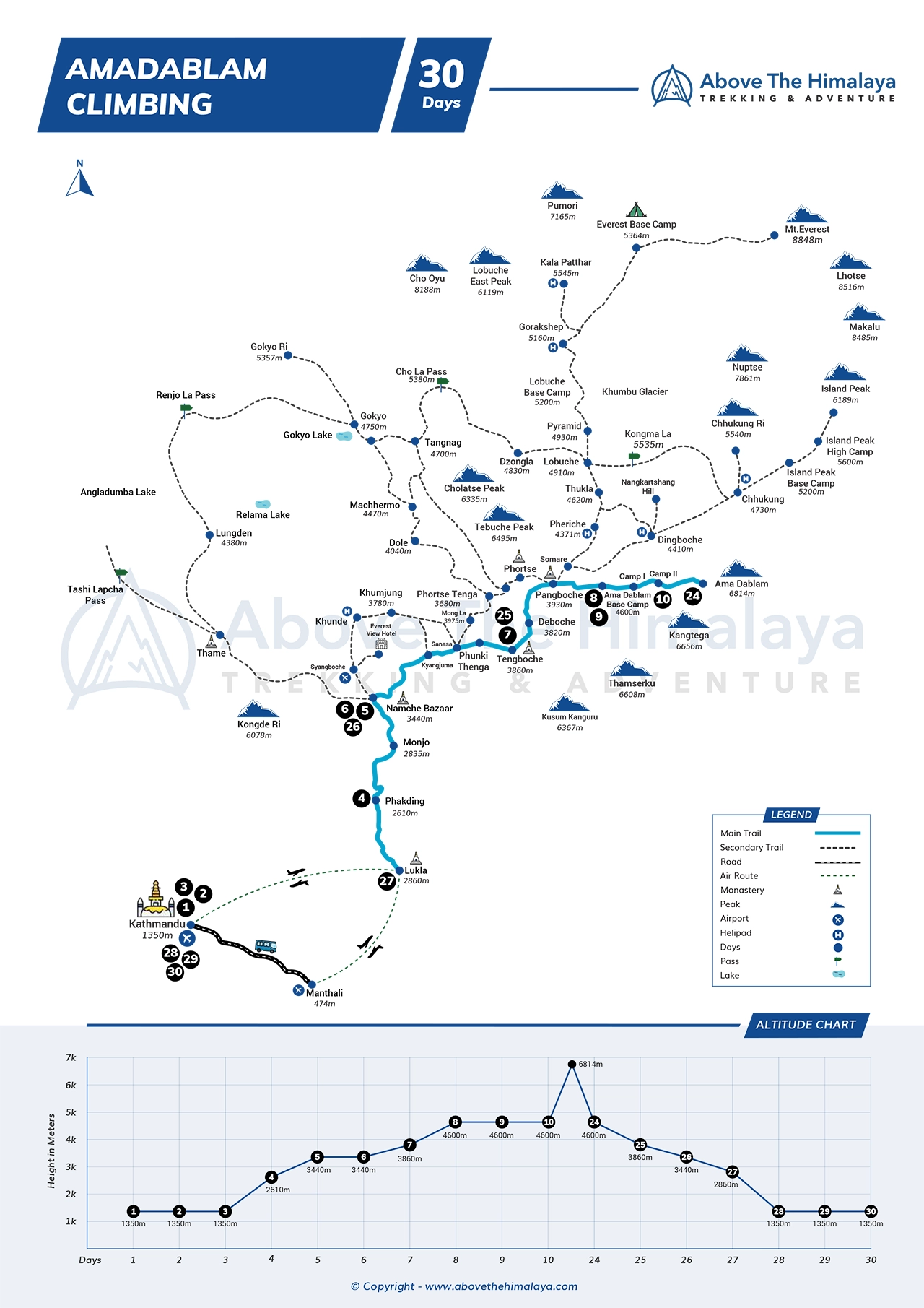
Route Map & Altitude Chart
Ama Dablam Climbing Route and Technical Difficulty
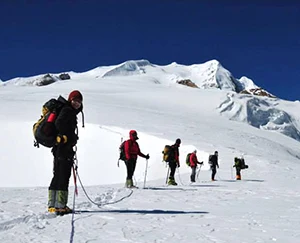
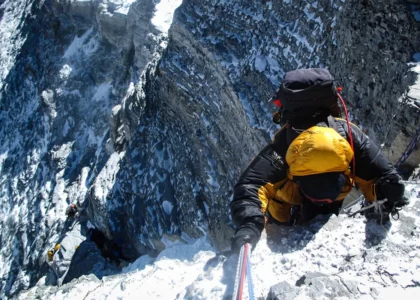
Ama Dablam is a popular technical climbing expedition in Nepal’s Khumbu region. The most popular route for Ama Dablam Climbing by far is the Southwest Ridge. The Southwest Ridge involves demanding technical climbing on exposed rock, snow, and ice.
It has good camp platforms at strategic points. Trekking in the Khumbu offers views of some of the world’s most famed mountains. We fly to Lukla from Kathmandu or Ramechhap before trekking through Namche Bazaar, Tengboche, and Pangboche. Finally, we set up in the Ama Dablam Base Camp.
The climbers must be technically competent and have good rock and ice climbing skills. The climbing route involves exposed rock, steep snow slopes, and technical ice sections.
How Difficult Is Ama Dablam Climbing?
Ama Dablam climbing is one of the most technical mountaineering adventures in Nepal. Ama Dablam is 6,814 meters high and it is a difficult mountain to climb even for seasoned climbers because of the technical aspects of the climb. The Southwest Ridge route is typical, with steep rock, exposed ridges, snow fields and technical ice sections.
Climbers must be confident using fixed ropes, crampons, ice axes, and other technical climbing equipment. The reduced oxygen, cold temperatures, strong winds and physical exertion can make the climb even more challenging.
Our 30-day Ama Dablam climbing itinerary incorporates acclimatisation days, technical preparation, and climbing rotations between Base Camp and upper camps. These arrangements allow climbers to gradually get used to the altitude and prepare for the summit attempt.
Previous mountaineering experience, good physical fitness and technical climbing skills are essential. If you are a beginner without the proper climbing experience, this expedition is not recommended.
Best Time to Climb Ama Dablam
In general, the best climbing seasons for Ama Dablam are spring (March to May) and autumn (September to November). These seasons usually offer good weather, better views of the mountain and better conditions for technical mountain climbing in the Everest region.
Ama Dablam is a popular mountain to climb in autumn, particularly in October and November. The skies are often clearer after the monsoon, and mountain views are usually excellent. Spring also offers good climbing conditions, relatively warmer weather and the colour of rhododendron forests along the trekking route.
Winter is marked by severe cold, strong winds and difficult climbing conditions. Similarly, the summer monsoon increases the possibility of precipitation, snowfall and low visibility.
The best seasons to climb Ama Dablam are spring and autumn, although you can’t count on good weather. Our climbing team keeps a close watch on the weather forecast and mountain conditions to plan climbing rotations and select a summit window.
Required Climbing Experience and Physical Fitness for Ama Dablam Climbing
Climbing Ama Dablam demands excellent physical fitness, mental endurance and prior technical mountaineering experience. Climbers must be comfortable on exposed ridges, steep rock, snow fields and icy conditions and carrying all essential personal equipment.
Previous high altitude mountaineering experience, preferably on 6000m+ peaks is strongly recommended. Climbers must also know how to use crampons, ice axes, harnesses, ascenders, descenders and fixed ropes. High altitude trekking experience alone is not sufficient preparation for this technical expedition.
We recommend you start your physical training 4-6 months prior to departure. You can prepare your body for the expedition by engaging in cardiovascular exercises, strength training, endurance hiking, rock climbing and technical rope practice.
At Base Camp, our climbing team will go over technical skills, equipment and safety procedures before moving to the higher camps. This preparation assists with reinforcing the existing mountaineering skills needed to climb Ama Dablam .
Visa & Permits for Ama Dablam Climbing
Most foreign tourists require a tourist visa to enter Nepal. Eligible travellers can apply for a visa on arrival at the Tribhuvan International Airport in Kathmandu. Ama Dablam Climbing Expedition duration: 30 days We recommend 90 days tourist visa to have some flexibility in case of any unexpected delays.
The standard Ama Dablam climbing expedition requires the following permits:
- Ama Dablam expedition climbing permit
- Sagarmatha National Park entry permit
- Khumbu Pasang Lhamu Rural Municipality entry permit
Our team will arrange the required climbing permits, trekking permits, expedition paperworks, and the necessary government formalities. Climbers must submit a copy of a valid passport and any other documents required for the permit process.
Our Ama Dablam climbing package cost includes the climbing and trekking permits needed. However, the Nepal tourist visa fee is to be paid separately by the traveller. Permit requirements and fees are subject to change by government regulations.
Ama Dablam Climbing Equipment List
Having appropriate technical equipment and high-altitude clothing is essential for Ama Dablam climbing. Climbers should prepare reliable mountaineering equipment suitable for steep rock, snow, ice, and extreme temperatures.
The essential personal climbing equipment includes:
- High-altitude mountaineering boots
- Crampons and technical ice axe
- Climbing harness and helmet
- Ascender, descender, and locking carabiners
- Safety slings and personal attachment equipment
- Expedition down suit or suitable insulated clothing
- High-altitude sleeping bag
- Waterproof jackets and pants
- Insulated gloves and mittens
- Glacier sunglasses and ski goggles
- Headlamp with spare batteries
- Trekking boots and backpack
- Personal first aid supplies
Our Ama Dablam climbing package includes group climbing equipment, tents, and kitchen supplies. Personal climbing equipment is not included in the package cost.
Some equipment can be rented or purchased in Kathmandu, subject to availability. We recommend reviewing your equipment list with our climbing team before departure.
Altitude Sickness and Safety During Ama Dablam Climbing
One of the significant health hazards in Ama Dablam climbing is altitude sickness. Less oxygen will build up more pressure on the body as mountaineers move towards elevated camps and the peak at an altitude of 6,814 meters.
The typical symptoms of acute mountain sickness are headache, nausea, feeling of dizziness, loss of appetite and odd fatigue. Gradual ascent and proper acclimatization help reduce the risk of altitude-related illness.
Our Ama Dablam climbing itinerary includes an acclimatization day in Namche Bazaar, preparation time at Base Camp, and acclimatization rotations between higher camps during the climbing period.
Climbers should maintain adequate hydration, avoid alcohol and smoking, and immediately report any altitude related symptoms to their guide. Further ascent must stop if symptoms develop.
Extreme or aggravating symptoms such as confusion, walking trouble, or dyspnea at rest necessitate immediate descent and immediate medical evaluation. Depending on the weather conditions, our climbing team can change the itinerary or cancel the summit attempt.
Travel Insurance and Emergency Evacuation for Ama Dablam Climbing
Comprehensive travel insurance is compulsory for all climbers participating in our Ama Dablam climbing expedition. Ordinary trekking or general travel insurance may not provide sufficient coverage for technical mountaineering at extreme altitudes.
Your insurance policy must cover technical mountaineering up to at least 7,000 meters, emergency medical treatment, mountain rescue, and helicopter evacuation. Trip cancellations, interruption, domestic flight delays, and unexpected changes of itinerary coverage are also suggested.
Prior to visiting Nepal, it is important to thoroughly read your insurance policy to make sure that technical climbing with ropes and mountaineering gear is included. You are required to give your insurance information and emergency contacts information prior to departure.
In Ama Dablam climbing, we will provide emergency rescue coordination services in case of necessity. However, helicopter evacuation depends on weather, altitude, aircraft availability, and operational conditions. Climbers may need to descend to a suitable evacuation point. Rescue, evacuation, and medical expenses are not included in the package cost.
Ama Dablam Climbing: Lukla Flight Delays and Contingency Plans
Flights to and from Lukla are an important part of the Ama Dablam climbing expedition. Flight delays or cancellations may be however, unexpected due to the weather conditions in the mountains, low visibility, and strong winds.
In peak trekking seasons, Lukla flights can be using Manthali Airport at Ramechhap, instead of Kathmandu. Our team will organize the road transfers between Kathmandu and Ramechhap as necessary.
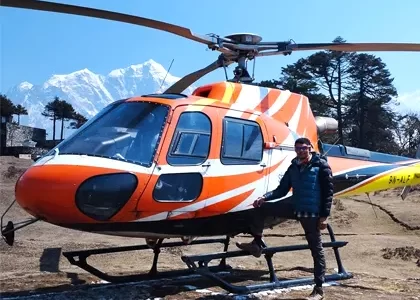
If flights are delayed or canceled, we will assist with alternative arrangements and rebook the next available flight. Helicopter transfers can be organized at an extra fee, depending on weather conditions and aircraft availability.
Our 30-day Ama Dablam climbing itinerary includes a free day in Kathmandu that can serve as a buffer for domestic flight delays. Additional expenses resulting from unexpected delays are the traveler’s responsibility. We suggest to have more days in Nepal and to keep the international flight arrangements flexible.
Frequently Asked Questions About the Ama Dablam Climbing
Yes, individual mountaineers are welcome to plan an Ama Dablam trip with us. We are able to arrange an individual expedition with professional climbing assistance according to your experience and preferred dates and personal needs. Get in touch to have your own itinerary and price.
Our 30-day Ama Dablam climbing schedule will allow 15 days between Day 10 and Day 24, to perform acclimatization rotations, higher camp preparations, and summit attempts. The exact summit day depends on weather conditions, route conditions, and the climber’s readiness.
The Yellow Tower is a steep, bare rocky area in the Southwest Ridge that is usually seen prior to Camp II. It is among the significant technical challenges of the expedition and it involves the skills of rock climbing and use of fixed rope with confidence.
Ama Dablam is commonly climbed without supplemental oxygen. However, individual health, acclimatization, and climbing conditions may influence oxygen requirements. Personal oxygen bottles, masks, and regulators are not included in our standard package and must be arranged separately if required.
You will stay in hotels in Kathmandu and local teahouses or lodges during the trekking portion of the expedition. Tent accommodation is provided at Ama Dablam Base Camp and higher camps. Facilities become increasingly basic as you ascend the mountain.
On the trekking and climbing period, we will have breakfast, lunch, and dinner as part of our package. Meals are prepared by local teahouses during the trek and our expedition kitchen team at Base Camp. Food options at higher camps are more limited due to challenging mountain logistics.
These facilities are usually provided at teahouses along the trekking path usually at a fee. Electricity at Base Camp depends on available power arrangements, while charging facilities at higher camps are limited or unavailable. It is advisable to have extra batteries and a durable power bank.
Yes, it is possible to combine the Ama dablam climbing with the Everest base camp Trek using a tailor-made itinerary. But our normal 30 days trip does not cover Everest Base Camp or Kala Patthar. More days and expenses are needed to cover these destinations.
Reaching the summit is not guaranteed. Should you be unable to go on because of health reasons, bad weather, or dangerous climbing conditions, our climbing team will give you the top priority to get back down safely. Any additional services or itinerary changes will be handled according to the expedition’s booking terms and conditions.
We recommend booking your Ama Dablam expedition at least three to six months in advance, particularly for the popular autumn climbing season. Early booking allows sufficient time to arrange climbing permits, experienced expedition staff, equipment, domestic flights, and other logistical requirements.
Reviews on Ama Dablam Climbing


Peter Stanek
UK
Best Climbing tirp to Amadablam
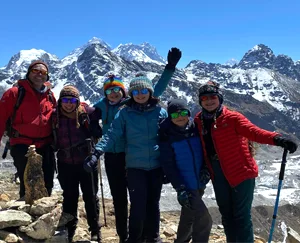
We just came back from our Amadablam expedition. Trekking above the Himalayas was an impressive experience. The company provided excellent services from the starting point of our climb to the endpoint. The Amadablam climbing was beautiful with their assistance.
Peter Stanek and friends
Book with Confidence
- Easy Booking: Secure your trip with just a 20% deposit.
- Flexible Date Changes: Free changes at least 30 days before departure.
- One-Year Deposit Credit: Use your deposit for an eligible postponed trip within one year.
- Private & Personalized: Flexible itineraries and group sizes.
- Experienced Local Guides: Professional guidance and support throughout your trek.
- Best Value: Competitive prices with clear package inclusions.
Your Trek Leader
Enjoy Himalayan scenery with the help of Nepal’s best guides with Government license holders and got training in first-aid, our Trip Leaders, know where you’ll find the best photos, most fascinating wildlife, and the best stream crossings.
Have Questions?Talk to Expert
Meet Mr. Purushotam Timalsena (Puru), Nepal's best trek and tour organizer, who has been working in the Himalayas for more than 24 years.
WhatsApp/Viber +977 98510 95 800