notification-icon
Join our solo, private, family, & small group joining trips Plan your trip

Everest Base Camp Trek by Road

||
trip-expert-puru-timalsena

Need Help? Let's Talk

+977 985-1095800
10% OFF

Best Price Guaranteed, Easy to change Date, Instant Confirmation

Book This Trip
Trip Duration 16 Days
Group Size 2-12 people
Maximum Altitude Kala Patthar (5,644 m)
Difficulty Grade Difficult
Start & End Point Kathmandu/Kathmandu
Best Seasons Mar-May, Sept-Nov

Highlights of Everest Base Camp Trek by Road

  • Chance to witness the rural and local life of Sherpas.
  • Stunning and scenic landscapes include lush forests, villages, rivers, and streams.
  • Sense of accomplishment and pride.
  • Avoidance of the risk of the world’s most dangerous flight, the flight to Lukla
  • Rare and exotic wildlife of the region.
  • Exciting historic sites are on the way.
  • More intimate cultural exchange.
  • Save the expensive flight cost.

Overview of Everest Base Camp Trek by Road

The Everest Base Camp trek by road without flight is one of the most fascinating treks in Nepal. It allows trekkers to get up close to the highest peak in the world and witness the beauty of Mount Everest. This trek is a dream come true for many Nepalese and foreigners. It offers the perfect blend of adventure and natural beauty.

Besides, trekkers get to trek through the challenging terrain of the Himalayas. We can see the stunning glaciers, peaks, and lakes. This trek also rewards the visitors with an exceptional cultural experience. They can feel the warmth of the traditional Sherpa community.

One can learn a lot about distinctive Sherpa culture while on the trek. Hence, Everest Base Camp Trek has more to offer: adventure and natural beauty. Going on this trek sets a lifetime memory as getting to the lap of the mighty Everest is a matter of pride and dignity.

The Everest Base Camp Trek by Road is a challenging trek that takes you 5,344 meters (17,598 ft) above sea level. The terrain is complex, making reaching EBC a significant achievement.

Besides, this trek can be a transformative experience if you enjoy challenging yourself. It’ll help you develop resilience and push past your limits.

Traveling to Everest Base Camp Trek by road without a flight can make the adventure even more thrilling. You will see breathtaking landscapes, local settlements, diverse local cultures, and rural life.

This road trek provides an experience and lets you see things you might otherwise miss. The expedition starts and ends from Tham Danda.

The Everest Base Camp trek by road is a 15-day trek through some of the world’s most stunning landscapes, like Solukhumbu. The trail passes dense forests of rhododendrons and magnolia trees.

Trekkers will encounter Namche Bazaar, a busy market and a gateway to Everest. They will also pass through traditional villages like Tengboche and Dingboche, which are picturesque villages from which the views of the Himalayas are stunning.

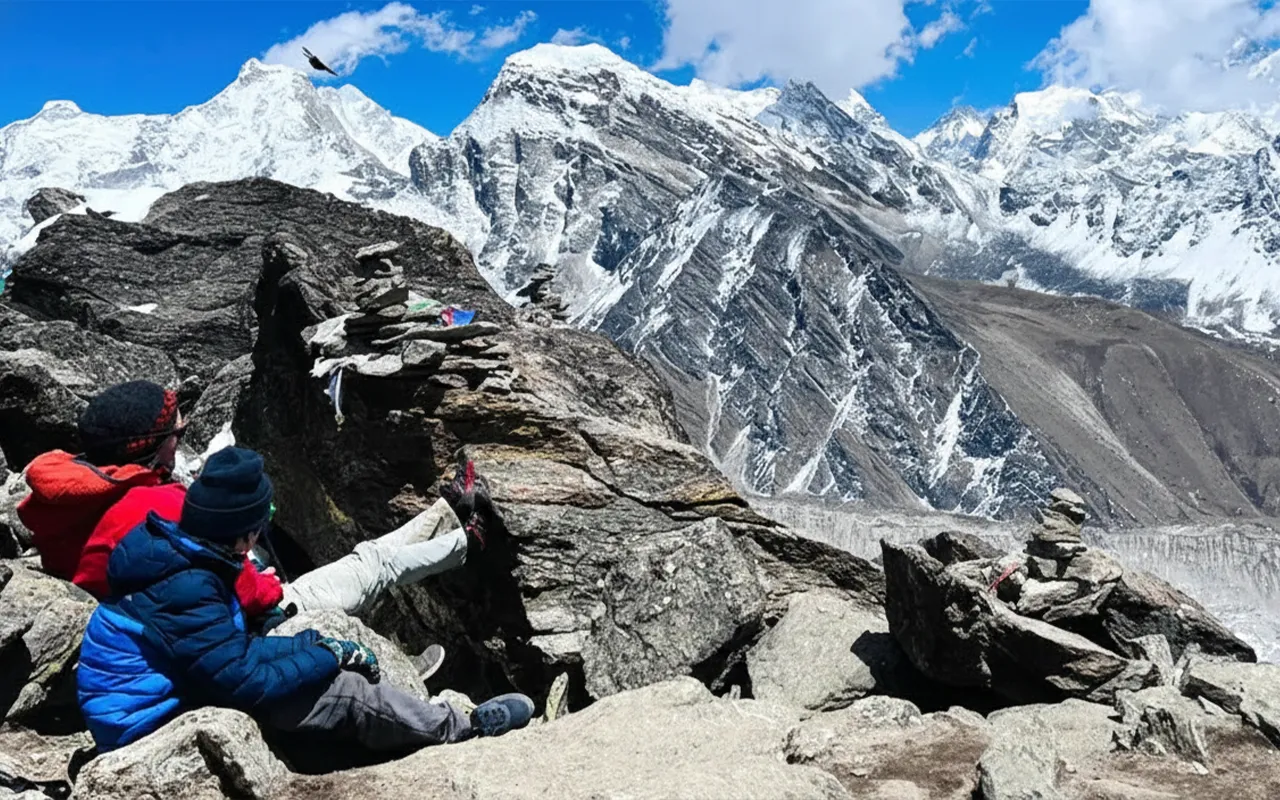
Moreover, Kala Patthar is one of the favored places for trekkers. It offers stunning views of Everest and other peaks in the region. Trekkers are rewarded with sunrises and views of peaks like Lhotse, Nuptse, and many more.

Suppose you’re looking for an adventure that pushes you to your limits. It allows you to experience the region’s natural beauty and rich culture. In that case, the Everest Base Camp Trek by Road is an excellent option. Road travel can enhance the experience and provide a more thrilling adventure.

How many days of trek to Everest base camp without taking flight?

We can trek for 14 days to Everest base camp with out flight. Now, it is easy to reach Surke by vehicle after crossing 64 km from the district headquarters, Salleri. We can trek from Kathmandu to Kathmandu in  14 to 16 days. With your international flight, we can make it a 16- 17 day itinerary. However, we do not recommend this route for a rainy time from Mid-June to the End of early October; due to rain, the road can be blocked so that you can travel that route in the dry season after mid-October,


Itinerary of Everest Base Camp Trek by Road

DAY
01

Day 01: Arrival in Kathmandu

Upon reaching Tribhuvan International Airport, one of our representatives will receive you. They will drive you toward the hotel.

You can freshen up, eat something and rest in the hotel. In the evening, you can set out from the hotel to explore Kathmandu’s nightlife. You can try some local Kathmandu cuisine to satisfy your taste buds. You will spend the night in Kathmandu.

Accommodation Hotel
Meals Dinner
Altitude Kathmandu (1400 m)
DAY
02

Day 02: Explore Kathmandu

On the second day of your Everest base camp trek by road itinerary, you can explore the vibrant city of Kathmandu. It is Nepal’s cultural and political hub. This city is home to many temples, palaces, and ancient buildings. They have stood the test of time and offer a glimpse into Nepal’s rich cultural heritage.

Your first stop will be Kathmandu Durbar Square, a UNESCO World Heritage Site. The square is surrounded by temples and palaces that were once the residences of Nepalese royalty.

Next up on your list is Patan Durbar Square, another UNESCO World Heritage Site in Lalitpur. The square has many temples, including the Krishna, Bhimsen, and Golden Temple.

After exploring Patan Durbar Square, you will visit the Boudhanath Stupa. It is one of the world’s largest stupas and a significant Buddhist pilgrimage site. The stupa is in the heart of the Tibetan community, around many monasteries and souvenir shops.

Your final stop for the day will be Swayambhunath Stupa, at the top of a hill. Many small temples and shrines surround the site. After a full day of sightseeing, you can retire to your accommodation in Kathmandu. Rest up for the next day’s adventure.

Car
Accommodation Hotel
Meals Breakfast, Lunch, Dinner
Altitude Kathmandu (1400 m)
DAY
03

Day 03: Drive from Kathmandu to Salleri

The Everest base camp trek by road journey from Kathmandu to Salleri is long and exciting. It takes you through some of the most scenic parts of Nepal. You will leave the hustle and bustle of the city behind and explore the stunning natural beauty.

The drive takes 10 to 11 hours, but the time passes as you take in the magnificent countryside views.

Once you arrive in Salleri, you will love the warm and welcoming nature of the local community. The city is the administrative headquarters of Solukhumbu district. It is home to diverse ethnic groups, including Kulungs, Kirants, Rais, and Chhetris.

The local customs and traditions reflect cultural diversity, making Salleri a fascinating place to explore. One of the highlights of Salleri is its stunning natural beauty. The city is 2362 meters above sea level, giving you a breathtaking view of the surrounding Himalayan landscape. As the sun sets over the mountains, you will see a display of colors and shadows, leaving you in awe.

Salleri is a popular starting point. It entices trekkers and mountaineers who want to explore the Everest region. From here, you can start your journey toward the Everest Base Camp. You pass through various landscapes and settlements.

Salleri uniquely blends natural beauty, cultural diversity, and warm hospitality, leaving a lasting impression on anyone who visits. It is the place to start your journey toward the world’s highest mountain.

Car 10-11 hrs
Accommodation Guesthouse
Meals Breakfast, Lunch, Dinner
Altitude Salleri (2,362m)
DAY
04

Day 04: Drive from Salleri to Surke and Trekking to Phakding

On the fourth day of our Everest base camp trek by road, you will drive from Salleri to Surke. The drive will take  5 hours and cover approximately 64 kilometers. This beautiful place provides a clear view of Okhaldhunga headquarters, Rumjatar.

From Surke we will have a short trek about 2 hours to Phakding. As you trek, you will love the beauty of the surroundings. The popular trekking trail is entire of rocky paths and steep ascents. Still, you will have the company of horses throughout the journey. Adding to your trek’s beauty, you will come across several authentic local tea shops.

Here, you can take a break and indulge in local delicacies. You will also encounter a few traditional-style houses. They reflect the culture and lifestyle of the locals.

You will trek alongside the Dudh Koshi River, which adds charm to the journey. You will then cross a suspension bridge over the Dudh Koshi River.

Further, you will pass by many prayer wheels reflecting local culture and tradition. You will come across charming villages like Musey and Charikharka. They offer a glimpse of the local way of life.

Once you reach Phakding, you will see several souvenir shops and an Irish Bar. They are pretty popular among foreigners. Phakding is famous for its local cuisine, which will tickle your taste buds. You will spend the night in Phakding amidst the natural beauty of the surroundings.


Multiple
Accommodation Guesthouse
Meals Breakfast, Lunch, Dinner
Altitude Tham Danda (2,350 m), Paiya (2,730 m)
DAY
05

Day 05: Phakding to Namche Bazaar

Today, our Everest base camp trek by road is from Phakding to Namche Bazar. This popular spot among trekkers is perfect for altitude acclimatization. To reach Namche Bazaar from Phakding, you must climb for approximately 5 to 6 hours.

The distance to cover is around 9.4 kilometers. This trail is steep as well as rocky. You will be crossing some beautiful bridges on the way. You will come across local people carrying bamboo in doko for household purposes.

You will pass through scenic routes, which consist of traditional houses, lush forests, and exciting ways. As you climb up, you will see glimpses of the mountain. On this day, you will cross Larcha Dovan at an altitude of 2935 meters, another adventure for the day.

About 45 minutes from your destination, you will achieve the most challenging part of the trek. You have climbed two hours of continuous incline.

Since you will be at a higher altitude, you will notice the weather changes; hence, pack and use your layers. This part of the trek will test your physical and mental strength.

As you reach the destination, everything will be worth it. You will see the superb and colorful Namche Bazaar. It is a town built amidst the Himalayas, which can make you wonder about the beauty of nature.

As you reach Namche Bazaar, you will notice the mountains covered with clouds. When the clouds are happy, they embrace the hills with fluffy white arms. They create a stunning contrast between the blue sky and the snow-capped peaks. The mountains, in turn, seem to bask in the love and attention of the clouds, looking gracious and proud.

But when the clouds are unhappy, they can be moody and unpredictable. They may shroud the mountains in a blanket of fog, hiding their majestic peaks from view. The mountains, in turn, can look sad and melancholy, as if they are yearning for the affection of their cloud companions.

Namche Bazaar is commercial; thus, if you need anything, you can buy it from the local shops. You will enjoy the charming Namche Bazaar, have dinner, and spend the night there.

Walking Day
Accommodation Hotel
Meals Breakfast, Lunch, Dinner
Altitude Namche Bazaar (3,440 m)
DAY
06

Day 06: Acclimatization at Namche Bazaar

Acclimatization is an essential part of high-altitude trekking. It is a process by which the human body adjusts to the decreased oxygen levels in the air. It is a significant part of the trek as it helps the body adapt to the surroundings. Moreover, it reduces the risk of any health issue, especially altitude sickness.

So, this day will be your day of acclimatization. You can walk around the town and visit the local museums, monasteries, and temples. Also, buy and stock up on stuff for the rest of the trek, and so on.

Trekkers can also visit Sagarmatha National Park and see the area’s exotic flora and fauna. They can also visit charming villages nearby to experience the rural lifestyle of locals, which will help in cultural exchange to the fullest.

You can take some time to enjoy the stunning views of Mount Everest, Ama Dablam, Lhotse, and other peaks. Enjoy a sip of tea or a coffee with the idea. You can click some snaps and take them as a memory for life. Many activities are available around Namche Bazaar to keep yourself active.

Remaining hydrated can help avoid headaches, dizziness, and altitude sickness. You can also consume fluids such as herbal tea, soup, and other drinks to maintain your body’s water level. However, it is better to avoid alcohol during acclimatization.

Hence, you will spend the night in Namche Bazaar on our Everest base camp trek by road.

Accommodation Hotel
Meals Breakfast, Lunch, Dinner
Altitude Namche Bazaar (3,440 m)
DAY
07

Day 07: Namche Bazaar to Tengboche

On the eighth day of our Everest base camp trek by road, you will trek from Namche Bazaar to Tengboche. It is a small village famous for Tengboche Monastery. Trekking distance from Namche Bazaar to Tengboche is around 5 to 6 hours. The trail is now more accessible, but since the air gets thinner, you might be out of breath; thus, take it slow.

You will come across an abandoned airport. The Nepal Government has stopped using it due to a few accidents. Now, there is an open space where you can rest and enjoy panoramic views of the Himalayas.

As you make your way, you will love the grandeur of the Himalayas. Towering peaks on both sides will surround you. As you look up, you will see the majestic Mount Everest. It is the highest mountain in the world, looming in the distance.

The views are breathtaking, and you will feel humbled by the sheer size and beauty of the mountains. As you reach Tengboche, you can visit the Tengboche monastery of the 19th century.

This monastery is the largest in the region. You can visit the prayer room, where you can pray and meditate. It is a sacred destination that lies within the Sagarmatha National Park.

From here, you can see the unique views of Ama Dablam, Tawache, Mount Everest, Lhotse, and Nuptse. You can enjoy this sacred place and feel the spiritual energy within you. You will have local cuisine in the area, prepare for the next day, and

Walking Day
Accommodation Guesthouse
Meals Breakfast, Lunch, Dinner
Altitude Tengboche (3,860 m)
DAY
08

Day 08: Tengboche to Dingboche

The ninth day of the Everest base camp trek by road is one of the most picturesque days as you trek toward Dingboche from Tengboche. It is a long day of trekking, but the trail is easy and comfortable. You will love the breathtaking views of the Himalayas that surround you.

Throughout the day, you will feel as if you are walking on the lap of the Himalayas, which is a humbling experience. As you approach Dingboche, you will come across small and big waterfalls.

The sound of the cascading water against the rocks will soothe your senses and provide a much-needed respite from the arduous climb. The trail is natural and isolated, surrounded by lush greenery and dense forests.

You will encounter a few yaks on the way, adding to your trek’s charm. These magnificent creatures are an integral part of the local culture. They have worked for centuries to carry goods and supplies in the mountainous terrain.

The most significant highlight of this trek is seeing the majestic Mount Everest. As you proceed toward Dingboche, it gets closer and closer to you. It is an awe-inspiring sight that will leave you feeling humbled and grateful. The closer you get to the world’s highest peak, the more inspired you will be to continue and complete the  Everest base camp trek by road.

As you reach Dingboche, you can rest and eat something to rejuvenate yourself. The village is charming and peaceful, with a warm and hospitable local community. You will spend the night there.

Walking Day
Accommodation Guesthouse
Meals Breakfast, Lunch, Dinner
Altitude Dingboche (4,410 m)
DAY
09

Day 09: Acclimatization at Dingboche

This is the second spot for acclimatization on the Everest base camp trek by road. You will allow your body to adjust to the changing surroundings. You can explore the village of Dingboche by walking to the hilltop viewpoints.

You can visit local villagers and try to have conversations with them. Make sure to have plenty of water and healthy food during this period. You can enjoy the rural lifestyle of Dingboche and try out local food. You will spend the night there.

Accommodation Guesthouse
Meals Breakfast, Lunch, Dinner
Altitude Dingboche (4,410 m)
DAY
10

Day 10: Dingboche to Lobuche

On the eleventh day, you will climb to Lobuche from Dingboche. You will pass through Thukla to reach Lobuche, a village near the base of the Khumbu Glacier. Going to Lobuche, only 8.5 kilometers from the Everest Base Camp, will inspire you even more.

This village needs to be more modernized. So, it might have little modern facilities. Yet, it has decent accommodation facilities in basic hotels, homestays, and tea houses. The Sherpa families own them.

On the way from Dingboche to Lobuche, you will see stunning views of nature. If you’re lucky enough to have a clear sky, but if not, the weather gets foggy. On this day, you can take in incredible scenes of hills and mountains. You will cross a fast-flowing river through a wooden bridge, which is also a kind of adventure.

You will again see colorful flags and yaks on the way. The temperature might drop on the way; thus, wear proper layers and eat. As you reach Lobuche, you can treat yourself to bakery items such as pies, hot chocolates, and tea. You can enjoy the evening and spend the night there.

Walking Day
Accommodation Teahouse
Meals Breakfast, Lunch, Dinner
Altitude Lobuche (4,950 m)
DAY
11

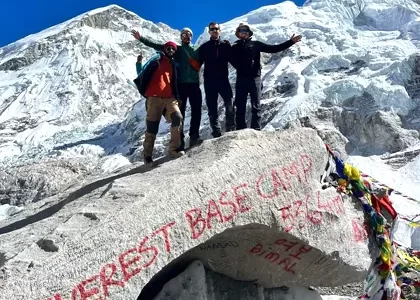
Day 11: Lobuche to EBC to Gorakshep

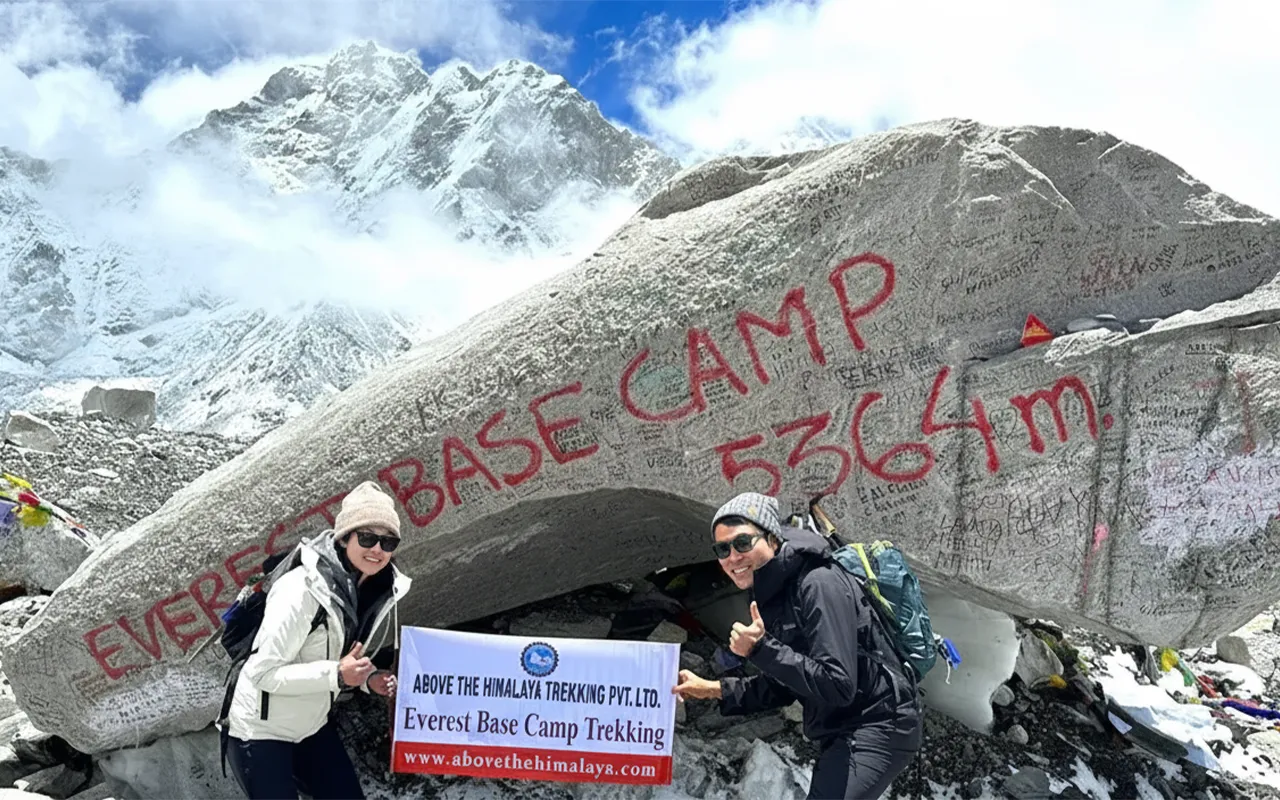
On this day of our Everest base camp trek by road, you will be trekking to Everest Base Camp, your destination for the entire journey. It will be a big day as you will cover a distance of about 15 kilometers on the rocky and steep trail. After 3 to 4 hours of trekking, you will reach Gorakshep, another charming village at an altitude of 5164 meters.

This is a final push to the base camp. “Gorakshep” comes from the bird known as the Himalayan Monal or the Impeyan Monal. It is also known as the “gorak” in Nepali. You can rest and eat before you climb to EBC. From Gorakhsep, you will trek through rugged and rocky rail to reach the Everest Base Camp.

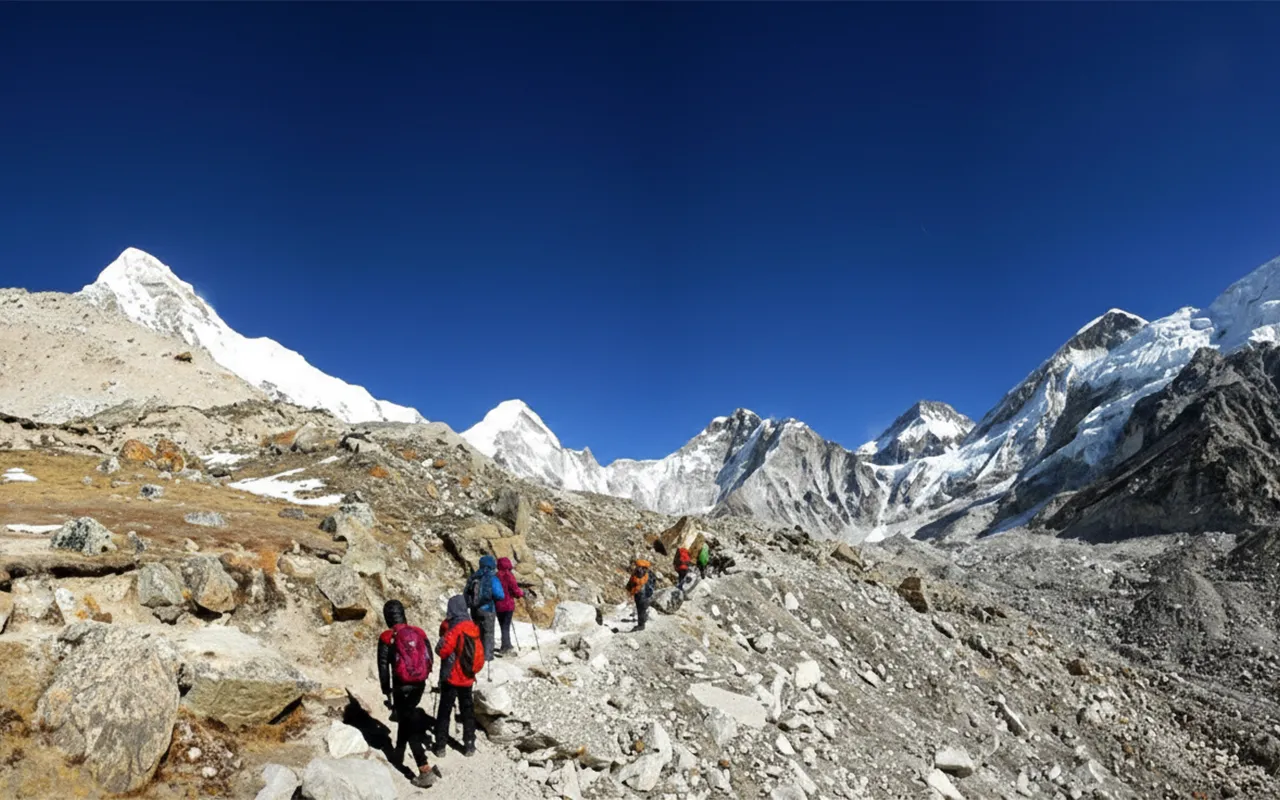
You will have to travel through the Khumbu Glacier, an absolute beauty of Mother Nature. After covering 3.5 kilometers from Gorakshep, you will finally reach the EBC. There, you can feel your dream come true. You will witness the majestic Everest from the closest distance.

You will need more of the snow-capped Everest. You can enjoy the 360-degree scenic view of Everest. Take some space and time to accept that you are on the base of the world’s highest peak. After spending some time there, you will descend towards Gorakshep. You will spend the night here.

Walking Day
Accommodation Teahouse
Meals Breakfast, Lunch, Dinner
Altitude EBC (5,364 m), Gorakshep (5,164 m)
DAY
12

Day 12: Gorakshep to Kala Patthar to Pheriche

On this day, you will trek to Kala Patthar, a popular point, to get stunning views of Mount Everest and other peaks.

The distance between Gorakshep and Kala Patthar is about 6 kilometers. After spending some time in Kala Patthar, you will trek to Pheriche. It is a small village located 4779 meters above sea level. You will spend the night there in Pheriche.

Walking Day
Accommodation Teahouse
Meals Breakfast, Lunch, Dinner
Altitude Gorakshep (5,164 m), Kala Patthar (5,644 m), Pheriche (4,379 m)
DAY
13

Day 13: Pheriche to Namche Bazaar

On this day of our Everest base camp trek by road, you will trek for about 5 to 6 hours to reach Namche Bazaar from Pheriche. You will cover a distance of around 16 kilometers. You will enjoy the impressive views of different mountains and hills.

Walking Day 5-6 hrs
Accommodation Hotel
Meals Breakfast, Lunch, Dinner
Altitude Namche Bazaar (3,440 m)
DAY
14

Day 14: Namche Bazaar to Surke

Surke is a small village in the Khumbu region. On the fifteenth day of the  Everest base camp trek by road, you will trek down to Surke from Namche Bazaar. You will again trace your way back through the rural lifestyle and warm locals living in that area. You will spend the night in Surke.

Note: If you don’t want to miss what Lukla offers, you can trek to Luka from Namche Bazaar instead of Surke.

Walking Day
Accommodation Teahouse
Meals Breakfast, Lunch, Dinner
Altitude Surke (2,535 m)
DAY
15

Day 15: Surke Drive to Salleri and drive backto Kathmandu

On the sixteenth day, you will proceed towards Tham Danda from Surke, which will take around 5 to 6 hours of trekking. Upon reaching Tham Danda, you will be driven to Salleri, where you will spend the night. You will drive back to Kathmandu from Salleri on our Everest base camp trek by road, which will take around 10 to 11 hours. Upon reaching the hotel, you can rest and freshen up. You will enjoy a lavish farewell dinner. You will spend the night in Kathmandu.

Multiple 5-6 hrs
Accommodation Lodge
Meals Breakfast, Lunch, Dinner
Altitude Salleri (2,362m)
DAY
16

Day 16: Final Departure

On this day, one of our representatives will drive you to Tribhuvan International Airport. The representative will ensure you reach the airport comfortably.

Trip Extension

Suppose you have more time in Nepal after this trip. In that case, we can help you to extend your trip by running different treks in Nepal, tours in Bhutan and Tibet, Jungle safari tours at Chitwan, Bardia, and other National parks, Nepal luxury hotel booking, Rafting, Ultra-light flights, or any other travel-related services. You can get more information here.

Includes/Excludes

What's Included?
  • Transfers from Kathmandu Airport to hotel and back by private vehicle.
  • Twin-sharing accommodation in Kathmandu with breakfast included.
  • Private jeep transportation from Kathmandu to Salleri or Tham Danda and return as per itinerary.
  • Certified trekking guide licensed by the Government with training in high altitude safety and first aid.
  • Local trekking porter to assist with your luggage during the Everest Base Camp Trek by Road.
  • Trekking staff salaries, food, accommodation, equipment, insurance, and clothing.
  • Twin-sharing accommodation in local tea houses or lodges during the Everest Base Camp Trek by Road.
  • All meals during the trek (breakfast, lunch, and dinner) with options from the menu.
  • Sagarmatha National Park Entry Permit and Khumbu Pasang Lhamu Rural Municipality Permit.
  • Guide carries essential medical supplies and first aid kits.
  • Above The Himalaya duffel bag (request in advance).
  • Detailed trek itinerary, trip information, and preparation guidance.
  • Above The Himalaya gifts and trekking certificate upon completion of the trek.
  • Government taxes and service charges.
What's Excluded?
  • Meals in Kathmandu except for hotel breakfast.
  • International airfare to Nepal and any city sightseeing entrance fees (if you do tours).
  • Nepal entry visa fee (obtainable on arrival at Tribhuvan International Airport).
  • Alcoholic drinks, soft drinks, hot water, Wi Fi, charging, and showers at teahouses (if extra fee).
  • Personal expenses including laundry, telephone calls, snacks, beverages, camera battery charging, and other miscellaneous costs.
  • Travel insurance covering rescue and medical assistance.
  • Personal trekking equipment (can be bought or rented in Kathmandu).
  • Tips or gratuities for trekking staff, guide, and driver.
  • Any other expenses not mentioned in the “Included” section.

Route Map & Altitude Chart

Everest Base Camp Trek by Road – Cost

Everest Base Camp Trek by road cost depends on the group size, facilities, and trekking season. Besides, there are some significant costs covered by the pricing. It would help if you carried extra cash for your expenses, but it is an economic trekking experience.

Cost Covers:

Ground Transportation Cost

The package covers the transportation expenses on land. It includes taking the customer to and from the airport. And all the other places mentioned in the itinerary.

Licensed Guide

You will have a professional tour guide throughout the trek. They will make your journey easier and hassle-free and help you deal with different language barriers. The package also includes the cost of a professional tour guide. Foreigners must have licensed guides throughout the trek per the prevalent government rules.

Local and government taxes

The quoted price covers all relevant taxes, charges, and fees imposed by the local or national government. It includes the trekking permit fees, national park fees, VAT on meals, transportation, accommodations, and other related expenses.

Fooding on Everest base camp trek by road

The package covers the expenses of the meals offered by the hotels where you will be staying. Yet, if you decide to dine outside the hotel, we will not include the cost of the food in the package. Also, the package price only covers the cost of the main course, tea, and coffee provided by the hotel. It does not cover any other types of food you may have.

Accommodation during the Everest base camp trek by road

The cost of the hotels that you will be staying at in different places throughout this journey is in the package.

Cost doesn’t cover:

Alcoholic Drinks

The cost of alcoholic drinks you might want on this journey is not included in the package. This comes under your price.

Porter

You might feel tired during the Everest Base Camp Trek by Road trek and sometimes get injured. You might need the help of a porter to carry your bags, but the porter’s cost isn’t included in the package. The charges for porters depend upon the distance they have your bags.

Medical and rescue expenses

The cost that arises due to unforeseen circumstances isn’t included in the price. This comes under your price.

Cost for extra days during your Everest base camp trek by road

If you plan on staying for more than the prescribed number of days, you must pay extra costs.

Some Tips for the Everest Base Camp Trek by Road

Stay hydrated

Staying hydrated is essential throughout the trek. As you climb up, the water level in your body will decrease. So, you might be feeling tired, dizzy, and have a headache. To avoid this, you should always keep a bottle to stay hydrated.

Carry Necessary Equipment

Since it is one of the most challenging treks, be careful about the equipment that you need to carry. You may have a trekking stick, headlamp, torchlight, map, compass, etc.

Be prepared for the trek. This trek is challenging. Thus, ensure you have a good fitness level before starting this journey. Focus on working out, keeping fit, and eating healthy before a few months of trekking.

Pack rationally

You will need base layers, insulated jackets, windproof and waterproof outer layers, trekking pants, and comfortable shoes. You may also take gloves, leg warmers, and a warm cap. Considering your hygiene, it would help if you carried many sets of socks and underwear.

Pack a few T-shirts as well. Remember to pack light because carrying excessive weight during the trek becomes tough.

Pack a first aid kit.

You might get injuries or minor health issues during the Everest base camp trek by road, so you should carry a first aid kit. In it, you can keep the last bandages handy, medicines for altitude sickness, Dettol, cotton, etc.

Be respectful

You will come across distinct cultures and traditions that might be new to you. Don’t do or say anything offensive to the locals. Remember to respect everything and everyone that you come across.

Don’t litter the environment.

Please don’t recklessly throw away packets of food you consume on the way. Instead, please keep them in the pocket of your bag and throw them in the dustbin when you reach the hotel. Be respectful of the environment.

Elevation and Distance

The Everest Base Camp Trek by Road begins with a scenic drive from Kathmandu to Salleri and continues toward Surke or Tham Danda, depending on road conditions, before joining the classic Everest trail. The trekking part slowly ascends the lower Solu villages to Namche Bazaar, 3,440 meters, then to the Everest Base Camp, 5,364 meters. The peak of the trip is the Kala Patthar of 5,644 meters, where one of the best panoramic views of Mount Everest and other peaks can be seen. At this altitude, oxygen levels are nearly 50 percent lower than at sea level, which makes proper acclimatization essential.

The approximate trekking distance is about 130 to 140 kilometers round trip, depending on the exact road endpoint and side hikes. Also, it includes a lot of road trips between Kathmandu and Salleri, thus distinguishing this variant as compared to the flight one. The increase in height is gradual yet considerable hence there should be adequate pacing and acclimatization. The Everest Base Camp Trek by Road provides a gradual and rewarding ascent without relying on flights to Lukla.

Altitude Sickness and Challenge

The Everest Base Camp Trek by Road is graded as difficult due to its high altitude, long walking days, and rugged mountain terrain. Technical climbing skills are not needed but trekkers should be ready to climb steep heights, rocky trails, suspension bridges and cold weather at the higher altitudes. This is a strenuous process that requires physical training and the right attitude.

One of the major issues in this trek is altitude sickness which occurs above 3,000 meters. The symptoms might be headache, nausea, dizziness, or dyspnea. The itinerary has acclimatization days in Namche Bazaar and Dingboche which will allow your body to acclimatize slowly. Deliberate pacing, adequate fluid intake, and alcohol will decrease risks to a large degree. With proper preparation and guidance, the Everest Base Camp Trek by Road can be completed safely by healthy and determined trekkers.

Maximum and Minimum Walking Hours daily

During the Everest Base Camp Trek by Road, daily walking hours generally range from five to eight hours depending on altitude and trail conditions. The most common long days are the Everest Base Camp and the hike to Kala Patthar whereby the trekkers may walk up to eight hours in their journey up and down the mountain. These working days need slow pacing and frequent breaks.

The shorter walking days tend to be on a downward part like Namche to Surke or acclimatization hikes. The terrain can have irregular tracks and downhill knee pressure even on shorter days. Comfort is maintained by wearing the right shoes and walking slowly. The itinerary is meant to be equal between the exertion and the relaxation enabling trekkers to enjoy the Everest region without any doubt or fear.

Trekking Permits

To complete the Everest Base Camp Trek by Road, trekkers are required to obtain specific permits for the Everest region. The major permits are the Sagarmatha National Park Entry Permit and the Khumbu Pasang Lhamu Rural Municipality Permit. These are permits that are inspected at different access points to the trail and are necessary to conserve and administer locally.

The majority of the trekking organizations will secure these permits on your behalf, prior to the commencement of the journey. The individuals who want their passport copies and passport sized photos should carry them along as independent trekkers. The rules of permits can vary and it is, therefore, better to verify new permits before traveling. Having the proper documents ensures a smooth and organized experience throughout the Everest Base Camp Trek by Road.

Travel Insurance

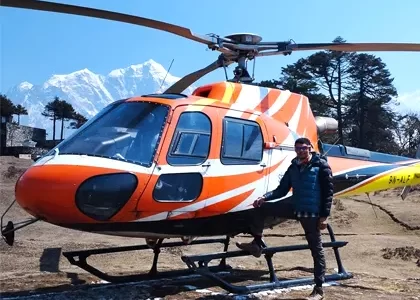
Travel insurance is strongly recommended for the Everest Base Camp Trek by Road due to the high altitude and remote mountain conditions. The expedition reaches a height of more than 5,500 meters in Kala Patthar and that is the reason why your insurance policy must be specifically to the high altitude trekking and emergency helicopter evacuation. The weather in the mountains is variable and there are very few medical facilities in the villages up the mountain.

Helicopter evacuation can be necessary in case of severe altitude sickness, injury or disease to access adequate medical assistance in Kathmandu. In the absence of appropriate insurance, the cost of evacuation and treatment can be high. Before reaching Nepal, it is also necessary to organize a detailed travel insurance and to have a copy of your policy in the trek. Proper insurance gives peace of mind and allows you to focus fully on enjoying the Everest Base Camp Trek by Road experience.

Accommodation, Food and Drink

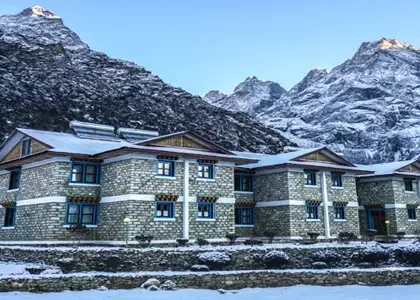
The Everest Base Camp Trek by Road follows a tea house style trekking system, where trekkers stay in local mountain lodges along the trail. The accommodation is basic and comfortable of a twin sharing basis with simple beds, blankets and shared bathrooms. Services are better at lower altitudes like Salleri and Namche Bazaar and worse at higher villages like Lobuche and Gorakshep because of remoteness.

The tea house has a dining hall where meals are served and they are mostly Nepali, Indian and simple western food. Commonly available are Dal Bhat, noodles, fried rice, pasta, soups and pancakes. The higher the altitude, the higher the prices of food since it has to be carried either by porters or by animals. During the trek, drinking water, tea, and coffee are accessible. The Everest Base Camp Trek by Road offers a simple yet authentic mountain hospitality experience.

Transportation

The Everest Base Camp Trek by Road begins with a long but scenic drive from Kathmandu to Salleri, which takes approximately 10 to 11 hours depending on road conditions. Another route that leads to Surke thence starting with a trekking section is a drive that starts at Salleri. The given road path provides an opportunity to the trekkers to pass by Lukla flight, still exploring rural environment and villages on the way.

There may be changes in the road condition based on the season of the year, particularly during the monsoon months when it might be paddling on some parts. Once you have done the trek, you go back through the road route through which you arrived to Kathmandu. The Everest Base Camp Trek by Road is ideal for travelers who prefer overland travel and want to avoid domestic flights while still experiencing the classic Everest trail.

Guides and Support Staff

Hiring a licensed guide for the Everest Base Camp Trek by Road is highly recommended for safety and better overall experience. In the local villages, the services of a professional guide help with navigation, daily pacing, accommodation, and communication. They also keep track of your health and assist in the administration of altitude issues during the trek.

Porters are also there to assist you in carrying your large luggage, normally two trekkers. This will enable you to walk freely having just a light daypack. A trekking company with a good reputation offers insurance and adequate support to their employees. It is normal culture in Nepal that the porters and the guides are tipped and it is a form of gratitude. With experienced support staff, the Everest Base Camp Trek by Road becomes more organized, safe, and enjoyable.

Internet and Charging Facilities, Mobile Network.

During the Everest Base Camp Trek by Road, communication facilities are available but become limited as you gain altitude. In the lower regions of Salleri, Phakding and Namche Bazaar, NTC and Ncell have mobile network coverage. Nevertheless, higher villages such as Lobuche and Gorakshep have lower signal strength and connection can be unreliable.

In most tea houses, they have WiFi services at an extra cost, particularly in busy places like Namche Bazaar and Tengboche. The internet speed is also low as a rule caused by remote location. Most lodges have charging facilities, which are normally powered by small hydro or solar energy, and which can be charged a small fee. Carrying a power bank is a good thing so that you have your devices charged all through the trek. Informing family members about limited connectivity will help you enjoy the Everest Base Camp Trek by Road without unnecessary concern.

Common Risks During the Trek

The Everest Base Camp Trek by Road is a high altitude journey, so trekkers should be aware of potential mountain related risks. One of the primary issues concerns altitude sickness, particularly once one goes higher than 3500 meters. Headache, nausea, dizziness and fatigue are some of the symptoms that should never be overlooked. This can be significantly reduced with the help of proper acclimatization days in Namche Bazaar and Dingboche.

The weather at the Everest area is very fast changing. At high altitudes, cold temperatures, heavy winds, and sudden snowfalls are usually experienced. There are also rocky beds, steep slopes, and suspension bridges in the trail which have to be walked carefully. During monsoon periods, road transport to Salleri is occasionally impacted by heavy downpour. With good preparation, proper pacing, and guidance from experienced staff, the Everest Base Camp Trek by Road remains a safe and rewarding Himalayan adventure.

A Typical Day on the Everest Base Camp Trek by Road

A typical day on the Everest Base Camp Trek by Road begins early in the morning with breakfast at the tea house. Trekkers tend to begin walking between 7 or 8 AM when the weather is clear in the morning. The path goes through the woods and rivers, small towns and bare mountain terrains. The breaks are taken regularly to rest, drink water, and take pictures.

A tea house typically serves lunch on the trail before moving on to the next place of stay. Trekking takes about 5 to 6 hours and by mid afternoon, the trekkers are at their lodge where they have time to relax, view the village or the mountain. Dining room is where evenings are spent, taking meals and talking about the trek with other trekkers. The structured rhythm of walking and resting helps maintain energy levels throughout the Everest Base Camp Trek by Road.

What to Expect from the Everest Base Camp Trek by Road

The Everest Base Camp Trek by Road offers a complete Himalayan experience combined with rural road travel. You will find a wide variety of landscapes, including terraced hills, river valleys, alpine forests, and high altitude glaciers. The trip offers direct glimpses of Everest, Lhotse, Nuptse, Ama Dablam and other renowned peaks.

This overland access to the Lukla Valley, unlike the air route, provides more cultural engagement with the local communities during the road part. The climb is not only tough but also very rewarding as one arrives at the Everest Base Camp and Kala Patthar. It is easy to accommodate, food is substantial and mountain setting is motivating. The Everest Base Camp Trek by Road is ideal for travelers seeking both adventure and authentic cultural exposure without taking a domestic flight.


Most Asked Questions by Travellers

General General

The Everest Base Camp Trek by Road avoids the domestic flight to Lukla and begins with an overland drive to Salleri and Surke. In this alternative the trekkers will get to visit the rural villages and landscapes that are normally bypassed when flying directly to the Khumbu region.

This is a tough trek because it involves high altitude and lengthy trekking days. Kala Patthar is at 5,644 meters which needs good stamina, mental will and acclimatization.

Majority of itineraries take 14 to 16 days according to the acclimatization and travel arrangements. The total trip can be approximately 16 to 17 days including arrival and departure days in Kathmandu.

The road to Salleri is scenic and long in length, but may be rough in places. The road conditions also differ according to the season particularly during the monsoon season.

First time trekkers are allowed as long as they are physically fit and mentally prepared to go to high altitudes. Previous hiking experience is however useful to help in better adaptation.

The summit is the kala patthar at 5,644 meters which has panoramic view of the Mount Everest and other adjacent mountains. The Base Camp of Everest is 5,364 meters on its own.

Yes, the schedule could be changed as per your time schedule, physical condition and interests. The private visits have a greater level of flexibility in terms of the pacing and accommodation options.

This hike possesses a very diverse topography including terraced hills, suspension bridges, pine forests, glaciers, and the Himalayan mountains which are dramatic. The way will also pass through Sherpa villages and Buddhist monasteries.

Preparation & Fitness Preparation & Fitness

You must be physically healthy and able to walk 5-7 hours a day in a few days. Good strength, stamina, and psychological determination to press are required in situations involving elevation and long ascents.

Training can be through routine cardio activities such as hiking, jogging, cycling, and ascending the stairs. Leg and core training through strength helps to enhance stamina during both downhill and uphill run.

One can start preparing 6-8 weeks before you leave. This is because walking further and more uphill will get your body adapted to it.

Prior experience in trekking is not an obligation, but is very advantageous. If you have completed multi day hikes before, your body will adapt more easily to the demands of the Everest Base Camp Trek by Road.

The altitude gain is gradual and considerable, particularly after Namche Bazaar. Days of proper acclimatization are provided to allow minimizing the risk of altitude related problems.

Yes, many trekkers in their 50s and 60s successfully complete the Everest Base Camp Trek by Road. It is better to be healthy, pace the trip correctly and consult the doctor before the trip.

Yes, high altitude trekking depends greatly on psychological strength. Patience and positive attitude are needed when it comes to weather changes and cold temperatures, and when one is physically tired.

You are also able to walk at a steady pace and have frequent rest intervals. It can also help to have a guide and porter which would help to make the process more bearable.

Permits Permits

Sagarmatha National Park Entry Permit and Khumbu Pasang Lhamu Rural Municipality Permit are required by Trekkers. Such permits are compulsory and can be inspected at various checkpoints on the trail.

In the case of the Everest area, a TIMS card is usually unnecessary when one gets the local permit of the municipality. Nonetheless, rules may evolve, and one should always be prudent to ensure that he or she checks the most recent demands before traveling.

In Kathmandu, a permit will be granted at the Nepal Tourism Board office or Monjo, the entrance point. When you book with a trekking company they normally take care of all the permits.

The costs of permits are also different as per nationality and season. The Sagarmatha National Park Permit costs NPR 3,000 for foreign trekkers, and the Khumbu Pasang Lhamu Rural Municipality Permit costs NPR 2,000.

Most organized Everest Base Camp Trek by Road packages include permit fees in the overall cost. Before booking, it is always advisable to check with your trekking provider on this.

A valid passport and in other cases passport sized photographs will be required to process permits. Carrying passport information in the trek is also important in case of verification.

Trekking permits are in most cases not refundable after being issued. Cancellation policy should also be checked with your trekking agents beforehand.

The permit fees aid the conservation activities and facilitate the management of the tourism in the Everest region. They also help the authorities in monitoring trekkers in case of emergency and safety.

Insurance and Visa Insurance and Visa

Travel insurance is not obligatory at law but highly suggested because of the elevation and isolated nature. Trekking beyond 5,500 meters should be clearly included in your policy and emergency helicopters should be evacuated.

Medical treatment, evacuation in emergency situations, cancellation of the trip including high altitude trekking should be covered by your insurance. When you are buying, it is important to verify the altitude limit that is mentioned in your policy.

Before going to Nepal, it is very advisable to get your insurance organized. International policies are usually in a better position to cover than the local short term insurance.

In case of a severe illness like altitude sickness then your guide will organize evacuation. The insurance company should also sanction the rescue and it will be important to have it in the form of policy details.

A majority of the tourists need a tourist visa to get to Nepal. A visa is usually provided to many nationalities at Kathmandu Tribhuvan International Airport.

For the Everest Base Camp Trek by Road, a 30 day tourist visa is usually sufficient. Allowing some additional time is prudent in case the travel is delayed.

You require a valid passport of at least half a year and a passport size photo. The amount to be paid in the form of cash at the points of entry at the border or airport is the visa fees.

Yes, Nepal tourist visa can be renewed in Kathmandu Department of Immigration. You should request extension before your visa expires to prevent penalties.

Guides & Support Staff Guides & Support Staff

Although there are areas where an independent trek in Nepal is an option, using an authorized guide is highly advisable due to the risk of accidents and lack of direction. A guide can assist in the logistics management, checking your health condition, and deliver cultural and historical background during the trip.

The services of a professional guide also help in route coincidence, accommodation, and communication in the local villages. They are also useful in the identification of the initial signs of altitude sickness, and appropriate acclimatization.

A porter is optional, however, extremely useful in the long and steep parts. Having a porter shared by two trekkers enables you to enjoy a light day pack as you walk.

A porter is normally used to carry 20-25 kilograms commonly between two trekkers. Safe and fair working conditions require that one packs responsibly.

Respected trekking agencies ensure their guides and porters insurance cover. You should always check this before you book your Everest Base Camp Trek by Road.

Yes, it is a common practice in Nepal to tip. It is a dignified method of acknowledging the effort and commitment of your support staff.

It can happen, but it is better to make your guide reservation before you come to Kathmandu so that everything will be organized and coordinated much easier at the very start of your journey.

Majority of the licensed trekking guides communicate in English and even other foreign languages. They are trained to speak clearly and guide international trekkers in a manner that helps them.

Accommodation and Facilities Accommodation and Facilities

The Everest Base Camp Trek by Road is a tea house trek in which trekkers reside in mountain lodges. In most cases, rooms are twin sharing and have plain beds, blankets, and bathroom facility.

Depending on availability, private rooms can be offered in the smaller villages like Salleri and Namche Bazaar. Rooms at higher altitudes such as Lobuche and Gorakshep are simple and sharing facilities are regular.

There are numerous tea houses, which provide hot showers at a fee. With the rise of the altitude, hot water can be scarce, and frequently warmed by the solar energy or gas.

Lighting and charging devices are commonly available in most of the villages powered by electricity or solar. The services are normally charged at a low fee particularly in the higher altitudes.

Bathrooms are attached in the towns situated in lower altitudes. Higher mountain villages have shared bathrooms because of the poor infrastructure.

Bedrooms are usually not heated. During the evening, the main dining hall typically has a stove which also turns into the cozy and socializing space.

Laundry services are also restricted in trail and might not be offered in the high areas. Lots of trekkers choose to bring quick drying clothes and wash little things themselves.

Yes, in spring and autumn times lodges would soon be full. Reservation through trekking company assists in getting accommodation, particularly in the busy villages.

Food and Drinks Food and Drinks

There are tea houses on the road that serve a combination of Nepali, Indian, Tibetan, and simple western foods. Foods eaten are typical such as dal bhat, noodles, fried rice, soups, pancakes, eggs, pasta and potatoes.

Yes, there are vegetarian cuisines that are very common and usually suggested at elevated altitudes as they are easily digestible. Popular and safe meals are dal bhat, vegetable curries, soups and rice dishes.

Tea houses serve drinking water, which is boiled or filtered on an additional fee. Trekkers are also able to bring purification pills or a reusable water filter bottle to minimize plastic waste.

There is bottled water in most villages, though it costs more with altitude as the cost of transportation goes up. Refillable bottles will make many trekkers be environmentally responsible.

All tea houses along the Everest Base Camp Trek by Road route have tea and coffee. The most popular ones are black tea, milk tea, ginger tea, lemon tea, and instant coffee.

There is plenty of alcohol in most villages such as beer and local liquor. Nevertheless, it cannot be recommended at elevated altitudes as it may risk the occurrence of dehydration and altitude sickness.

The trekking packages consist of three meals which comprise breakfast, lunch and dinner. Extra drinks, snacks and bakery products are normally excluded and have to be charged separately.

The tea houses in the Everest area are generally accustomed to serving trekkers and have low standards of hygiene. Eating hot and fresh food and drinking treated water are helpful in preventing stomach problems.

Weather & Seasons Weather & Seasons

The best seasons are the spring between March and May and fall between September and November. The weather is usually stable during these months and the views of mountains are at their best. The weather is also clearer and the skies are clear.

In the lower parts, there is moderate weather with rhododendron forests in bloom. The days are very comfortable to walk and the nights may be cold at the high altitudes.

Autumn also offers clear weather, clear visibility and cold air. It has been regarded as the best trekking season in the sense that the mountain sceneries are normally clear and clear.

Yes, the Everest Base Camp Trek by Road can be done in winter from December to February. Nevertheless, the temperatures decrease considerably with the increase in altitude and snow can influence the conditions of trails. Heavy snowfall may affect trail conditions above Dingboche and Lobuche during peak winter months.

Monsoon is the period between June and August and it is associated with heavy rainfall, dark clouds and roadblocks likely to occur in the Salleri road. There is a low level of visibility and conditions during traveling can be less predictable.

In some areas such as Lobuche and Gorakshep, the temperatures may drop below zero at night particularly during late autumn and winter periods. Layering and warm clothing should be used in a proper way to be comfortable.

No, it is possible that during the monsoon there are muddy roads or some temporary blockages because of heavy rainfall. This is the reason why the road route is more stable during dry seasons.

The mountain scene is subject to weather conditions and clouds. Early mornings are typically the most effective to get a view of Everest, Lhotse and Nuptse.

Health & Safety Health & Safety

Yes, the trip is mostly safe, with the correct preparation and reasonable program. It is safer to follow the acclimatization strategy and be guided on a trek.

The elevation sickness is also a major issue since the trail reaches an altitude of more than 5,000 meters. Slow ascent, proper hydration, and rest days are the main ways to minimize the risk.

In case of such symptoms like headache, nausea or dizziness, it is necessary to inform your guide. The most relevant solution in case the symptoms continue is to go down to a lower altitude.

Villages such as Namche Bazaar and Phoriche have basic health posts. Nevertheless, there is minimal medical care and extreme cases are often evacuated by helicopters.

Yes, there is helicopter evacuation in case of an emergency. That is why, detailed traveling insurance at high altitude trekking is crucial.

Appropriate trekking boots, trekking poles and a slow pace of walking will prevent straining the knee and slippery floors. Physical well being is facilitated by stretching and being hydrated.

Unfiltered tap water should not be used. During the trek, it is safe to drink boiled water, filtered water or purified water.

Yes, hiking with a permit guide would be safer in regards to routes, health checks and first aid. Guides are also trained to identify symptoms of the altitude and rescue within a short period in case of necessity.

Packing & Gear Packing & Gear

A good quality sleeping bag, hat, gloves, hat, down jacket, layered clothing, and trekking boots that are strong and sturdy should be considered essential. The weather at high altitude is unpredictable and thus the layering is highly essential.

Yes, a warm sleeping bag should be carried, particularly on the higher villages such as lobuche and gorakshep. The tea houses furnish blankets, which however are not always adequate in colder seasons.

When you pay a porter, you just have to bring a light day pack with water, food and personal items. The daypack should be less than 5-7 kilograms which makes it comfortable to walk.

The use of trekking poles is highly encouraged especially during difficult ascents and when you have to go down a hill that is longer. They distribute the load on the knees and enhance balance on rocky trails.

Layered clothing is effective, and it includes thermal base garments, fleece, windproof and waterproof outer clothes. There is a significant difference in temperatures in lower villages and high altitude regions.

Yes, winter needs to be dressed more warmly with insulated gloves, wear that is warmer and heavier, and heavy socks. At greater altitudes night temperatures may well be considered below the freezing point.

Yes, trekking equipment like sleeping bags, down jackets, etc. can be hired in Kathmandu. This will be of assistance to the travelers who do not want to carry heavy equipment to home.

It is advisable to carry personal first aid kit containing basic medicines, blister care and altitude related medicine. It provides an additional safety to the trek.

Booking & Payment Booking & Payment

The booking should be done at least a few weeks ahead, particularly during spring and autumn seasons. Early reservation assists in finding a hotel and a formal transit on the road part to Salleri or Surke.

Yes, a deposit is usually requested by most trekking companies to ensure that you have a reservation. The rest of the balance is normally paid at Kathmandu before the trek starts.

In Nepal, the payment methods are usually bank transfer, credit card or cash. Before you head off to the treks, it is prudent to establish the terms of the transaction and any service fees that your trekking company may charge.

Yes, we accept last minute bookings in cases of availability. But in the high seasons of trekking, it is safer and convenient to book in advance.

The majority of packages cover accommodation, meals on the trek, permits, and guide services and ground transportation. There are usually personal expenses that include drinks, tips and travel insurances.

Hot showers, charging fees, bottled water, snacks and tipping are some of the extra expenses. Avoiding misunderstandings will be achieved by clarifying what is included or excluded during the booking.

The cancellation policies differ among the trekking companies. Before validating your booking, it is essential to read the refund policy.

Yes, there are a lot of companies which can provide you with flexible itinerary according to own schedule and fitness. When planned in advance, it is easier to customize.

Transportation & Flight Transportation & Flight

The trip starts with a long yet beautiful start of Kathmandu to Salleri and further on to Surke or Tham Danda, depending on the state of the road. This road alternative allows trekkers to avoid the Lukla flight while enjoying rural landscapes and local villages along the journey.

The journey normally requires about 10-11 hours, subject to traffic and road conditions. The trip is long, but there is the picturesque country music and the glimpse of the local village life.

The highway is partially covered with paving and rough in areas of mountains. Although it can be a rough ride sometimes, the comfort of the private jeeps is more superior than the public transport.

A lot of trekkers use road because they do not want to experience any flight delays, and weather cancellations at Lukla airport. It also makes the total flight costs less and provide another travel experience to the journey.

The road is usually available when the seasons are dry like in spring and fall. Landslides can also impact on travel time or close a section during heavy monsoon months.

No domestic flight is required for the Everest Base Camp Trek by Road. The whole trailhead process is done by vehicle.

Driving around in a private jeep is popular due to the comfort and flexibility. Shared vehicles can also be organized based on group size in a number of cases.

The majority of trekking packages comprises airport pick and drop services in Kathmandu. This is always best to be checked during booking.

Reviews on Everest Base Camp Trek by Road


Profile
Corey Mackevicius
Canada
Everest base camp trek by Road- We had great time.
Star Star Star Star Star

Trekking above the Himalayas is highly recommended. Puru took outstanding care of us and made sure everything was okay. Our experience started 10/10 when They picked us up at the airport.

I would only go with Above the Himalayan Trekking. Our trip to base camp was very successful because of Above the Himalayan Trekking. MAKE SURE TO ASK FOR SURESH AS A GUIDE as well!

He will take the best care of you and ensure you have a lifetime trip.

Corey Mackevicius

Canada

Profile
Michal Liang
USA
Everet base camp trek by Road - Best Trip Ever
Star Star Star Star Star

Puru, Thanks so much for your help with the Everest Base Camp trek by road. The Guide, the food, and the service were excellent, and Phaplu to Phakding was beautiful.

It was a trip to remember, and I plan to return with a group of my own next time. People were friendly and polite, inviting us.

I felt good. Bhala, my Guide, was true to his word and a good friend.

Michal Liang
USA

10% OFF

Best Price Guaranteed, Easy to change Date, Instant Confirmation

Book This Trip
Book with Confidence
  • Flexible bookings and easy trip date changes
  • Personalized service and customized group sizes
  • Safe travels with owner-operated services and highly experienced guides
  • Best price guarantee for the most value for your money
  • Secure & easy online booking
Your Trek Leader

Trek Leader Enjoy Himalayan scenery with the help of Nepal’s best guides with Government license holders and got training in first-aid, our Trip Leaders, know where you’ll find the best photos, most fascinating wildlife, and the best stream crossings.

Trips for All

Divider
Private Trip
Peaceful tour with your travel buddy and guide
Small Group Travel
Travel with people having similar adventure dreams
Trips for Kids
Calling all young adventurers - join us for a journey of a lifetime!
Trips for Adventurers
Climbing & mountaineering adventures for thrill-seekers
Live Chat Support
Purushotam Timalsena
Purushotam Timalsena Travel Expert
We'll plan the perfect personalized vacation for you.
Request for Assistance ⮞