Customize Your Trip
 Need Help? Let's Talk
+977 985-1095800Renjo La Pass Trek


Trip Duration 11 Days
Group Size 2-20 People
Maximum Altitude 5360 m
Difficulty Grade Moderate
Start & End Point Kathmandu/Kathmandu
Best Seasons Mar-May, Sep-Nov
Trip Highlights of Renjo La Pass Trek
- Cross Renjo La Pass at approximately 5,360 m.
- Explore the traditional Sherpa village of Thame.
- Spend an acclimatization day in Namche Bazaar.
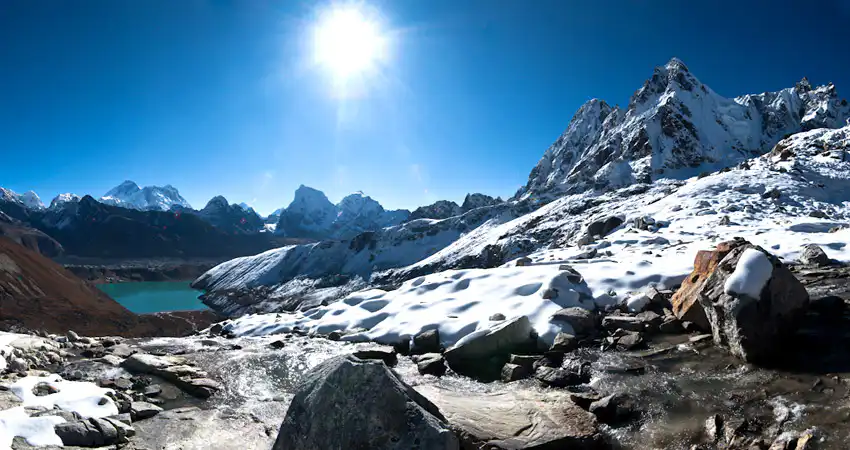
- Visit the turquoise Gokyo Lakes and surrounding valleys.
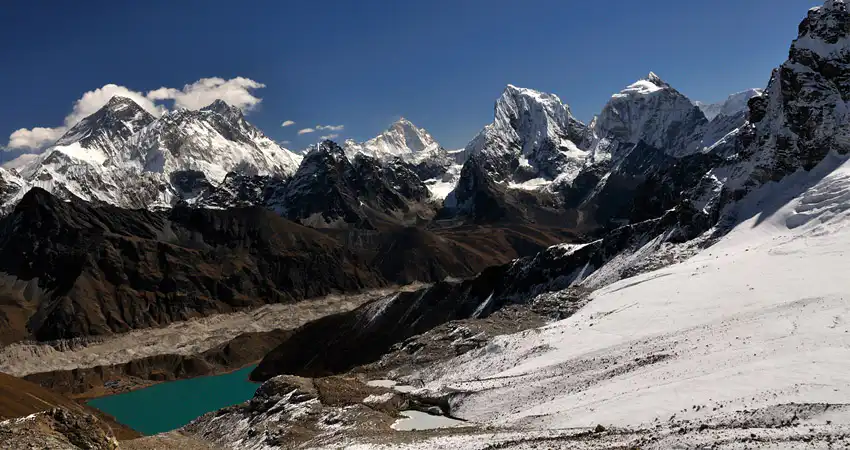
- Hike to Gokyo Ri for views of major Himalayan peaks.
- Walk through Lungden, Machhermo and Dole.
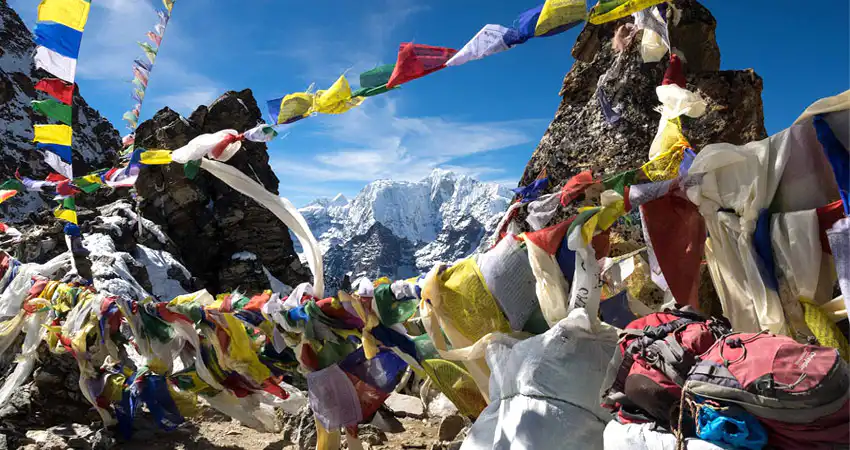
- Experience monasteries, prayer flags, mani walls and mountain villages.
Overview of Renjo La Pass Trek
The Renjo La Pass Trek is an 11 day high altitude journey through the Khumbu region, combining traditional Sherpa villages, remote mountain valleys, a challenging high pass and the glacial lakes of Gokyo. We will begin with a flight from Kathmandu to Lukla, or a drive from Kathmandu to Ramechhap followed by a flight to Lukla, depending on the current flight schedule. From Lukla, we will trek through Phakding toward Namche Bazaar.
After acclimatization day in Namche, the trail leaves the main Everest trail and heads into the Bhote Koshi Valley toward Thame and Lungden. Thame offers a quieter environment where traditional Sherpa culture is still closely linked with the surrounding mountains. From here the trail gradually climbs toward Lungden before the challenging crossing of Renjo La at around 5,360 meters.
This is the highest point of the trek so we will keep a steady pace and allow enough time for rest along the way. The descent from the pass leads into the Gokyo Valley where a series of high altitude lakes and the surrounding peaks dominate the route.
The Renjo La Pass Trek Itinerary includes time in Gokyo to explore the lakes and prepare for an early morning hike to Gokyo Ri. From the viewpoint, clear weather can provide views of Everest, Lhotse, Makalu, Cho Oyu, Cholatse and other peaks. We then descend through Machhermo and Dole before returning to Namche Bazaar and Lukla.
The trek involves long days and a big altitude gain so previous experience of multi day mountain trekking is useful. Technical climbing skills are not required but you should be comfortable walking on uneven ground for several hours a day. Our guide will brief you on the daily route, check your condition and help you maintain an appropriate pace at altitude.
This journey also includes Buddhist monasteries, prayer flags, mani walls, suspension bridges and settlements that reflect the culture of the Khumbu. The final day involves a flight from Lukla to Kathmandu or Ramechhap, depending on the current flight schedule and seasonal operating arrangements. The Renjo La Trek is therefore suited to trekkers who want a demanding route through the high Himalayas while exploring the Thame and Gokyo areas.
Route Overview of Renjo La Pass Trek
The route begins with a short mountain flight from Kathmandu to Lukla, or a drive from Kathmandu to Ramechhap followed by a flight to Lukla, depending on the current flight schedule. From Lukla, we start walking through Phakding and continue toward Namche Bazaar. After an acclimatization day in Namche, we leave the main trail and follow the Bhote Koshi Valley toward Thame and Lungden. The landscape becomes more rugged as we gain altitude and approach Renjo La.
The main pass crossing takes us from Lungden over Renjo La at approximately 5,360 meters before descending into the Gokyo Valley. We spend time around Gokyo and make an early morning hike to Gokyo Ri before beginning the return journey through Machhermo and Dole. The final trekking stages take us back to Namche Bazaar and Lukla.
The table below is a general overview of the daily route, places of overnight, approximate trekking distances, walking duration and included meals. Distances may vary slightly depending on the exact trail taken and local conditions.
| Day | Overnight | Trek Distance | Duration | Included |
| 01 | Phakding | Approx. 8 km | 3 to 4 hrs | B, L, D |
| 02 | Namche Bazaar | Approx. 9 to 11 km | 5 to 6 hrs | B, L, D |
| 03 | Namche Bazaar | Acclimatization walk | 3 to 4 hrs optional walking | B, L, D |
| 04 | Thame | Approx. 10 to 11 km | 5 to 6 hrs | B, L, D |
| 05 | Lungden | Approx. 9 to 10 km | 5 to 6 hrs | B, L, D |
| 06 | Gokyo | Approx. 15 to 17 km | 7 to 9 hrs | B, L, D |
| 07 | Gokyo | Exploration and optional hiking | 3 to 5 hrs optional walking | B, L, D |
| 08 | Dole | Approx. 12 to 14 km | 6 to 7 hrs | B, L, D |
| 09 | Namche Bazaar | Approx. 11 to 13 km | 5 to 6 hrs | B, L, D |
| 10 | Lukla | Approx. 15 to 18 km | 6 to 8 hrs | B, L, D |
| 11 | Kathmandu | Flight from Lukla | Flight subject to schedule | B |
Note: The distances and walking times shown above are approximate and can change according to trail conditions, weather, individual walking pace, and the exact route used on the day. Day 11 involves a flight from Lukla to Kathmandu or Ramechhap depending on the current flight schedule. During periods when flights operate through Ramechhap, we will arrange the road transfer from Ramechhap to Kathmandu. Flight times are subject to weather and airline operations and should not be treated as fixed.
Who Should NOT Choose the Renjo La Pass Trek?
The Renjo La Pass Trek involves high altitude, long walking days and a demanding pass crossing. It may not be the right choice if you prefer a relaxed itinerary or have limited experience with extended mountain walks.
- Prefer short walking days with plenty of free time.
- Feel uncomfortable walking for several hours on uneven and rocky trails.
- Have little preparation for steep ascents and descents.
- Do not feel comfortable reaching elevations above 5,000 meters.
- Prefer a trekking route without a high pass crossing.
- Want a slower itinerary with more acclimatization days.
- Have a medical condition that may make high altitude travel unsuitable without medical advice.
- Are not prepared for cold temperatures and changing mountain weather.
- Prefer comfortable facilities throughout the trek rather than basic mountain lodges.
Physical fitness can help you manage the walking demands, but it does not eliminate the possibility of altitude illness. If you have concerns about high altitude or an existing medical condition, consult a qualified medical professional before booking. Our team will also explain the daily elevation gains and walking requirements so you can decide whether this route matches your experience and preparation.
Itinerary of Renjo La Pass Trek
DAY
1
1
Day 1: Fly to Lukla and Trek to Phakding
We will take an early morning flight from Kathmandu to Lukla, or drive from Kathmandu to Ramechhap and take a flight to Lukla, depending on the current flight schedule. The mountain flight is brief as it flies to the Khumbu region where Himalayan landscape is seen when the weather is clear. Upon arrival at Lukla, we will meet the local trekking crew and begin the walk to Phakding.
The path then slowly winds down and passes through the Dudh Koshi Valley with small villages and wooded areas. The first day is not very long and we have time to acclimatize to the mountain conditions before the walking gets more serious. If time and energy allow, we can make a short visit to a nearby monastery before settling into the lodge in Phakding.
Flight
30 min to 45 min
Accommodation
Lodge
Meals
Breakfast, Lunch and dinner
Trek Distance
8 km
Trek Duration
3 to 4 hours
Altitude
Lukla, 2,860 m
DAY
2
2
Day 2: Trek from Phakding to Namche Bazaar
We will then take the route of Dudh Koshi Valley to Namche Bazaar after breakfast. The road goes through pine forests, small villages and a number of suspension bridges to Monjo where we get into Sagarmatha National Park. From here, the route continues toward Jorsalle and follows the river through a mix of forest and open sections.
The last section of the day is a long trek to Namche Bazaar. We will cross the Hillary Suspension Bridge before continuing uphill through the forest. The climb may be challenging as we ascend in increasing heights and our guide will ensure that we take frequent rests. Namche Bazaar is approximately 3,440 meters and offers a significant rest point before we proceed to Thame and the elevated parts of the trail.
Accommodation
Lodge
Meals
Breakfast, Lunch and Dinner
Trek Distance
9 to 11 km
Trek Duration
5 to 6 hours
Altitude
Namche Bazaar, 3,440 m
DAY
3
3
Day 3: Acclimatization Day in Namche Bazaar
We will spend the day in Namche Bazaar to allow your body to adjust to the increase in altitude. Rather than staying indoors throughout the day, we recommend a short hike around the surrounding hills. We can either walk towards the Syangboche region or walk around some of the nearby vistas depending on the conditions and your pace of walking, and then we go back to Namche.
The day also gives you time to explore the local market, visit cafes or simply rest at the lodge. Our guide will explain the symptoms of altitude illness and discuss the importance of walking slowly, staying hydrated and reporting any unusual symptoms. Since the following days take us toward Thame and Lungden, this break is useful preparation before we begin gaining altitude again.
Accommodation
Lodge
Meals
Breakfast, Lunch and Dinner
Trek Distance
Short acclimatization walk, depending on activity
Trek Duration
Approximately 3 to 4 hours optional walking
Altitude
Around 3,800 m during the optional hike
DAY
4
4
Day 4: Trek from Namche Bazaar to Thame
We will leave the busier trail toward Everest Base Camp and follow the route along the Bhote Koshi Valley toward Thame. The path slowly trails off Namche and enters forested areas, small villages and classic mountain scenes. As we move on the environment turns less noisy and the path provides us with a better glimpse of the rural aspect of the Khumbu.
Passing through Thamo, we will proceed towards Thame, an ancient Sherpa village in the main valley. The village is surrounded by mountains and has strong links with the traditional culture of the region. We can visit the village in some of the areas or we can go to the nearby monastery depending on the arrival time and the conditions in the area. After the day’s walk, we will spend the night at a local lodge in Thame.
Accommodation
Lodge
Meals
Breakfast, Lunch and Dinner
Trek Distance
10 to 11 km
Trek Duration
5 to 6 hours
Altitude
Thame, approximately 3,800 m
DAY
5
5
Day 5: Trek from Thame to Lungden
Leaving Thame, the trail leads north into the Bhote Koshi Valley, and slowly ascends in altitude to Lungden. As the forest becomes more spindly the landscape gets more open and the surrounding terrain begins to reveal the nature of the higher Himalayas. We will cross small villages and yak grazing fields as we proceed up the valley to the upper Khumbu.
Today is an important preparation day before crossing Renjo La. We will not rush but run at a steady pace and have periods of rest and hydration in between. As we approach Lungden, the valley becomes increasingly rugged, with rocky slopes and mountain terrain surrounding the trail. In the afternoon we will arrive at the lodge and we will rest till the next day when we will cross the high pass.
Accommodation
Lodge
Meals
Breakfast, Lunch and Dinner
Trek Distance
9 to 10 km
Trek Duration
5 to 6 hours
Altitude
Lungden, approximately 4,350 m
DAY
6
6
Day 6: Trek from Lungden to Renjo La Pass and Gokyo
We will start early from Lungden because today is the most demanding section of the trek. The path slowly ascends through the remote upper valley to Renjo La, the terrain growing more open and rocky as we rise. The ascent is steady and requires a slow pace, particularly during the final section leading to the pass.
After reaching Renjo La Pass at approximately 5,360 m, we will have time to rest and take in the mountain surroundings, depending on weather conditions. The path to the pass heads down to the Gokyo Valley. On the descent toward Dudh Pokhari and Gokyo, we will pass through the high altitude landscape of the Gokyo Valley before reaching the lakeside settlement of Gokyo. The day is long, so regular breaks and proper hydration will be important.
Accommodation
Lodge
Meals
Breakfast, Lunch and Dinner
Trek Distance
Approximately 15 to 17 km
Trek Duration
7 to 9 hours
Altitude
Renjo La Pass, approximately 5,360 m
DAY
7
7
Day 7: Acclimatization and Exploration Day in Gokyo
We will spend another day in Gokyo to rest and allow the body to adjust after crossing Renjo La. The day may be maintained light and one may walk around the Gokyo Lakes and the valley surrounding. The third lake, Dudh Pokhari, is located next to Gokyo village and offers an easy way to enjoy the mountain environment without having to make another challenging ascent.
We can have a quick stroll to the local lakes or other points of view, should you like. The fourth lake, Thonak Tsho, can also be explored depending on your energy, weather and trail conditions. This day provides us with valuable time to rest before the early morning walk to Gokyo Ri and the descent to Dole the next day.
Accommodation
Lodge
Meals
Breakfast, Lunch and Dinner
Trek Distance
Optional walking depending on activity
Trek Duration
Approximately 3 to 5 hours optional walking
Altitude
Gokyo, approximately 4,750 m
DAY
8
8
Day 8: Hike to Gokyo Ri and Trek to Dole
We will start early for the hike to Gokyo Ri, climbing steadily above Gokyo before returning to the village. We will start early for the hike to Gokyo Ri, climbing steadily above Gokyo before returning to the village. The climb is challenging because of the elevation, but clear morning weather can provide views of Everest, Lhotse, Makalu, Cho Oyu, Cholatse, Pumori and other surrounding peaks.
After returning to Gokyo, we will have breakfast before continuing toward Machhermo. path runs along the Dudh Koshi and is rocky with sightseeing of the nearby mountains and Ngozumpa Glacier. We will continue from Machhermo toward Dole, where the lower elevation provides some relief after several days at high altitude.
Accommodation
Lodge
Meals
Breakfast, lunch and dinner
Trek Distance
12 to 14 km
Trek Duration
6-7 hours with the hike to the Gokyo Ri
Altitude
Gokyo Ri, around 5,360 m
DAY
9
9
Day 9: Trek from Dole to Namche Bazaar
After breakfast, we will continue descending through the Dudh Koshi Valley toward Namche Bazaar. The route goes through rhododendron and pine forest, and at various points, the route is up and down, not down all the way. We will pass through Phortse Tenga and continue toward the viewpoints around Mongla and Kyangjuma.
The vegetation gets denser as we descend and the air is warmer than the higher areas around Gokyo. The path later joins the footpath back to Namche Bazaar. Once you get to Namche, you will be able to spend a more leisurely evening in the town and rest after the high altitude parts of the journey.
Accommodation
Lodge
Meals
Breakfast, Lunch and Dinner
Trek Distance
11 to 13 km
Trek Duration
5 to 6 hours
Altitude
Namche Bazaar, 3,440 m
DAY
10
10
Day 10: Trek from Namche Bazaar to Lukla
We will leave Namche after breakfast and begin the long walk back toward Lukla. The route goes down through the forest and along the Dudh Koshi Valley, Kyangjuma, Sanasa and some other famous villages. Then we will proceed to Jorsalle and Monjo and leave Sagarmatha National Park.
From Monjo, the path goes on to Phakding and on the river and then slowly to Lukla. This is another big walking day, although we are dropping in general, there are a few uphill stretches. Once in Lukla, we will get into the lodge and ensure that everything is set as per the next day flight.
Accommodation
Lodge
Meals
Breakfast, Lunch and Dinner
Trek Distance
15 to 18 km
Trek Duration
6 to 8 hours
Altitude
Lukla, 2,860 m
DAY
11
11
Day 11: Fly from Lukla to Kathmandu or Ramechhap
We will take the scheduled flight from Lukla after completing the trek. The flight can land in Kathmandu or fly between Lukla and Ramechhap depending on the existing airline service and season. In case the flight is to Ramechhap, our team will organize the road transportation to Kathmandu as per the agreed travel arrangements.
The landing provides a last chance to see back upon the Himalayan scenery as we depart the Khumbu valley. After we arrive in Kathmandu the rest of the day is at your own discretion. You can rest at your hotel, explore the city or purchase souvenirs before continuing with your onward travel.
Mountain flights are affected by weather and operational conditions, so departure and arrival times can change. We recommend keeping some flexibility in your travel schedule, particularly if you have an international flight soon after returning from the trek.
Flight
30 to 40 minutes
Accommodation
Lodge
Meals
Breakfast
Altitude
Lukla, 2,860 m
Trip Extension
Suppose you have more time in Nepal after this trip. In that case, we can help you to extend your trip by running different treks in Nepal, tours in Bhutan and Tibet, Jungle safari tours at Chitwan, Bardia, and other National parks, Nepal luxury hotel booking, Rafting, Ultra-light flights, or any other travel-related services. You can get more information here.
Includes/Excludes
What's Included?
- Airport arrival and departure transfers by private vehicle.
- Domestic flight tickets between Kathmandu and Lukla or Ramechhap and Lukla, depending on the current flight schedule.
- Teahouse accommodation during the trek on a twin sharing basis.
- Breakfast, lunch, and dinner during the trekking days.
- Experienced trekking guide and porter service.
- Sagarmatha National Park entry permit.
- Khumbu Pasang Lhamu Rural Municipality fee.
- TIMS card as required by current regulations.
- Government taxes and service charges.
- Basic first aid kit carried by the trekking team.
What's Excluded?
- International flights to and from Nepal.
- Nepal tourist visa fee.
- Travel insurance and emergency evacuation costs.
- Personal trekking equipment and clothing.
- Hotel accommodation and meals in Kathmandu, unless specified in the package.
- Personal expenses such as drinks, snacks, laundry, phone calls, and souvenirs.
- WiFi, hot showers, and charging fees during the trek.
- Extra accommodation and meals due to flight delays or itinerary changes.
- Optional helicopter flights and other transportation upgrades.
- Tips for guides, porters and drivers. Any service not listed under inclusions.
How Difficult Is the Renjo La Pass Trek?
The Renjo La Pass Trek is a challenging high altitude journey that requires good fitness and preparation. The route includes long walking days, steep climbs, rocky sections and a high pass crossing at approximately 5,360 meters. The part between Lungden and Renjo La and down to Gokyo is the most strenuous of the trek.
Renjo La Pass Trek Itinerary has an acclimatization day at Namche Bazaar and another day in Gokyo. These stops allow time to adjust before and after the highest sections. However, altitude sickness can still affect fit and experienced trekkers.
Technical climbing skills are not required, but you should be comfortable walking for several hours on uneven terrain. Regular hiking, stair climbing and endurance training before the trip can help. Our guide will maintain a steady pace and monitor your condition throughout the trek.
Weather and Best Seasons for Renjo La Pass Trek
The ideal seasons to do the Renjo La Pass Trek Nepal are the spring and autumn, as the weather tends to be more stable and the mountain visibility higher. March to May is warmer in the lower valleys, and colder in the higher parts, particularly in the mornings.
The period between September and November is usually dry and clear with a clear view of the mountains. Popular trekking routes can be busy in October and November.
Winter from December to February brings freezing temperatures and possible snow around Lungden, Renjo La and Gokyo. The pass can become more difficult to cross in heavy snow. June to August (monsoon) is rainy and cloudy in the lower valleys and may impact mountain flights and trail conditions.
| Season | Months | General Conditions | Trekking Consideration |
| Spring | March to May | Mild lower valleys and clearer skies | Good conditions with cold high sections |
| Summer / Monsoon | June to August | Rain, cloud and variable visibility | Flights and trails can be less predictable |
| Autumn | September to November | Generally dry and clear | Good conditions with higher visitor numbers |
| Winter | December to February | Very cold with possible snow | Requires suitable cold weather equipment |
Mountain weather can change quickly, so we recommend choosing your travel period according to weather, snow conditions, trail conditions and your experience.
Food and Accommodation
During theRenjo La Trek, we will stay in local teahouses and mountain lodges. Rooms are generally simple with basic beds and shared bathrooms. Facilities become more limited around Lungden and Gokyo. Some lodges provide hot showers, WiFi and charging for an additional fee.
Meals usually include dal bhat, rice, noodles, soups, potatoes, vegetables, pasta, eggs and momos. Food choices may become more limited at higher elevations because supplies have to be transported into remote areas. Breakfast, lunch and dinner are included during the trekking days according to the package arrangement.
We recommend carrying a reusable water bottle and using filtered, boiled, treated or bottled water. Personal snacks can also be useful during the longer walking days.
A warm sleeping bag is recommended for the colder nights. Teahouses generally provide blankets, but temperatures can become very low at higher elevations.
Altitude Sickness and Staying Safe
The Renjo La Pass Trek reaches more than 5,000 meters, so altitude illness is an important consideration. The usual symptoms are headache, nausea, dizziness, unusual tiredness and difficulty sleeping.
We will take an acclimatization day in Namche Bazaar and then proceed to Thame and Lungden. We also spend time in Gokyo after crossing Renjo La before climbing Gokyo Ri.
To reduce unnecessary strain:
- Move slowly, at a comfortable pace.
- Consume enough water during the day.
- Eat regular meals to maintain energy.
- Avoid excessive alcohol at high altitude.
- In case of abnormal symptoms, inform your guide at once.
- Do not continue ascending if symptoms become worse.
Severe breathlessness, confusion, difficulty walking or worsening symptoms require immediate attention and may require descent. In case you take medicine on altitude sickness, do so before the trek and with a qualified medical professional.
Training and Preparation for Renjo La Pass Trek
The Renjo La Pass Trek requires preparation because the route includes long walking days and a high pass crossing. Start training several weeks before departure by gradually increasing your walking distance and endurance.
Include hill walking, stair climbing or incline treadmill sessions to prepare for uphill sections. Longer hikes on varied terrain can help you become comfortable with uneven trails and extended walking. Simple leg and core exercises can also support your preparation.
You will normally carry only your daypack, while the main luggage is handled according to the porter arrangement included in the package. There is no need to train with an unnecessarily heavy backpack.
Good preparation helps you manage the physical demands of the trek, but it does not prevent altitude sickness. Allow enough time for rest and recovery during your training period.
Nepal Visa, Permits and Requirements
The majority of foreign tourists require a valid Nepal tourist visa to get into the country. There are entry requirements and visa fees which may vary and we suggest the current details of the Nepal Department of Immigration to determine how to proceed with travelling beforehand.
In the case of Renjo La Pass Trek Nepal, the trekking permit documents required usually consist of the Sagarmatha National Park Entry Permit, Khumbu Pasang Lhamu Rural Municipality fee and TIMS card depending on the rules and regulations at the time of travelling.
The team will also organize the necessary trekking permits and discuss the paperwork prior to the trek. During the trek, you are advised to bring your passport and other related documents since you can be asked to produce your permits at certain places.
The permit charges and requirements are subject to change and thus the current regulations will be adhered to at the time of your trek.
Staying Healthy and Safe on the Trail
Staying healthy becomes increasingly important as we gain altitude on the Renjo La Trek. Consume filtered, boiled, treated or bottled water and take regular meals to sustain your energy on long walking days. Avoid untreated water from streams and taps.
Pack sunscreen, sun glasses and lip balm since the sun is more intense at high altitude. It is also important to have warm layers, gloves, an appropriate sleeping bag and comfortable trekking shoes. Trekking poles can provide additional support on steep and uneven sections of the trail.
Teahouse facilities become more basic as the elevation increases, so carry basic personal hygiene items and hand sanitizer. Carry important medicines in your daypack instead of your main luggage.
Your guide will keep a check on how you are doing and will assist you practically throughout the trek. Inform the guide as soon as possible in case of feeling ill and especially when you acquire altitude related symptoms, dehydration or exhaustion.
Flights, Drives and Trail Transportation during Renjo La Pass Trek
The journey begins with a domestic flight from Kathmandu to Lukla, or a drive from Kathmandu to Ramechhap followed by a flight to Lukla, depending on the current airline schedule. The flight usually takes around 30 to 40 minutes, but weather and operational conditions can cause delays or cancellations.
During busy trekking seasons, flights may operate between Ramechhap and Lukla instead of Kathmandu and Lukla. In that situation, our team will arrange the required road transfer between Kathmandu and Ramechhap.
After reaching Lukla, the main Renjo La Pass Trek Itinerary is completed on foot through Phakding, Namche Bazaar, Thame, Lungden, Gokyo, Dole and back to Lukla.
The return flight may arrive in Kathmandu or Ramechhap. If it lands at Ramechhap, we will arrange the road transfer to Kathmandu according to the current travel arrangements. Flight times cannot be guaranteed because mountain weather can change quickly.
Travel Insurance and Emergency Evacuation
Travel insurance is strongly recommended for the Renjo La Pass Trek because the route reaches approximately 5,360 meters and passes through remote mountain areas. High altitude trekking, medical care and emergency evacuation should be covered under your policy.
Confirm the highest limit of your insurance coverage during traveling. Trekking at high altitudes are not always covered under some of the standard policies, and therefore ensure that you check the terms.
In case of a serious illness or injury, report to your guide. The team might advise rest, descent or emergency evacuation depending on your condition. Helicopter evacuation is limited to weather, visibility and availability of the aircraft and the location of the trekker and therefore no immediate service can be assured.
Always have your insurance information and emergency contacts with you on the trek. When needed, our team will help in organizing and coordinating the needed services, and the cost of medical and evacuation will be determined by your insurance policy and the service provider.
Alternative Trekking Routes in the Everest Region
In case you are interested in the Khumbu using an alternative route, there are some other options that could be used as an alternative to the Renjo La Pass Trek. The correct decision is based upon your time, trekking experience and interest in high passes, lakes or Everest Base Camp.
Everest Base Camp Trek: Trails the traditional route via Namche, Tengboche, Dingboche, Lobuche and Gorak Shep to the base camp of Everest.
Gokyo Valley Trek: This concentrates on the Gokyo Lakes and Gokyo Ri without going over Renjo La.
Everest Three Passes Trek: It is a combination of Renjo La, Cho La and Kongma La to have a long and arduous high pass trek.
Everest View Trek: A relatively shorter trip with a focus on Sherpa villages, monasteries, and mountain sceneries in the area of Namche.
Gokyo to Everest Base Camp Trek: Joining the Gokyo Valley and the Everest Base Camp trail via a high mountain pass.
Thame Valley Trek: Allows more time to look through the ancient settlements and mountainous terrain in the area of Thame.
Our team will be able to assist you to compare these options by the number of days that you have, the level of fitness that you have, the acclimatization requirements and the level of difficulty that you prefer.
Language and Communication Renjo La Pass Trek
The main language spoken in Nepal is Nepali, while Sherpa is widely spoken in the Khumbu region. The lodge staff and trekking guides on the main trails tend to know English, especially in larger villages like Namche Bazaar.
There is no need to know Nepali or Sherpa when completing the Renjo La Pass Trek. At the lodges, restaurants, checkpoints or other places along the route, our guide will assist with communication.
Mobile coverage is available in some villages, but it becomes less reliable as we move toward Lungden, Renjo La and Gokyo. We recommend keeping important information and travel documents available offline.
Such basic expressions like Namaste and Dhanyabad can also help in talking to the locals. Clear articulation and patience also ease communication in remote locations.
Festivals Along the Trail
The Khumbu region is a strong Tibetan Buddhist country, and various festivals are celebrated in the villages and monasteries on the way. Every year the dates differ, as a lot of festivals observe the lunar calendar.
Mani Rimdu: An important Buddhist festival that is linked with Tengboche Monastery that involves prayers, rituals and traditional masked dances.
Losar: Sherpa and Tibetan New Year, which is usually held in January or February.
Saga Dawa: A major Buddhist festival that is normally held in May or June.
Local Monastery Ceremonies: Smaller prayers, pujas and religious meetings can be held all year round.
When your Renjo La Trek happens during a festival, you can observe some more religious and cultural events. Popular festival periods can also increase accommodation and therefore planning early is helpful.
Most Difficult Day of the Renjo La Pass Trek
Day 6, from Lungden over Renjo La and down to Gokyo, is likely to be the toughest day of the Renjo La Pass Trek Itinerary. The trail climbs to approximately 5,360 meters before descending into the Gokyo Valley.
The challenge comes from the combination of altitude, steep climbing, rocky terrain and the length of the day. The final ascent toward the pass requires a slow and steady pace, with regular breaks depending on weather and individual condition.
After reaching the pass, we will begin the descent toward Gokyo and pass several high altitude lakes before reaching the village. The descent is physically easier than the climb but still requires care because tired legs can make rocky sections more difficult.
Good preparation, proper hydration and a controlled pace are important on this day. Tell your guide immediately if you experience unusual symptoms or feel unable to continue safely.
Weather at Each Overnight Stop
Weather changes as we gain altitude during the Renjo La Pass Trek Nepal. Lukla and Phakding are generally milder, while Namche, Thame and Lungden become progressively colder. Gokyo can be particularly cold after sunset because of its elevation and exposed mountain setting.
| Location | Altitude | Typical Conditions |
| Lukla | 2,860 m | Cool days and chilly nights |
| Phakding | 2,610 m | Mild to cool conditions depending on season |
| Namche Bazaar | 3,440 m | Cool days and cold nights |
| Thame | Approx. 3,800 m | Cold evenings with cooler daytime conditions |
| Lungden | Approx. 4,350 m | Cold and dry with freezing nights |
| Gokyo | Approx. 4,750 m | Very cold, particularly after sunset |
| Dole | Approx. 4,200 m | Cold mornings and cool daytime conditions |
Winter brings the lowest temperatures and a greater possibility of snow at higher elevations. Spring and autumn usually provide more comfortable trekking conditions, although temperatures can still fall sharply at night. We recommend carrying layered clothing, a warm jacket, gloves, a hat and a waterproof outer layer.
Internet, Charging and Mobile Signal
Mobile connectivity is available in some settlements along the Renjo La Trek, but coverage becomes less dependable as we move farther into the remote valleys. Namche generally has better connectivity than Thame, Lungden and Gokyo, while signal may be unavailable on sections of the high pass.
Many teahouses provide WiFi for an additional charge, although the connection can be slow or unreliable, especially during busy periods. Charging facilities are also available at many lodges, but they may cost extra and can become less accessible at higher elevations.
We recommend carrying a power bank and keeping important documents, maps and travel information available offline. Mobile service should be treated as a convenience rather than something you can depend on throughout the entire route.
Luxury Upgrade Options
The standard Renjo La Pass Trek uses local teahouses and mountain lodges, but some additional comfort can be arranged in selected locations depending on availability.
Higher category Kathmandu hotel: Stay in Kathmandu hotel before or after the trek.
Better lodging choices: The chosen lower altitude stops can have better-facilitated rooms where possible.
Personal transport: It is possible to book personal transport (airport and road).
Helicopter services: It can be considered to use helicopter services in certain parts or emergencies, depending on the weather, availability and extra cost.
The category accommodation is also restricted to higher categories in remote places like Lungden and Gokyo, thus a luxury standard cannot be assured in the entire trekking path. We will ensure that we check the availability and any other charges before making any upgrade arrangements.
Seasonal Crowds Guide
Visitor numbers along the Renjo La Pass Trek Itinerary change considerably throughout the year. Spring and autumn generally bring more trekkers because of better weather and mountain visibility. The Renjo La route is usually quieter than the main Everest Base Camp trail, although popular periods can still increase demand for accommodation.
| Month | Crowd Level | General Pattern |
| March | Medium | Spring trekking begins |
| April | High | Busy spring period |
| May | High | Continued spring trekking |
| June | Low | Monsoon conditions begin |
| July | Low | Rain and cloud reduce visitor numbers |
| August | Low | Monsoon continues |
| September | Medium | Autumn season begins |
| October | High | Peak trekking period |
| November | High | Good conditions with fewer visitors than October |
| December | Low to Medium | Winter conditions begin |
| January | Low | Cold conditions and fewer trekkers |
| February | Low to Medium | Winter gradually starts to ease |
April, May, October and November are generally the busiest months. June through August are quieter but bring less predictable weather. These are general patterns, and actual visitor numbers can vary each year.
What Should You Do If Lukla Flights Are Cancelled?
Lukla flights depend on weather, visibility and airline operations, so delays and cancellations are possible during the trek. In the event of a change in the planned flight, our department will examine the options and realign the travel plan.
- Reschedule the flight: Take the next available flight when the airline provides a suitable option.
- Ramechhap alternative: Depending upon the prevailing schedule, flights could be made via Ramechhap rather than Kathmandu.
- Helicopter option: A helicopter can be optional if it is possible, weather, visibility and availability permitting, and incurs extra fees. Extra accommodation: Delays may involve extra hotel stays, meals or transportation based on the circumstances.
Mountain flights are not guaranteed at a fixed time, so we recommend keeping some flexibility before and after the trek. Our staff will help you with practical arrangements in case of flight schedule alterations.
Renjo La Pass Trek Cost
Teahouse prices can be higher at higher elevations because supplies and services are more difficult to provide. As the trail goes to a high and remote area of the Khumbu, certain costs are greater than the cost of shorter or lower altitude walks.
The main cost factors include:
- Flights to Lukla: Mountain flights may be arranged according to season and with flights departing Kathmandu or Ramechhap.
- Accommodation: The price of Teahouse can be higher in higher elevations due to the increased difficulty in supplying and offering services.
- Guide and porter services: The price of staffs varies according to the size of the group, the number of days and assists in the package.
- Permits and fees: National park entry, local area fees and other required trekking documents contribute to the total price.
- Food and supplies: Rates are usually higher towards the remote settlements like Lungden and Gokyo.
- Weather contingency: Flight delays can require additional accommodation, meals or transportation.
- Additional services: Helicopter transport, private transportation and hotel upgrades are optional and may add to the end cost.
The ultimate price will be determined by what services you have in your package. Our crew will give you the total price and what will be included before you approve the trek.
Renjo La Pass Trek vs Other Everest Region Treks
The Renjo La Pass Trek is different from the standard Everest Base Camp route because its main focus is the high pass, Thame Valley and Gokyo Lakes. Your choice should depend on how much time you have and the type of mountain experience you prefer.
| Feature | Renjo La Trek | Everest Base Camp Trek | Gokyo Valley Trek |
| Main Attraction | Renjo La and Gokyo | Everest Base Camp | Gokyo Lakes and Gokyo Ri |
| Highest Elevation Reached | Approx. 5,360 m | Approx. 5,545 m at Kala Patthar | Approx. 5,360 m at Gokyo Ri |
| High Pass | Renjo La | No major pass | Usually no major pass |
| Thame Valley | Included | Not usually included | Not usually included |
| Gokyo Lakes | Included | Not usually included | Included |
| Difficulty | Challenging | Challenging | Moderate to challenging |
| Suitable For | Trekkers seeking a high pass and quieter route | Trekkers wanting Everest Base Camp | Trekkers interested in lakes and mountain views |
The Renjo La Pass Trek Itinerary provides a good choice for trekkers who want to combine a high mountain pass with the Gokyo Valley. The Everest Base Camp route is more appropriate if reaching Base Camp is your main goal, while the Gokyo route suits travelers who prefer a lake focused journey with fewer demanding sections.
Is the Renjo La Pass Trek Right for You?
Renjo La Pass Trek is suited to the visitors who wish to have more than an ordinary stroll around the Everest area. You should be comfortable with long trekking days, steep climbs and spending several nights at high altitude. Renjo La is a physically challenging crossing, and preparation should be considered.
This trek may suit you if you:
- Like to walk in secluded valleys of mountains.
- Desire to traverse a Himalayan pass at an altitude of more than 5,000 meters.
- Are interested in Thame, Lungden and the Gokyo Valley.
- Choose a less noisy path than the popular Everest Base Camp path.
- Prior experience with multi day hiking or is trained appropriately to be on the trek.
- Are comfortable staying in basic teahouses.
- Take time to walk at least a few hours on a few days in a row.
The alternative route could be of interest to you should your primary objective be to get to Everest Base Camp, should you wish fewer longer walking days, or should you not feel comfortable with high altitude and steep gradients.
Through the Renjo La Pass Trek Itinerary, you will have time to acclimatize to Namche and visit Gokyo and then retrace your path to Dole and Namche. This route may be an appropriate option, in case you are ready to the physical challenges and wish to enjoy the high pass, mountain lakes and traditional Sherpa settlements.
Trip Extensions and Add On Options
It is possible to continue your trip to Nepal before or after the Renjo La Pass Trek, with a number of extra tours. The following options may come in handy when you have additional days and wish to explore outside the Khumbu area.
- Kathmandu Valley Tour: Visit Pashupatinath, Boudhanath, Patan Durbar Square and Bhaktapur Durbar Square.
- Pokhara Tour: Take a couple of days to visit the area of Phewa Lake and the city with the mountain ranges of Annapurna in the background.
- Chitwan National Park: Include jungle adventure with wildlife sightseeing, village touring and canoeing.
- Lumbini Tour: Go to the birthplace of Gautama Buddha and see the monasteries around it.
- Nagarkot or Dhulikhel: Have a more serene day in the mountains with few walks.
- Everest Base Camp Trek: More time and experience Trekkers can combine another Khumbu route but this will involve a different itinerary and extra days.
Our team can arrange these extensions before or after the trek. Transportation, accommodation, duration and cost will depend on the option you select.
Most Asked Questions by Travellers
No, however the previous high altitude trekking helps. You should be ready for hours of trekking on steep and rough trails.
The peak of the route is Renjo La which is 5,360 meters above sea level.
Technical climbing skills are usually not necessary. The main challenges are the altitude, the steep parts, the cold weather, and the long crossing day.
Yes. Everest is visible at various points especially at the Gokyo Ri, when the weather conditions are clear.
Yes. In case you feel tired or need to take a break you can skip the climb of Gokyo Ri and proceed with the scheduled schedule.
Thame is a classic Sherpa village in the Bhote Koshi valley, which has great cultural and historical connections with the region.
Yes, generally. The main Thame and Lungden paths do not receive many trekkers as compared to the main Everest Base Camp trail, although Gokyo can get congested during high seasons.
We tend to stay at small teahouses with simple twin sharing rooms and basic facilities. Facilities become more basic at higher altitudes.
Yes. Vegetarian meals are widely available at teahouses. Common options include dal bhat, noodles, rice, vegetables, soups, potatoes and momos.
Many lodges have charging facilities for an extra cost. Availability is more restricted at higher altitudes so bring a power bank.
Yes, nepali rupees are good to have for personal expenses like snacks, beverages, baths, charges and other items.
Yes. The plan includes porter service so you can carry a lighter daypack on the journey.
Our guide will evaluate the situation and if weather or trail conditions make the pass risky, we will change the route to the safest option possible.
Yes. The planned schedule may need to be adjusted due to health concerns, flight disruptions, trail conditions, and weather.
Suitability does not depend on age. More crucial are fitness, experience in hiking and capacity to cope with high altitude. If you are concerned, it is advisable to seek medical advice.
Yes. If your travel schedule allows we may arrange for extra days for touring, acclimatisation or just for extra flexibility.
Spring and autumn are the popular seasons and it is useful to book early to arrange accommodation, flights, guides and trekking preparations.
Sometimes it’s very cold, especially in the morning. Temperatures might vary greatly depending on the season and weather, so pack warm layers.
Some villages have coverage although it gets patchy around Lungden, Renjo La and Gokyo. We recommend keeping important information available offline.
Yes, we strongly recommend travel insurance. Your policy should include high altitude trekking, medical treatment and emergency evacuation at the maximum altitude of the journey.
Reviews on Renjo La Pass Trek
Be first to post a review in this trip.
Posted on Tripadvisor
 H H9 December 2025
Verified
Thank you for the best tour we have ever had! I planned to stay at the Everest View Hotel this time and travel there because I wanted to see Everest, the highest mountain in the world, slowly, but despite the short schedule due to my children's school, all I got was a response that it was difficult to contact several tour companies. The Himaraya Trekking, Above, has worked out a smooth and safe schedule and had the best experience for me and my family. I will never forget the view of Mount Everest. Thank you very much.Posted on Tripadvisor Mike F26 November 2025Another Amazing Trip with Above the Himalaya This is my 3rd trip with Above the Himalaya and Puru. Each trip with Puru has exceeded expectation with the quality of the guides, porters and attention to detail. We were a team of 5 trekker and our ages were all above 67 years of age with the oldest being 73. We are all experienced hikers and trekker and our plan was to trek up the Khumbu Valley to the Cho La pass to Gokyo to the Renjo La pass to return to Lukla. However, the weather altered our plans as Cyclone Montha blanketed the country in rain at lower elevations and significant snowfall at the upper elevations. Due to the weather, no one was trekking and everyone was staying put in their current location during the storm. All the passes were closed due to the deep snow. We were in Namche when the storm was blanketing the country.This is where Above the Himalaya really shines is in the ability to adapt to the changing conditions and our safety. In conversation with our lead guide, we decided to alter our route to trek through the Gokyo valley to reach Gokyo and then do the Renjo La pass. Sitaram our lead guide and Dhurba our assistant guide was both attentive to the changing conditions and always kept a keen eye for how we were doing and feeling on the trek. The pacing was excellent as none of us had any hint of altitude sickness as we reached a maximum elevation of 5,365m.Having trekked and hiked all over the world with different tour companies, Puru’s company is simply the best. The communications, focus on safety, the guides and staff, the accommodations, and the food are all amazing. All you have to do is focus on the beauty of the mountains, enjoy the joyfulness of the Nepali people and have fun exploring the trails. I am planning my next trip with Puru for 2027 as there is no other trekking company to match Puru’s level of service.Posted on Tripadvisor
 Mie K. A.25 November 2025Take a small step into the Himalayas I went with Above The Himalaya Trekking’s Everest View Hike in November 2025 and can only recommend with my whole heart!I had never visited Nepal or the Himalayas before and had a life long dream of seeing Mt Everest. I had though, hiked a lot in various parts of the world, but never above 2000 m, so I went with the five day Everest View Trek to take a small step and see how I would handle the altitude. From first enquiry about dates and various questions, to my arrival back from the trip, Puru has been an invaluable help, always standby on mail and WhatsApp, pulling strings and making things happen.Also big shout out to the amazing guide I was teamed with, Kamal, who did everything he could to answer all my curious questions about vegetation, animal life, Nepalese culture and everything in-between :) Kamal was the perfect gentleman, offering little treats and reminding me to take breaks, and all in all I felt very safe and in good hands all the time. He also had good banter and jokes, which lifted the spirit of even the hardest climb.It was cold most nights and mornings and even though the tea houses provided heavy blankets (and I could borrow extra) I was glad I had the sleeping bag with me, which I rented through Puru. But I could definitely have survived without and saved the space in my pack.In total, I’m very pleased I’ve got to experience this lovely country with Above the Himalaya Trekking and if I ever come back for the big leap into the mountains, I’ll chose Kamal and Puru all over again :)Posted on Tripadvisor
 nameless25 November 2025Nepal trek-Gokyo Second trek with Above the Himalaya, this time to Gokyo and over Renjo La. Our lead and assistant guides (Sitaram and Dhurba) were excellent. Due to several days of rain at lower elevations and snow higher we needed to change our plans while in the midst of our trek. Above the Himalaya accomplished this smoothly and flawlessly, which ultimately resulted in a better experience. We’ll be back!Posted on Tripadvisor
 Yu S22 November 2025Great Experience and Friendly people. We had a great time with Above the Himalayas tour company in Oct. Ajay, the tour guide in Kathmandu is very friendly and knowledgeable. He took us to a lot of places that we can experience local authentic daily life. Puru, the owner, arranged and organized our trip in such way that we really feel comfortable and enjoyable. We are specially impressed by his quick action and management skills. Our flight to Pokhara got cancelled due to bed weather. Within minutes, Puru was able to arrange a car and a driver to drive us to Pokhara! It saved out trip.Posted on Tripadvisor
 Sally M14 November 2025Glorious trekking experience - ABC We had the most wonderful experience doing the Annapurna Base Camp trek with our fabulous guide, Tanka, and porter, Ravi. The trek was glorious, despite some rainy days, and although we weren't sure we would get to see the peaks at ABC, the weather cleared just in time and we had an amazing sunrise there. What made the whole trip so special, though, were Tanka and Ravi, who remained cheerful at all times and went out of their way to make everything as good as it could be. This included setting a pace with regular breaks which made the walking completely manageable, modifying the itinerary so we could visit additional villages, getting up in the middle of the night to see if the sky would be clear for sunrise, and bringing a sense of ease and humour to all our interactions. We just loved the whole thing and are keen to return to Nepal for another trek. It was magical!Posted on Tripadvisor
 Peter E27 October 2025Above the Himalayas goes above and beyond expectations! From start to finish everything was perfect! Puru, the managing director, was always quick with his responses to my questions when I first contacted him about planning our trek, and he continued to check to see that everything was going well throughout.Our guide Tanka and porter Ravi were fantastic! Their friendly demeanor kept our experience lively and interesting the entire time and made sure that we were well taken care of. Even small details like Ravi coming in and double checking our rooms to see that we had left nothing behind before leaving each morning, and seeing that meals were prepared the way we liked them weren't overlooked. Tanka was also quite knowledgeable about the mountains, the people, and just about everything "Nepal". He enthusiastically shared stories about his family and Nepalese life in a general way.Although there was a clear itinerary each day, and for the whole trek, Tanka allowed for flexibility in terms of time and where to stay. He was even willing and able to make changes to same-day accommodation based on how far we anticipated hiking that morning. I can't say enough about how much we enjoyed our hike and I would definitely recommend Above the Himalayas for anyone considering a trek.Posted on Tripadvisor
 Akane U25 October 2025Amazing tour For me and my son, Pru thought of a four-day trekking tour.His interaction was very smooth.On the first day, I went with my son to Gandrouk, and on the second day, he went to a higher place (mulde view point, Poon hill) with his guide Ashok. Ashok was very kind and took me to various local places. The food was also very good.My guide, Tangka, was very kind and helped me a lot.I recommend this travel agency because it's great.Posted on Tripadvisor
 Daniel F24 October 2025Everest Base Camp Trek My friends and I just completed the EBC trek. From the time I met Puru at the Canada Place trade show in Vancouver BC, Canada I felt comfortable going to Nepal. His communications via WhatsApp were seamless answering all our questions. Everything went exactly according to plan. Our guide Suresh was amazing. He took very good care of us the whole time. From guiding us to making sure we had everything we needed to be happy. The food the whole way up and back was amazing! 5 ⭐️. Our 2 porters were great as well. I have a whole new respect and appreciation for what they do. They are the true hero’s to what we can do as a team. We chose the basic trek the lodging was to be expected. If I was to do again I would choose the luxury trek. The hotels in Kathmandu at the Hotel Aloft and the Hotel Lo Mustang were top notch as well as the buffets. Highly recommend this local company!Posted on Tripadvisor
 adrienne h24 October 2025Great tour, would recommend! My friend and I completed the 10 day Annapurna circuit with Above Trekking Himalaya. Buddha our porter was a little mountain goat, pocket rocket. When I got altitude sickness he carried my bag, as well as mine and my friend’s big pack. He was friendly and loved to played cards with us, always with a cheeky smile on his face. Sitaram our guide was very knowledgeable of the area and quite serious. He was always available if we had any questions and went above and beyond to try get us the best/quietest rooms in the tea houses. Puru was fabulous working behind the scenes to ensure our trip was as smooth as possible. He was very quick to respond to any messages. It was a great experience to see Nepal with some locals and I certainly appreciated their support when I succumbed to altitude sickness. They stayed close to us the whole time and checked in frequently making us feeling safe and supported the entire time.Verified by TrustindexTrustindex verified badge is the Universal Symbol of Trust. Only the greatest companies can get the verified badge who has a review score above 4.5, based on customer reviews over the past 12 months. Read more
Best Price Guaranteed, Easy to change Date, Instant Confirmation
Book This TripBook with Confidence
- Flexible bookings and easy trip date changes
- Personalized service and customized group sizes
- Safe travels with owner-operated services and highly experienced guides
- Best price guarantee for the most value for your money
- Secure & easy online booking
Your Trek Leader
 Enjoy Himalayan scenery with the help of Nepal’s best guides with Government license holders and got training in first-aid, our Trip Leaders, know where you’ll find the best photos, most fascinating wildlife, and the best stream crossings.
Have Questions?Talk to Expert
Meet Mr. Purushotam Timalsena (Puru), Nepal's best trek and tour organizer, who has been working in the Himalayas for more than 24 years.
WhatsApp/Viber +977 98510 95 800



You May Like




Trips for All
Private Trip
Peaceful tour with your travel buddy and guide
Small Group Travel
Travel with people having similar adventure dreams
Trips for Kids
Calling all young adventurers - join us for a journey of a lifetime!
Trips for Adventurers
Climbing & mountaineering adventures for thrill-seekers