Bhutan Luxury Tour Weather and Best Season
The spring and autumn seasons are the most appropriate seasons to visit Bhutan. To have a Bhutan luxury tour, these seasons have pleasant weather, clear skies, and colorful festivals. The period between March and May (spring) includes blooming rhododendrons and also good weather to do sightseeing, both in the valleys and mountain passes.
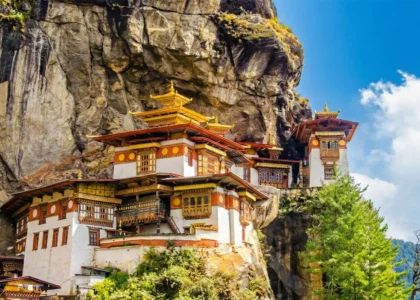
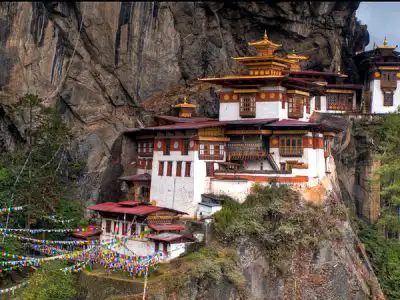
Autumn (September to November) is a good season with cool air and clear sight of the Himalayan mountains, an ideal season to have scenic drives and hikes such as the Tiger Nest.
Bhutan is under the monsoon in summer (June to August). Although the place is green and full of vegetation, downpours sometimes interfere with the travelling arrangements, and clouds obscure the mountainous scenery.
During winter (December to February), the weather is dry and usually sunny and very cold, particularly during the night in such destinations as Thimphu and Paro. Nevertheless, you can still travel in winter, and luxury tours continue year-round. Winter brings fewer tourists, clear skies, and colder nights, especially in Paro and Thimphu.
Regardless of the season, pack layered clothes to cope with the daytime heat and the cool nights. Even during spring or autumn, mornings and evenings in locations such as Paro and Thimphu may be chilly, but further down in Punakha are warmer. The summer monsoon season is characterized by heavy rains – carry a light rain jacket or umbrella.
Food & Drink During the Tour
Food is one of the pleasures of a Bhutan luxury tour. All meals (breakfast, lunch, and dinner) are included in your package, and you will have an opportunity to taste a combination of Bhutanese and international food.
You can savor an array of dishes, such as continental and Chinese, down to Indian, in high-end hotels and restaurants that are made according to your taste. You can not pass without trying Bhutan’s special dish Ema Datshi, which is a spicy combination of chilies and local cheese, traditionally accompanied by red rice.
Momo (dumpling) and hearty stews can also be available as other local delicacies. Bhutanese food often is rather spicy (chillies are one of the main ingredients); however, in case you want a mild taste, it is only necessary to tell your guide, and changes will be introduced. Water is served during the trip (bottled mineral water is usually presented), and it is better not to use tap water in Bhutan.
The usual beverage that is used at cultural experiences is tea (particularly butter tea, referred to as Suja). Most hotels offer alcohol, though you will have the chance to try Aar (a classic rice spirit) or local beers. In Bhutan, the same can be said about dietary limitations in the course of luxury tours, which can be arranged with prior notification, and the meals are safe and enjoyable.
Altitude Sickness
Altitude sickness is not expected to be a big problem on this 5-day Bhutan luxury tour, though it is better to be aware of it. At the top of it is the Tiger Nest at approximately 3,120 m (10,236 ft). Most overnight stops are at moderate altitude – around 2,200–2,350 m in Paro and Thimphu, and about 1,200–1,300 m in Punakha, which is generally comfortable for most travelers.
These are moderate altitudes when measured against the high-altitude context, and our itinerary will enable you to get acclimatized over time, starting with Thimphu (2,320 m) before any of the higher elevation activities. Saying so, people respond differently to altitude.
Others may experience mild symptoms such as shortness of breath or a mild headache during the uphill hiking. Prevention is always the best, and it is always advisable to keep oneself hydrated, keep walking at a normal pace, and avoid alcohol on the first or second day.
Our guides are trained to identify indicators of Acute Mountain Sickness (AMS), and they will make sure that you slow down or take a break. In case you feel unwell, tell your guide right away.
(Drugs such as Diamox are not normally necessary here, but you should check with your doctor in advance, in case you feel that there is any cause for concern.) Travelers on luxury tours in Bhutan are usually not bothered by altitude problems along this route, provided they take the necessary precautions.
Visa and Permits for the Bhutan Luxury Tour
Any foreigner (except Indian, Bangladeshi, and Maldivian citizens) requires a visa to enter Bhutan. Your tour operator (e.g., Above The Himalaya) on any Bhutan luxury tour will take care of the Bhutan visa on your behalf.
You will have to send a copy of the passport scanned, and a passport-sized photograph in advance. We also get you a visa clearance in advance so that it is ready and has been stamped into your passport on arrival at Paro.
The visa fees and the Sustainable Development Fee (a government tourism levy) are usually included in your package. The SDF is a separate government levy that we include in your total tour price and pay on your behalf when arranging your visa. Besides the visa, there are other permits needed to travel within regions in Bhutan.
In this tour, our team handles all the behind-the-scenes work of securing permits to visit Thimphu, Punakha, and Paro. The entrance fees to monasteries, museums, and monuments are also handled. You will not have to be concerned with any paperwork work but have fun on your trip and leave the formalities to us.
Health & Safety
Bhutan is considered to be a very safe tourist destination, and in our Bhutan luxury tour, your health and safety are our first priority. The rates of crime are very low, and the people who live here are friendly and honest. You will be free to visit places and towns with your guide.
However, it is prudent to exercise typical precautions as one does in any other place: lock up your valuables and have eyes on your surroundings in a busy place (such as markets or festival grounds).
Healthwise, we built the tour itinerary to reduce risks. We also offer drinking water and good meals to avoid stomach infections – do not eat street food that has not been approved by our guide. Before meals, it is advisable to wash hands or apply hand sanitizer. In case you have some existing medical conditions, bring them with you and report to us.
Our guide is equipped with first aid for minor problems. In case of any severe disease or accident (not likely during this cultural tour in the short term), hospitals are available in Thimphu and Paro. To have this extra level of security, make sure you have travel insurance that includes medical evacuation insurance, and you can travel without worrying.
Transportation
On our Bhutan luxury tour, we do all the transportation within the country to make it very comfortable and convenient. As soon as you get in Paro, a personal vehicle with a professional driver will be available to you. Depending on the size of a group, we travel using large and well-kept SUVs or minivans, which have enough space to allow one to relax whenever traveling.
The Bhutan roads are mountainous and winding, and hence the travelling time can be more than the distance would seem to be, but we have experienced drivers who drive the roads at a comfortable pace.
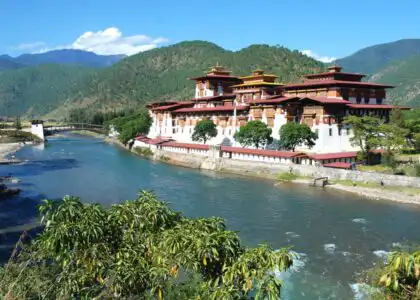
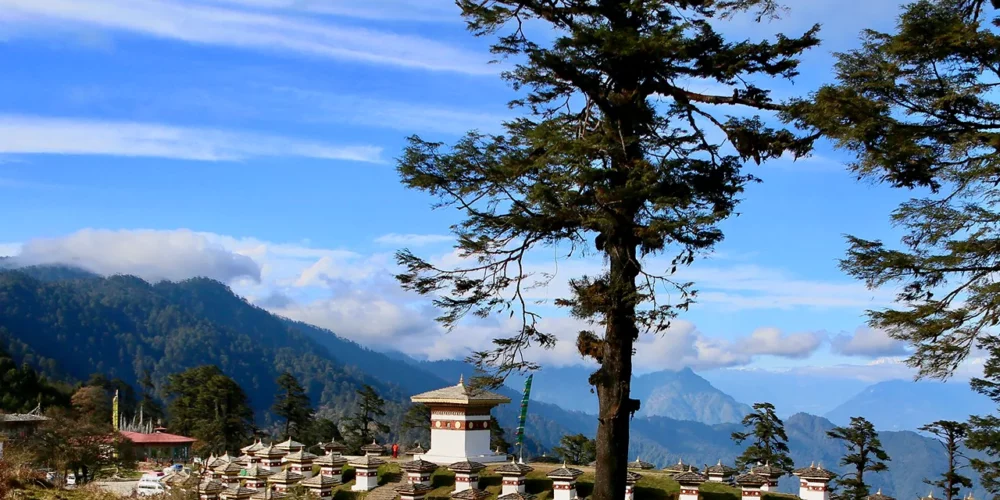
Some of the highlights during this tour are the scenic drive between Paro and Thimphu (about 1–1.5 hours, around 55 km), the mountain road passing through Dochula Pass to Punakha (approximately 2.5 hours), and the return drive back to Paro with beautiful village and valley views.
Any local tours within Thimphu and Paro will also be available in the vehicle as per the itinerary. We can help with your flights to Bhutan, in case of flying the national airline of Bhutan (Druk Air or Bhutan Airlines): a flight costs a bit more, however, the views of Bhutan in the Himalayas are beautiful.
We also take care of every transfer, such as airport collection, hotel delivery, and even sightseeing tours, so you can enjoy the trip without any stress.
Travel Insurance for the Bhutan Luxury Tour
We strongly suggest travel insurance for any luxury tour to Bhutan, and most tour operators (we included) insist on it. A detailed travel insurance policy ensuring the following is a must before you begin your Bhutan luxury tour: medical treatment, emergency evacuation (in case of severe altitude complications or injury), trip cancellation/ interruption, and loss/theft of items.
Although we take safety as a priority in all of the steps implemented, we have insurance that offers us financial coverage and security. Bhutan is a distant place, with fewer advanced medical services, particularly outside the capital.
Insurance is essential in a worst-case scenario where you may need to evacuate to a hospital in a neighboring country (like Thailand or India) because such expenses can be high.
Additionally, Bhutan flights may sometimes be postponed because of weather; good insurance cover will assist in paying supplementary expenses due to unexpected delays. Bring a copy of your insurance policy details with you on the trip, and make a copy available to a family member at home as well.
Additional Costs of the Travel
Our Bhutan luxury tour package is almost a complete package since we cover accommodation, meals, transport, guide, permits, and even your Bhutan visa fee. There are, however, additional costs that are not covered, and thus you need to budget for them.
Tips to your guide and driver are one such cost; although it is an extra, it is a common practice that is used to give someone a tip to the driver or guide in case you are satisfied with their work.
There are also a lot of travelers who purchase souvenirs (handicrafts, textiles, local products) in Bhutan, which is why it is recommended to have a little money to buy some gifts. Any personal spending, such as snacks or extras (outside of meals), alcohol, laundering, calls, or internet data (in case you require more than Wi-Fi at the hotel), will be your own.
In case you choose to visit the spa or have massages in the luxury hotels, this would be an added expense. There will be no surprises with our luxury tours of Bhutan since we will inform you about any optional tours that might involve extra fees, and you can decide whether you want to do them.
Language & Communication
There is no language barrier on a Bhutan luxury tour. Dzongkha is the official language of Bhutan, although English is widely spoken, particularly among guides, hotel staff, and in tourist-related shops. Every one of our guides knows English (and other languages upon request), and thus you will see no problem in interpreting the introduction to the cultural sites or explaining your needs.
Most of the Bhutanese, including the younger ones, have a bit of English, and people are generally welcoming and open to talking to the visitors. And you can always learn some words of Dzongkha, say, Kuzuzangpo la (Hello) and Kadrinché (Thanks), but you will find that English will be sufficient all the time.
In Bhutan, communication services are improving steadily. The free Wi-Fi is available in the majority of luxury hotels in the lobby and in the rooms, where you can keep in touch with your family or share your travel photos. Coverage of mobile phones is available in urban settings such as Thimphu and Paro, but could be sporadic in mountain passes or in remote locations.
You can just buy a local SIM card for your unlocked phone easily in case you need it to have access to data throughout the tour. In general, it is quite possible to be connected on luxury tours in Bhutan, but you can also have moments of digital detox in Bhutan with its peaceful scenery.
Don’t on this Trip
You should remember that in the course of your Bhutan luxury tour, you have to respect local traditions and adhere to the regulations of the country. When visiting the religious places, you must be well behaved by taking off your shoes and head covering before you enter any temple or monastery, and dress decently by not wearing shorts or sleeveless garments.
Most temples and dzongs are not allowed to have their pictures photographed indoors, and therefore, you should not take pictures unless your guide indicates that it is okay to do so.
In Bhutan, smoking is strictly regulated. Tobacco products are difficult to find and heavily taxed, and smoking in public places is largely prohibited. If you smoke, it is best to bring your own supply within the legal limits, declare it if required, and only smoke in designated areas or where your guide confirms it is allowed.
It is preferable not to show any signs of affection since the Bhutanese are conservative, and you should never point at people or statues with the finger; you should use an open hand to gesticulate.
Bhutan has respected all living creatures and a clean environment, and therefore should not litter or disturb wildlife. These are the few tips that you can follow to ensure that you are respectful to the Bhutanese culture, and so make the trip enjoyable to all.
Trip Extension for the Bhutan Luxury Tour
In case you want to extend your stay after this five-day Bhutan luxury tour, there is a lot more to take into consideration. You could spend more time in Bhutan and visit sites like the serene Haa Valley, the scenic Phobjikha Valley, where black necked cranes congregate during winter periods, or even pay a visit to the central part of Bumthang to get to know more of Bhutan’s spiritual history.
Every region has its beauty, and you will have a lot of luxurious resorts to proceed with your experience in comfort. A large number of travelers are also planning to make a combination of their luxury tour in Bhutan with Nepal or Tibet. You might also spend a cultural holiday in Kathmandu, a holiday in Pokhara relaxing, or even have a wildlife safari in Chitwan.
The other option that the majority of travelers use to conclude their journey is to relax in a luxury world-class resort like COMO Uma, Aman, or Six Senses, where guests are free to receive spa therapy, practice meditation, and yoga in a serene natural environment. You will always be pleased to tailor any extension to your desires and make sure it is just as comfortable and enjoyable as your longer holiday.
Photography and Drone Rules
There are numerous scenic places to capture the photography in Bhutan, and in your Bhutan luxury tour, you are bound to have all the opportunities to take pictures of mountains, temples, and the daily village life.
Although there are no limitations regarding outdoor pictures, you need to keep in mind that you are sometimes forbidden to take pictures in temples and monasteries, so you should pay attention to the directions of your guide.
When you want to take pictures of the locals then it is always polite to ask them prior to taking pictures, particularly monks or families. Drones are highly regulated in Bhutan, and guests are not permitted to use them without the specific government permission, which is rarely granted.
When you carry a drone, you have to declare it at customs and even to the authorities; it may be detained. Instead, one should use normal photography in order to prevent complications. By adhering to these regulations, you will have a good time on your vacation without any problems and will not violate local traditions and privacy.
Cultural Festivals on the Trail
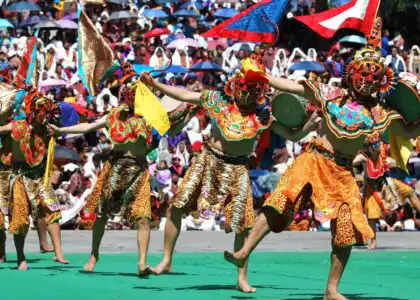
One of the colorful events during the Bhutan luxury tour is the cultural festivals, or Tshechus, which are filled with music, dances, and blessings. Attending one of them is a treat. These celebrations are organized in monasteries and dzongs, where the recognitions assemble in the best traditional attire to observe the sacred masked dances.
The Paro Tshechu in spring and the Thimphu Tshechu in autumn have been two of the most renowned events in western Bhutan. Both festivals consist of gorgeous dances, which have long been carried out and attract local families. Cultural experiences can also be well received in other festivals like the Punakha Drubchen or the Black Necked Crane Festival in Phobjikha Valley.
In case your travelling dates coincide with any of the festival seasons, we would like to include one of these visits in your itinerary. Festivals also get a lot of visitors, so it is prudent to reserve. Another attraction is to attend a Tshechu, which creates a wider perception of the Bhutanese culture and is a memorable addition to your trip.
Tips for First-Time Visitors
In case this is the first time you are visiting Bhutan, there are some simple tips that can ensure that your Bhutan luxury tour is even more pleasant. Layered clothing, comfortable walking shoes, sunscreen, sunglasses, and a hat will be useful since the weather can vary throughout the day, and you will be ready to do something outdoors.
The local currency is Ngultrum, but the US dollar is also accepted in most places, particularly in hotels and stores, and hence some money is handy. Tips are not expected, but welcome, and most visitors pay a small percentage to the guides and drivers at the tour’s conclusion.
Use of the right hand or both hands to receive and give an object is also very polite, and walking clockwise around religious items like stupas or prayer wheels.
Life in Bhutan has a loose pace, and therefore, it is worth being flexible and allowing oneself to savor the slower tempo. You will enjoy and remember the experience more when you take time and unplug some gadgets and just enjoy the stillness of the scenery.


 Customize Your Trip







 Enjoy Himalayan scenery with the help of Nepal’s best guides with Government license holders and got training in first-aid, our Trip Leaders, know where you’ll find the best photos, most fascinating wildlife, and the best stream crossings.