notification-icon
Booking open for Kailash Mansarovar Yatra 2026 & 2027 View Dates

Ghorepani Poon Hill Trek – 3 days

Best Price Guaranteed, Easy to change Date, Instant Confirmation

Book This Trip
Trip Duration 3 days
Group Size 2-16
Maximum Altitude 3210 m
Difficulty Grade Easy to Moderate
Start & End Point Pokhara/Pokhara
Best Seasons Mar-May & Sep-Nov

Trip Highlights of Ghorepani Poon Hill Trek – 3 days

  • Poon Hill sunrise and panoramic views of the Himalaya
  • Ghorepani Poon Hill Trek 3-day best trek among busy travelers
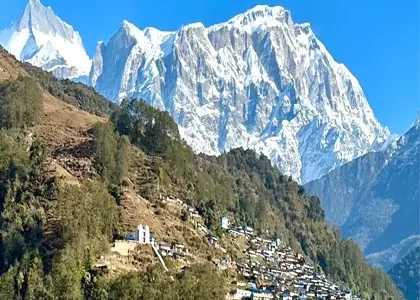
  • Beautiful Magar villages and terraced agricultural areas
  • Varied rhododendron and oak wood on the path
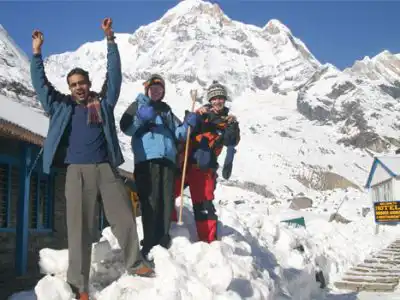
  • Great scenery of Annapurna, Dhaulagiri, and Fishtail peaks
  • Welcoming tea-house accommodation in Nepali style
  • Meaningful insight into Gurung and Magar village life

Overview of Ghorepani Poon Hill Trek – 3 days

The 3-day Ghorepani Poon Hill Trek is a short and refreshing adventure in Nepal’s Annapurna region. It is ideal for travelers who do not have much time but still want to enjoy real Himalayan views and local village life. In just a few days, you will walk through rhododendron forests, stone-paved trails, small farming villages, and peaceful hillsides.

The main highlight of this short Ghorepani trek is the sunrise from Poon Hill (3,210 m), where the first light of the day touches Annapurna, Dhaulagiri, Machhapuchhre, and many other peaks. It is a simple moment, but one that most trekkers remember for a lifetime. The trip starts from Pokhara, and we drive you to Nayapul, the starting point of the walk. Each day, you follow gentle trails and stay in local tea houses for the night.

Villages like Tikhedhunga, Ulleri, and Ghorepani give you a warm welcome with friendly people and tasty home-cooked meals. The walking is comfortable for most people, and even beginners or families can enjoy this route without stress. Even though this is a short Ghorepani trek, it includes all the best parts of the region. The forests are full of color during spring, and the mountain views appear again and again as you walk.

On the final morning, a short climb takes you to the top of Poon Hill for an amazing sunrise that lights up the whole Himalaya range. Throughout the trip, Above The Himalaya takes care of all arrangements so you can simply walk, relax, and enjoy the scenery.

You will walk back to Nayapul after your visit to the sunrise, and walk back to Pokhara, where you can rest on the lakeside or proceed with your journey. It is a beautiful 3-day walk through the Annapurna foothills that is a great adventure, a short and easy trek that can be experienced in a short run, and is worth remembering all through.

Itinerary of Ghorepani Poon Hill Trek – 3 days

DAY
01

Day 01: Drive from Pokhara to Nayapul – Trek to Tikhedhunga

On Day 1, you will set out from Pokhara early in the morning. You will drive 45 km northwest to reach Nayapul (about 1,070 m), the trailhead of the Ghorepani Poon Hill Trek. After a quick lunch break, the trek begins along the banks of the Modi Khola River.

You will trek roughly 8–10 km (about 4–5 hours) on an easy-to-follow trail. The path climbs gently through bamboo and rhododendron forest and passes by a beautiful waterfall.

Along the way, you will cross suspension bridges over mountain streams and enjoy views of green hills and farmland.

The trail ends at Tikhedhunga (1,540 m), a small Magar village. You will spend the night at a cozy teahouse and enjoy dinner with the team.

Jeep 1.5hrs
Accommodation Teahouse
Meals B L D
Trek Distance 8-10km
Trek Duration 4-5hrs
Altitude 1,540m
DAY
02

Day 02: Trek from Tikhedhunga to Ghorepani

On Day 2, the trek ascends further up the mountains. Your journey will begin with a steep climb out of Tikhedhunga over some 3,000 stone steps up through a subtropical forest.

The initial significant destination is Ulleri (approximately 2,070 m), where one can have a rest and see the view.

The trail, as of Ulleri, resumes the increasing direction more easily. A row of little villages will come your way, and you will go on through fertile wood. The trek on the day is approximately 6-7 hours and 11 km.

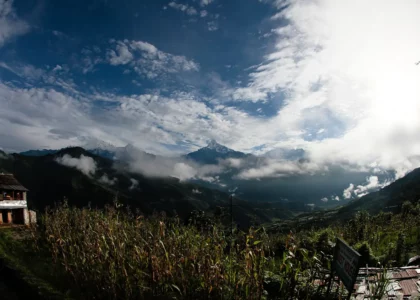
You will pass by rhododendron and oak trees, and sometimes you can see Annapurna South (7,273 m), Hiunchuli, and Machhapuchhre (6,993 m) mountains on the way.

Towards the end of the afternoon, you will reach Ghorepani (2,860 m). This is where you spend the night in a mountain lodge, where you relax and breathe the cool mountain air.

Accommodation Teahouse
Meals B L D
Trek Distance 11 km
Trek Duration 6-7hrs
Altitude 2,860m
DAY
03

Day 03: Ghorepani to Poon Hill – Return to Pokhara

On Day 3, you will get up early in the morning to ascend the short path to the Poon Hill vantage point (3,210 m). The trek is sharp but not more than 45 minutes. And with time, you will see the sunrise paint the Himalayan peaks in golden light, a sight that cannot be forgotten.

After the beautiful panoramic view, you will return on the same trail towards Ghorepani to have a lovely breakfast at the teahouse. Then you will start down the mountain to Nayapul.

The path goes down through rhododendron woods and bedrock gardens. It will take you some 4-5 hours of walking (roughly 10-12 km) before you reach Nayapul in the mid-afternoon.

At the end, you will take a jeep or a local bus back to Pokhara in a 2-3 hour journey. The hike will be completed upon reaching Pokhara, where you will be taken to your hotel, where you can either go to sleep or proceed with your adventure.

Jeep 1.5hrs
Accommodation Hotel
Meals B L
Trek Distance 10-12 km
Trek Duration 5-6hrs
Altitude 3,210

Trip Extension

Suppose you have more time in Nepal after this trip. In that case, we can help you to extend your trip by running different treks in Nepal, tours in Bhutan and Tibet, Jungle safari tours at Chitwan, Bardia, and other National parks, Nepal luxury hotel booking, Rafting, Ultra-light flights, or any other travel-related services. You can get more information here.

Includes/Excludes

What's Included?
  • Airport or hotel pickup and drop-off in Pokhara
  • All ground transportation (jeep/bus) as per the itinerary (Pokhara–Nayapul and return)
  • 2 nights’ accommodation in twin-share tea-house lodges during trek
  • All meals on trek (2 breakfasts, 3 lunches, 2 dinners per person) as listed
  • Government trekking permits (TIMS and Annapurna Conservation Area Permit)
  • Licensed English-speaking trekking guide and porter (1 porter per 2 guests)
  • All meals and accommodations for the guide/porter
  • Insurance for guide and porter, first-aid kit carried by the team
What's Excluded?
  • International and domestic flights (Kathmandu–Pokhara round-trip)
  • Hotel and meals in Kathmandu or Pokhara (other than on trek)
  • Guide and porter gratuities (tips)
  • Drinks (tea, coffee, alcoholic beverages) not included
  • Hot shower, Wi-Fi, and battery charging fees at lodges
  • Personal trekking gear and personal expenses (snacks, souvenirs)
  • Travel insurance (mandatory but not included)
  • Any expenses due to unforeseen circumstances (flight delays, illness, extra nights)

Weather & Best Season

The Annapurna region has four distinct seasons. Autumn (September–November) and spring (March–May) are the best times for the Ghorepani Poon Hill Trek. In these months, daytime temperatures are mild (around 10–20°C) and skies are usually clear. Autumn offers stable weather and outstanding mountain views. Spring brings warm days and vibrant rhododendron blooms along the trail.

The summer monsoon (June–August) brings heavy rain and slippery trails, so it’s best to avoid that season. December–February is dry but very cold at night – trekkers enjoy crisp, clear days but must pack warm layers. Overall, autumn and spring offer the most comfortable weather and visibility for this short Ghorepani trek.

Food & Drink

Local teahouse serves simple Nepali meals on the short Ghorepani trek. Typical options include dal bhat (rice and lentils), curried vegetables, noodles, and momos (dumplings). Most meals in the itinerary are included: you will receive breakfast, lunch, and dinner each day as specified. Breakfast often features eggs, porridge, or toast. Hot beverages like tea and coffee are available for purchase in lodges.

Drinking water is not provided, so bring a water purification method or buy bottled water in villages. Alcoholic drinks (like local rakshi or beer) are also sold but not included. Carry some energy snacks (chocolates, nuts) for the hike. Stay well-hydrated by drinking boiled or treated water and herbal teas throughout the trek.

Altitude Sickness

The peak of the Ghorepani Poon Hill Trek is Poon Hill (3,210 m). Acute mountain sickness (AMS) may develop at this moderate altitude, but it is mild. These symptoms comprise headache, nausea, or fatigue.

In order to reduce the risk, climb slowly and maintain hydration. Before this trek, we suggest staying at a lower altitude (Pokhara, 820 m) as you arrive in Kathmandu. Walk slowly and take a rest when you get tired.

Do not take alcohol or heavy food. A majority of the trekkers make good acclimatization by being busy and relaxed. Should any of the serious symptoms occur (dizziness, shortness of breath), notify your guide at once, so they can rest or descend. In general, fit individuals with good plans tend to handle the elevations of this hike.

Visa & Permits

All foreign nationals have to acquire a tourist visa in Nepal, which can be obtained upon arrival at the Kathmandu or Pokhara airport. A 30-day visa will cost around US$ \ -50 (carry passport-sized photos and either local currency or USD cash).

In the trek itself, an Annapurna Conservation Area Permit (ACAP) will be required. Above The Himalaya organizes ACAP and any other necessary trekker registrations or permits based on the current regulations.

Take a copy of your permits and passport. Ensure that your passport is valid (at least 6 months). When coming by air or road (Kathmandu), you get the visa at the time of arrival; when going by road (Pokhara), you can take the help of most agents beforehand. Organizing documents will be a sure start to this Ghorepani Poon Hill Trek.

Health & Safety

Trekking in Nepal is normally safe, provided one takes some basic precautions. Keep hydrated and do not consume uncooked food or unboiled water. Bring sunscreen, sunglasses, and a small first aid kit (e.g,. any medication needed by you). Routine vaccinations (tetanus, hepatitis A, typhoid) should be done.

Take the advice of your guide on safety on the journey of Ghorepani poon hill trek 3 days, some parts of the trail can be steep or become slippery following rain. Apply insect repellent where necessary. Inform your guide of any medical problems or concerns. Women traveling in villages are expected to dress in modest way.

The Ghorepani Poon Hill Trek is mostly secure, but keep your bag packed. Medical facilities available are few, and in case of a severe case, evacuation must be done to Pokhara or Kathmandu. By traveling with a reputable company, you benefit from local knowledge and emergency support if needed. Overall, stay with the group and listen to your guides for a safe trek.

Transportation

Ghorepani Poon Hill Trek begins and ends in Pokhara. Above The Himalaya arranges all local transport. You can fly from Kathmandu to Pokhara (25-minute flight) or take a tourist bus (5–7 hours). On Day 1, you will take a jeep or bus from Pokhara to Nayapul (45 km, about 1.5 hours). On Day 3, you will return by jeep or bus from Nayapul to Pokhara.

The roads are mountainous but generally in good condition. Inside the trail areas, there is no motor transport – trekking covers those parts. If you prefer extra comfort, private car hire can be arranged (at extra cost). In Pokhara, your luggage can be stored at the hotel while you trek. Make sure you arrive in Pokhara a day before trekking starts.

Travel Insurance

Comprehensive travel insurance is mandatory for the Ghorepani Poon Hill Trek. Make sure your policy covers high-altitude trekking and emergency helicopter evacuation. Medical coverage should include hospitals in Nepal. Provide a copy of your insurance details to Above The Himalaya before the trek.

If you do not already have coverage, purchase it before traveling. Keep your insurance documents (digital and printed) with you during the trek. Without adequate insurance, the trek cannot proceed for safety reasons. Having insurance ensures peace of mind in case of illness, injury, or unexpected changes during the short Ghorepani trek. It is essential for any Himalaya adventure.

Your Extra Expenses

Budget some extra cash for personal and optional items. On the Ghorepani Poon Hill trek, all meals specified in the itinerary are covered, but snacks, drinks, and extras are at your own cost. Drinks (tea, coffee, bottled water, alcohol) at lodges must be paid separately. There is usually a small fee for hot showers (if you want one) or Wi-Fi and phone charging.

Any hotel or meal costs in Pokhara or Kathmandu before/after the trek are not included. Porters carry a maximum of 15–20 kg; extra porter services require extra payment. It is customary to tip your guide and porter: plan about 5–10% of the trip cost for tips.

Carry additional cash (Nepalese rupees or USD) to cover these costs and any souvenirs in this short Ghorepani trek. There are ATMs in Pokhara, but always carry cash after reaching the trail.

Language & Communication

In Nepal, Nepali is the official language, though English is commonly used in the tourist cities. Your guide will be a fluent English speaker. In the mountain villages, local people may also speak Gurung or Magar languages. You don’t need to learn Nepali, but simple greetings (e.g., “Namaste” for hello, “Dhanyabad” for thank you) are appreciated.

Mobile phone service is limited on the Ghorepani poon hill trek for 3 days. Most small villages do not have reliable cell coverage. Lodges often offer Wi-Fi for a small fee in the evenings. If you need connectivity, you can buy a local SIM card in Pokhara (Telcos: Ncell, NTC) and use it where service is available. Generally, communication with your guide and team will suffice for route and safety.

Don’ts on this Trip

The following guidelines should be adhered to in order to make the short Ghorepani trek respectful and enjoyable to all. Never litter, and you should bring your trash with you. Avoid purchasing single-use plastic bottles; use a reusable water bottle. Feed of and do not disturb stray dogs or wildlife, since this may interfere with their natural behavior.

Do not go into local houses or temples without seeking permission, and also keep in mind to take your shoes off at the door. Having photos of individuals without prior permission, more so women, or when in religious practice, is discouraged. Reduce noise levels and do not play loud music in villages because mornings and evenings are special times of local family serenity.

During this season, do not smoke in teahouses or in the forested places, as this may cause in fire. Above all things, please always follow our guide. These few rules allow maintaining the trail clean, secure, and respectful to the visitors and the local communities.

Trip Extension

In case you have some spare time, you can extend your visit to a variety of places. Extra days in Pokhara, it is worth spending some entire days by the lakeside, or making reservations for certain activities such as paragliding or boat rides. In case of trekking, you might go as far as Ghorepani to Tadapani village or the Ghandruk village.

In reality, a lot of trekkers extend the Ghorepani Poon Hill Trek with the 5-day Poon Hill or Annapurna Base Camp trek with additional days. Kathmandu outings, including a visit to temples or a trip to Everest scenic flights, are also common. Above The Himalaya will be able to organize these extras or a more detailed, tailor-made schedule. Ask your guide or agent about optional extensions that will fit your schedule.

Photography & Drone Rules

The trek offers excellent photo opportunities. You are welcome to take pictures of landscapes, lodges, and villagers if they consent. Always ask before photographing people or entering places of worship. Drones are subject to strict regulations in Nepal. Flying a drone requires government permits from the Civil Aviation Authority and the conservation department.

In the case of the Ghorepani Poon Hill Trek, the idea of using drones is usually not recommended unless you find permission much earlier on. Fines may be imposed on unlicensed drone flights. We suggest using your camera or smartphone to take snapshots and not to intrude on the privacy of other people.

Cultural Festivals on the Trail

Nepal has rich cultural festivals that you may experience. If your Ghorepani Poon Hill Trek falls in autumn, villages celebrate Dashain and Tihar (September–November) with gatherings and special foods. Dashain (the largest festival) often involves family feasts, although celebrations in small villages may be low-key. Springtime brings Holi (festival of colors) around March, which locals celebrate with joy.

The Magar and Gurung communities also have their own festivals, like Sonam Losar (New Year) in January/February. During these times, you may see villagers in traditional dress or observe prayer rituals. Participating respectfully in local festivals – even by simply joining a community meal – can be a memorable cultural experience.

Tips for First-Time Visitors

Some preparation in advance will be helpful in the Ghorepani Poon Hill Trek. Begin training (hiking, stair climbing, cardio) a few weeks prior to the trek so that the body develops endurance. Packs: a warm jacket, wool hat, and gloves in cold mornings, and a rainproof shell in wet weather. Break in the hiking boots prior to the trip.

Always carry at least 2 liters of water in your daypack and frequently hydrate yourself. Carry a reusable water bottle and purification pills. Bring along some Nepalese rupees (or small US dollars) to use in villages and tipping. Be respectful of local culture: greet people with a Namaste (palms together) and take off shoes before going into lodges.

Take a tour on the advice of your guide on pacing and acclimatization. We suggest carrying hand sanitizer and toilet paper, because on the trail, supplies may be minimal. Believe in your local guide, and have fun – if you are properly prepared and open-minded, then your Ghorepani Poon Hill Trek will certainly be safe and memorable.

Most Asked Questions by Travellers

The Ghorepani Poon Hill Trek is generally considered easy to moderate. Most of the trail is gentle and enjoyable, with one well-known steep climb through Ulleri’s stone steps. As long as you have basic fitness and walk at a steady pace, the trek feels comfortable and rewarding.

Yes. This trek is very suitable for beginners, families, and casual hikers. The paths are well-maintained, tea houses are conveniently located, and your guide will ensure that everyone walks at a relaxed pace.

The summit of this trail is Poon Hill with an elevation of 3,210 m (10,531 ft). The altitude is not tough, and the majority of the trekkers manage it. Altitudes are not extensively an issue on this route, but it is always prudent to maintain hydration, walk slowly, and take the scenery at a slow pace.

The majority of days include 4-7 hours of walking based on the route and pauses. You will take tea stops and photos, and scenic spots at various points during the day; therefore, the hiking is comfortable and well-paced. Day 3 includes an early morning trek to Poon Hill, which is not long but stupendous, and the sunrise is memorable.

Yes, a licensed guide is advisable and included in your package. Guides also assist in navigation, security, and provide insightful information about the local area that would add significance to the journey. Porters are not a must, yet extremely useful when you wish to walk with a light daypack only. Porters can be hired when necessary by our team.

To enter the Annapurna Conservation Area, you will have to obtain two different permits: the Annapurna Conservation Area Permit (ACAP) and the TIMS card. Our company organises these permits before your trek starts, and you need not worry about organising paperwork on your own. Do not forget to keep a copy of your passport with you when getting the permit.

In tea-house lodges operated by local families, accommodation is in effect. Rooms are simple and clean, and normally contain two single beds. Communal bathrooms are the order of the day. Most lodges have hot showers at a minimal fee. Tea houses also have a cosy sitting area where trekkers can have meals.

Yes, the tea houses cook fresh and cooked food, i.e., dal bhat, soups, noodles, and a simple breakfast. These are safe for trekkers. You should take only boiled or purified water, and in cases when you require it, you can take purification tablets or purchase bottled water. Raw salads and fruits that have not been peeled should be avoided to minimize the chances of stomach complications.

Your package will consist of 2 breakfasts, 3 lunches, and 2 dinners. The trekking meals are organized at the tea houses of choice. Other pre-trek or post-trek meals in Pokhara are also not included, and hence you will have a chance to explore a few nice restaurants in town at your convenience.

Yes, travel insurance is required. It should include medical care, helicopter evacuation during an emergency. Since you are trekking and climbing to at least 3,210 m, please ensure that this is included in your policy.

Yes. Most tea houses have charging facilities; most of them in the dining area at a small fee. Due to the possible power shortage during the busiest times of the year, it is also good to carry around a power bank or extra batteries.

You can either take a short flight (less than 25 minutes) or take a tourist bus (5-7 hours). The airlines are more comfortable and quicker, whereas buses are cheaper and offer sightseeing. You can count on us to take care of the arrangements of flights or transfers according to your choice.

The best currency to use on the trek is the Nepalese rupee (NPR). Bring little notes to tea-houses, snacks, or tips. It is possible to take out money at ATMs in Pokhara before the start of the trek.

A moderate level of fitness is best. The trek will be fun in case you can comfortably walk 5-6 hours in the hilly terrain. Light work up on your trip, walking, jogging, or climbing the stairs, helps you feel better on the trail.

Yes. A large number of families go trekking to Poon Hill. Active children at the age of 10 years and older tend to have experience and cope with daily walking. Parents are advised to be careful with the smaller children on steep slopes.

Yes, all tea houses have simple toilets. They tend to be squat toilets, but certain lodges have Western ones. Bring tissues and hand sanitizers since they are not always around.

Currently, it is not permitted by local laws to hike without an authorized guide. The presence of a guide guarantees ease of communication, safety, and no stressful logistics as well; hence, it is a great way to enrich your experience.

You can bring warm clothes, fleece, a rain jacket, trekking pants, hiking shoes, comfortable, sun protection, a reusable water bottle, a headlight, and personal toiletries. As a day pack, a small 3040 L size is ideal.

At tea houses, blankets are also available, and one does not need a heavy sleeping bag. But when you get cold easily, a lightweight liner will provide additional warmth and comfort.

Yes, it is easy to arrange extensions. You can either go to neighboring villages such as Ghandruk or even take trails towards Annapurna Base Camp in case you have additional time. We will be glad to assist you in developing a more extended itinerary depending on your interests.

Reviews on Ghorepani Poon Hill Trek – 3 days

Be first to post a review in this trip.

Best Price Guaranteed, Easy to change Date, Instant Confirmation

Book This Trip
Book with Confidence
  • Flexible bookings and easy trip date changes
  • Personalized service and customized group sizes
  • Safe travels with owner-operated services and highly experienced guides
  • Best price guarantee for the most value for your money
  • Secure & easy online booking
Your Trek Leader

Trek Leader Enjoy Himalayan scenery with the help of Nepal’s best guides with Government license holders and got training in first-aid, our Trip Leaders, know where you’ll find the best photos, most fascinating wildlife, and the best stream crossings.

Trips for All

Divider
Private Trip
Peaceful tour with your travel buddy and guide
Small Group Travel
Travel with people having similar adventure dreams
Trips for Kids
Calling all young adventurers - join us for a journey of a lifetime!
Trips for Adventurers
Climbing & mountaineering adventures for thrill-seekers
Live Chat Support
Purushotam Timalsena
Purushotam Timalsena Travel Expert
We'll plan the perfect personalized vacation for you.
Request for Assistance ⮞