notification-icon
Join our solo, private, family, & small group joining trips Plan your trip

Humla Limi Valley Trek

trip-expert-puru-timalsena

Need Help? Let's Talk

+977 985-1095800

Best Price Guaranteed, Easy to change Date, Instant Confirmation

Book This Trip
Trip Duration 17 Days
Group Size 2-20 People
Maximum Altitude 4,995 m
Difficulty Grade Moderate
Start & End Point Kathmandu/Kathmandu
Best Seasons Mar-May, Sep-Nov

Trip Highlights of Humla Limi Valley Trek

  • Fly into remote Humla and start trekking from Simikot
  • Cross Nara La (4,620m) and feel true highland adventure
  • Camp under starry skies in seldom-visited valleys
  • Visit Halji and explore its ancient monastery atmosphere
  • Soak in natural hot springs after tough trekking days
  • Walk beside dramatic river gorges and rock formations
  • Experience Tibetan-influenced culture in remote villages
  • Search for blue sheep and other Himalayan wildlife

Overview of Humla Limi Valley Trek

The Humla Limi Valley Trek is a 17-day remote Himalayan adventure that takes travelers into one of the least visited regions of Nepal. This amazing trip takes one to the far northwest part of the country which lies near the Tibetan border where ancient trade routes once linked Nepal and Tibet. Traders moved salt, wool, and other daily items across these valleys since time immemorial, and the road still has the silent air of that ancient flow.

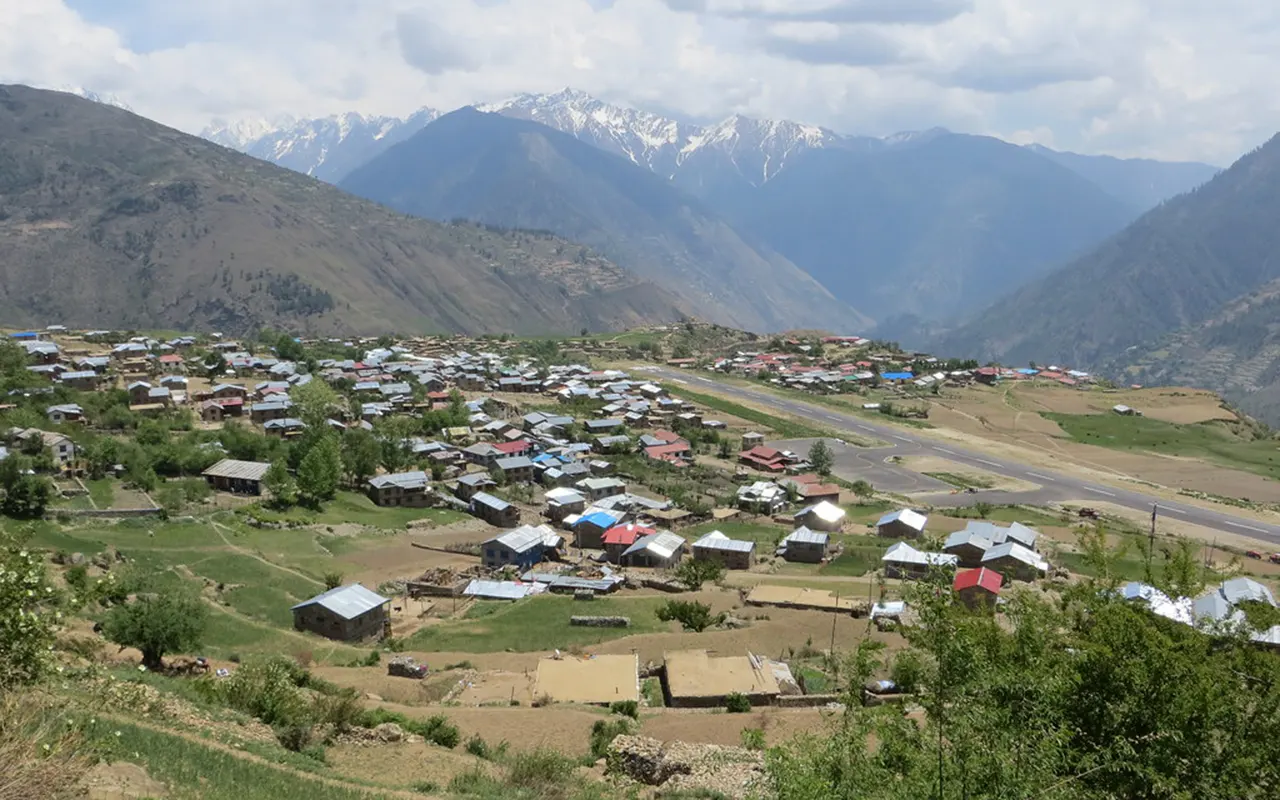
The trip will start with a flight between and Nepalgunj and then the mountain flight scenic flight to Simikot. Simikot is the administrative center of Humla and the starting point of the Limi Valley trek. Here the path slowly turns into the deep ravines of rivers and steep mountainous terrain. Trekkers follow suspension bridges, wide trails and tranquil hillside villages as they gradually increase in elevation.

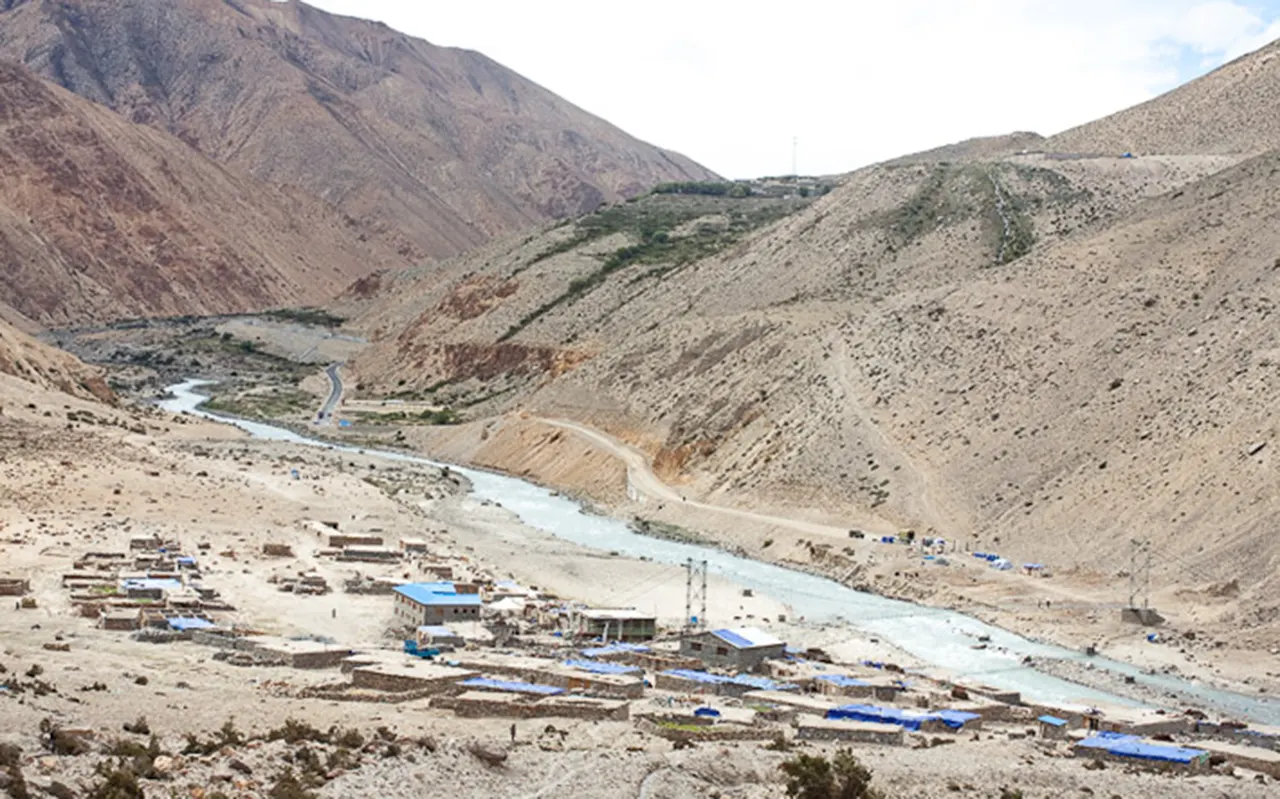
The landscape starts to shift as the journey progresses. The woody hills and little farms gradually are replaced by expansive highlands and spectacular mountainous landscapes. The Humla Limi Valley trek allows trekkers to experience a rare side of the Himalayas where nature remains quiet and untouched. Large portions of the trail are remote, and the noise of rivers, wind, and footsteps will replace the busy feel of well-trodden trekking trails.

Another special part of the trek to Limi Valley is the cultural experience. Tibetan-influenced traditions of the communities of this region are strong. Other villages like Til and Halji maintain the old traditions, architectural structure and religious practices that have been in existence many generations. Visiting Halji monastery also offers a unique opportunity to observe the spiritual life that continues to guide the people of Limi Valley Nepal.

Due to the very remote nature of the area, camping is frequently used to set up accommodation. This makes the Limi Valley trek feel more adventurous and authentic. Trekking with the help of skilled guides, porters, and cooking personnel, the trekkers may concentrate on the enjoyment of the trip, whereas the staff takes care of the logistics each day.

The Humla Limi Valley trek is ideal for travelers who want to explore quiet Himalayan landscapes, experience traditional mountain culture, and walk through one of the most untouched regions of Nepal. With experienced guides and strong logistical support, Above The Himalaya organizes the Humla Limi Valley trek in a structured and responsible way while respecting local culture and environment.

What to Expect on Humla Limi Valley Trek

The Humla Limi Valley trek is a journey that runs on simplicity and strong teamwork. Trekkers use silent paths of river valleys, hill villages and secluded mountain views. The road leads slowly up into elevated terrain where the broad expanses of sky, fierce breezes and dramatic landscape characterize the scene.

During the Limi Valley trek, walking days are usually long but paced carefully to help trekkers adjust to altitude. The pathway travels along river streams and suspension bridges and then on to the elevated open sceneries. As the trip goes on, the landscape turns out to be not only green hills and little settlements but also broader valleys and high mountainous terrain.

Accommodation during the trek to Limi Valley often includes camping because facilities are limited beyond major villages. This renders the experience more adventurous and closer to nature. The trekking team normally takes care of tents, meals, and camp life, thus ensuring that trekkers are able to concentrate on gradual walking and adequate rest.

Altitude also becomes an important part of the Humla Limi Valley trek. Several of the villages are found midway between 3,000 and 4,000 meters. There are also high passes such as Nara La at 4,620 meters along the trek. Some itineraries also cross Nyalu La, which reaches approximately 4,995 meters under different conditions.

Another unique part of the Limi Valley trek is the quiet environment. Because the area is restricted and logistically difficult, visitor numbers remain low hence the trail is usually serene and empty. Most trekkers take pleasure in hours of walking without hearing anything but the wind, water, and footsteps on the path.

Why This Trek is on Your Bucket List

Nepal has numerous trekking routes, which are characterized by crowded foot trails and established sights. The Limi Valley trek stands out because of its rarity and peaceful setting. The area was opened to foreign trekkers in the early 2000s and as yet is one of the least visited trekking locations in the country.

The Humla Limi Valley trek also offers a rich cultural experience. The communities of this area practice powerful influential traditions of Tibet. Trekkers can observe traditional homes, visit monasteries, and experience village life that continues to follow long established customs in Limi Valley Nepal.

This experience also transforms the perceptions of comfort by the travelers. During the trek to Limi Valley, trekkers exchange busy towns for quiet valleys and camp tea for simple mountain meals. Night time usually has a clear sky with stars and calm atmosphere.

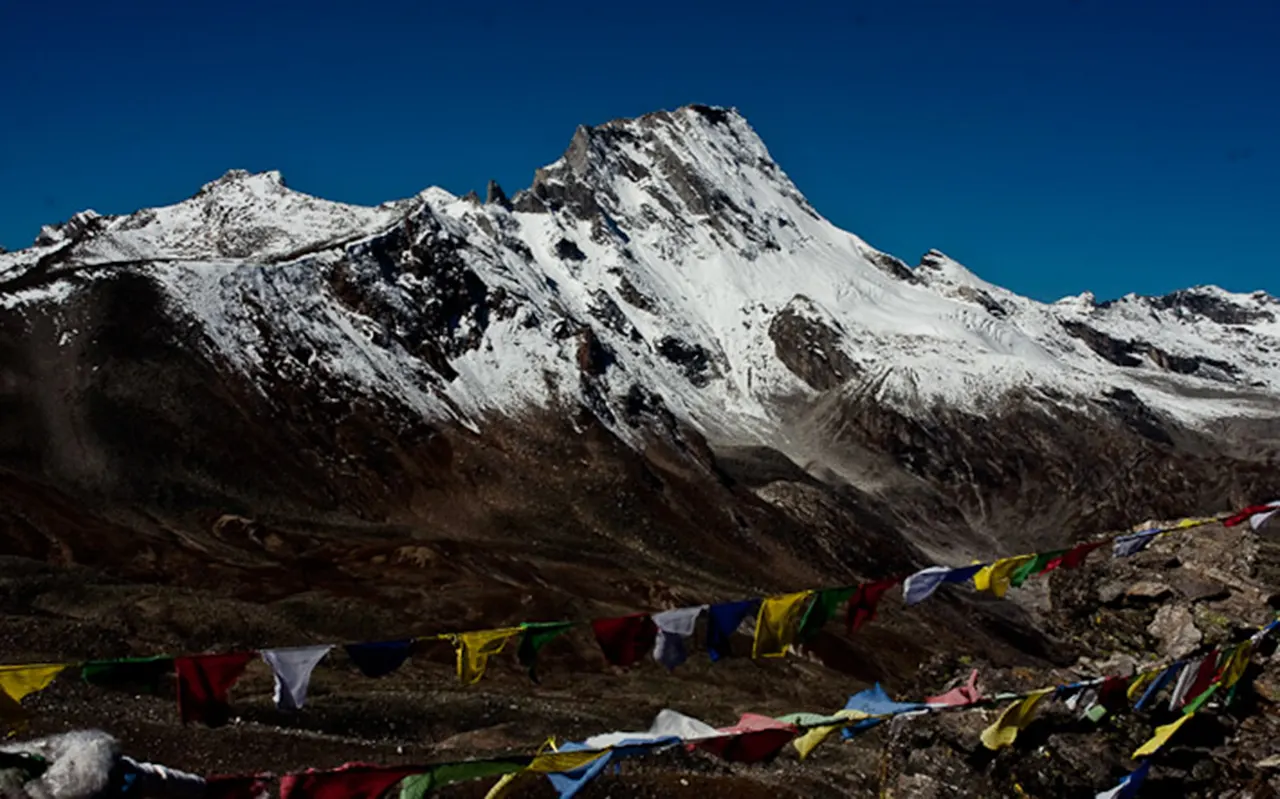
Small experiences often become the most memorable moments of the Limi Valley trek. Taking a dip in the hot springs of nature following a tiring day of walking or watching the prayer flags sway in the mountain wind can be memorable.

With experienced planning and guidance, Above The Himalaya organizes the Humla Limi Valley trek in a safe and responsible way while respecting the culture and natural environment of the region.

Major Attractions and Himalayan Views

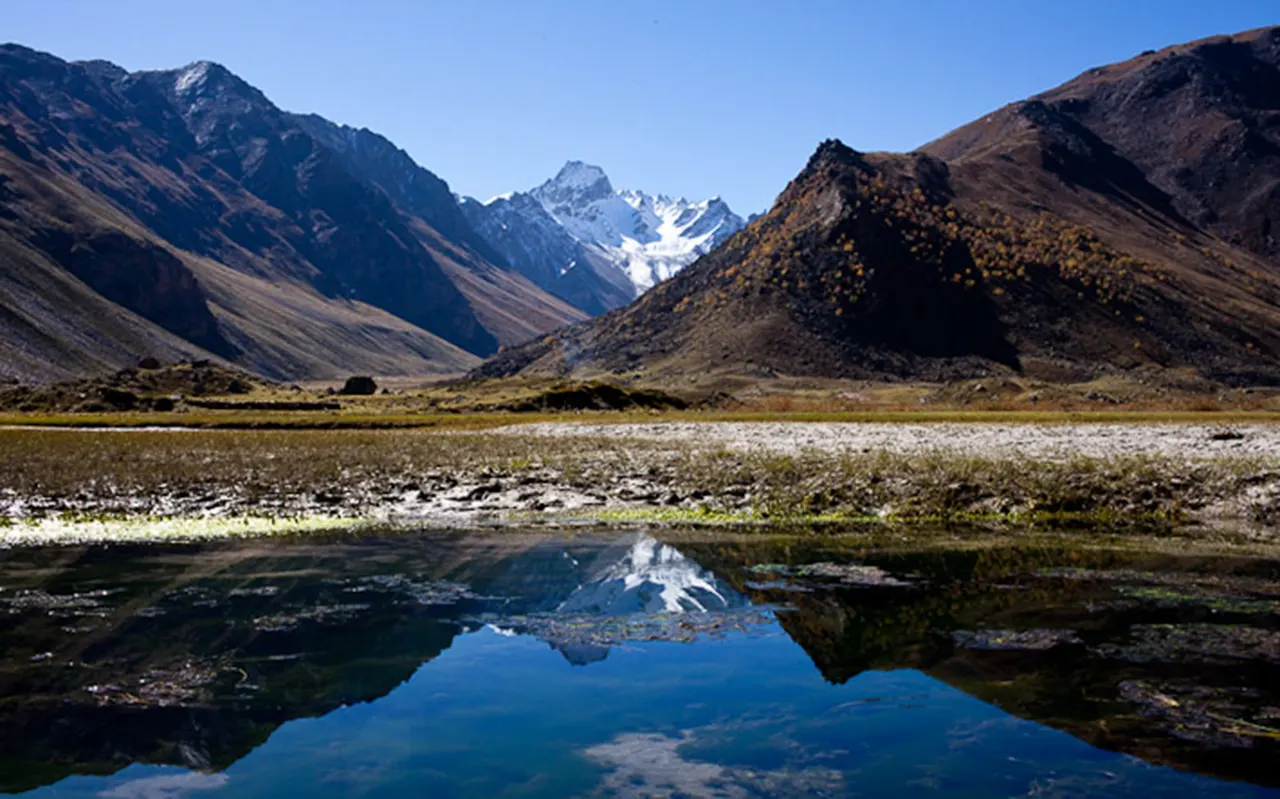
The Humla Limi Valley trek offers a combination of mountain scenery, cultural heritage, and remote wilderness. The route traces parts of the Karnali River system and its branches, with steep cliffs and rocky formations that make the scenery impressive.

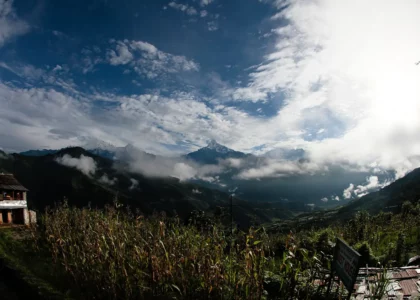
During the Limi Valley trek, clear weather may reveal impressive views of the far western Himalayas. The trail may offer views of Saipal (7,031 m) and other peaks such as Api and Kanjirowa, and other mountains like Api and Kanjirowa at various angles along the trail.

High mountain passes are also important highlights of the trek to Limi Valley. It is a feeling of achievement to pass Nara La at 4,620 meters and to have a vast view of the neighboring valleys. Nyalu La which is about 4,995 meters might also be incorporated in some of routes since the region is high altitude in nature.

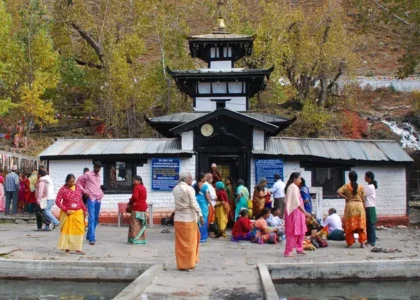
Cultural landmarks add another meaningful dimension to the Humla Limi Valley trek. The trail includes Halji village, where trekkers can visit an ancient monastery and observe spiritual traditions that continue to guide life in Limi Valley Nepal.

Nature is another attraction along the Limi Valley trek. The area has wildlife which include blue sheep, with the region being a territory of the endangered snow leopard. The high Himalayan terrain may also attract trekkers to hardy alpine plants and mountain flowers.

Itinerary of Humla Limi Valley Trek

DAY
01

Day 01: Fly to Nepalgunj and Prepare for the Journey

Our Humla Limi Valley trek begins with a scenic flight from Kathmandu to Nepalgunj in western Nepal. This is a short flight of approximately forty five minutes and the view is beautiful as we leave the hills of Kathmandu and fly towards the warm plains of the Terai region. Upon arriving at Nepalgunj we will shift to our hotel where we will rest after the journey.

During the afternoon we can go around the town on a slow stroll to enjoy the local mood. Nepalgunj is an important gateway for many remote Himalayan treks, including the Limi Valley trek. We will also meet our guide and review final preparations for the trek to Limi Valley before continuing toward the mountains.

Flight 45 min
Accommodation Hotel
Meals Lunch, Dinner
Altitude 200m (Nepalgunj)
DAY
02

Day 02: Fly to Simikot and Trek to Dharapuri

We will do an early morning mountain flight in Nepalgunj to Simikot today. This is a very short journey or flight that provides great reviews of the remote mountains and far Himalayan mountains. Simikot is the district headquarters of Humla and the starting point of the Humla Limi Valley trek.

After arriving in Simikot, we will meet our trekking team and prepare for the first walking day of the Limi Valley trek. The path starts with the slow downward movement of small villages and farmlands. We will pass by suspension bridges and pathways along the Karnali River valley. The hike is not a demanding one and it begins to make our bodies fit with the altitude. Afternoon, we will be at Dharapuri where we will take a rest and spend our first night on the Limi Valley trek.

Flight 30 to 45 minutes
Accommodation Teahouse
Meals Breakfast, Lunch & Dinner
Trek Distance 12 km
Trek Duration 4 hrs
Altitude 2,300m (Dharapuri)
DAY
03

Day 03: Trek to Kermi and Visit the Hot Springs

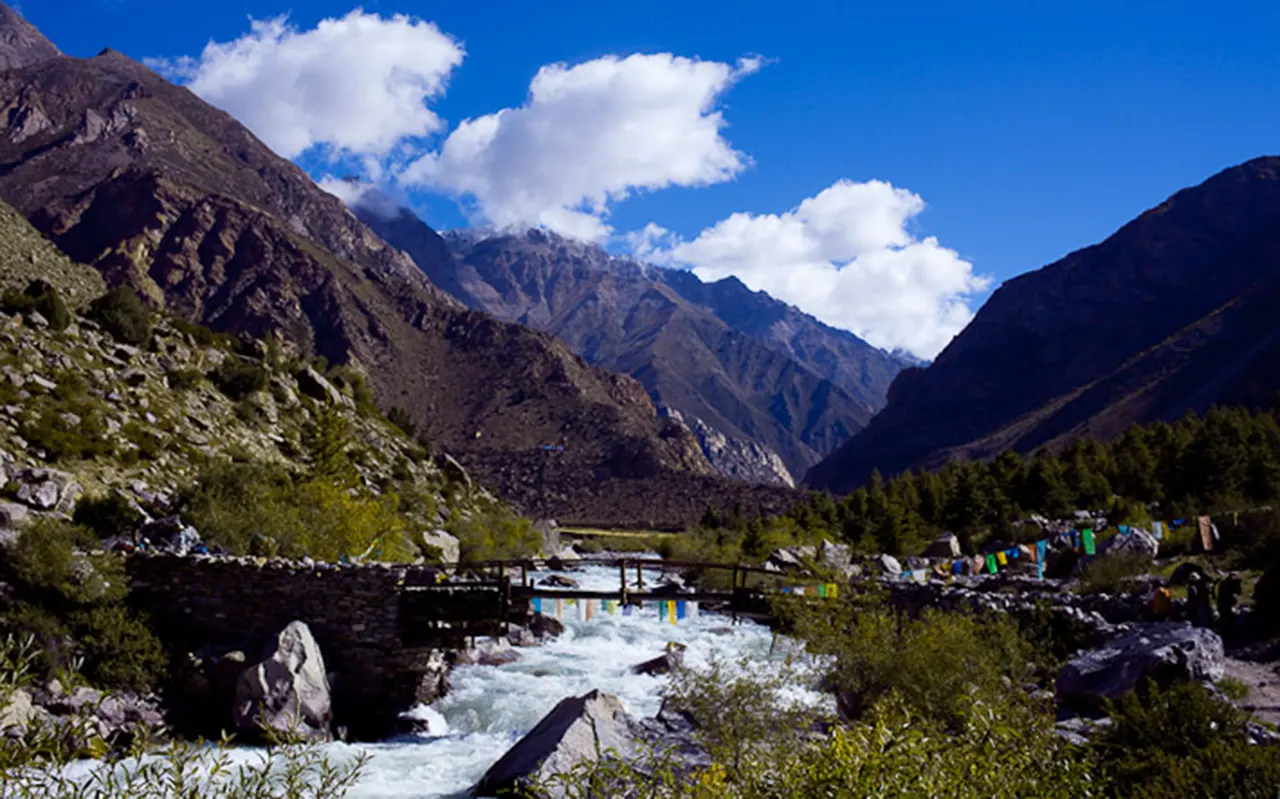
After breakfast we will continue our journey deeper into the mountains on the HumlaLimi Valley trek. The trail is currently along the Karnali River and includes lovely pine forests and the small settlements on the hillsides. We will cross a suspension bridge and then slowly ascend towards the village of Kermi.

Kermi has natural hot springs and serene mountainous location. A lot of trekkers like spending time here after a day walk. The Limi Valley trek also has some good resting stops such as Kermi where the body can comfortably adjust to the altitude. Our crew will prepare a hot dinner and we will camp near the village. The evening offers time to relax and appreciate the quiet environment of this remote region of Limi Valley Nepal.

Accommodation Teahouse
Meals Breakfast, Lunch & Dinner
Trek Distance 14 km
Trek Duration 5 hrs
Altitude 2,870m (Kermi)
DAY
04

Day 04: Trek to Yalbung

Today we will continue the trek to Limi Valley with a steady walk toward Yalbung village. The track slowly ascends through woody trails and bare hills. On our path, we will go through some minor villages where we will see the local people leading traditional mountain life.

The scenery begins to change slowly as we move higher during the HumlaLimi Valley trek. The valley is opened up more and there are glimpses of mountains occasionally on the trail. We will walk slowly and have frequent short pauses to keep our body energized and our bodies to become accustomed to the altitude.

In the afternoon we will arrive at Yalbung village. Here we will set up camp, enjoy a warm meal, and rest for the night before continuing our Limi Valley trek further into the mountains.

Accommodation Teahouse
Meals Breakfast, Lunch & Dinner
Trek Distance 15 km
Trek Duration 5 hrs
Altitude 3,060m (Yalbung)
DAY
05

Day 05: Trek to Tumkot

After breakfast we will begin another peaceful day of the HumlaLimi Valley trek as we walk toward Tumkot.The trail today passes through beautiful valleys and open landscapes that show more of the remote character of Limi Valley Nepal.

The walking route remains steady and comfortable, making it a pleasant day on the Limi Valley trek. Our trails will be mountain tracks, passing through small farms, mountain tracks and still points of view along the valley. This part of the trek journey to Limi Valley will enable us to experience the pace of the trekking gradually building up strength and getting adjusted to the altitude.

At afternoon we will reach Tumkot village and pitch camp and will end up the night.. The calm environment enables us to get ready to the elevated parts of the Humla Limi Valley trek in the future.

Accommodation Teahouse
Meals Breakfast, Lunch & Dinner
Trek Distance 15 km
Trek Duration 5 hrs
Altitude 3,073 m (Tumkot)
DAY
06

Day 06: Trek to Yari

Today we will proceed further with our HumlaLimi Valley trek and head on to the village of Yari. The trail begins to climb slowly on upwards and the landscape begins to appear more rugged and bare. Forests are slowly turned into rocks and had larger views of the valleys. Our walk will be slow, with frequent rests, as we climb upwards, so that our bodies can get used to the altitude.

During this part of the Limi Valley trek, the scenery becomes more dramatic and remote. The air is cooler and you can feel the mountain environment better. We will arrive by afternoon at Yari village, beneath the high pass of Nara La. Here we shall rest, and prepare to pass one of the most important parts of the journey to Limi Valley.

Accommodation Teahouse
Meals Breakfast, Lunch & Dinner
Trek Distance 16 km
Trek Duration 6 hrs
Altitude 3,663m (Yari)
DAY
07

Day 07: Cross Nara La Pass and Trek to Hilsa

Today is one of the most exciting days of the HumlaLimi Valley trek. We will start early in the morning and we ascend to Nara La Pass which lies at a height of about 4,620 meters. The path gradually ascends up through high alpine landscapes and is accompanied by expansive vistas of mountains and valleys around.

Reaching the top of the pass is a rewarding moment during the Limi Valley trek. We will have panoramic views at the pass before setting out to descend to Hilsa. The trail continues through open landscapes that show the remote beauty of Limi Valley Nepal.

Hilsa is a small village bordering Tibet and it is a place with a distinctive border air. After arriving, we will settle into camp and enjoy a well-earned rest after crossing this major point of the trek to Limi Valley.

Accommodation Teahouse
Meals Breakfast, Lunch & Dinner
Trek Distance 18 km
Trek Duration 6 hrs
Altitude 3,700m (Hilsa)
DAY
08

Day 08: Trek to Manepeme

After breakfast we will continue deeper into the mountains as the HumlaLimi Valley trek leads us toward Manepeme. The path winds along broad high valleys wherein there is a sense of tranquility and solitude. We have the benefit of the open landscape, where we can view the mountains and rough landscape in the distance.

During this section of the Limi Valley trek, we will walk at a slow and steady pace because we are now trekking at higher altitude. The serene scenery and the silence of the paths makes the ride very memorable.

In afternoon we shall reach Manepeme, which is near 4,000 meters. We will camp out and spend the evening relaxing and enjoying the serene mood of this remote area of Limi Valley Nepal.

Accommodation Teahouse
Meals Breakfast, Lunch & Dinner
Trek Distance 14 km
Trek Duration 5 hrs
Altitude 3,990m (Manepeme)
DAY
09

Day 09: Trek to Til Village

Today we will enter one of the most interesting cultural areas of the HumlaLimi Valley trek as we walk toward Til village. The trail moves through high valleys and gradually approaches the settlements of Limi Valley Nepal. As we proceed to the village, we might have an insight of the traditional stone houses and prayer flags which are an indication of the Tibetan influenced culture in the area.

Til is one of the main villages along the Limi Valley trek and sits at around 4,000 meters above sea level. The village has a scenic location with clear mountain views.

We will spend quality time in the village of Til when we reach the village and we will experience the traditional way of life of the people in the village when we go on our trek to Limi valley.

Accommodation Teahouse
Meals Breakfast, Lunch & Dinner
Trek Distance 15 km
Trek Duration 6 hrs
Altitude 4,000m (Til)
DAY
10

Day 10: Rest Day and Explore Til Village

Today we will spend a rest day in Til village to support proper acclimatization during the HumlaLimi Valley trek. Rest days are highly significant in the high altitude trekking since they allow the body to adapt slowly.

We will go on brief walks around the village and there in the village and surrounding scenic points in the day. This is also a great opportunity to learn more about the culture and traditions of the people living in Limi Valley Nepal. Our guide will be able to inform us about the history of the village and local life.

The rest day also allows us to check our gear and prepare for the next stages of the Limi Valley trek. By the evening we will feel refreshed and ready to continue the trek to Limi Valley.

Accommodation Teahouse
Meals Breakfast, Lunch & Dinner
Altitude 4,000m (Til)
DAY
11

Day 11: Trek via Halji Monastery to Tatopani

Today we will leave Til and continue our HumlaLimi Valley trek toward Tatopani. Our path starts by a gentle stroll through the valley and a little stream is passed in making our way to Halji village. Halji is an important cultural stop along the Limi Valley trek and is known for its historic monastery and peaceful village setting.

We will take time to visit the monastery and observe the traditional spiritual life of Limi Valley Nepal. We will walk on to Tatopani after visiting the village. The path cuts across scenic scenery and waterfalls, colorful flags and mountainous landscape. Tatopani offers a warmer environment and comfortable stop after a long day on the trek to Limi Valley.

Accommodation Teahouse
Meals Breakfast, Lunch & Dinner
Trek Distance 14 km
Trek Duration 5 hrs
Altitude 3,670m (Tatopani)
DAY
12

Day 12: Trek to Talung

Today the HumlaLimi Valley trek continues along the Limi River valley as we walk toward Talung. The trail cuts through a small ravine on which steep rocky walls rise above the river. This section of the Limi Valley trek offers dramatic scenery and a strong feeling of wilderness.

We will walk at a comfortable pace while enjoying the peaceful surroundings of Limi Valley Nepal. As we head towards Talung, the path starts to ascend gradually and then leads to broader valleys. This is a small settlement in an isolated and idyllic mountainous region.

Once we arrive at Talung we will camp along the river. The evening provides a peaceful moment to relax and reflect on the experience of the trek to Limi Valley.

Accommodation Teahouse
Meals Breakfast, Lunch & Dinner
Trek Distance 14 km
Trek Duration 5 hrs
Altitude 4,370m (Talung/Limi River camp area)
DAY
13

Day 13: Trek to Shinjungma via Nyalu La

Today will be one of the challenging but rewarding days of the Humla Limi Valley trek. We will start early in the morning and proceed toward the high mountain pass of Nyalu La, and it ascends to some 4,995 meters. The ascendancy is tedious yet needs gradual pacing and patience.

Reaching the pass offers impressive views across the surrounding valleys and mountains of Limi Valley Nepal. After enjoying the scenery, we will begin to descend to Shinjungma.

This stage of the Limi Valley trek passes through alpine landscapes and quiet mountain meadows. By afternoon we will reach the Shinjungma area where we will set up camp and rest after completing this important part of the trek to Limi Valley.

Accommodation Teahouse
Meals Breakfast, Lunch & Dinner
Trek Distance 16 km
Trek Duration 6 hrs
Altitude 3,620m (Shinjungma)
DAY
14

Day 14: Trek to Kermi

Today we begin the return section of the HumlaLimi Valley trek as we walk toward Kermi. The path winds slowly down through valleys and mountainous tracks. The atmosphere starts to feel warmer and greener as we descend in altitude.

The Limi Valley trek today feels relaxed as we return to familiar landscapes along the Karnali valley corridor. Higher altitude can be exhilarating and exhausting, so after a few days in higher altitude the lower altitude can be refreshing and relaxing.

We will reach the Kermi village in the afternoon. Many trekkers enjoy relaxing in the natural hot springs again after the long journey through Limi Valley Nepal. The warm water provides a pleasant way to recover after many days on the trek to Limi Valley.

Accommodation Teahouse
Meals Breakfast, Lunch & Dinner
Trek Distance 14 km
Trek Duration 5 hrs
Altitude 2,670m (Kermi)
DAY
15

Day 15: Trek to Dharapuri

After breakfast we will continue the HumlaLimi Valley trek toward Dharapuri. The path goes through woodland tracks, terraced agricultural fields and suspension bridges along the Karnali River.

Walking at lower altitude makes this section of the Limi Valley trek more comfortable and allows us to enjoy the scenery at a relaxed pace. We will cross small villages where people still live in the old mountain lifestyle.

Afternoon we will get to Dharapuri and pitch camp there and rest. This day of the trek to Limi Valley allows us to reflect on the journey while gradually returning toward Simikot.

Accommodation Teahouse
Meals Breakfast, Lunch & Dinner
Trek Distance 14 km
Trek Duration 5 hrs
Altitude 2,300m (Dharapuri)
DAY
16

Day 16: Trek to Simikot

Today is the final trekking day of the HumlaLimi Valley trek. As we continue to appreciate the familiar sceneries along the Karnali valley, we will walk back towards Simikot. The road has suspension bridges, small villages and low level climbs before the town.

Arriving in Simikot marks the completion of the Limi Valley trek. The town has good facilities and an opportunity to have a rest after spending some days in the isolated mountainous areas.

We will check into a teahouse and celebrate the successful completion of our trek to Limi Valley. The night is a chance to reward our trekking group, and to rest.

Accommodation Teahouse
Meals Breakfast, Lunch & Dinner
Trek Distance 16 km
Trek Duration 6 hrs
Altitude 2,950m (Simikot)
DAY
17

Day 17: Flight to Kathmandu through Nepalgunj

Today we will leave the mountains and conclude the HumlaLimi Valley trek. An early flight will be made between Simikot and Nepalgunj. During the flight we can enjoy a final view of the remote Himalayan landscapes of Limi Valley Nepal.

Once we get to Nepalgunj we will board another flight to Kathmandu. The return flight brings us back to the busy capital after many peaceful days on the Limi Valley trek.

After arriving Kathmandu, we will transfer you to the hotel and the trek to Limi Valley officially comes to an end. This wonderful adventure gives us memorable memories of distant mountains, vibrant culture and silent Himalayan valleys.

Flight 30 min flight + 45 min flight
Meals Breakfast, Lunch
Altitude 1,295m (Kathmandu)

Trip Extension

Suppose you have more time in Nepal after this trip. In that case, we can help you to extend your trip by running different treks in Nepal, tours in Bhutan and Tibet, Jungle safari tours at Chitwan, Bardia, and other National parks, Nepal luxury hotel booking, Rafting, Ultra-light flights, or any other travel-related services. You can get more information here.

Includes/Excludes

What's Included?
  • Transfers from Kathmandu Airport to hotel and back by tourist vehicle.
  • Twin sharing accommodation in Kathmandu and Nepalgunj with breakfast included.
  • Domestic flights from Kathmandu to Nepalgunj and Nepalgunj to Simikot including return flights.
  • Certified trekking guide licensed by the Government with training in high altitude sickness and first aid.
  • Local trekking porters to assist with your luggage during the trek.
  • Trekking staff salaries, food, accommodation, equipment, insurance, and clothing.
  • Round trip flights Kathmandu to Nepalgunj and Nepalgunj to Simikot.
  • Accommodation in tented camping during the trek with necessary camping equipment.
  • All meals during the trek (breakfast, lunch, and dinner) prepared by the camping cook team.
  • Restricted area permit for HumlaLimi Valley and other required local permits.
  • Guide carries essential medical supplies and first aid kits.
  • Above the Himalaya duffel bag (request in advance).
  • Detailed trek itinerary, trip information, and preparation guidance.
  • Above the Himalaya gifts and trekking certificate upon completion of the trek.
  • One farewell dinner in Kathmandu at a Nepali restaurant.
  • Government taxes and service charges.
What's Excluded?
  • Meals in Kathmandu and Nepalgunj except for hotel breakfast.
  • Airfare to Nepal.
  • Nepal entry visa fee (obtainable on arrival at Tribhuvan International Airport).
  • Alcoholic drinks, soft drinks, bottled water, hot water, and showers where available.
  • Personal expenses including laundry, telephone calls, snacks, beverages, camera battery charging, and other miscellaneous costs.
  • Travel insurance covering rescue and medical assistance.
  • Personal trekking equipment (can be bought or rented in Kathmandu).
  • Tips or gratuities for trekking staff, guide, and driver.
  • Any other expenses not mentioned in the “Included” section.

Trek Challenge and Difficulty of Humla Limi Valley Trek

The Humla Limi Valley trek is considered more demanding than many standard trekking routes in Nepal. The trip is made in an isolated area where roads are rough and amenities scarce. Trekkers typically cover many hours a day over diverse terrain and that comprises river valleys, mountain trails, and mountain passes. This adventure is physically challenging due to the long walking days and fluctuation in altitude.

During the Limi Valley trek, travelers spend many nights above 3,000 meters and sometimes close to 4,000 meters. High passes like Nara La and Nyalu La are also found in the route and they must be paced well and acclimatized. With steady preparation and patience, most trekkers can complete the trek to Limi Valley successfully. The challenge is typically exciting and memorable to those who appreciate multi day hiking and the serene mountain settings.

Weather and Ideal Trekking Seasons

Choosing the right season is important for enjoying the Humla Limi Valley trek. Autumn and spring normally offer the best weather when trekking. The seasons tend to be sunny with favorable temperatures during the day and mountain conditions remaining stable. Many travelers prefer to plan the Limi Valley trek between March and May or between September and November.

In spring, rhododendron forests start to bloom and add color to the lower parts of the trail. Autumn generally gives good visibility and expansive scenery of the Himalayan mountain ranges around it. The trek to Limi Valley can sometimes be done during the monsoon season because parts of the region lie in a rain shadow area, although weather can still change quickly. Winter trekking is generally not recommended because heavy snow and very cold temperatures can make travel difficult in Limi Valley Nepal.

Food and Drinks During the Humla Limi Valley Trek

Food during the Humla Limi Valley trek is simple, nourishing, and designed to support trekkers through long walking days. Due to the remoteness of most parts of the path, the trek usually depends on camping services and a cook team. The crew tends to prepare fresh meals on a daily basis.

During the Limi Valley trek, trekkers commonly enjoy traditional meals such as dal bhat, vegetable curries, soups, noodles, eggs, and bread. The mornings also offer porridge and warm drinks that are served to provide children with energy in the day. Along the trail, tea, ginger tea and coffee is readily available.

Staying hydrated is very important during the trek to Limi Valley. Trekkers are encouraged to drink as much water as possible and use purification filters or purifying pills whenever they are necessary. Warm meals and hot drinks also help maintain energy and comfort in the cool mountain climate of Limi Valley Nepal.

Tea Houses and Accommodation on the Trail.

Accommodation on the Humla Limi Valley trek varies depending on the location along the route. Trekkers tend to spend the night in basic hotels or teahouses in such towns as Nepalgunj and Simikot, both before and after the trekking part of the trip. Some villages along the Limi Valley trek also offer basic teahouses.

However, much of the trek to Limi Valley relies on tented camping because the region remains very remote. Trekking groups usually carry tents, kitchen tents and cooking equipment, and cooking gear to make the camping in the path comfortable. This style of travel allows trekkers to stay closer to nature while exploring Limi Valley Nepal.

Although the facilities are basic, camping offers a serene and natural trekking adventure. The trekkers are also able to relax in the serene mountain atmosphere with the help of guides and other staff.

Altitude Sickness Prevention and Awareness

Altitude is an important factor during the Humla Limi Valley trek because much of the route takes place above 3,000 meters. Other mountain climbers might also have slight cases of altitude sickness because the body is getting used to the elevated levels. The typical symptoms in the early stages are headaches, tiredness, and dizziness, as well as sleeping issues.

During the Limi Valley trek, the best way to prevent altitude problems is to ascend gradually and walk at a comfortable pace. It is very important to drink enough water, rest and take the advice of the guide. Rest days, such as the one in Til village, help the body adapt during the trek to Limi Valley.

When the symptoms get more intense, the best solution is to go to a lower altitude. Guides on the Humla Limi Valley trek carefully monitor trekkers and encourage open communication to ensure everyone stays safe throughout the journey.

Trek Preparation and Physical Training

Good preparation helps travelers enjoy the Humla Limi Valley trek with confidence and comfort. The trek takes multiple days of walking in isolated mountainous areas, and in that regard, training stamina prior to the trek can be highly beneficial. The trekking days involve walking up to five to six hours with or without high altitude.

It is recommended to begin training about two to three months before starting the Limi Valley trek. Frequent walking, hiking or light jogging will help in building stamina. Hill walking or even stair climbing can also be added to condition the legs in the mountain trails. Leg and core strength can help make long trekking days easier.

It is also helpful to train with a small backpack. During the trek to Limi Valley, comfortable boots and well tested gear can prevent common issues such as blisters. With steady preparation, trekkers can fully enjoy the landscapes and culture of Limi Valley Nepal.

Nepal Visa Requirements and Limi Valley Trek Permits

Travelers visiting Nepal for the Humla Limi Valley trek usually need a tourist visa. A tourist visa is available on arrival for many nationalities at Tribhuvan International Airport in Kathmandu. It is a highly straightforward procedure and the travelers have the option of visa periods like fifteen, thirty or ninety days based on their travelling plans.

The Limi Valley trek also requires special permits because the region lies in a restricted area near the Tibetan border. Such permits will be organized by Above The Himalaya, so you do not need to worry about any permit issues. Independent trekking is not permitted in this restricted area where the trekkers are usually accompanied by a guide and a team.

Permit rules help protect the environment and cultural heritage of Limi Valley Nepal. When planning the trek to Limi Valley, trekking agencies usually manage all permit arrangements so travelers can focus on preparing for the journey.

Transportation In the Trek

Transportation plays an important role in reaching the remote starting point of the Humla Limi Valley trek. This trek typically starts with Kathmandu to Nepalgunj, in western Nepal by flight. From Nepalgunj, a smaller mountain aircraft flies to Simikot, which serves as the gateway for the Limi Valley trek.

On arrival at Simikot, the trekking adventure begins on foot. The trail moves through valleys, villages, and mountain passes across the remote landscapes of Limi Valley Nepal.The same route of flight is usually followed at the end of the trek to get back to Kathmandu via Nepalgunj and then back to Simikot.

Weather conditions can sometimes affect mountain flights, so flexibility is important when planning the trek to Limi Valley. Professional trekking guides keep track of the flight dates to provide an uninterrupted travel experience.

Travel Insurance

Travel insurance is strongly recommended for anyone planning the Humla Limi Valley trek. It is a remote area and there are few medical care centers thus good coverage will be a great security on the trip. High altitude trekking and emergency evacuation should be covered under the insurance policies.

Because the Limi Valley trek reaches elevations above 4,000 meters, it is important that insurance specifically covers trekking at high altitude. There are also some policies that provide helicopter evacuation in the case of injury or extreme altitude sickness.

Travel insurance can also provide protection for unexpected situations such as trip delays, flight cancellations, or medical treatment during the trek to Limi Valley. Having the correct coverage allows trekkers to travel with peace of mind while exploring the remote landscapes of Limi Valley Nepal.

Mobile Network, Internet and Charging

Communication during the Humla Limi Valley trek is limited because the region is very remote. Mobile network coverage is available in some towns such as Nepalgunj and Simikot, but once the Limi Valley trek begins, signal strength becomes weak or unavailable in many areas. Most of the trail villages also have limited access to the internet.

For this reason, trekkers should inform family or friends that communication may not be possible for several days during the trek to Limi Valley. Many travelers treat the journey as a chance to disconnect from daily routines and enjoy the peaceful environment of Limi Valley Nepal.

It is also possible to restrict charging of electronic devices. Charging facilities can be offered in teahouses in larger settlements, yet camps commonly use solar power or personal power banks. It may be beneficial to carry some spare batteries or a power bank so that they could have the necessary devices ready on the trek.

Cultural Festivals Along the Trail

The communities living along the Humla Limi Valley trek follow traditions strongly influenced by Tibetan Buddhism. The life in these villages is based on cultural life around the monasteries, the prayer life and the seasonal celebrations. Depending on the local religious calendar, festivals might differ in villages.

Trekkers visiting Limi Valley Nepal during spring or autumn sometimes have the opportunity to observe local ceremonies or religious gatherings. Such occasions tend to consist of prayers, music and local traditions representing the spiritual life of the area.

While enjoying the Limi Valley trek, it is important to observe these cultural moments respectfully. When visiting monasteries or holy sites the visitor must seek permission to take photographs and obey the guidance of the guides. Experiencing local festivals during the trek to Limi Valley can offer a deeper understanding of the traditions and values of the local communities.

Local Culture and Traditions

The Humla Limi Valley trek offers a rare chance to experience traditional Himalayan culture. This area has villages with great Tibetan influenced traditions that have hardly changed over the generations. Stone houses, prayer flags, and ancient monasteries are common sights along the Limi Valley trek.

People living in Limi Valley Nepal often depend on farming, animal herding, and seasonal trade to support their livelihoods. Everyday life is slower and is shaped by the rhythm of nature and mountain weather.

During the trek to Limi Valley, visitors may have opportunities to interact with local families, observe traditional homes, and learn about community customs. The respectful behavior is highly valued even in villages. Asking permission before entering homes or taking photos helps maintain positive relationships with local communities throughout the Humla Limi Valley trek.

Mental Preparation and Trek Mindset

A positive mindset is an important part of enjoying the Humla Limi Valley trek. Being organized in a remote location, the trip will require the tourists to face the absence of facilities, weather shifts, and transportation delays. Being psychologically prepared of such conditions makes the experience more enjoyable.

The Limi Valley trek rewards patience and a steady approach. Slow trekking with plenty of water and sleep daily can help trekkers cope with physical challenges of the journey. Living in harmony with the plain life of the mountains is also a way of making travelers enjoy the beauty of the area.

During the trek to Limi Valley, flexibility and teamwork play an important role. When trekkers maintain a calm and open mindset, they often find the journey through Limi Valley Nepal deeply rewarding and memorable.

Wildlife and Flora

The remote landscapes of the Humla Limi Valley trek support a unique Himalayan ecosystem. Since the region is not as busy as other trekking sites, wildlife habitats are not so disturbed. Trekkers sometimes observe animals such as blue sheep, musk deer, and other mountain species along the Limi Valley trek.

The high mountains of Limi Valley Nepal are also known as a habitat for the rare snow leopard, although sightings are extremely uncommon. Along with wildlife also, the area sustains numerous alpine flora which thrive in the rugged mountains.

Lower sections of the trek to Limi Valley may include forests with rhododendron trees and other mountain vegetation. The elevation is higher with tougher alpine flowers that blossom in the warmer seasons. Observing these natural elements adds another special dimension to the Humla Limi Valley trek experience.

Most Asked Questions by Travellers

General General

Remote borderland culture, quiet trails, camping support, rare high passes make for a truly exploratory journey into the Himalayas.

Trekkers who seek out remoteness and depth of culture and structure of logistics of a controlled area itinerary in far west Nepal.

Standard itinerary 17 days including flights to Nepalgunj, Simikot logistics, trekking days, and return.

No. Permit controls and remoteness ensure that the number of visitors remains very low as compared to the corridors of Everest or Annapurna.

Yes. Above The Himalaya can flex pacing, buffer days, or customize services while following the rules of the permits.

Experience helps but good fitness, discipline and good guidance can support the first-time high altitude trekkers on this route.

It is a combination of basic teahouses in important locations and tented camping in remote sections where teahouses are still limited.

Halji area is unique for its monastery visit and deep sense of Tibetan-influenced feeling in high Humla.

Preparation & Fitness Preparation & Fitness

8-12 weeks in advance of your trek, hiking, cardio, and leg strengthening exercises, as well as practice walks with your trekking daypack.

Try to get two midweek workouts and one long weekend hike, working your way up to 5-6 hours on mixed terrain.

You don’t need it but it can help. Slow ascent strategy and endurance training are more significant and continuous.

Train consistent pacing, uphill respiration pattern and daily-after-day hiking – these competencies matter more than speed in distant areas.

Break in boots, try socks, use blister prevention tape early and dry feet with spare socks.

Build both. Strong legs help protect knees on descents, and steady cardio helps with altitude pacing and recovery.

Expect delays and discomfort, be focused on routine, and patience is your primary skill during remote trekking.

You can, if you train well, trek steadily, and follow the discipline of acclimatization with the support of your guide.

Permits Permits

Yes. The area is classified as controlled/restricted and you require the right government issued permits through an agency.

Solo permits are usually limited with controlled-area rules. Book an agency and make a minimum booking of two trekkers where necessary.

Authorized agencies apply to the Department of Immigration processes controlled areas, after making the necessary documentation.

There is a weekly fee as well as a daily fee charged in addition to the first week in Simikot/Yari/Limi/Muchu controlled corridor.

TIMS is still listed as required on many trekking systems and eCard charges and online issuance details are listed on NTB.

Yes. The paperwork and timing are managed so that you can concentrate on trekking, fitness, and safety preparation.

Yes. Controlled-area permits are route based and rule based, and you are advised to adhere to the itinerary and guide direction.

Confirm early. Controlled-area processing requires documentation and time, and flight logistics introduce a layer of planning.

Insurance and Visa Insurance and Visa

Yes. Select high altitude trekking and emergency evacuation coverage because of remoteness and inaccessibility to local medical services.

Yes. The possibility of remote districts and altitude diseases, as well as the need to cover evacuation due to safe and responsible travel, makes coverage the planning necessity.

The majority of travelers apply to a tourist visa through pre-registration or visa on arrival, depending on nationality and entry point.

A 30-day tourist visa tends to be a comfortable fit, with buffer days to cover flight delays and time to rest in Kathmandu.

Yes, extensions are typically done in immigration offices, yet to prevent the stress of the last day and administrative pressure.

Yes. Valid passports with remaining validity are usually needed in Nepal; ensure you verify your rules on nationality before travelling.

Yes. We provide helpful advice on arrival and documentation but your visa application and payment is your responsibility.

Yes. Have digital copies and printed copies stored in waterproof storage because it is still not possible to rely on internet connection in Humla.

Guides & Support Staff Guides & Support Staff

The agency support of controlled-area rules is frequently mandatory, and remote navigation tends to prefer professional guiding due to the safety and logistical reasons.

A guide, cook, assistants, and porters are common on a team, since the logistics of camping demand coordinated daily systems.

There are lots of packages that will provide a porter to two trekkers, with a weight of each person being limited to a certain amount, therefore, pack light and clever.

Yes. Guides are also able to mediate language and cultural etiquette, guiding you to communicate in a respectful manner on village visits and monastery stops.

Yes. Custom guiding provides a slower approach and individual focus, which aids in removed routes with elevation and flight unpredictability.

Yes. Tips are excluded in many inclusions and ethical tipping acknowledges the efforts of guides and support personnel.

Yes. Guides ensure symptoms are monitored, particularly when managing altitude illness risk, and professional teams carry first-aid kits.

Yes normally with prior notice. Remote logistics restrict choices; therefore, be clear at the outset to plan meals realistically.

Accommodation and Facilities Accommodation and Facilities

Expect mixed accommodation. Teahouses are used in Nepalgunj and Simikot, but in the more distant parts of the Limi valley trek, tented camping becomes extremely important.

No. Hot showers are uncommon in remote sections of the Limi Valley trek.

Camping teams provide toilet systems, but the conditions are basic. Carry personal hygiene products and observe Leave No Trace practices.

Typically you will have to share a tent unless you hire a separate set-up, at an additional fee, based on logistics and availability.

You normally stay in a teahouse in Simikot and occasionally in teahouses in the major settlements as indicated in the itinerary.

Limited. Small things can be washed by hand, but cold weather slows down the drying process, so bring quick-drying clothes and extra socks.

Not reliably. There are not many shops in remote days, and it is better to carry personal energy snacks and other necessities like Kathmandu or Nepalgunj.

Yes. Most hotels keep luggage securely at the time when you trek, so you only bring that which is essential into Humla.

Food and Drinks Food and Drinks

Standard packages include breakfast, lunch and dinner on the trip, often tea or coffee is part of the camp routines.

Expect dal bhat, soups, eggs, bread, porridge, noodles, vegetables and warm tea which is designed for energy and warmth.

Not consistently. Plan to treat water with purification methods, and bring reusable water bottles or a hydration bladder.

Avoid alcohol at altitude. It may aggravate dehydration and altitude symptoms, a risk factor in remote environments.

Yes. Higher camps prefer simple hot foods that cook well and aid digestion in the thin air and cold weather.

Yes with notice. Camping cooks can plan vegetarian menus much easier than strict allergy free menus in remote logistics.

Yes. Snacks keep you stable throughout the day on long days, and there are few places to purchase food on the last few days after you cross Simikot.

Expect tea, ginger tea and coffee options depending on the tea supply plan of the team and the conditions at each campsite on a daily basis.

Weather & Seasons Weather & Seasons

Spring and Autumn are good trekking conditions and the itinerary includes September through November and March through May as the best months.

Experienced trekkers sometimes do, since parts fall in rain shadow patterns, but weather still changes fast in mountains.

Avoid winter. Snow can block trails and temperatures can drop very low and the route is unsafe and logistically difficult.

Nights can be freezing above 3500 meters. Pack a warm sleeping bag and layers even in the spring or autumn.

Expect warm sun, sudden wind and cold evenings. Mountain conditions change rapidly so layer frequently and guard your hands.

Yes. Mountain flights may be delayed because of visibility and wind, so allow buffer time and be flexible.

Bring a waterproof shell, pack cover, gaiters and dry bags. Even dry areas can experience storms at altitude.

Often yes, but it depends on the condition. Autumn will generally bring clear skies, and spring brings color and nice daytime temperatures.

Health & Safety Health & Safety

Altitude illness. It can affect anyone, follow acclimatization plans and report symptoms early to your guide.

Worsening headache and confusion, poor co-ordination, breathlessness at rest, or severe weakness, necessitating instant action and often descent.

Take it easy, rest when symptoms show, drink plenty of fluids, and view the itinerary as a pace, not a race.

Ask your doctor. Medical guidelines are discussed about acetazolamide for prevention, but personal health factors determine safe use.

Use trekking poles, don’t rush, make sure you keep space on bridges, follow guide instructions during wind or slippery conditions.

Yes, but it is weather and aircraft dependent. Insurance and early reporting of symptoms makes evacuations more effective.

Bring your personal medications, while the guide carries a group first-aid kit.

Keep a safe distance from wildlife, proper food storage, and never feed animals. Respect the ecosystem that supports rare Himalayan species.

Packing & Gear Packing & Gear

A cold-rated sleeping bag that can freeze at night above 3,500 meters is necessary, particularly in the spring and autumn trekking periods.

Trekking poles are highly recommended. They assist in taking the pressure off the knee when stepping downwards and keep one steady on rough footing when walking long distances.

Yes, a down jacket is essential. Even the daytime temperature might be pleasant, but evenings and mountain passes may be windy and quite cold.

Well worn trekking shoes with good support in the ankle should be used. You can even bring light camp shoes to wear during the evenings to make your stay more comfortable.

Yes, it is advisable to carry a water filter or purification pills, because often it is not found along the trail on the more distant parts.

Kathmandu is home to numerous trekking stores where one can rent out sleeping bags and jackets among others. Personal boots and base layers should, however, be personal in the ideal sense.

Yes, from Kathmandu, it is better to bring sufficient cash, as there are no ATM machines in isolated areas during trekking.

It is always a good idea to keep spare batteries and a power bank since there are few places to charge them. Preservation of equipment against cold and dust is also a good idea.

Booking & Payment Booking & Payment

It is advisable to do early bookings. Domestic flights, restricted permits and limited seasonal availability are factors that make advance planning useful.

Yes, it is possible to organize a private trip according to your desirable dates, speed, and trekking team in accordance with all regulations of the restricted areas.

Yes, there are operators who offer lower prices in case of an increase in group size. You can call Above The Himalaya to inquire about the existing offers.

Lots of trekking companies welcome bank payments and cards. Transaction fees and exchange rate are better to be checked in advance.

Yes, majority of booking entails deposit beforehand to get permits, flights, and staffing in remote trekking areas.

There are limits in the booking policy in many cases where changes can be made. This is because schedules can be influenced by weather and flights; hence a certain degree of flexibility can be useful.

Typically, you will be required to submit a copy of a passport, visa information, photographs, and itinerary information to get permits processed by the agency.

There are firms that run their own groups and there are those that pool trekkers based on departure times. This is better confirmed with Above The Himalaya.

Transportation & Flight Transportation & Flight

The trip usually starts with a Kathmandu Nepalgunj flight, then another flight to Simikot, upon which the trek begins.

The duration of flight is typically forty five minutes, and time can be different based on the activity of the airlines and weather.

The average time spent in this mountain flight is forty five minutes, although this flight may take less or more depending on the weather and the type of aircraft.

In case of cancelled flights because of weather or other reasons, the travelers may wait to get the next flight or look to charter flights in case.

Yes, the itinerary usually starts with a walk, that is, arriving at Simikot and moving to Dharapuri after arrival and simple preparation.

Yes, it is advisable to add the additional buffer time since the mountain flights can be delayed occasionally due to the weather conditions.

Yes, the last day usually involves the flights between Simikot and Nepalgunj and the flights further to Kathmandu.

Yes, conveniently most standard trekking packages have airport pick-up, and Kathmandu hotel transfer services.

Reviews on Humla Limi Valley Trek

Be first to post a review in this trip.

Best Price Guaranteed, Easy to change Date, Instant Confirmation

Book This Trip
Book with Confidence
  • Flexible bookings and easy trip date changes
  • Personalized service and customized group sizes
  • Safe travels with owner-operated services and highly experienced guides
  • Best price guarantee for the most value for your money
  • Secure & easy online booking
Your Trek Leader

Trek Leader Enjoy Himalayan scenery with the help of Nepal’s best guides with Government license holders and got training in first-aid, our Trip Leaders, know where you’ll find the best photos, most fascinating wildlife, and the best stream crossings.

Trips for All

Divider
Private Trip
Peaceful tour with your travel buddy and guide
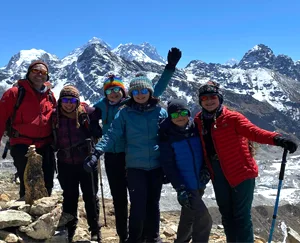
Small Group Travel
Travel with people having similar adventure dreams
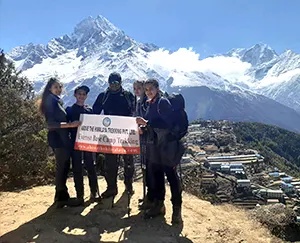
Trips for Kids
Calling all young adventurers - join us for a journey of a lifetime!
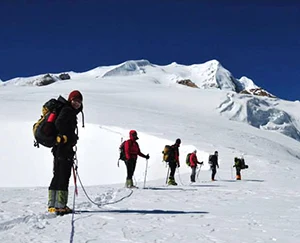
Trips for Adventurers
Climbing & mountaineering adventures for thrill-seekers
Live Chat Support
Purushotam Timalsena
Purushotam Timalsena Travel Expert
We'll plan the perfect personalized vacation for you.
Request for Assistance ⮞