Customize Your Trip
 Annapurna Base Camp Trek Solo: Complete Guide for First-Time Trekkers
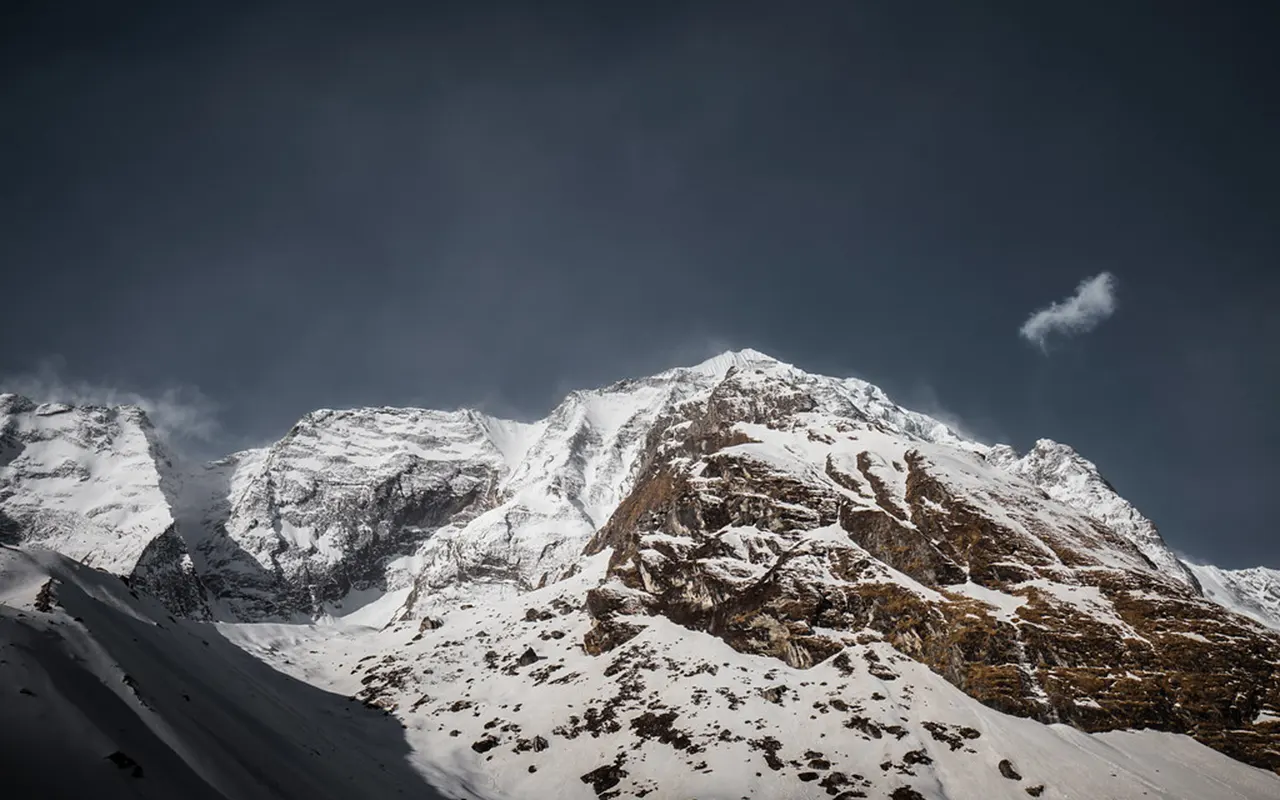
The Annapurna Base Camp Trek solo experience is one of the most popular trekking adventures in Nepal. The trek is based at Annapurna Sanctuary and takes the trekkers through stunning villages, forests, and mountain sceneries until they arrive at Annapurna Base Camp, which is 4,130 meters (13,550 ft) above sea level. This site lies in a broad glacial basin within the range of the Himalayas highlanders with the highest peak of Annapurna I at 8,091 meters (26,545 ft).
The trek normally starts at Pokhara with a small drive to Nayapul, which is at an altitude of 1,070 meters (3,510 ft), where the trekking path formally starts. This is where the trail slowly ascends with classic Gurung villages like Ghandruk and Chhomrong. Trekking through the terraced farms, bamboo forests, and valleys along the way, the trekkers observe the spectacular view of the mountain.
The reason why many trekkers visit the Annapurna Base Camp Trek solo is that it is regarded as moderate in level as compared to other Himalayan treks. It is a well-developed path that is supported by tea houses, which can be encountered by a first-time trekker who wishes to traverse the Himalayas on their own.
The trek normally lasts between 10 and 14 days, depending on the itinerary and the schedule of acclimatization. The Annapurna Base Camp Trek solo has a magnificent landscape, rich culture, and a rewarding destination, which makes the Annapurna Base Camp trek a memorable trekking experience for both beginners and experienced trekkers.
Best Time to Trek
Anyone planning to do the Annapurna Base Camp Trek solo should consider the right season. The most suitable season to trek is during the spring (March to May) and the autumn (September to November) as these seasons are typically stable, and there is a clear view of the mountains.
The season is popular, particularly in spring when the forests on the trail bloom with rhododendron flowers. In lower regions like Ghandruk at 1,940 meters (6,365 ft) in the daytime, it is very comfortable, with temperatures of between 10 °C and 20 °C. The higher the trekkers ascend towards the Annapurna Base Camp, which is 4,130 meters (13,550 ft) in altitude, the temperature decreases, and it can still be controlled with the right equipment.
The other season that would be great to do the Annapurna Base Camp Trek solo would be in autumn. The air is clear after the monsoon rains are over, and the mountains are beautiful to see, including the Annapurna South and Machhapuchare. The trails are also dry and free to trek.
June to mid-September is not a normal season to visit due to the monsoon that contaminates the trails, making them muddy and slippery. December to February, which is Winter may also be problematic, with temperatures in the Annapurna Base Camp dropping to below -10 °C, with the snow potentially covering parts of the path.
To the majority of trekkers, spring and autumn are the safest and best seasons.
Permits and Regulations
The trekkers have to obtain the required permits needed to trek in the Annapurna region before beginning the Annapurna Base Camp Trek solo. The Annapurna Conservation Area Permit (ACAP) is the most significant permit as it allows visitors to enter the Annapurna Conservation Area and trek in the area.
Foreign trekkers are charged around USD 25, which is NPR 3,000, as the permit fee for the ACAP. This permit may be received either in Kathmandu or in Pokhara prior to the start of the trek. Trekkers should always bring the permit along the way since it is inspected at a number of checkpoints, such as the entrance of the trail at Nayapul at 1,070 meters (3,510 ft), and at villages such as Chhomrong at 2,170 meters (7,119 ft).
Trekkers also required a card previously, which was a TIMS (Trekkers’ Information Management System). But with the recent developments, the TIMS card is not obligatory in most of the treks in the Annapurna region.
The Annapurna Base Camp Trek solo has not been spared by the new trekking regulations. Under the recent government regulations, foreign trekkers are normally expected to employ a licensed guide whenever they are trekking in the conservation areas. This regulation is meant to enhance safety, empower the local communities, and help trekkers during emergencies.
Although in the past people used to do the Annapurna Base Camp Trek solo, it is recommended and sometimes obligatory to hire a guide. In trekking in the Himalayas, guides assist in navigation, local knowledge, and safety.
Route Options and Itinerary
The Annapurna Base Camp trek solo takes place on a well-marked trail across the Annapurna Sanctuary. The majority of treks start with a drive from Pokhara to Nayapul at an altitude of 1,070 meters (3,510 ft), where the trail starts.
Trekking starts at Nayapul, the trekkers pass through small villages and terraced agriculture fields, and enter Ulleri and the picturesque village of Ghandruk at 1,940 meters (6,365 ft), and stay overnight there. It is a common tourist destination because of the beautiful mountain views and the traditional Gurung culture.
The path then proceeds to Chhomrong of 2,170 meters (7,119 ft), a key village, to which a number of trekking paths converge. The road goes down to the river of Modi Khola and up through the woods to Bamboo and Dovan, beginning at Chhomrong.
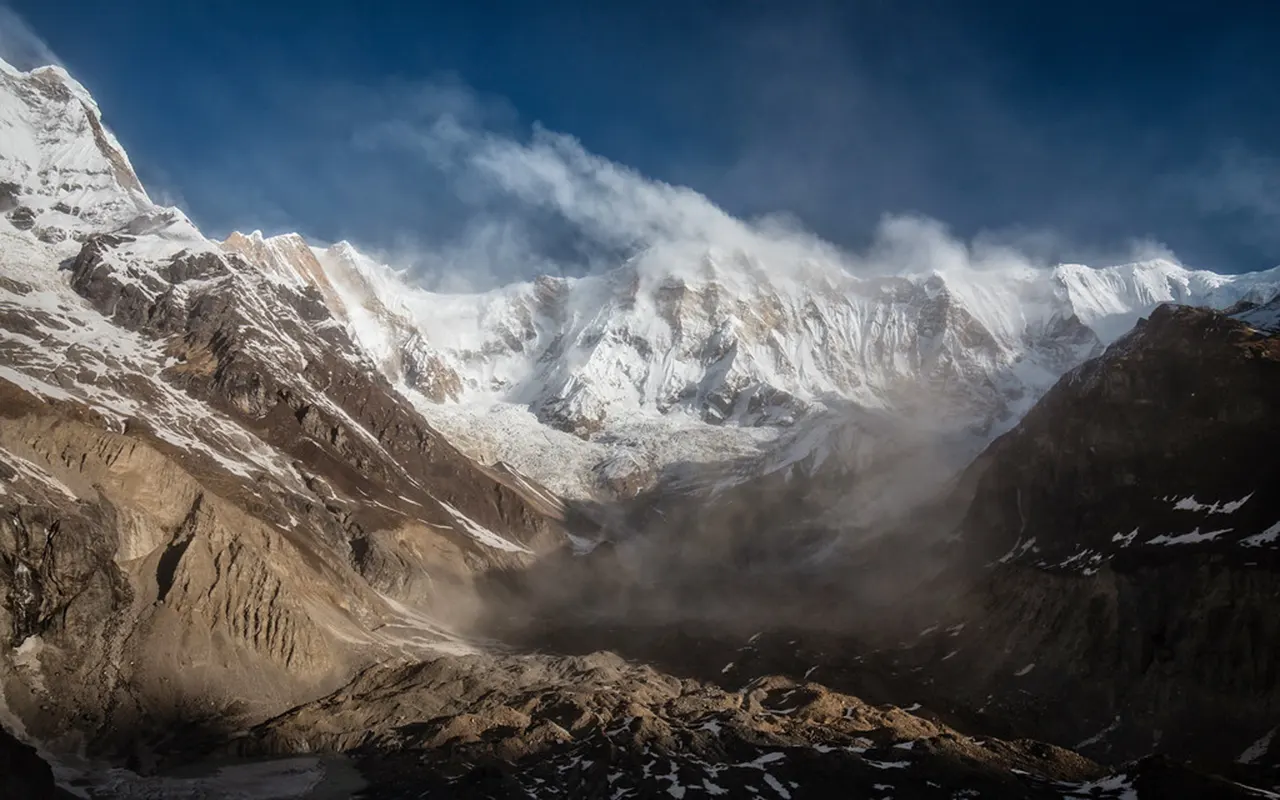
Once the trekkers arrive at Deurali of 3,230 meters (10,597 ft) landscape starts shifting to an alpine one. This path then leads to the Annapurna Sanctuary, where trekkers typically camp at Machhapuchare Base Camp at 3,700 meters (12,139 ft) and then onto Annapurna Base Camp at 4,130 meters (13,550 ft).
The route is usually the same direction back, but there are a few trekkers who leave from Jhinu Danda at 1,700 meters (5,577 ft), where the natural hot springs will give them a good conclusion to the trip. Most itineraries take 10-14 days.
Safety Considerations
Another aspect that should be considered when organizing the Annapurna Base Camp Trek solo is safety. The high altitude and the changing weather conditions make the trek much harder to prepare for; the trek is said to be moderate in comparison with the rest of the Himalayan routes.
Altitude sickness is one of the largest threats. The base camp at Annapurna is 4,130 meters (13,550 ft), where the oxygen level is much lower than at sea level. There are some symptoms that can be experienced by some trekkers: headaches, dizziness, nausea, or fatigue. Preventing the occurrence of altitude sickness is best achieved by climbing at a slow pace and ensuring that time is taken to acclimatize.
The weather is also likely to change rapidly in the mountains. The trail may become slippery due to heavy rainfall during the monsoon season, and landslides can be a problem. During winter, the altitude of Machhapuchare Base Camp of 3,700 meters (12,139 ft) can fall way below the freezing point.
There are also steep steps made of stones and narrow mountain paths in the trekking trail. The stability may be enhanced with the help of trekking poles and powerful hiking boots that will alleviate the pressure on the knees.
The phone reception in some areas of the road is poor, thus emergency services would take time to arrive at the isolated places. It is based on this reason that trekkers planning the Annapurna Base Camp Trek solo have to carry with them basic first-aid kits and travel insurance that covers high altitude evacuation.
Accommodation and Food
Traditional tea houses constitute the major source of accommodation during the Annapurna Base Camp Trek solo. These are small family-run lodges with basic but comfortable rooms that trekkers can use along the trail. Basic mattresses, blankets, and twin beds are common in rooms.
There are tea houses in the majority of the villages along the trekking route, such as Ghandruk at 1940 meters (6365 ft), Chhomrongat 2,170 meters (7119 ft), and Deuraliat 3,230 meters (10597 ft). Accommodation is less luxurious near the base camp of Annapurna at 4130 meters (13550 ft) because of the remote location in the mountains.
The tea house dining room is typically warm and friendly and is usually heated with a wood stove around which trekkers have dinner and chat. Bathrooms tend to be common, and hot showers could be charged.
Eating at the Annapurna Base Camp Trek solo is not very complicated, but healthy. The most common meal is the dal bhat or the Nepalese meal, consisting of rice, soup of lentils, and vegetable curry. It is filling and has free refills. Noodles, soups, fried rice, pancakes, eggs, and momos are the other alternatives.
The trekkers are advised to have snacks like energy bars, nuts, or chocolate as they go on a long trek. Consumption of a lot of water is necessary, and most of the trekkers use boiled water provided by the tea houses.

Budget and Costs
Any person planning to go on the Annapurna Base Camp Trek solo should plan a realistic budget. The total price is based on transportation, guide tour services, lodgings, and personal expenditure.
The average trekker will be spending USD 700 to USD 1,200 on a full trek that takes them about 10-12 days to complete. The Annapurna Conservation Area Permit (ACAP) is one of the primary expenses that are required, and it costs approximately NPR 3,000 (approximately USD 25).
Another expense is transportation. The tourist bus ride from Kathmandu to Pokhara would take about USD 10-15, and a domestic flight could cost USD 100- USD 130. Reaching Nayapul, the starting point of the trek, is at 1,070 meters (3,510 ft) in an hour long drive, starting at Pokhara.
The cost of accommodation in the Annapurna Base Camp Trek solo is not expensive. The price of tea house rooms varies between NPR 300 and NPR 1,000 each night, depending on the altitude. The daily food costs are normally between USD 20 and USD 30.
Other expenses might include the employment of a guide, a hot shower, charging of electrical devices, and snacks along the trail. It is advisable to carry Nepali rupees in small denominations since most villages on the treks don’t have an ATM.
Packing Essentials
To accomplish the Annapurna Base Camp Trek solo safely and comfortably, one needs to have proper gear. Due to the altitudes the trek will go up to, like the Annapurna Base Camp, which is 4,130 meters (13,550 ft), the temperatures may be extremely low, particularly at night.
Wearing multiple layers of clothes will be the best method of keeping warm and comfortable on the trek. Trekkers are to carry base layers with moisture-wicking qualities, middle layers like fleece jackets or down jackets, and waterproof outer jackets. The warm clothing, such as gloves, a hat, and a neck gaiter are also helpful in cooler areas like the Machhapuchare Base Camp of 3,700 meters (12,139 ft).
Trekking boots should be very strong and comfortable in order to be used in the walk over rough trails and over rock steps. Trekking poles would also help to take weight off the knees and enhance stability during steep ascents or descents.
A warmer sleeping bag that is designed to withstand cold weather, a pair of UV protection sunglasses, sunscreen, a refillable water bottle, and other essentials are some of the key products. The essential first-aid kit must have bandages, painkillers, blister pills, and personal medication.
You should also include a headlamp, a power bank, and snacks like energy bars. The weight of the backpack should be maintained at 10-12 kilograms, which will make it easier and more comfortable to trek.

Fitness and Acclimatization
Physical fitness will also enable the Annapurna Base Camp Trek solo to be more enjoyable and less exhausting. Though the trek is regarded as a moderate one, the trekkers normally cover the mountain trails in the span of 5-6 hours a day, with a spot of probable uphill steps and uneven tracks.
It is advisable to prepare for the trek by exercising. Hiking, running, cycling, or climbing stairs may enhance the condition of endurance and leg strength. The use of a backpack during training may also enable the body to get used to carrying things during the long trekking days.
The other significant section of the Annapurna Base Camp Trek solo is the process of acclimatization. The higher a trekker goes in the mountain, the more air becomes thin and oxygen is lesser. These changes are facilitated by proper acclimatization to enable the body to adapt to them.
Trekkers should climb slowly and gradually, especially after reaching heights above 3,000 meters (9,843 ft). Overnight stay in such villages as Chhomrong at 2,170 meters (7,119 ft) or Machhapuchare Base Camp at 3,700 meters (12,139 ft) may assist the body in acclimatization, and then proceed to the Annapurna Base Camp at 4,130 meters (13,550 ft).
Consuming an adequate amount of water, consuming healthy food, and walking at a consistent pace are major measures to avoid altitude sickness during the trek.
Challenges and How to Overcome Them
The Annapurna Base Camp Trek solo is an amazing experience in terms of the sights that it offers, but there are several challenges that one will have to deal with. By knowing the way to deal with these issues, the journey may be more enjoyable and easier.
Altitude is one of the largest obstacles. When trekkers arrive at the base camp of Annapurna, which is 4,130 meters (13,550 ft), the lack of oxygen may make them feel fatigued or even experience altitude sickness. To conquer it, trekkers are advised to walk at a slow pace, remain hydrated, and give time to proper acclimatization.
The weather may also cause problems in the trek. The monsoon season may cause muddy and slippery trails due to rain, whereas the winter season may be accompanied by snow and cold weather. Decent waterproof clothes and warm-up are beneficial to enable the trekkers to stay comfortable in different weather conditions.
The path has steep stone steps, particularly around such villages as Ulleri and Chhomrong at 2,170 meters (7,119 ft). These parts may be physically tiresome, but with the help of trekking poles and slow walking, it is possible to avoid pressure on the legs and knees.
Lastly, it may be difficult to walk alone because of directional or poor communication. By staying at tea houses, mingling with other trekkers, and having a local guide, one can significantly enhance the safety on the Annapurna Base Camp Trek solo.
How to Reach the Starting Point
The trailhead is the first step in the completion of the plan for the Annapurna Base Camp Trek solo. The starting point of most of the trekkers is Kathmandu, the capital of Nepal, and then they proceed to Pokhara, which is the major entrance to the Annapurna area.
The route from Kathmandu to Pokhara can be taken in two major ways. The cheapest way is the tourist bus, which takes approximately 6 to 8 hours and provides a scenic experience on the journey to the rivers, hills, and villages in the rural areas. The other quicker alternative is a domestic flight, and it lasts approximately 25 minutes, and the aerial view of the Himalayan mountains is stunning.
After arriving in Pokhara, the trekkers have to reach the starting point of the trek. The Annapurna Base Camp Trek solo traditionally starts at Nayapul at an altitude of 1,070 meters (3,510 ft). Nayapul is approximately 1- 2 hrs away from Pokhara, which can be accessed via local bus, taxi, or shared jeep.
The trekking path starts at Nayapul and ascends slowly through the villages of Ulleri and Ghandruk to 1,940 meters (6,365 ft). There are trekkers who prefer to begin at Ghandruk instead of the initial few days of the trek.
When leaving Pokhara, one should get permits, carry sufficient money, and see weather conditions. The following information should be ready beforehand so that the Annapurna Base Camp Trek solo will be a smoother and more enjoyable trip.

Conclusion
The Annapurna Base Camp Trek solo is one of the most fulfilling treks in Nepal. The trip has a spectacular blend of nature, culture, and the magnificent mountainous landscapes.
Beginning at the villages around Pokhara and working up slowly through forest, river, and alpine terrain, the trekkers finally arrive at Annapurna Base Camp at 4,130 meters (13,550 ft). It is a truly memorable experience to be standing in the centre of the Annapurna Sanctuary and see such large mountain ranges like Annapurna I at 8,091 meters (26,545 ft).
Even though this trek is deemed to be moderate, preparation is necessary. Knowledge of the most appropriate year to trek, adherence to permit rules, and creation of an effective itinerary are all that make the trip a success. The correct packing, physical fitness, and acclimatization are also important in enabling the trekkers to remain safe and comfortable at the elevated levels.
Regardless of the difficulties, a significant number of first-time trekkers can complete the Annapurna Base Camp Trek solo. The trek will always be open to the people who are willing to have an adventure in the Himalayas with the help of tea houses, clear trails, and friendly local guides.
To any person who may dream of venturing into the mountain of Nepal, the Annapurna Base Camp Trek solo is a journey that can be remembered and inspire one with beautiful scenery and cultural exploration.
Best Price Guaranteed, Easy to change Date, Instant Confirmation
Book This Trip Have Questions?
Talk to Expert
Meet Mr. Purushotam Timalsena (Puru), Nepal's best trek and tour organizer, who has been working in the Himalayas for more than 24 years.
WhatsApp/Viber +977 98510 95 800