Customize Your Trip
 Kailash Mansarovar Yatra Horse Year 2026
Many know and are familiar with the Kailash Mansarovar Yatra. Every year, thousands of devoted pilgrims from Hinduism, Buddhism, Jainism, and Bon make the pilgrimage to the foot of this holy mountain with only one motive in mind: to cleanse themselves of their sins. Kailash Mansarovar Yatra horse year 2026 trip start from May to September.
Despite their different customs, religion, and beliefs, they unite in faith once they are gathered at Kailash and Mansarovar. The upcoming year of 2026 is especially meaningful for these pilgrims, particularly for Tibetans, as it is designated as the Year of the Horse which is believed to add even greater significance to the Kailash Mansarovar Yatra.
A little about Mount Kailash
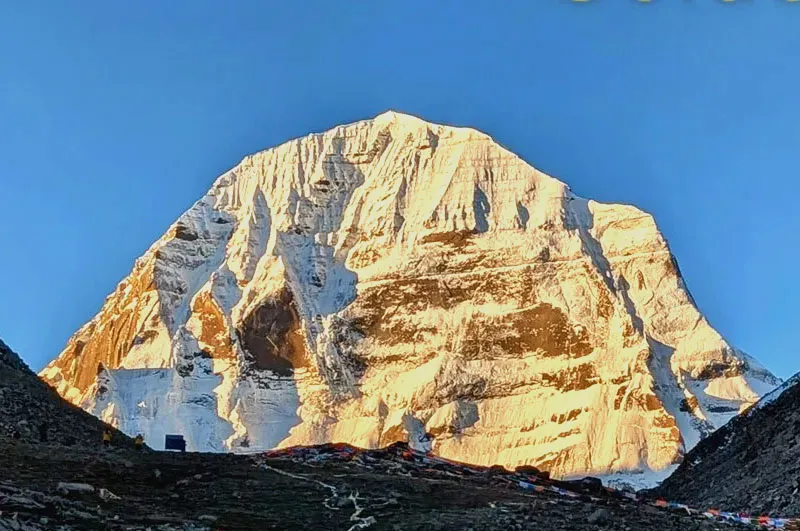
Mount Kailash of Tibet known as the ancestor of a thousand mountains has been the center of attraction for various groups of people: pilgrims, researchers, NASA, tourists, government, sages, and many more.
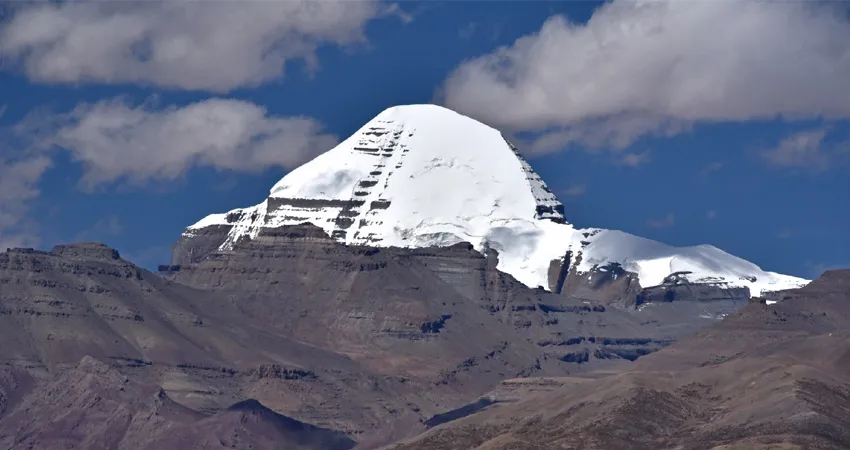
Visitors to Kailash often report experiencing its serene and tranquil aura. The mountain stands like a King in the Ngari county of Tibet, calm, and composed at 6638 m altitude giving people a deep sense of inner strength and awe.
This extraordinary power of the summit is unparalleled to any other snowy summit around the world. When the light of the sun and the moon dance on Kailash, it reflects a unique light.
The clear springs flow from the neck of the mountain creating a melody as enchanting as a fairy music. The green grass and flowers at the base of the mountain are stunning lining the summit as a colorful skirt.
But the peak is not only regarded for its beauty but more for its merits. Various intricate and diverse religions come together at Kailash, each with their own understanding, practices, and rituals. However, once they are at the base of Mount Kailash, their diverse beliefs are united in one basic ritual: the act of walking called the Kora or Parikrama.
Their belief and their perception may be varied but for all, Mount Kailash stands as an eternal holy peak that offers them peace and calmness. Although they have conflicting views, but they coexist in harmony in front of Kailash and Mansarovar sharing the common belief.
No matter what their nationality, culture, religion, or race is, the strong faith of believers can cleanse and enhance their bodies and mind when they visit this unique place where nature and spirit connect deeply. Mount Kailash, a sacred mountain, has always welcomed all living beings with open arms and protected the good humans of all sects.
According to the Hindu faith, Kailash is the residence of Lord Shiva who lives in the coolness of the mountain with a snake wrapped around his neck and a moon on his head.
In Hindu religion, the worship of Lord Shiva holds an important position. Believers travel thousands of miles to Tibet to pay their respects to Mount Kailash, circumambulate the mountain, and recite sacred texts. They sincerely pray for Lord Shiva’s protection and compassion.
For Jains, Mount Kailash is the sacred place where their first Tirthankara, Rishabhadeva (Adinath), founded the religion after he achieved enlightenment after years of hardships.
To this day, they honor Mount Kailash and Mansarovar and view them as the most revered sites. They strongly believe that worshiping the sacred mountain and lake can not only bring them peace and happiness in this life but also help them to gain good karma for liberation in the next life.
The Bons also hold Mount Kailash in high regard and call the peak as the Yungdrung Gutsek or the Nine-Storied Swastika Mountain. They view Mount Kailash as the spiritual center of the goddess Sipaimen and a powerful source of spirituality.
For them, walking around the mountain is a practice to purify karma and bond with nature and spirits.
For Buddhists, Mount Kailash is the residence of Buddha Demchok, a figure of perfect harmony. According to the faith, it is from Mount Kailash that Buddhism became their dominant religion in Tibet replacing Bon.
Based on the legend, Milarepa, a miraculous Buddhist sage in Tantric Buddhism, arrived in Tibet and challenged Naro-Bonchung, the leader of Bon. The two engaged in a fierce magical duel, and Milarepa emerged victorious by reaching the peak of Kailash on rays of sunlight.
Tibetan Calendar and Significance of Kailash Mansarovar Yatra Horse year
The Tibetan calendar is based on the astrological system of the Kalachakra Tantra. It was promoted by Chogyal Phagpa, the fifth Sakya founder, in the second half of the 13th century. Since then, the calendar has been modified numerous times but has retained its lunisolar character.
It features a 12-year zodiac cycle, where each year is linked with a different animal. The cycle begins with the new year called Lhosar which is the Chinese New Year and each animal portrays their own unique set of character and significance.
The Tibetans believe that the zodiac and the animal sign shape each person’s personality traits according to their birth year. It is often used to know the compatibility in relationships, make future life predictions, and guide important decisions related to career or finance.
The 12 animal signs of the Tibetan calendar according to their order are Rat, Ox, Tiger, Rabbit, Dragon, Snake, Horse, Goat, Monkey, Rooster, Dog, and Pig.
The Horse is the seventh zodiac sign that occur every twelve years which last occurred in 2014 and will happen again in next year 2026 beginning on the Chinese New Year on February 17 or 18.
The Horse was integrated into the Tibetan culture in the later years but since its integration, the animal sign holds immense importance in its history.
It is believed that the horse initially played no part in warfare or agriculture but was mostly used as a draft animal. Later, the adjacent kingdoms began to see it as a valuable mount animal.
They then created special attire for the horse rider so they can move freely when riding giving them an incredible advantage on the battlefield. The desire for these horses likely motivated early expeditions, leading to the creation of the famous Silk Road.
Thus, the horse in the Chinese culture arrived from foreign and later included as the fundamental creature in the zodiac. In different provinces of Tibet and China, the Horse Day is celebrated still today when the animals are given a rest from work.
They are even decorated in beautiful multicolored attire and featured in the festivals.
Kailash Manasarovar Yatra horse year Fixed Departures 2026 (For Western Passport Holders Other than Indians)
Note: Our Fixed departure dates includes : Kailash Kora (Sacred circumambulation of Mount Kailash) Manasarovar Lake Kora(Pilgrimage around the holy lake) and Charan Sparsh (Kailash Touch)–A divine experience up close.
| Kathmandu Arrival | Visa Apply | Final Departure | Remarks |
| 03rd May 2026 | 04th May 2026 | 17th May 2026 | Full Moon |
| 17th May 2026 | 18th May 2026 | 01st June 2026 | |
| 31st May 2026 | 01st June 2026 | 15th June 2026 | Full Moon |
| 29th June 2026 | 30th June 2026 | 14th July 2026 | Full Moon |
| 28th July 2026 | 29th July 2026 | 11th August 2026 | Full Moon |
| 26th August 2026 | 27th August 2026 | 10th September 2026 | Full Moon |
| 13th September 2026 | 14th September 2026 | 28th September 2026 | |
| 20th September 2026 | 21st September 2026 | 05th October 2026 | Full Moon |
Significance of Kailash Mansarovar Yatra Horse year 2026
According to Tibetan belief, once every twelve years in the Horse Year, each ritual Kora around Mount Kailash is equal to thirteen Koras. This is the Outer Walk or Kora around Kailash.
The other most significant Kora that takes place in Kailash which is regarded even more sacred than the Outer Walk is the Inner Kora which occurs at the very foot of the southern Kailash.
The trail is limited by severe mountain spurs and not everybody can undertake the journey because of the physical limitations. Based on Tibetan customs, only those who have completely passed the Outer Kora thirteen times are allowed to take the Inner Kora.
Accordingly, in the year 2026, it is possible to combine both the Outer Kora and the Inner Kora together without violating traditions. The reasons why the Kailash Mansarovar Yatra Horse year holds so much significance in the horse year are varied.
Many believe that the sacred Mountain was formed in the year of Horse. And, the Buddha Shakyamuni was also born in the year of Horse. When he was born, the gods who safeguarded the ten directions- the bodhisattvas, the gods, the arhats, the asuras, and the heavenly musicians all gathered around the sacred mountain, so the year of the horse became the birth year of Mount Kailash.
This is also the year when the Bon Buddha Dunba Xinrao came to the snowy platform of Mount Kailash and defeated the monsters and the demons. He established Dharma and also founded the Yungdrung Bon.
For Buddhists, it is also the year when the revered Milarepa defeated the Bon Master Naro Benqiong. All these legends therefore signify the merit of the Horse Year among Tibetans so the year is considered very auspicious and special and Mount Kailash becomes even more sacred and powerful.
Therefore, the merit of circumambulating the Kailash once in the year of the horse is equivalent to the merit accumulated by circumambulating the mountain thirteen times in other years.
This belief thus heightens the religious merit and offers the pilgrims the remarkable unique opportunity to purify themselves and accumulate good Karma so they can be deeply connected to their Gods, achieve the higher Realm, and escape from the severe punishments in Hell.
During this time, the Tibetan devotees walk around Kailash and Mansarovar through a ritual of prostration which symbolizes their connection between Earth and Heaven.
Completing the circular route of Kailash Mansarovar Yatra Horse year this way will take round ten days. They often stand in their designated order, join hands, chant scriptures, and recite the name of the Buddha.
After this, they lay themselves on the ground, extend their limbs, push their hands forward, return to a kneeling position, rise, and walk back to the point where their hands were extended, before repeating the prostration cycle.
If they encounter an area where prostration is not possible, they will estimate the distance, perform prostrations for that distance, and continue once they have passed the obstacle.
How to go on Kailash Mansarovar Yatra Horse year of 2026?
For the Mount Kailash Mansarovar Yatra Horse Year of 2026, the most convenient route will be from Nepal. You will have the option of the overland tour through Kerung or Lhasa, or you may choose a helicopter tour from Simikot.
The advantage of organizing the Kailash Mansarovar Yatra horse year from Nepal is that the travel agency will manage all necessary formalities including visas, Permits, food, accommodation, and transportation which can be quite stressful to handle on your own.
Besides, independent travel within Tibet is not permitted; you must be a participant in a registered tour through an authorized travel agency.
Kailash Mansarovar tour via Lhasa
If you select this option, you will fly straight to Lhasa from Nepal’s capital and get a few days of rest for acclimatization. You will then proceed through Gyantse, Shigatse, and Saga to Lake Manasarovar and Darchen from where your Kailash Kora will commence (both outer and inner).
From Darchen, you will head to Dirapuk Monastery, cross the Dolma La Pass, and reach ZutulPuk. Then walking back to Darchen, you will conclude your Outer Kora, for the Inner Kora up to Charan Sparsh, one more day will have to be added and for the complete Inner circuit, a few more days will be needed.
This Kailash Mansarovar Yatra Horse year route helps you avoid the long and tiring mountain roads of Nepal along with the extra acclimation walks in Lhasa.
Kailash Mansarovar Yatra Horse Year via Kerung
This journey will take you from Kathmandu along the hilly road of Nepal to Rasuwa District where you will cross the border and enter Kerung. From there, you will proceed toward Saga, Lake Mansarovar, and Darchen.
This option is short, cost-effective, and provides an alternative to flying for those who have a fear of air travel.
Kailash Mansarovar Yatra Horse Year by Helicopter
For this option, you will have to engage in more than one flight: the first will take you to Nepalgunj in southern Nepal, and the second will take you to Simikot in the Humla district of Nepal.
From Simikot, a helicopter will then fly towards Hilsa from where you will engage in a short drive to Taklakot and start walking towards Mansarovar and Darchen.
It will cost you a little bit more but the journey will be less arduous and beneficial for those who have constraints of time.
Conclusion
The Kailash Mansarovar Yatra Horse year of 2026 is therefore a remarkable opportunity if you desire a deep transformation of your life. No matter which route you choose, we will plan and coordinate everything for you, so you will have a lasting personal and spiritual journey for years ahead.
Best Price Guaranteed, Easy to change Date, Instant Confirmation
Book This Trip Have Questions?
Talk to Expert
Meet Mr. Purushotam Timalsena (Puru), Nepal's best trek and tour organizer, who has been working in the Himalayas for more than 24 years.
WhatsApp/Viber +977 98510 95 800