Customize Your Trip
 Need Help? Let's Talk
+977 985-1095800Dhampus Sarangkot Trek

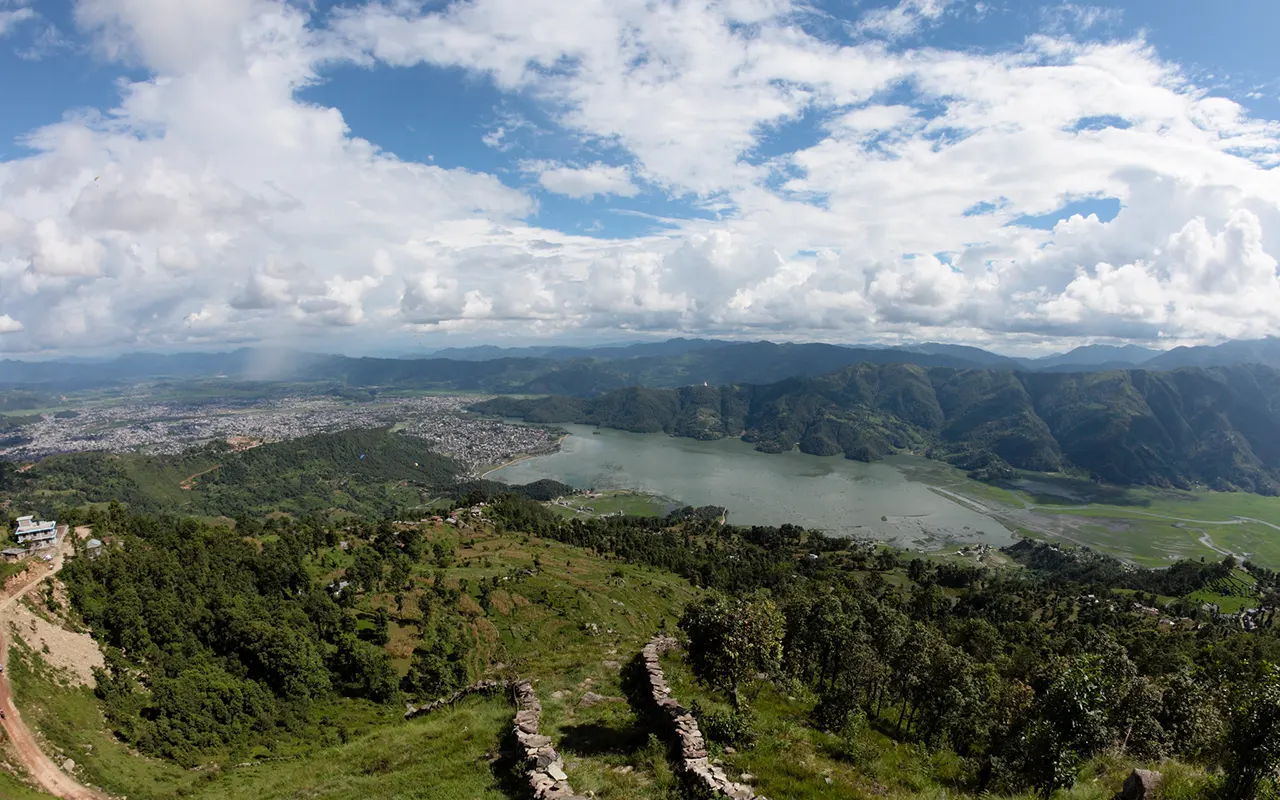
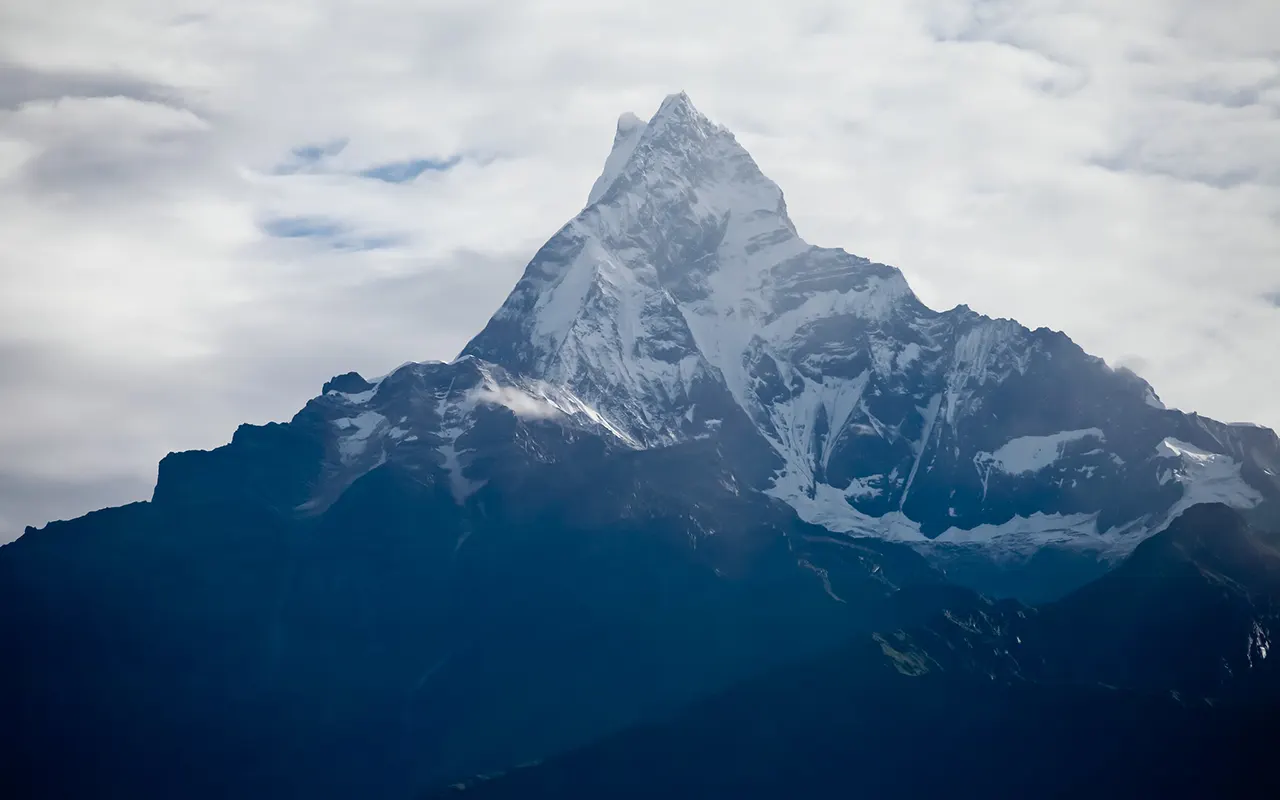
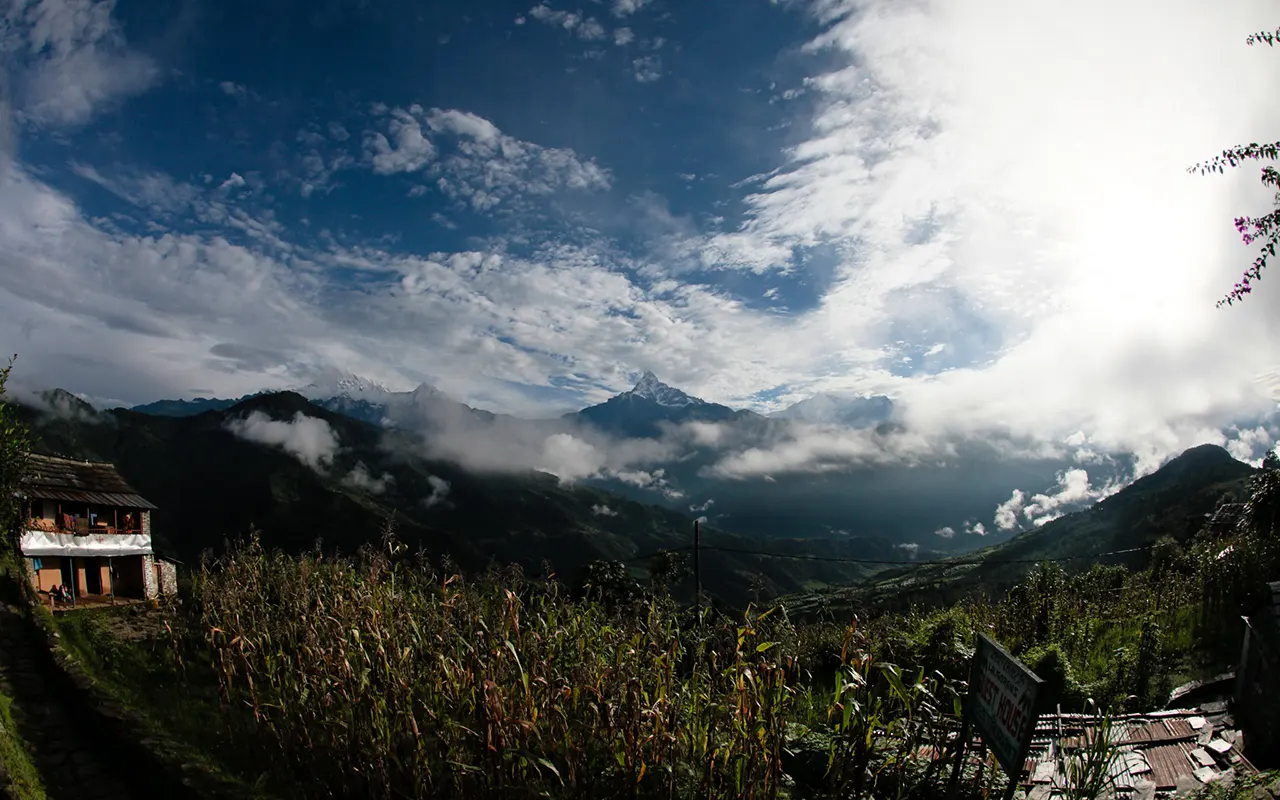

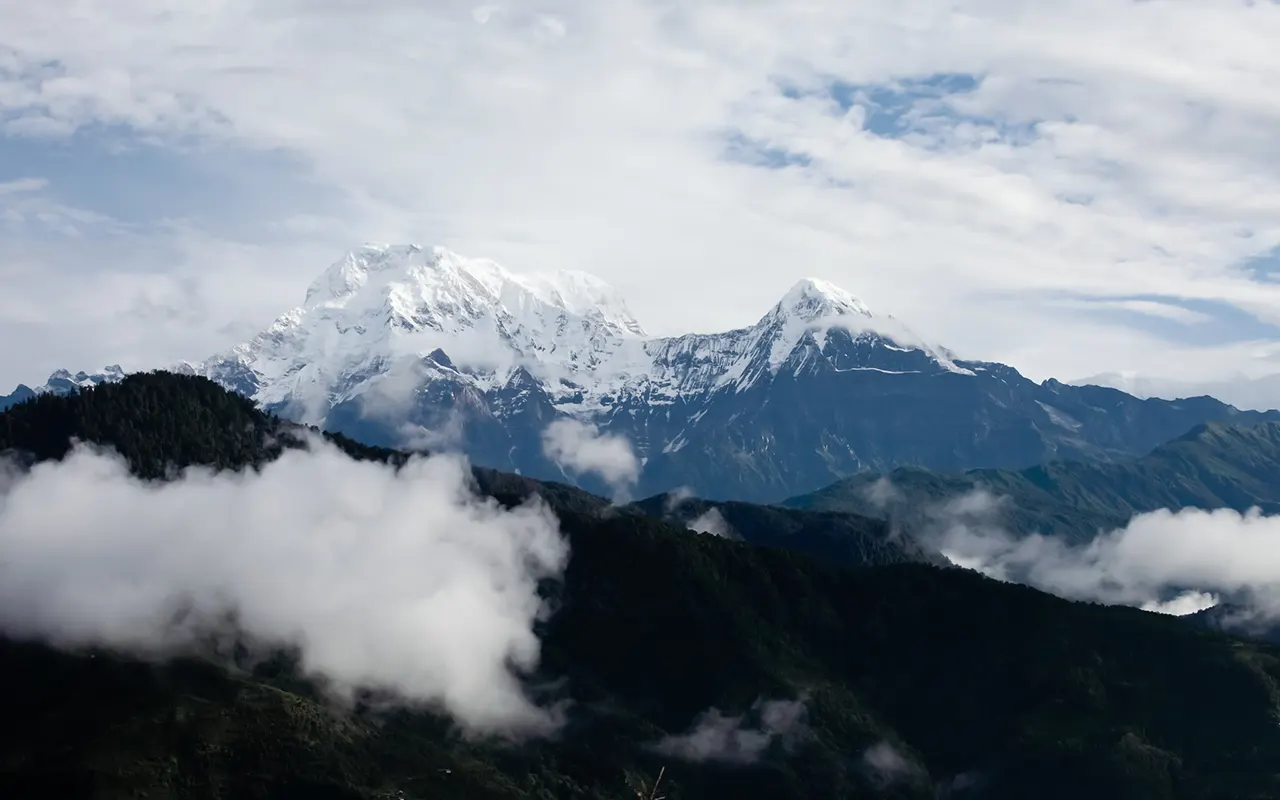
Trip Highlights of Dhampus Sarangkot Trek
- Enjoy the stunning sunrise view of the Annapurna and Dhaulagiri ranges from Sarangkot.
- Have a quick and beautiful Himalayan adventure that isbeginner-friendly and families friendly.
- Follow the trail through terraced farms, woodland, and quiet hill villages.
- Visit the lovely Gurung village of Dhampus with expansive mountain scenery.
- Take beautiful pictures of the snow-white mountains and the scenes of the Pokhara Valley.
- Explore Nepali culture and experience friendly local hospitality in village guesthouses.
- Enjoy the day-to-day life in villages as you hike through traditional villages such as Naudanda and Kaskikot.
- Combine nature, culture, and Himalayan scenery within a few days discoveries.
Overview of Dhampus Sarangkot Trek
The Dhampus Sarangkot Trek is one of the most enjoyable short trekking experiences near Pokhara, Nepal. It is ideal for anyone who wants to explore and enjoy the beauty of the Himalayas,without investing a lot of time and energy into the long trek. This trek will offer you the views of mountains, calm villages, and local culture in a short and manageable trip.
The road goes through terraced fields, small forests, and Gurung villages where you can explore the rural life in the Gurung villages. The highest points of the trek are Dhampus (1,650 m / 5,413 ft) and Sarangkot (1,600 m / 5,249 ft), and it is suitable for a majority of beginners and families.
The trip starts with a brief drive from Pokhara to the starting point of the trail, Phedi. Trekking from there, you will ascend rocky steps and mountain trails, which slowly bring you to the beautiful village of Dhampus. It is a village located on a ridge and featuring great scenery of the Annapurna mountain range. The serene nature, warm neighborhoods, and old houses offer a calming effect to the trekkers.
The second day of the Dhampus Sarangkot Trek goes along beautiful ridgelines with villages like Naudanda and Kaskikot, where you will have the opportunity to view panoramic views of the valleys, forests, and the mountains of the Himalayas in the distance.
Sarangkot is one of the most popular viewpoints over Pokhara, which is a highlight of the trek. Waking up early in the morning, the trekkers hike to the viewpoint to see the sun rise above the Annapurna and Dhaulagiri mountain ranges at Sarangkot. The mountains are shining with stunning shades of gold as the first rays of light touch them. Trekkers can also have a glimpse of the countryside before returning to Pokhara through less strenuous village walks.
The Dhampas Sarangkot trek is the best trek for people who like to visit and have a brief adventure in the Himalayan range, and enjoy the beauty of nature along with the culture. It is also beginner and family-friendly because the trails, lodges, and walking distances are well-marked and moderate.
Managed by Above the Himalaya, this trek will enable the visitor to unfold the mid-hill Nepal scenery and get to experience professional management, local hospitality, and some memorable mountain scenery.
Why choose this trek?
The Dhampus Sarangkot Trek is the best option for a traveler who does not wish to have any long and challenging trekking days but wishes to experience the beautiful Himalayan region in a short but scenic way.
The trail cuts across scenic hill villages, terraced lands, and forest paths, and provides extensive glimpses of the Annapurna range. The trek takes you to Dhampus(1,650 m / 5,413 ft) and Sarangkot(1,600 m / 5,249 ft), both of which are comfortable for first-time hikers. It also covers the popular Sarangkot sunrise point over Pokhara.
The Dhampus Sarangkot Trek is an excellent starting point for trekking in Nepal, with the short distances to cover, experience with a cultural village, and the spectacular mountain view in this trek.
Itinerary of Dhampus Sarangkot Trek
DAY
01
01
Day 01: Pokhara to Phedi drive, then trek to Dhampus
Your Dhampus Sarangkot Trek will start in Pokhara with a short morning drive to Phedi, which is the starting point of your trekking path. The drive lasts approximately 40 minutes and goes through small villages and green hills on the edges of the city.
Once there at Phedi, you start the walk up a stone staircase that ascends consistently up the mountain. The initial part of the path may appear to be steep, but the road is properly laid and simple to walk.
The landscape varies slowly with an increase in height. There are terraced agricultural lands all around the hilly areas, and we can see small old houses along the path. You can find the local farmers in the fields working or children walking home with their school bags. The higher you go, the colder the air becomes, and the countryside setting enables the walk to be pleasant.
In between 2 and 3 hours of hiking, you reach the beautiful village of Dhampus at 1,650 m (5,413 ft). This is a beautiful village located on a ridge and faces broad vistas of the Annapurna mountain and the valleys around it.
During the evening, you can take a walk down the stone streets, see the village life, and have a soothing sunset before dinner in your guest house.
Bus
40 min
Accommodation
Guesthouse
Meals
Breakfast, Lunch, and Dinner
Trek Distance
3 km
Trek Duration
2–3 hrs
Altitude
1,650 m (5,413 ft)
DAY
02
02
Day 02: Dhampus to Sarangkot via Naudanda and Kaskikot
It is the most picturesque and the longest day of the Dhampus Sarangkot Trek. The day starts in Dhampus (1,650 m / 5,413 ft) with clear skies, often with good panoramas of the Annapurna range. After breakfast, you start down a ridge trail that at first slopes down to the valley.
Then the road leads to the small river, which is the Ghatte Khola and has a suspension bridge. It is a gradual ascent over the bridge on your way to Naudanda. This parttraverses’ woodland regions, terraced agricultural fields, and small hill villages. On the trail, one can have expansive views of the Pokhara Valley and the green hills.
From Naudanda, the path passes up to a picturesque ridge to the old village of Kaskikot. This is a nice spot to take a lunch break and have a rest, as one looks at the surrounding scenery. The walk moves on after lunch, winding through quiet villages and agricultural land and slowly ascending to Sarangkot at 1,600 m (5,249 ft).
Sarangkot is a busy hilltop resort that is popular due to the beauty of the sunrise. Once you have checked into your guesthouse, you may relax and explore the viewpoint area and have a beautiful sunset, provided the weather is fine.
Accommodation
Guesthouse
Meals
Breakfast, Lunch, and Dinner
Trek Distance
20 km
Trek Duration
6–7 hrs
Altitude
1,650 m (5,413 ft)
DAY
03
03
Day 03: Sarangkot sunrise, then trek down to Pokhara
This is the last day of the trek. You also take a walk to the popular Sarangkot view point before sunrise. From here, you can see the first sunlight slowly fall on the Annapurna and Dhaulagiri mountain ranges. The mountains that are covered with snow are golden-colored, and they form one of the most beautiful sunrise scenes in the Pokhara area.
You come back to your guesthouse after spending a serene morning in the landscape and taking photographs. After packing, you start the down hill walk to Pokhara. The route is on a row of village lanes, paving, and mountain tracks which gradually lead down to the valley.
On your way, you get to pass through farms, small houses, and green hillsides, but still have a glimpse of Phewa Lake and Pokhara city below. It is generally a downhill and comfortable walk, and the time taken is between 2.5 and 3 hours.
The trail in the end reaches the lakeside of Pokhara, and the Dhampus Sarangkot trek comes to an end. You will be able to rest in the lakeside, sightsee the town, or rejoice that your short Himalayan tour is over.
Meals
Breakfast, Lunch, and Dinner
Trek Distance
5 km
Trek Duration
2.5–3 hrs
Altitude
1,600 m (5,249 ft)
Trip Extension
Suppose you have more time in Nepal after this trip. In that case, we can help you to extend your trip by running different treks in Nepal, tours in Bhutan and Tibet, Jungle safari tours at Chitwan, Bardia, and other National parks, Nepal luxury hotel booking, Rafting, Ultra-light flights, or any other travel-related services. You can get more information here.
Includes/Excludes
What's Included?
- English-speaking professional Trekking guide
- All the necessary trekking permits and formalities of the route.
- Transportation from Pokhara to Phedi at the beginning of the trek
- Breakfast, Lunch, and dinner all the meals in the trekking days as indicated in the itinerary.
- Accommodation in the local guesthouses or lodges
- A guide and his costs, such as salary, insurance, food, and accommodation.
What's Excluded?
- Meals and accommodation when staying in Pokhara before and after the trek.
- Personal costs such as snacks, dessert, and additional foodstuffs and drinks.
- Hot showers, Wi-Fi, and gadget charging at lodges where necessary.
- Traveling insurance, visa costs, and flight tickets to and from Nepal.
- Personal trekking equipment and gear.
- Tips for guides and porter
- Additional things that one can do, like paragliding from Sarangkot to Pokhara.
- Anything else not mentioned in the inclusion list.
Route Map & Altitude Chart
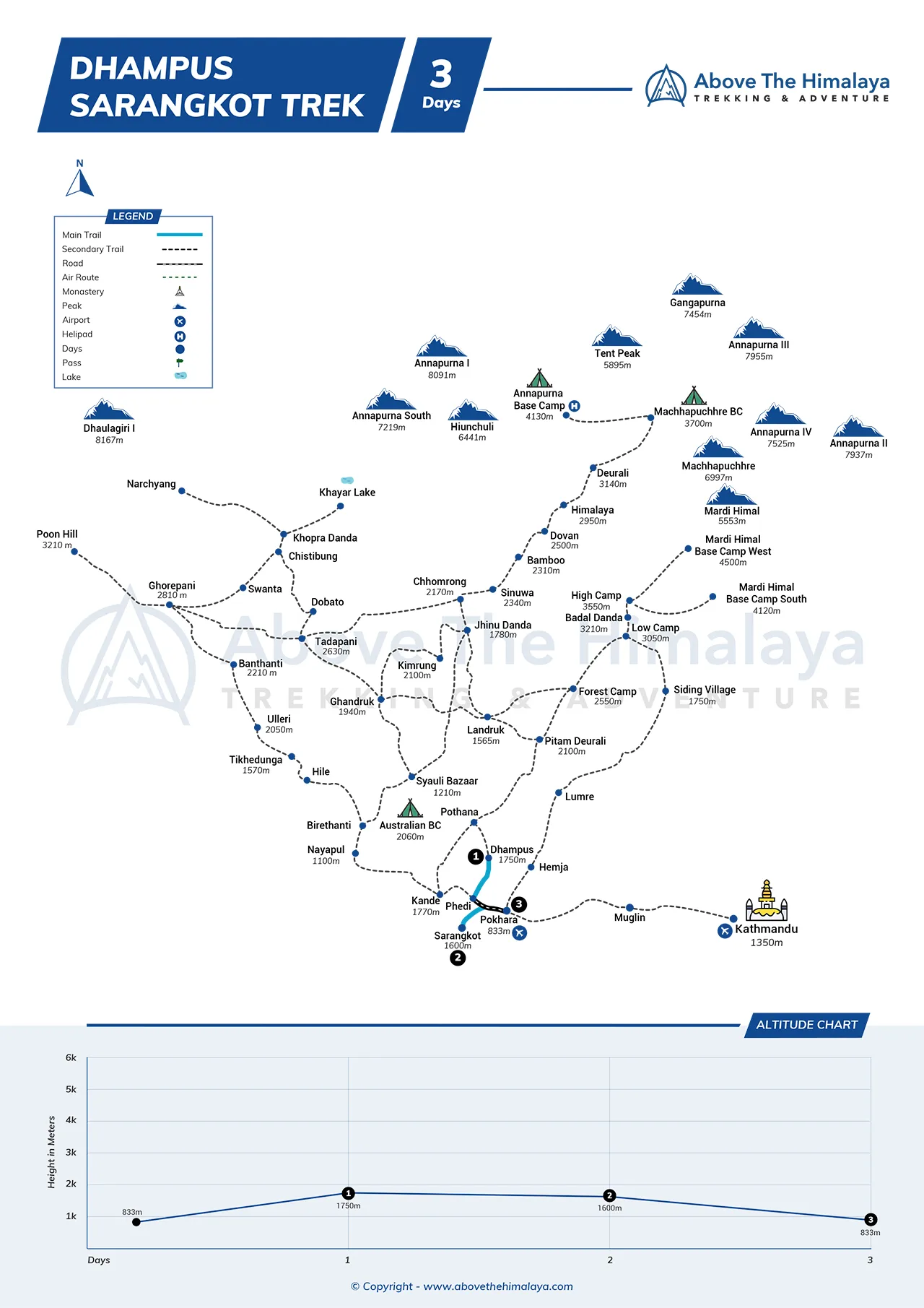
Difficulty Level
Dhampus Sarangkot Trek is regarded as one of the easiest, as well as most pleasant, short treks in Nepal. It is perfect for beginners, a family, or a solo traveler who wants to enjoy a glimpse of the Himalayas without a strenuous and lengthy mountain walk.
The trails are primarily on established village tracks, rocky steps, and terraced farmland tracks. Climbs and descents are steady, so no technical skills are needed.
The highest points of the trek are Dhampus (1,650 m / 5,413 ft) and Sarangkot (1,600 m / 5,249 ft). Most of the trekkers are not challenged with serious altitude issues due to the relatively low altitude. The maximum hour of trekking lasts about 6-7 hours, although the walking is a leisurely and easy one.
This trek can be done by any individual who is able to walk on the hills for a couple of hours, taking breaks. Certain sections of the path have rocky stairs; good footwear and a minimum fitness level are beneficial. The experience may be even better if one prepares some short hills or stair exercises prior to the trip.
Trekking with Above the Himalaya, trekkers will easily finish the Dhampus Sarangkot Trek, enjoying the landscapes, cultural villages, and beautiful views of the Himalayas.
Foods and Drinks
Food during the Dhampus Sarangkot Trek is basic, fresh, and good. During the trek, most of the meals are provided in the guesthouses located in the area. The trekking menu typically comprises popular Nepali and simple international food like dal bhat (rice with lentil soup and vegetable), noodles, fried rice, soups, eggs, pancakes, and momos (dumplings).
Most trekkers eat dal bhat, which is the most popular meal because of the energy it gives them during a long walk. It is typically served with rice, lentils, vegetables, and occasionally pickles or curry. Most guesthouses serve tea and coffee, milk tea, and hot lemon as well.
The trek does not go above Dhampus (1,650 m / 5,413 ft) and Sarangkot (1,600 m / 5,249 ft), and thus food can be easily found in the villages. Foods in the trekking days normally consist of breakfast, lunch, and dinner as stated in the itinerary.
Trekkers must consume safe water during their trek. To limit the amount of plastic waste, it is advisable to use a reusable water bottle containing purification tablets or a filter. Most lodges also have boiled water.
The food is organized according to the schedule to allow the trekkers to concentrate on the trip and the beauty of the nature of the Dhampus Sarangkot Trek.
Accommodation during the Dhampus Sarangkot Trek
During the Dhampus Sarangkot Trek, accommodation is provided in the small village guesthouses and local lodges. These lodges are family-based, which gives you a comfortable and welcoming atmosphere. The rooms are simple yet clean with twin beds, blankets, and basic furniture.
Lodges often have shared bathrooms, while some guesthouses may offer private bathrooms depending on availability. Dining halls can be very cozy and warm, where the trekkers usually dine, rest, and share stories with each other about the trail.
One of the most unforgettable places to stay is Dhampus village (1,650 m / 5,413 ft). This is a beautiful ridge-top village that has large views of the Annapurna mountain range and the valleys around it. Another popular tourist destination where many guesthouses are located is Sarangkot (1,600 m / 5,249 ft),and many people visit this place during sunrise to view the Himalayas.
Most villages have electricity, whilst a few lodges have Wi-Fi and hot showers as an optional add-on. Although the facilities are as basic as those in the city hotels, the warm welcome and serene atmosphere make the stay enjoyable.
The place of stay will be pre-planned to allow the traveller to have a stress-free time during the Dhampus Sarangkot Trek.
Altitude Sickness and Practical Suggestions
The problem of altitude sickness is hardly relevant in the Dhampus Sarangkot Trek since the path always remains at moderate heights. The highest elevation in the trek is Dhampus at 1,650 m (5,413 ft), which is much lower than the altitude at which drastic altitude sickness is typically experienced.
Nonetheless, the responses of every individual to changes in elevation vary. Some people can experience mild symptoms like headache, fatigue, or slight dizziness even at moderate altitudes. Such symptoms normally resolve through rest and hydration.
In order to make the trek comfortable, one should not be in a hurry on the uphill parts. Drink lots of water and have normal meals so that your body can be accustomed to the physical activity. Other ways of keeping the energy level up include taking short breaks during the hike.
In case of any unusual symptoms like nausea, extreme fatigue, you are to report this to your guide as soon as possible. Guides from Above the Himalaya keep an eye on trekkers and may slow them down as necessary.
As the Dhampus Sarangkot Trek remains below 1,650 m / 5,413 ft, the majority of the travelers complete the trek without any significant difficulties and with the stunning views and cultural tourism.
Dhampus Sarangkot Trek Preparation and Fitness Guide
Dhampus Sarangkot Trek is not a demanding trek, but a simple preparation makes the trek more comfortable. The fitness of trekkers is required to be medium, and they must be able to walk for a couple of hours per day.
The trekking hours range between 2 and 7 on hill trails and stone staircases. Endurance can be boosted by practising short hikes, regular walks, or walking up and down a few weeks before the trip. Comfortable trekking shoes with good grip also play a very significant role since the trail is full of stone steps.
The altitude is not so high that it requires heavy mountaineering training. Nevertheless, walking at an even pace and remaining hydrated will ensure that the amount of energy does not go down during the trek.
Another preparation step is light packing. Bring only things you need, like a water bottle, a light jacket, sunscreen, snacks, and personal medicine.
In trekking with Above the Himalaya, the guides ensure a moderate pace so the travelers can have time to appreciate the picturesque landscapes, local villages, and the mountain views during the Dhampus Sarangkot Trek.
Visa and Permits
People intending to do the Dhampus Sarangkot Trek will need a valid visa and trekking permits before the trip.
A Nepal tourist visa is available to most of the international visitors at Tribhuvan International Airport in Kathmandu. The visa procedure is easy, and it can even be done through the internet, so that once you arrive at the airport, you do not have to spend too much time.
To do trekking, you will need a TIMS (Trekkers Information Management System) card. It assists the authorities in maintaining records of the trekkers so that they can maintain safety and management records.
Although the Dhampus Sarangkot Trek does not go very high, with a top elevation of Dhampus of (1,650 m / 5,413 ft) and Sarangkot of (1,600 m / 5,249 ft), the permit system still assists in monitoring trekking activities in busy trails.
During the trek, you must carry your passports, copies of permits, and identification documents. These can be inspected at some point in the trail.
With Above the Himalaya, all the required trekking permits and documentation are provided as a part of the package. This will enable the travellers not to have complications regarding paperwork and enjoy the trip.
Health and Safety on the Trail
The Dhampus Sarangkot Trek, like any trekking trip, requires attention to health and safety. Although the path remains relatively low, the trekkers are expected to take the time to prepare.
The trail has stone stairs, woods trails, and village trails, which may turn slippery in cases of rain or morning dew. Slips and injuries can be prevented by wearing good trekking shoes that have a good grip.
A daypack with necessary things like water, sunscreen, a warm layer, and simple personal medication should be carried. One can reduce fatigue by drinking enough water and at a moderate pace.
Local surroundings also should be taken into consideration. Villages along the path usually have animals, either donkeys, cows, or dogs. Remaining respectful of animals will prevent accidents.
Above the Himalaya guides keep a check on the rate and well-being of trekkers in the Dhampus Sarangkot Trek so that they enjoy a safe and comfortable trekking period.
Transportation for the Dhampus Sarangkot Trek
The Dhampus Sarangkot Trek is easy to transport due to the starting and finishing point that is located in the Pokhara area. This renders the trek very easy to incorporate into the majority of travel plans in Nepal.
This trip typically begins with a short drive to Phedifrom Pokhara. This drive is approximately 40 minutes and goes through the small settlements and green hills. From Phedi, trekkers start climbing uphill to the Dhampus village.
Located at an elevation of 1,650 m / 5,413 ft, Dhampus is a beautiful ridge that has remarkable views of the Annapurna mountain range. The trekking trail proceeds to Naudanda and Kaskikot after staying there before arriving at Sarangkot at (1,600 m / 5,249 ft).
On the last day, the trekkers go from Sarangkot to Pokhara. The walk has an estimated duration of between 2.5 and 3 hours, and it intersects with roads that are located in the lakeside region.
Some people will also opt to paraglide from Sarangkot to Pokhara at an extra fee.
In the case of trekking with Above the Himalaya, all the transportation plans are taken care of in an easy manner, which allows you to enjoy the scenic nature of the journey without the worry of the logistical arrangements.
Travel Insurance
Anyone planning the Dhampus Sarangkot Trek will be highly advised to purchase travel insurance. Although the trek remains at relatively low elevations like Dhampus (1,650 m / 5,413 ft) and Sarangkot (1,600 m / 5,249 ft), some unforeseen circumstances remain possible.
Insurance should cover against sickness, accidents, cancelled trips, or lost luggage. The routes involve climbing rock steps and rough ways; hence, slight falls or harm can occur. When there is insurance for trekking activities and emergency evacuation, it makes the trip peaceful.
The traveler must take insurance that includes medical treatment, emergency evacuation, and travel interruption.
Bring along printed and an electronic copy of insurance documents during the trek, so it can come in handy if needed.
Above the Himalaya guides are patient with safety and assist in dealing with a situation in case of an emergency. Nonetheless, insurance will guarantee that travelers are provided with prompt service and health care in case of need.
Your Extra Expenses on the Dhampus Sarangkot Trek
In the Dhampus Sarangkot Trek, meals, accommodation, and a guide, among other important services, are normally part of the trekking package. However, trekkers should still expect some personal expenses during the trip.
Villages such as Dhampus (1,650 m / 5,413 ft) and Sarangkot (1,600 m / 5,249 ft) have guesthouses which may have some other services to be paid in small fees. They may be a hot shower, the internet, and charging a device.
Rest stops may also involve trekkers spending money on snacks, tea, coffee, desserts, or bottled beverages. There are also local stores that have handmade souvenirs, snacks, and small objects that you may be interested in.
It is advised that Nepalese rupees should be kept in small amounts since no ATMs are found on the trekking route. In the majority of villages, only cash is accepted.
You can also partake in activities like paragliding, which can be done from Sarangkot to Pokhara at an extra fee. Travelers often tip guides and porters as a way to show appreciation for their support during the Dhampus Sarangkot Trek
Language and Communication
Language and communication in the Dhampus Sarangkot Trek are not a problem for the travelers. The key language that is spoken in Pokhara and in the nearby villages is Nepali; however, other local communities like the Gurung people also have their own traditional languages.
Most of the guesthouse owners and guides in popular trekking locations, such as Dhampus (1,650 m / 5,413 ft) and Sarangkot (1,600 m / 5,249 ft), can speak basic English. That is why trekkers find it easy to order food, seek directions, and communicate with locals.
It would be nice to learn some simple phrases in Nepali and make the experience more entertaining. Namaste, which is English for hello; Dhanyabad, which can be translated to mean thank you, and Mitho cha, which can be translated to mean delicious.
Above the Himalaya guides are also useful to translate the conversation and interpret the local customs and traditions. They assist you in talking to the villagers in a very nice and easy manner.
Speaking in the villages on the Dhampus Sarangkot Trek, it is appropriate to talk slowly, smile, and be respectful of the local culture. It is also advisable to ask people first before taking their photographs.
Mobile Network, Internet, and Charging Facilities for the Dhampus Sarangkot Trek
Coverage of the mobile network in the Dhampus Sarangkot Trek is generally good, particularly near Sarangkot (1,600 m / 5,249 ft) since it is near the city of Pokhara. In the majority of the route, most trekkers will be able to make calls and send messages.
Nevertheless, the speed of the internet can change in accordance with the weather and the position of the village. There are guesthouses that have Wi-Fi service, but with slower speeds than those in the cities.
Most of the villages, such as Dhampus (1,650 m / 5,413 ft), have access to electricity. At guesthouses, trekkers normally have the ability to charge phones, cameras, and other electronic devices. Certain lodges can charge a small fee for charging.
A power bank is advantageous since the amount of time spent on the road during trekking can be quite long, and the cold mornings can empty the battery quickly. By keeping your phones and cameras in jackets, the battery life can be preserved.
You can also purchase a local SIM card in Pokhara and proceed with the Dhampus Sarangkot Trek.
Photography and Drone Rules
Dhampus Sarangkot Trek is a trek that provides numerous beautiful photo opportunities. Sarangkot (1,600 m / 5,249 ft) is where trekkers can be able to take magnificent shots of the Annapurna mountains, terraced farmlands, traditional villages, and view the sunrise.
Sarangkot is particularly renowned for sunrise. As soon as the first rays of the sun hit the Himalayan mountains, they turn golden, which is why great photographs are guaranteed.
Although photography is not prohibited in the trekking path, visitors are expected to adhere to the local traditions. One should not make close shots of people, houses, or places of worship without permission.
In Nepal, there is a regulation on the use of drones. In most cases, one should not fly drones without permission, particularly in places of conservation. Before the use of drones in the Dhampus Sarangkot Trek, trekkers will be expected to seek proper authorization.
Responsible photography is useful in conserving the environment and addressing the cultures of the local communities on the trekking path.
The Cultural Festivals on the Trail
The villages around the Dhampus Sarangkot Trek celebrate many colorful cultural festivals throughout the year. These festivals give the tourists an opportunity to see the traditional Nepali culture and the life of local communities.
Dashain is one of the greatest, longest, and most celebrated Hindu festivals in Nepal. It typically takes two weeks and involves family reunions, blessings of elders, and customary rituals.
Tihar, or the festival of lights, is another festival that is popular. Houses and streets are adorned with colorful lights, flowers, and candles. The festival is dedicated to animals like dogs and cows, and the goddess of wealth.
During these festivals, travelers who visit Dhampus (1,650 m / 5,413 ft) and adjacent villages will probably observe traditional music, dancing, and local celebrations.
Others are Buddha Jayanti that is celebrated on the birth of Buddha, and the festival of colour, known as Holi, in spring.
Most Asked Questions by Travellers
 General
Yes, you can buy water at guesthouses along the trail, or ask for boiled water.
Yes, it is family-friendly, due to the short distance and moderate level.
The majority of the guesthouses are capable of cooking vegetarian meals if requested.
Yes, however, spring and autumn are the most favorable in terms of weather and mountain visibility.
 Guides & Support Staff
Yes. The trekking permits can’t be obtained without a licensed guide.
The guide controls the path, describes the local culture, and provides security during the trek.
Porters are optional on this trek since it is short, but they can help carry luggage if needed.
The maximum weight of a porter is normally 20 kg, shared by two trekkers.
 Accommodation and Facilities
Trekkers will lodge in basic guesthouses or lodges that are operated by the local people.
Guesthouses offer basic private rooms, most of which are subject to availability.
Most lodges also have hot showers, often at a small extra fee.
Most villages, such as Dhampus and Sarangkot, have electricity and outlets.
 Packing & Gear
Comfortable trekking shoes with good grip are advised for stone steps and hillside trails.
Yes, it can be cool in the mornings and evenings, particularly along Dhampus (1,650 m / 5,413 ft).
A small daypack helps carry water, snacks, sunscreen, and a light jacket.
Trekking poles are not compulsory, but they can aid in decreasing the amount of pressure on the knee during downhill.
 Booking & Payment
A booking is advisable, particularly in the spring and autumn trekking seasons.
The journey is most commonly done in 3 days, and thus, it is an ideal short trekking destination around Pokhara.
The most favorable skies and mountain sceneries are in spring (March-May) and autumn (September-November).
Yes, the trek is not a difficult one as the summit reaches 1,650 m (5,413 ft) maximum.
Reviews on Dhampus Sarangkot Trek
Be first to post a review in this trip.
Posted on Tripadvisor
 H H9 December 2025
Verified
Thank you for the best tour we have ever had! I planned to stay at the Everest View Hotel this time and travel there because I wanted to see Everest, the highest mountain in the world, slowly, but despite the short schedule due to my children's school, all I got was a response that it was difficult to contact several tour companies. The Himaraya Trekking, Above, has worked out a smooth and safe schedule and had the best experience for me and my family. I will never forget the view of Mount Everest. Thank you very much.Posted on Tripadvisor Mike F26 November 2025Another Amazing Trip with Above the Himalaya This is my 3rd trip with Above the Himalaya and Puru. Each trip with Puru has exceeded expectation with the quality of the guides, porters and attention to detail. We were a team of 5 trekker and our ages were all above 67 years of age with the oldest being 73. We are all experienced hikers and trekker and our plan was to trek up the Khumbu Valley to the Cho La pass to Gokyo to the Renjo La pass to return to Lukla. However, the weather altered our plans as Cyclone Montha blanketed the country in rain at lower elevations and significant snowfall at the upper elevations. Due to the weather, no one was trekking and everyone was staying put in their current location during the storm. All the passes were closed due to the deep snow. We were in Namche when the storm was blanketing the country.This is where Above the Himalaya really shines is in the ability to adapt to the changing conditions and our safety. In conversation with our lead guide, we decided to alter our route to trek through the Gokyo valley to reach Gokyo and then do the Renjo La pass. Sitaram our lead guide and Dhurba our assistant guide was both attentive to the changing conditions and always kept a keen eye for how we were doing and feeling on the trek. The pacing was excellent as none of us had any hint of altitude sickness as we reached a maximum elevation of 5,365m.Having trekked and hiked all over the world with different tour companies, Puru’s company is simply the best. The communications, focus on safety, the guides and staff, the accommodations, and the food are all amazing. All you have to do is focus on the beauty of the mountains, enjoy the joyfulness of the Nepali people and have fun exploring the trails. I am planning my next trip with Puru for 2027 as there is no other trekking company to match Puru’s level of service.Posted on Tripadvisor
 Mie K. A.25 November 2025Take a small step into the Himalayas I went with Above The Himalaya Trekking’s Everest View Hike in November 2025 and can only recommend with my whole heart!I had never visited Nepal or the Himalayas before and had a life long dream of seeing Mt Everest. I had though, hiked a lot in various parts of the world, but never above 2000 m, so I went with the five day Everest View Trek to take a small step and see how I would handle the altitude. From first enquiry about dates and various questions, to my arrival back from the trip, Puru has been an invaluable help, always standby on mail and WhatsApp, pulling strings and making things happen.Also big shout out to the amazing guide I was teamed with, Kamal, who did everything he could to answer all my curious questions about vegetation, animal life, Nepalese culture and everything in-between :) Kamal was the perfect gentleman, offering little treats and reminding me to take breaks, and all in all I felt very safe and in good hands all the time. He also had good banter and jokes, which lifted the spirit of even the hardest climb.It was cold most nights and mornings and even though the tea houses provided heavy blankets (and I could borrow extra) I was glad I had the sleeping bag with me, which I rented through Puru. But I could definitely have survived without and saved the space in my pack.In total, I’m very pleased I’ve got to experience this lovely country with Above the Himalaya Trekking and if I ever come back for the big leap into the mountains, I’ll chose Kamal and Puru all over again :)Posted on Tripadvisor
 nameless25 November 2025Nepal trek-Gokyo Second trek with Above the Himalaya, this time to Gokyo and over Renjo La. Our lead and assistant guides (Sitaram and Dhurba) were excellent. Due to several days of rain at lower elevations and snow higher we needed to change our plans while in the midst of our trek. Above the Himalaya accomplished this smoothly and flawlessly, which ultimately resulted in a better experience. We’ll be back!Posted on Tripadvisor
 Yu S22 November 2025Great Experience and Friendly people. We had a great time with Above the Himalayas tour company in Oct. Ajay, the tour guide in Kathmandu is very friendly and knowledgeable. He took us to a lot of places that we can experience local authentic daily life. Puru, the owner, arranged and organized our trip in such way that we really feel comfortable and enjoyable. We are specially impressed by his quick action and management skills. Our flight to Pokhara got cancelled due to bed weather. Within minutes, Puru was able to arrange a car and a driver to drive us to Pokhara! It saved out trip.Posted on Tripadvisor
 Sally M14 November 2025Glorious trekking experience - ABC We had the most wonderful experience doing the Annapurna Base Camp trek with our fabulous guide, Tanka, and porter, Ravi. The trek was glorious, despite some rainy days, and although we weren't sure we would get to see the peaks at ABC, the weather cleared just in time and we had an amazing sunrise there. What made the whole trip so special, though, were Tanka and Ravi, who remained cheerful at all times and went out of their way to make everything as good as it could be. This included setting a pace with regular breaks which made the walking completely manageable, modifying the itinerary so we could visit additional villages, getting up in the middle of the night to see if the sky would be clear for sunrise, and bringing a sense of ease and humour to all our interactions. We just loved the whole thing and are keen to return to Nepal for another trek. It was magical!Posted on Tripadvisor
 Peter E27 October 2025Above the Himalayas goes above and beyond expectations! From start to finish everything was perfect! Puru, the managing director, was always quick with his responses to my questions when I first contacted him about planning our trek, and he continued to check to see that everything was going well throughout.Our guide Tanka and porter Ravi were fantastic! Their friendly demeanor kept our experience lively and interesting the entire time and made sure that we were well taken care of. Even small details like Ravi coming in and double checking our rooms to see that we had left nothing behind before leaving each morning, and seeing that meals were prepared the way we liked them weren't overlooked. Tanka was also quite knowledgeable about the mountains, the people, and just about everything "Nepal". He enthusiastically shared stories about his family and Nepalese life in a general way.Although there was a clear itinerary each day, and for the whole trek, Tanka allowed for flexibility in terms of time and where to stay. He was even willing and able to make changes to same-day accommodation based on how far we anticipated hiking that morning. I can't say enough about how much we enjoyed our hike and I would definitely recommend Above the Himalayas for anyone considering a trek.Posted on Tripadvisor
 Akane U25 October 2025Amazing tour For me and my son, Pru thought of a four-day trekking tour.His interaction was very smooth.On the first day, I went with my son to Gandrouk, and on the second day, he went to a higher place (mulde view point, Poon hill) with his guide Ashok. Ashok was very kind and took me to various local places. The food was also very good.My guide, Tangka, was very kind and helped me a lot.I recommend this travel agency because it's great.Posted on Tripadvisor
 Daniel F24 October 2025Everest Base Camp Trek My friends and I just completed the EBC trek. From the time I met Puru at the Canada Place trade show in Vancouver BC, Canada I felt comfortable going to Nepal. His communications via WhatsApp were seamless answering all our questions. Everything went exactly according to plan. Our guide Suresh was amazing. He took very good care of us the whole time. From guiding us to making sure we had everything we needed to be happy. The food the whole way up and back was amazing! 5 ⭐️. Our 2 porters were great as well. I have a whole new respect and appreciation for what they do. They are the true hero’s to what we can do as a team. We chose the basic trek the lodging was to be expected. If I was to do again I would choose the luxury trek. The hotels in Kathmandu at the Hotel Aloft and the Hotel Lo Mustang were top notch as well as the buffets. Highly recommend this local company!Posted on Tripadvisor
 adrienne h24 October 2025Great tour, would recommend! My friend and I completed the 10 day Annapurna circuit with Above Trekking Himalaya. Buddha our porter was a little mountain goat, pocket rocket. When I got altitude sickness he carried my bag, as well as mine and my friend’s big pack. He was friendly and loved to played cards with us, always with a cheeky smile on his face. Sitaram our guide was very knowledgeable of the area and quite serious. He was always available if we had any questions and went above and beyond to try get us the best/quietest rooms in the tea houses. Puru was fabulous working behind the scenes to ensure our trip was as smooth as possible. He was very quick to respond to any messages. It was a great experience to see Nepal with some locals and I certainly appreciated their support when I succumbed to altitude sickness. They stayed close to us the whole time and checked in frequently making us feeling safe and supported the entire time.Verified by TrustindexTrustindex verified badge is the Universal Symbol of Trust. Only the greatest companies can get the verified badge who has a review score above 4.5, based on customer reviews over the past 12 months. Read more
Best Price Guaranteed, Easy to change Date, Instant Confirmation
Book This TripBook with Confidence
- Flexible bookings and easy trip date changes
- Personalized service and customized group sizes
- Safe travels with owner-operated services and highly experienced guides
- Best price guarantee for the most value for your money
- Secure & easy online booking
Your Trek Leader
 Enjoy Himalayan scenery with the help of Nepal’s best guides with Government license holders and got training in first-aid, our Trip Leaders, know where you’ll find the best photos, most fascinating wildlife, and the best stream crossings.
Have Questions?Talk to Expert
Meet Mr. Purushotam Timalsena (Puru), Nepal's best trek and tour organizer, who has been working in the Himalayas for more than 24 years.
WhatsApp/Viber +977 98510 95 800



You May Like



Trips for All
Private Trip
Peaceful tour with your travel buddy and guide
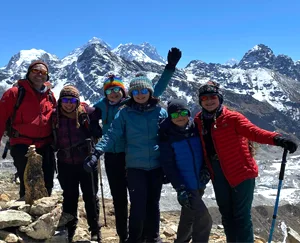
Small Group Travel
Travel with people having similar adventure dreams
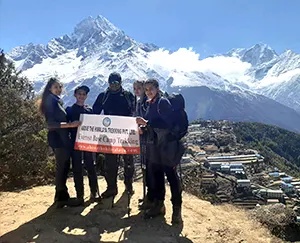
Trips for Kids
Calling all young adventurers - join us for a journey of a lifetime!
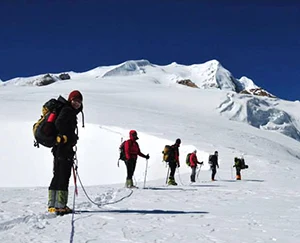
Trips for Adventurers
Climbing & mountaineering adventures for thrill-seekers