Customize Your Trip
 Need Help? Let's Talk
+977 985-1095800Annapurna Base Camp Trek Via Poon Hill


10% OFF
Small Group Departure Dates for 2027 and 2028
Note: We can run a trip for solo travelers, couples, friends, and family with children. Our private trips run daily. For small group travel, please check the dates below. If the dates below do not suit you, please email us or WhatsApp us at +9779851095800 to travel on your preferred dates.
September: 05,10,18,22,30
October: 02,05,08,12,16,20,24,30
November: 04,07,11,14,17,21,25,30
December: 03,07,12,17,21,24,30
Janurary: 02,12,20
February: 08
March: 03,07,11,14,17,21,25,29
April: 02,06,10,13,16,19,22,28
May: 02,07,11,15,20,28
June: 05,10,15,20
Highlights of Annapurna Base camp trek via Poon hill
- Annapurna base camp trek via Poon Hil is an entire of exciting scenarios that create an unforgettable travel experience.
- Enjoy up-close looks at the Dhaulagiri and Annapurna mountain ranges.
- You may also explore peaks like Machapuchare (6,993m) and Annapurna I (8,091m).
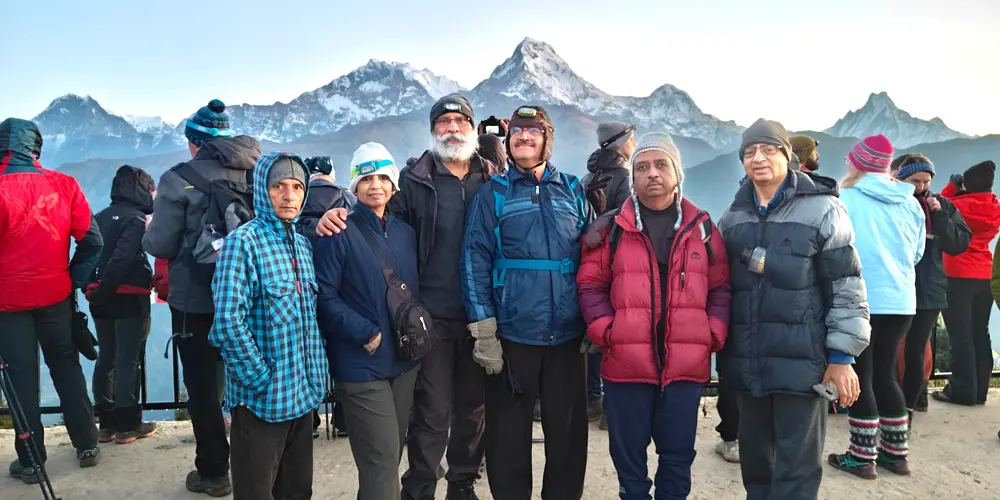
- Visit Poon Hill to see a magnificent dawn. It provides expansive views of Dhaulagiri and Annapurna.
- Discover the Annapurna region’s several landscapes.
- Hiking the route through verdant rhododendron woods,terraced farms, charming towns, and icy glacier valleys.
- Experience the traditions, customs, and way of life of the locals. Interactions with many ethnic groups, such as Gurungs and Magars, are available.
- Hike to the center of the Annapurna Sanctuary, where majestic peaks encircle a beautiful arena.
- Jhinu Danda offers natural hot springs for relaxation. This location provides a healing bath in its lovely wooded surroundings.
Overview of Annapurna Base Camp Trek Via Poon Hill
Annapurna Base Camp Trek via Poon Hill is one of the most popular moderate treks on earth. The trail passes through cascading waterfalls and beautiful villages. Terraced farmlands — lush rhododendron forests and fantastic mountain vistas. Before reaching the base of the mighty Annapurna. Trek offers enough time to witness the staggeringly beautiful peaks of all the Annapurna giants that encircle the basin Mountains in the Annapurna region from the central core.
Still, it is not the tallest because it rises in the heart of the Himalayas. Annapurna I, Hiunchuli, Annapurna II, Gangapurna, Annapurna III, Machhapuchhre, Annapurna IV, etc., are some of the mountains in this region.
The Annapurna base camp trek via poon hill also guarantees you fun, pleasure, and great insight into the natural and cultural heritage of the tiny Himalayan country of Nepal. It is one of the most beautiful treks, passing through the diverse ethnic groups’ cultures and various vegetation forests and wildlife. To reach the Annapurna region, we must follow the trail of terraced lands, dense, beautiful rhododendron forests, and the Gurung community’s traditional and cultural villages.
The Annapurna base camp trek starts from Nayapul, about 1 hour 30 minutes drive from Pokhara. Pokhara, recognized as the beautiful city of Nepal, is the Gateway to Annapurna base camp trekking; you feel saturated by nature and unidentifiable calm in the heart and soul. Firstly, we will reach Nayapul. Then Tikhedhunga, Ghorepani, Tadapani, Chhomrung, and Deurali.
Enjoy the best sunrise and sunset view from Poon Hill.
We will be in many viewpoints. Among them, Poon Hill will be the most beautiful viewpoint from where we can see the combination of more than ten mountains serially. Since our trial goes clockwise, we will not return the same way. Our return route will be to Bamboo to end our trek from Annapurna base camp. The trail finally stumbles. Bamboo moraines and reaches the world of ice and snow.
The journey to this Trek from Pokhara includes various cultural villages like Ghandruk, Jhinu, and Deuralietc on the way, and also the excellent location Poon Hill. Poon Hill is famous for giving the best view of Himalayan Ranges. It is where we can see the best sunrise and sunset views. The beautiful villages on the way reflect the ethnic culture of Gurung and Magars. One can enjoy cultural food and festivals and be introduced to these residents’ lifestyles.
Nepal’s one of the best trek Annapurna Base Camp trek via poon hill
It is a beautiful experience to get familiar with the new cultures, traditional tools, products, and ethnic settlements. It also allows visitors to be aware of the local lifestyle of these ethnic groups. Then, the journey includes another major attraction: Machhapuchhrebase camp, enabling you to visit two camps simultaneously. Machhapuchhre Mountain is famous for its unique peak shape, which is shaped like a fish’s tail. And after this beautiful journey, you will reach the magnificent Annapurna Base Camp.
This camp provides a clear up-to-down view of Mt. Annapurna and is surrounded by immense and naturally wonderful mountains. It also provides a beautiful view of the Machhapuchhre, Hiunchuli, and Dhaulagiri mountains. You can enjoy breathtaking natural scenarios and photography. The fantastic surroundings of Annapurna Base Camp also provide a great view of nature photography.
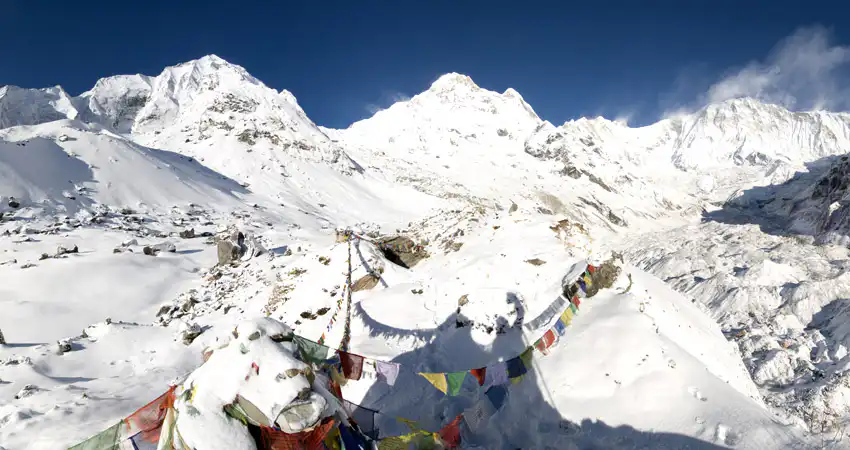
Enjoy the 360-degree views of the Annapurna ranges.
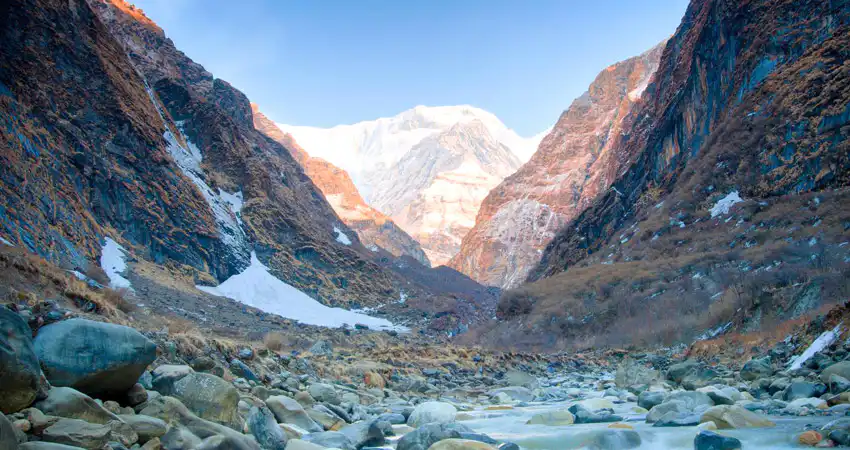
The sunrise and sunset in this place make it a tiny paradise. Also, surrounded by flowering and non-flowering plants and wildlife around the camp makes this place magnificent. The place also has hot springs. Tourists can relax and enjoy during or while returning from the trip. Rivers like Modi-Khola, dense forests with variations, and exotic flora and fauna are also included. This place is the most beautiful expenditure in the Himalayas.
Annapurna Sanctuary, from where you will see incredible 360-degree views of the Annapurna ranges. And above the massive Annapurna glacier. Collecting lifetime experience, we retrace from Annapurna Base camp to Chomrong and then to the Jhinu Danda, where is the natural hot spring, and you can enjoy the small bath pools from here. The trail leads to a rhododendron forest and passes through charming villages of Nepal’s ethnic communities of the Gurung & Magar.
Generally, the Annapurna Base camp trek via Poon Hill is considered moderate trekking. Because our trek will be at a high altitude but not on a steep path, September, October, November, December, March, April, May, and February will be the most favorable time to trek in this region.
Nepal Annapurna Base Camp Treks is always on your front foot to help you make your trek in Annapurna Base Camp throughout the year. We will tailor your trekking schedule to your holiday by providing the best trekking guide for you. This fantastic trek finishes at Phedi, where we drive to Pokhara.
Annapurna Base Camp Trek Via Poon Hill Itinerary at a Glance
| Day | Route | Walking Time | Distance |
| Day 1 | Pokhara to Tikhedhunga | 4 hours | 9.6 km |
| Day 2 | Tikhedhunga to Ghorepani | 5 to 6 hours | 9.4 km |
| Day 3 | Ghorepani to Poon Hill to Tadapani | 5 to 6 hours | 11 km |
| Day 4 | Tadapani to Chhomrong | 3 to 5 hours | 9.8 km |
| Day 5 | Chhomrong to Dovan | 4 to 5 hours | 8 km |
| Day 6 | Dovan to Machhapuchhre Base Camp | 5 to 6 hours | 8.5 km |
| Day 7 | Machhapuchhre Base Camp to Annapurna Base Camp | 2 to 3 hours | 3 km |
| Day 8 | Annapurna Base Camp to Bamboo | 5 to 6 hours | 12.7 km |
| Day 9 | Bamboo to Jhinu Danda | 5 to 6 hours | 8.5 km |
| Day 10 | Jhinu Danda to Nayapul and drive to Pokhara | 6 hours + 1.5 hours drive | 13.5 km |
Itinerary of Annapurna Base Camp Trek Via Poon Hill
DAY
1
1
Day 1: Pokhara Trek to Tikhedhunga (1540m): walking distance 4 hours, 540 meters ascent - 9.6 km
Enjoying breakfast every morning, your journey for the Annapurna base camp trek via Poon Hill begins. Driving for about one and a half hours through a large village, Lumle brings you to Nayapul.
The trek starts from here, dropping at first on a staircase and then traversing high above the river on an entire stone-paved trail to a large and prosperous town, Birethanti (1000m).
Today’s trekking trail follows winding bamboo forests and waterfalls with plunge pools inviting you for a refreshing swim. Beyond a pasture used by pony caravans, the trail reaches a small village, Sudami, where you can have lunch.
After lunch, climb steadily up the side of the valley to Hille (1510m). After a short walk, you will arrive at Tikhedunga. We spend the night at the guest house.
DAY
2
2
Day 2: Tikhedunga trek to Ghorepani (2775m): walking distance 5-6 hours 1360 meters ascent - 9.4 km
The trail crosses the Tikhedunga River on a suspension bridge, then drops and crosses the Bhurungdi Khola on a large deck at 1520m. The trail ascends on a stone staircase that is said to have more than 3300 steps.
The unrelenting staircase continues to the large Magar village of Ulleri (2080m). From Ulleri, the trail gently climbs through pastures and cultivated fields. You walk beside the cascading river through refreshingly fresh oak and Rhododendron forest.
The trail crosses two sparkling clear streams, a small ridge, and another stream before climbing to Nangathanti (2460m).
We have a little rest with lunch here at Nangathanti. In winter, the trail can be covered with snow. The day destination, Ghorepani (2750m), is reached after about an hour past Nangathanti.
DAY
3
3
Day 3: Ghorepani Hike to Poon Hill and trek to Tadapani (2540m): walking distance to Tadapani 5-6 hours, 550 meters descent, 710 meters ascent
Most people rise before dawn the following day to make the early-morning excursion to Poon Hill (3210m), one of the best Himalaya viewpoints in Nepal, which provides an unobstructed view of sunrise over the high Himalayas.
The spectacular panorama stretches from Dhaulagiri I (8167m) and Tukuche (6920m) to Nilgiri (6940m), Annapurna South, Annapurna I (8091m), Hiuchhuli (6441m) and Tarke Kang (7193m). Gangapurna (7454m), Lamjung Himal (6986m), and Mt. Fishtail (Machhapuchhre 6997m) make your breath and eyes catch. Watching the beautiful sunrise is a defining moment of pleasure and tranquility.
After breakfast, our trek to Tadapani starts.
A short early morning climb to the Deurali passes for a spectacular panorama over Dhaulagiri and Annapurna. The trail descends steeply through the dense moss-covered forest with abundant birdlife to Tadapani, which also provides a close-up sunset view.
DAY
4
4
Day 4: Tadapani Trekking to Chhomrong (2040m): walking distance 3-5 hours,780 meters descent and 240 meters ascent - 9.8 km
Today Annapurna base camp trek via poon hill goes to Chhomrong; the trekking trail follows almighty rhododendron forests and beautiful terraces passing through our trail to the Chhomrong village. Above the town is the mighty peak of Annapurna South, with Mt. Fishtail facing it across the valley.
Chhomrong is a beautiful village with lots of lodges that provide excellent facilities. Chhomrong is a gateway to the Annapurna Sanctuary trek and is inhabited by Gurung, one of the major ethnic groups of Nepal.
DAY
5
5
Day 5: Chhomrong trekking to Dovan (2540m): walking distance 4-5 hours, 740 meters ascent and 510 meters descent - 8km
Leaving Chhomrong, the trail descends via a stone staircase and crosses the Chhomrong Khola on a swaying Suspension bridge. Then, climb out of the side valley, passing through deep forests of Bamboo, rhododendron, and oak.
The Bamboo of the day’s trek follows another ascent to Kuldi (2470m). Descend a long, steep, slippery stone staircase into a deep bamboo and rhododendron forest to the village of Dovan.
DAY
6
6
Day 6: Dovan trekking to Machhapuchhare Base Camp (3700m): walking distance 5-6 hours, 1260 meters ascent - 8.5 km
A narrow Modi Khola valley trek brings you almost to the base of M.B.C. There’s technically no such thing as Machhapuchhare Base Camp since ascents of the mountains are prohibited.
The mountain views are breathtaking; the panorama includes Hiuchhuli, Annapurna ranges, and the ever-changing Machhapuchhare. This area is called the Annapurna Sanctuary since mountains surround it. A vast arena is enclosed by a solid wall of snow-capped peaks, which include Annapurna I, Annapurna III, and the fishtail spire of Machhapuchhare.
DAY
7
7
Day 7: Machhapuchhare Base Camp Trek to Annapurna Base Camp (4130m): walking distance 2-3 hours, 430 meters ascent - 3 km
The climb to Annapurna Base Camp trek via Poon Hill takes under two hours. You descend a small ridge from the mountain pass to the mountainside with broad terraced fields showcasing tranquil meadows and lush, fertile farming land.
As you reach Annapurna South Base Camp, witness impressive picturesque landscapes, majestic panoramic views of snow-capped mountainous
peaks, and varied Himalayan cultural settings tucked beneath the southern slopes of the Annapurna massive.
Tremendous Annapurna Range stops your heartbeat for a while; a whole day without rest, chill out to explore A.B.C.
DAY
8
8
Day 8: Annapurna Base Camp Trekking to Bamboo (2340m): walking distance - 12.7 km
Heading back down the valley is much more comfortable. We will have some fantastic glimpses of sunrise over Mt. Annapurna and surrounding ranges. Even if you explore in the morning, you will have no problem reaching Bamboo and passing through Himalayan Bamboo Dovan.
Your Annapurna base camp trek via Poon Hill is gently ascending through bamboo forests with varieties of rhododendrons and oak trees. Keep an eye out for troops of black-faced ‘Langur’ monkeys. At night, you will find yourself in a guest house.
DAY
9
9
Day 9: Bamboo Trekking to Jhinu Danda (1750m): walking distance - 8.5 km
Retrace our steps back down to apple pie country. The trail goes steeply up to the Kuldi Ghar, and now the trail is relatively flat until you reach Sinuwa. Your trek gradually descends to the Chhomrong Khola, and you must follow the stone staircase for almost an hour to get to Chhomrong.
The trail continues through rhododendrons, bamboo forests, and majestic mountain scenery, especially Mt. Machhapuchhare. An hour’s walk will take you to Jhinu Danda, where you can enjoy the natural hot spring and explore the surrounding area.
DAY
10
10
Day 10: Jhinu Hot Spring trekking to Nayapul and drive to Pokhara, 6 hrs trek, 1 hour 30 minute drive. - 13.5 km
Today is our last walking day in the mountain; on our way to Nayapul, the trip leads downhill with stone steps through farm terraces, passing another Nayapul (New Bridge) small settlement by the River Modi; the walk leads further downhill to Syauli-Bazaar.
From here, follow the Modi River downstream to Birethanti, where our trek ends at Nayapul. Drive back to Pokhara and transfer to the hotel.
Trip Extension
Suppose you have more time in Nepal after this trip. In that case, we can help you to extend your trip by running different treks in Nepal, tours in Bhutan and Tibet, Jungle safari tours at Chitwan, Bardia, and other National parks, Nepal luxury hotel booking, Rafting, Ultra-light flights, or any other travel-related services. You can get more information here.
Includes/Excludes
What's Included?
Government license holder experienced, trekking guide (trained in Wilderness First Aid& altitude sickness) and porters (1 porter for between 2 trekkers basis) with their food, accommodation, salary, equipment, accidental insurance, clothing, and medicine.
Twin sharing Tea house/Lodges, Accommodation during the trekking
During the trek, daily Meals are chosen from the Menu (breakfast, lunch, and dinner).
Annapurna Conservation Area Trekking Permit.
TIMS Trekking Permit (Trekking Information Management System) Card for the Annapurna Trek
Group medical supplies (first aid kit will be available).
Above the Himalayan duffel bag. ( If you need to, please let us know before you book the trip and remind us in our pre-meeting at our office)
Pokhara to the trek’s starting point is Nayapul, and the trek’s finishing point is Phedi to Pokhara, transported by private vehicle. Comprehensive pre-departure information and trip dossiers
All necessary papers, office Service charges, and all Government Taxes
What's Excluded?
Any services in Kathmandu and Pokhara.
Alcoholic, hot and cold drinks, hot water, hot shower
Personal expenses include laundry, telephone calls, sweets, snacks, beverages, bar bills, and camera battery charging.
Travel Insurance (Essential – Should include emergency evacuation coverage while trekking up to 5500+ meters).
Personal trekking gears
Tips for tour/ trekking staff and driver
Any other expenses which are not mentioned in the Price Include section.
Route Map & Altitude Chart
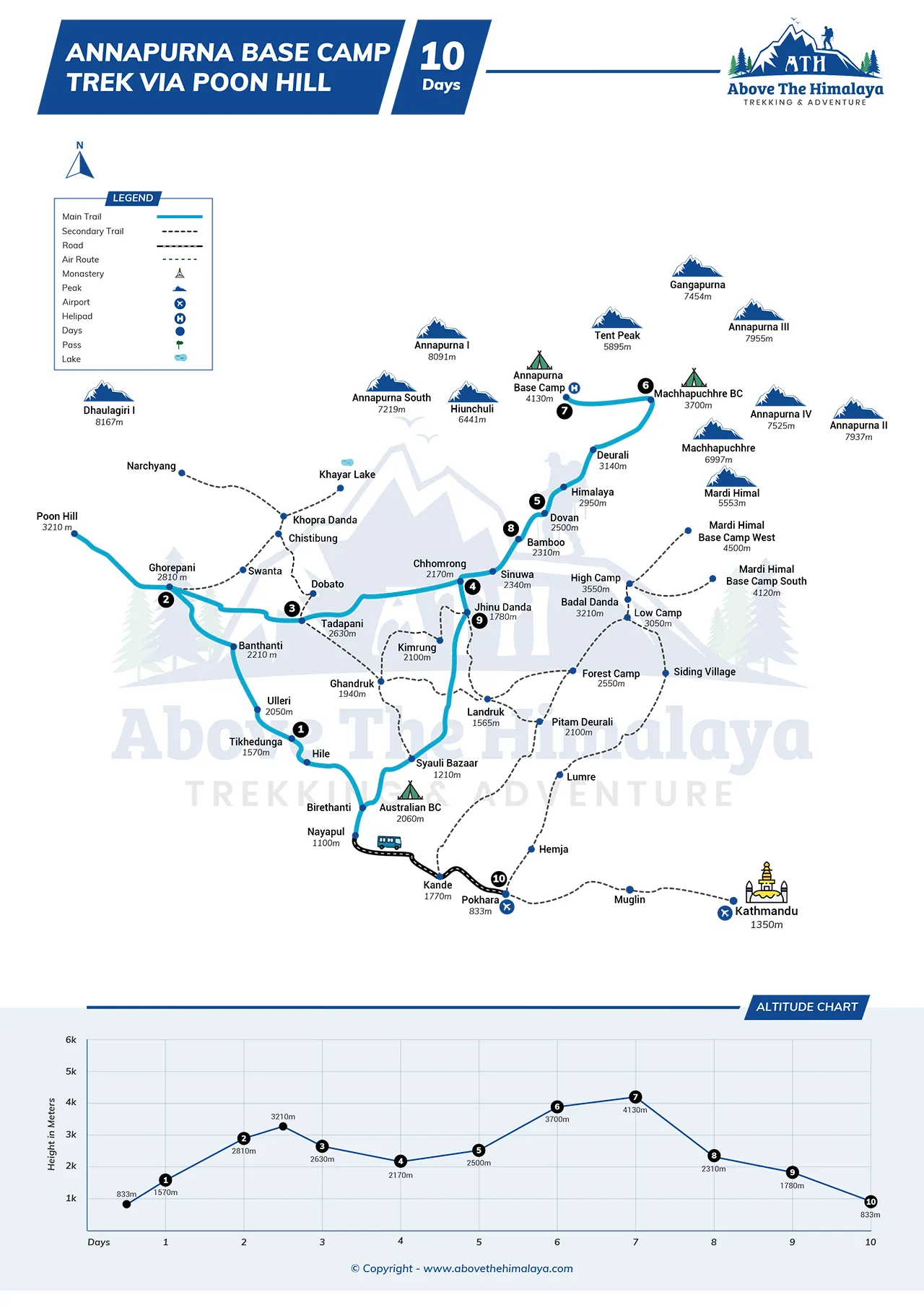
Max. Altitude: Annapurna Base Camp (4160 m)
Trek Grade: Moderate
Best Travel Time: February to mid-June and September to November are the best seasons. December and January are winter; we can go on a trek. There can be snow on the trail; July and August are rainy times and not highly recommended.
Trip Snippets: The trek includes ten days, nine nights of Lodging, and three meals daily ( breakfast, lunch, and dinner).
Departure Dates: We can offer this trek on any dates during March, April, May, June, Sept, Oct, November, and December for a group of 2 to 16 people.
Equipment rental: We advise you to bring all your clothing and gear from home; however, in Kathmandu, there are many shops where you can buy and rent trek-related equipment.
Your trek Backpack/duffle bag: Our porters will carry your baggage on the trek; the maximum weight per trekker is 15 kg, including your sleeping bag and down jacket; other items not required on the trek you can store in our office or your hotel in Kathmandu or Pokhara.
Transportation: Tourist Bus, Private Car/Van
Food
On the time of Annapurna base camp trek via poon hill, you must consume enough food and water. It is essential for your general hiking experience, energy, and well-being. On the other hand, you have a lot of food choices for your private trek.
You can taste the regional Sherpa and Nepali cuisine at teahouses along the trek. On your Annapurna base camp trek via Poon Hill, three meals are served. The majority of the dinner consists of authentically prepared Nepali food. Lunch and dinner are explicitly provided with dhal bhat (rice and lentil soup). A variety of side dishes, including pickles, curries, and more, are offered with this thali set.
You can order other items from the menu if you don’t want to eat dal bhat all the time. Popular choices include thukpa, tsampa (roasted barley flour), and momos (dumplings). Additionally, a wide variety of Indian and Western dishes are available. Make sure the food you eat is well-balanced.
Your diet should include carbohydrates, proteins, and fats. Trekking requires a variety of nutrients because it is an intense physical activity. Foods high in protein and carbohydrates provide sustained energy levels.
Remember to drink lots of water. It aids in maintaining your intake of water, particularly in dry-air environments at high elevations. Comforting alternatives include herbal teas and hot lemon and ginger drinks. You can travel with energy-boosting snacks.
The ideal snacks throughout the trek are protein bars, granola bars, almonds, chocolate, and dried fruit. However, inform your hiking guide as soon as possible if you have any dietary restrictions. He will let the teahouse proprietor know to prepare meals according to your diet and preferences.
Accommodation on the Annapurna Base Camp trek via Poon Hill
Teahouses and lodges are usually places to stay on an Annapurna Base Camp trek via poon hill. There is a network of teahouses and lodges along the trekking path leading up to Annapurna Base Camp. These modest but cozy guesthouses have twin-bedded rooms available. The larger dorm-style rooms are occasionally available.
The basic yet comfortable Lodging protects you from cold mountain weather. Most teahouse rooms have a shared base and restrooms, but this applies only if you are trekking in a group. We will reserve a shared room, which can also be a dormitory in the high season.
Lodges and teahouses also serve food. A range of regional and global cuisines is available to taste. Nepali specialties like momos (dumplings) and Dal Bhat (lentil stew with rice) are usually included on the menus.
Fresh items could become more challenging as you get higher in the atmosphere, limiting the menu options. Stoves are frequently used in these hotels to heat common spaces, offering a cozy spot for people to relax and interact in the evenings. L lodging must be booked earlier to guarantee comfort on a private trip. Reservations can be made via your trekking agency.
This way, you can ensure you have somewhere to stay at the end of each day’s hike. You can personalize the degree of accommodation to what you prefer. You have choices, from traditional teahouses to affordable lodges. More luxurious lodges with private bathrooms can be found in some places. Still, getting to the attached bathroom area becomes more difficult as you climb the elevation.
The chances of getting luxury services are less elaborate than in city hotels. However, these lodgings provide a cozy and genuine trekking experience. Trekking in the stunning and isolated Annapurna area remains lovely despite all this.
Annapurna base camp trek via Poon Hill weather and temperature
Seasons can affect the temperature and weather during the Annapurna base camp trek via Poon Hill. As a result, everything is dependent on climate and elevation. Here's an overview of the weather in the ABC region:
Spring (March to May):
The trek is most enjoyable in the spring. The blossoming rhododendrons enhance the attractiveness of trekking in spring. The weather is lovely and moderate throughout the day. At lower
elevations, it ranges from 15°C to 20°C (59°F to 68°F). At higher elevations, daily temperatures can vary from 5°C to 15°C (41°F to 59°F). It can get cold at night. There is a 5°C to 5°C (23°F to
41°F) temperature drop, particularly at higher elevations.
Autumn (September to November):
Autumn is another excellent time for the Annapurna base camp trek via Poon Hill. Trekkers can enjoy the mild temperatures and beautiful skies. At lower elevations, daytime temperatures vary from 15°C to 20°C (59°F to 68°F). Daytime temperatures in the ABC area range from 5°C to 15°C (41°F to 59°F) at higher elevations. The range of nighttime temperatures, which is between -5°C and five °C (23°F and 41°F), is similar to that of spring.
Winter (December to February):
Higher altitudes have colder winters with a greater likelihood of snowfall. Hiking during this season is not recommended. On the other hand, if you are seeking challenges and excitement, you may go trekking in the winter. At lower altitudes, daytime temperatures are about ten °C (50°F).
Daytime temperatures can range between -5°C and 5 °C (23°F to 41°F) at higher elevations. Particularly at Annapurna Base Camp, the temperatures at night can reach -10°C to -20°C (14°F to -4°F) or lower.
Monsoon (June to August):
Although the temperature is still adaptable, the monsoon season brings considerable rain. Yet, the Annapurna base camp trek via Poon Hill is not recommended because of the leeches and slippery paths. During this time of year, landslides and trail closures are frequent.
What should I pack?
Packing appropriately and having clothing that can withstand temperature changes is essential. It is advisable to dress in layers to adapt to changing temperatures. Furthermore, remember that the weather might change from season to season. It would help if you also kept up with the most recent forecasts before and throughout the trek. This contributes to ensuring your comfort and safety.
Pack everything you need for your Annapurna base camp trek via poon hill following your checklist. Ensure your equipment is in good working order, fits perfectly, and has been checked before the trek. Always be ready for changeable temperatures and shifting weather. Consult with your trekking agency for advice on particular equipment.
Why Choose Annapurna Base Camp Trek Via Poon Hill?
The Annapurna Base Camp Trek Via Poon Hill combines two popular trekking experiences in the Annapurna region. The path initially leads us to Tikhedhunga, Ulleri and Ghorepani and then the early morning trek to Poon hill. Poon hill offers a panoramic view of Dhauligiri, Annapurna South, Annapurna I, Hiunchuli, Machhapuchhre and other mountains nearby.
The path after Poon Hill goes through Tadapani, Chhomrong, Dovan and Annapurna Sanctuary to Machhapuchhre Base Camp and Annapurna Base Camp. The trail gives us the chance to come across contrasting sceneries within the same hike, including terraced agricultural land and rhododendron woodlands to the elevated mountainous terrain within the Annapurna Sanctuary.
The trek also has the cultural aspect of the trip. We cross villages with Gurung and Magar people and get the chance to see their traditional life and local environment. Another attraction is Jhinu Danda, where natural hot springs are available after the trek from the higher elevations. Combining Poon Hill with Annapurna Base Camp makes the journey longer than a direct route but gives trekkers the opportunity to experience both the Ghorepani and Annapurna Sanctuary sections.
Annapurna Base Camp Trek Via Poon Hill Difficulty
The Annapurna Base Camp Trek Via Poon Hill is graded as a moderate trek. It does not require technical climbing skills, but trekkers should be prepared for several hours of walking each day and sections with considerable ascent and descent.
The first major challenge comes on the trail from Tikhedhunga toward Ghorepani. The route includes a long stone staircase before reaching Ulleri and continues through forested terrain toward Nangathanti and Ghorepani.
The hike to Poon Hill early in the morning also entails an uphill walk before daybreak. The trail proceeds after Poon hill, through Tadapani and Chhomrong and into the Annapurna Sanctuary. There are repeated ascents and descents on the route, including stone staircases around Chhomrong.
The highest point of the trek is Annapurna Base Camp at about 4,130 meters. The distance between Machhapuchhre Base Camp and Annapurna Base Camp is not as long as other trekking days, yet the rising altitude requires the trekkers to walk steadily and drink plenty of water.
Good physical preparation is helpful for this trek. The daily walking can be made easier by walking regularly, uphill and downhill, and training on stairs before the journey.
Is This Trek Suitable for Beginners?
Trekkers without previous high altitude trekking experience can take this route if they are reasonably fit and prepared for the walking conditions. Previous trekking experience is helpful but technical mountaineering skills are not required.
The main challenges are the long stone staircases, daily walking hours, repeated elevation changes and the altitude reached at Annapurna Base Camp. Our trekking guide can provide support throughout the route and help trekkers maintain a suitable pace.
Annapurna Base Camp Trek Via Poon Hill Altitude
During the Annapurna Base Camp Trek Via Poon Hill, the altitude varies significantly. The trip starts at a very low altitude around the Pokhara region and then slowly ascends to the higher mountain terrain of the Annapurna Sanctuary.
The major elevations on the route include:
| Location | Altitude |
| Tikhedhunga | 1,540 m |
| Ghorepani | 2,775 m |
| Poon Hill | 3,210 m |
| Tadapani | 2,540 m |
| Chhomrong | 2,040 m |
| Dovan | 2,540 m |
| Machhapuchhre Base Camp | 3,700 m |
| Annapurna Base Camp | 4,130 m |
The route does not simply climb continuously because there are several ascents and descents between villages. For example, after reaching Poon Hill, the trail descends toward Tadapani before continuing toward Chhomrong and then climbing again into the Annapurna Sanctuary.
Annapurna Base Camp is the highest point of the itinerary at approximately 4,130 meters. Trekkers should therefore walk at a comfortable pace, drink sufficient water and inform the guide if they experience any unusual symptoms.
Note: Your current package also states a maximum altitude of 4,160 meters in the Route Map & Altitude Chart section. This should be standardized across the page before publication so that the same figure is used consistently.
Altitude Sickness and Acclimatization
The Annapurna Base Camp Trek Via Poon Hill reaches 4,130 meters at Annapurna Base Camp, so altitude should be taken seriously during the trek. As the elevation increases, the amount of available oxygen decreases, and some trekkers may experience symptoms related to altitude.
Common symptoms can include headache, tiredness, dizziness, loss of appetite, nausea or difficulty sleeping. Trekkers should inform their guide if they experience these symptoms instead of trying to continue without assistance.
Walking slowly and maintaining a comfortable pace is important at higher elevations. Drinking enough water and taking suitable rest can also support the body while adjusting to the changing altitude. Alcohol should also be avoided when dealing with altitude related symptoms.
Our guide is trained in wilderness first aid and altitude sickness and will be available throughout the trek. Group medical supplies are also included in the package. If a trekker develops serious symptoms, the guide and trekking team will assess the situation and take appropriate action.
Visa and Permits
Before starting the trek, international travelers need to have the required travel documents ready. The main requirements are a valid passport, a Nepal tourist visa when applicable, and the permits required for the Annapurna Conservation Area.
| Requirement | Information |
| Nepal Tourist Visa | Required for travelers who need a visa to enter Nepal |
| Annapurna Conservation Area Permit | Required for trekking in the Annapurna Conservation Area |
| TIMS Card | Required for the trekking route where applicable |
| Permit Arrangement | Our team will arrange the required trekking permits and TIMS documentation applicable to the route |
| Passport | A valid passport is required for international travelers |
Travelers who need a visa can obtain a Nepal tourist visa according to the current entry requirements. Your passport should remain valid for your stay in Nepal, and it is useful to keep copies of your passport and other important documents with you.
The Annapurna Conservation Area Permit is required because the trek passes through the Annapurna Conservation Area. TIMS requirements can depend on the current regulations and trekking arrangements. Our team will check the applicable requirements before the trek and help arrange the necessary trekking documents included in the package.
Annapurna Base Camp Trek Via Poon Hill Cost
The cost of the Annapurna Base Camp Trek Via Poon Hill depends on the services included in the trekking package and the arrangements made for the trip. Your package includes trekking accommodation, three daily meals during the trek, guide and porter services, trekking permits, group medical supplies, transportation between the trekking points specified in the package and other listed services.
The cost can also vary depending on the type of trip selected, group arrangements and personal requirements. Services in Kathmandu and Pokhara, personal expenses, travel insurance, trekking gear, drinks, hot showers, charging and staff tips are excluded from the package according to your current inclusions and exclusions.
For travelers who need additional services or wish to make changes to the standard itinerary, our team can discuss the requirements before booking.
Important: Your supplied package does not provide an actual selling price, so I have not added a price figure here. The live website price should be inserted if you want this section to target direct cost searches more strongly.
Travel Insurance and Emergency Evacuation
Travel insurance is important for the Annapurna Base Camp Trek Via Poon Hill because the route reaches a high altitude and takes place in a mountain environment. Your current package specifically states that travel insurance is excluded and recommends insurance that includes emergency evacuation coverage while trekking up to 5,500 meters or above.
Before starting the trek, trekkers should check their insurance policy carefully and make sure that it covers trekking at the altitude required for this itinerary. Medical treatment and emergency evacuation should also be included according to the requirements of the trek.
Personal travel insurance is the responsibility of each trekker. Our trekking guide carries group medical supplies, but this does not replace personal travel insurance.
Trek Prep aration
Good preparation makes the Annapurna Base Camp Trek Via Poon Hill easier and more comfortable. The route includes long walking days, stone staircases, uphill sections and downhill sections, so it is useful to prepare your body before arriving in Nepal.
Regular walking is a simple way to prepare. You can gradually increase your walking distance and include uphill and downhill routes in your training. Stair exercises can also be useful because the trail around Ulleri, Chhomrong and other parts of the route contains many stone steps.
It is also important to prepare your trekking footwear before the trip. New boots should be worn before the trek so that they are comfortable and do not cause problems during longer walking days.
Your backpack should contain only the items you need during the trek. According to your package, porters carry the main baggage, with a maximum weight of 15 kg per trekker, including the sleeping bag and down jacket. Items not required for the trek can be stored at the office or hotel in Kathmandu or Pokhara.
Transportation
Transportation for the Annapurna Base Camp Trek Via Poon Hill is arranged according to the trekking itinerary. Your current package states that transportation can be provided by tourist bus or private car or van. It also includes transportation from Pokhara to Nayapul and transportation from the stated finishing point back to Pokhara by private vehicle.
The trekking route begins from the Nayapul area after driving from Pokhara. The final trekking day includes a walk to Nayapul followed by a drive back to Pokhara.
If you require a different transportation arrangement, this can be discussed with our team before the trek.
Note: Your package currently contains a route inconsistency because the Overview says the trek finishes at Phedi, while the Day 10 itinerary says the trek ends at Nayapul. The inclusions also mention Phedi. This should be corrected before publishing.
Mobile Network and Internet
Mobile network and internet access can vary during the Annapurna Base Camp Trek Via Poon Hill. Connectivity is generally easier around larger villages and lower sections of the trekking route, while it can become less reliable as we move farther into the Annapurna Sanctuary and higher elevations.
Some teahouses and lodges may provide internet access, but trekkers should not expect the same connection quality available in Kathmandu or Pokhara.
It is better to inform family and friends before leaving the city that communication may not always be possible during the trek. Keeping important information available offline can also be useful.
Since your current package does not specify particular mobile networks, WiFi availability or connection charges, these details should be confirmed with the trekking team before publishing specific claims.
Electricity and Charging Facilities
Electricity and charging facilities are available at some accommodation places along the trekking route, but access can vary between villages and lodges. Charging may also involve an additional personal expense, which is listed under the exclusions in your package.
Trekkers should carry a power bank if they need to keep their phone, camera or other electronic equipment charged throughout the trek. Extra batteries can also be useful for cameras and headlamps.
Your packing list already recommends charging equipment and extra batteries, so these items should be kept in an easily accessible part of your daypack.
Money and ATM Facilities
It is useful to carry enough Nepalese cash before beginning the trekking section of the Annapurna Base Camp Trek Via Poon Hill. Personal expenses such as drinks, hot showers, telephone calls, laundry, snacks and battery charging are not included in the trekking package.
The trekking route is made up mainly of villages and mountain settlements, so trekkers should not depend on regular access to banking facilities during the trek.
Because your package does not specify ATM locations along the route, we should not list particular villages as having ATMs without verifying the current situation. Trekkers can ask our team before departure about how much cash they should carry for their personal needs.
The following is a detailed equipment list for your Annapurna Base Camp Trek via Poon Hill
Clothing:
Sweatless base layers tops and bottoms.
Fleece jacket
Down jacket
Waterproof and windproof outer (jacket and pants)
Long-sleeve T-shirts.
Trekking pants and shorts
Pair with warm gloves.
Warm hat and a sun hat.
Scarf and the neck gaiter.
Warm socks (3–4 pairs)
Comfortable and reliable trekking boots
Accessories:
Trekking poles
UV-protective sunglasses.
Daypack cover.
Duffel bag
Headlamp with extra batteries
Sleeping bag
Travel towel
Toiletries
Health and Safety:
First aid kit
Personal prescription medications
Water purification pills
Sunscreen and lip balm with high SPF
Insect repellent.
Hand sanitizer
Miscellaneous:
Passport-sized photos.
Reusable water bottle.
Snacks and energy bars
Travel plug adapter and charging equipment.
Maps or guidebooks
Camera, extra batteries, and charging equipment.
Trekking and itinerary information (for emergency contacts)
Most Asked Questions by Travellers
The trek is graded as moderate. It includes several hours of walking each day, stone staircases, uphill and downhill sections and a maximum altitude of around 4,130 meters at Annapurna Base Camp.
Your current package is a 10 day itinerary with nine nights of lodging during the trek. The itinerary starts from Pokhara and finishes with the return drive to Pokhara on Day 10.
Annapurna Base Camp is the highest point of the itinerary at approximately 4,130 meters according to your Day 7 itinerary. Your Route Map & Altitude Chart currently states 4,160 meters, so this figure should be made consistent before publication.
Yes, trekkers without previous high altitude trekking experience can take the route if they have reasonable fitness and prepare properly. The trek does not require technical climbing skills, but the long stair sections and altitude require good preparation.
Your package includes the Annapurna Conservation Area Trekking Permit and TIMS Trekking Permit.
Accommodation during the trek is provided in teahouses and lodges. Twin sharing rooms are normally used, while shared or dormitory accommodation can be available at higher elevations and during busy periods.
Three meals are included each day during the trek. The package discusses Nepali food such as dal bhat as well as options including thukpa, tsampa, momos and other Indian and Western dishes available from teahouse menus.
Yes. Your package recommends travel insurance with emergency evacuation coverage suitable for trekking at high altitude. Travel insurance is not included in the package price.
Charging facilities may be available at accommodation places, but charging is listed as a personal expense in your package. Carrying a power bank and spare batteries is recommended.
Your package states that the trekking schedule can be tailored according to travelers’ holiday requirements. Private trips are also available according to the information provided on the package.
Yes. Poon Hill is another key aspect of this itinerary. We walk to Poon Hill in the early morning hours at Ghorepani and proceed to Tadapani and the Annapurna Sanctuary.
The Poon Hill trek begins early in the morning so that the trekkers arrive at the view point in the morning to view the sunrise over the Himalayan mountains around the area.
In Poon Hill, the itinerary includes sightseeing of Dhauligiri I, Tukuche, Nilgiri, Annapurna South, Annapurna I, Hiunchuli, Tarke Kang, Gangapurna, Lamjung Himal and Machhapuchhre.
Yes. The schedule will cover Machhapuchhre Base Camp 3,700 meters and then proceed to Annapurna Base Camp.
Yes. On Day 9, the itinerary culminates with Jhinu Danda where the trekkers can explore natural hot springs and take a bit of rest before moving on the last day of the trek.
The route includes stone staircases, forest trails, terraced farmland, suspension bridges, village paths and sections through bamboo, oak and rhododendron forests. The trail conditions change as the elevation increases toward the Annapurna Sanctuary.
Yes. The section between Tikhedhunga and Ghorepani includes a long stone staircase, and there are additional stair sections around Chhomrong and other parts of the route. Your itinerary specifically mentions more than 3,300 steps on the approach toward Ulleri.
Yes. In your package, it is mentioned that the trekking program can be adjusted to your needs of the holiday. You can also book private trips on the dates of your choice.
Your package is a maximum of 15 kg of porter baggage per trekker, including the sleeping bag and down jacket. Things not needed in the trek may be kept in Kathmandu or Pokhara.
Your daypack should contain items you may need while walking, such as water, snacks, sunscreen, sunglasses, a rain or wind layer, personal medication, a camera and other small personal items. The main luggage will be carried by the porters according to the package allowance.
Reviews on Annapurna Base Camp Trek Via Poon Hill
Be first to post a review in this trip.
Posted on Tripadvisor
 H H9 December 2025
Verified
Thank you for the best tour we have ever had! I planned to stay at the Everest View Hotel this time and travel there because I wanted to see Everest, the highest mountain in the world, slowly, but despite the short schedule due to my children's school, all I got was a response that it was difficult to contact several tour companies. The Himaraya Trekking, Above, has worked out a smooth and safe schedule and had the best experience for me and my family. I will never forget the view of Mount Everest. Thank you very much.Posted on Tripadvisor Mike F26 November 2025Another Amazing Trip with Above the Himalaya This is my 3rd trip with Above the Himalaya and Puru. Each trip with Puru has exceeded expectation with the quality of the guides, porters and attention to detail. We were a team of 5 trekker and our ages were all above 67 years of age with the oldest being 73. We are all experienced hikers and trekker and our plan was to trek up the Khumbu Valley to the Cho La pass to Gokyo to the Renjo La pass to return to Lukla. However, the weather altered our plans as Cyclone Montha blanketed the country in rain at lower elevations and significant snowfall at the upper elevations. Due to the weather, no one was trekking and everyone was staying put in their current location during the storm. All the passes were closed due to the deep snow. We were in Namche when the storm was blanketing the country.This is where Above the Himalaya really shines is in the ability to adapt to the changing conditions and our safety. In conversation with our lead guide, we decided to alter our route to trek through the Gokyo valley to reach Gokyo and then do the Renjo La pass. Sitaram our lead guide and Dhurba our assistant guide was both attentive to the changing conditions and always kept a keen eye for how we were doing and feeling on the trek. The pacing was excellent as none of us had any hint of altitude sickness as we reached a maximum elevation of 5,365m.Having trekked and hiked all over the world with different tour companies, Puru’s company is simply the best. The communications, focus on safety, the guides and staff, the accommodations, and the food are all amazing. All you have to do is focus on the beauty of the mountains, enjoy the joyfulness of the Nepali people and have fun exploring the trails. I am planning my next trip with Puru for 2027 as there is no other trekking company to match Puru’s level of service.Posted on Tripadvisor
 Mie K. A.25 November 2025Take a small step into the Himalayas I went with Above The Himalaya Trekking’s Everest View Hike in November 2025 and can only recommend with my whole heart!I had never visited Nepal or the Himalayas before and had a life long dream of seeing Mt Everest. I had though, hiked a lot in various parts of the world, but never above 2000 m, so I went with the five day Everest View Trek to take a small step and see how I would handle the altitude. From first enquiry about dates and various questions, to my arrival back from the trip, Puru has been an invaluable help, always standby on mail and WhatsApp, pulling strings and making things happen.Also big shout out to the amazing guide I was teamed with, Kamal, who did everything he could to answer all my curious questions about vegetation, animal life, Nepalese culture and everything in-between :) Kamal was the perfect gentleman, offering little treats and reminding me to take breaks, and all in all I felt very safe and in good hands all the time. He also had good banter and jokes, which lifted the spirit of even the hardest climb.It was cold most nights and mornings and even though the tea houses provided heavy blankets (and I could borrow extra) I was glad I had the sleeping bag with me, which I rented through Puru. But I could definitely have survived without and saved the space in my pack.In total, I’m very pleased I’ve got to experience this lovely country with Above the Himalaya Trekking and if I ever come back for the big leap into the mountains, I’ll chose Kamal and Puru all over again :)Posted on Tripadvisor
 nameless25 November 2025Nepal trek-Gokyo Second trek with Above the Himalaya, this time to Gokyo and over Renjo La. Our lead and assistant guides (Sitaram and Dhurba) were excellent. Due to several days of rain at lower elevations and snow higher we needed to change our plans while in the midst of our trek. Above the Himalaya accomplished this smoothly and flawlessly, which ultimately resulted in a better experience. We’ll be back!Posted on Tripadvisor
 Yu S22 November 2025Great Experience and Friendly people. We had a great time with Above the Himalayas tour company in Oct. Ajay, the tour guide in Kathmandu is very friendly and knowledgeable. He took us to a lot of places that we can experience local authentic daily life. Puru, the owner, arranged and organized our trip in such way that we really feel comfortable and enjoyable. We are specially impressed by his quick action and management skills. Our flight to Pokhara got cancelled due to bed weather. Within minutes, Puru was able to arrange a car and a driver to drive us to Pokhara! It saved out trip.Posted on Tripadvisor
 Sally M14 November 2025Glorious trekking experience - ABC We had the most wonderful experience doing the Annapurna Base Camp trek with our fabulous guide, Tanka, and porter, Ravi. The trek was glorious, despite some rainy days, and although we weren't sure we would get to see the peaks at ABC, the weather cleared just in time and we had an amazing sunrise there. What made the whole trip so special, though, were Tanka and Ravi, who remained cheerful at all times and went out of their way to make everything as good as it could be. This included setting a pace with regular breaks which made the walking completely manageable, modifying the itinerary so we could visit additional villages, getting up in the middle of the night to see if the sky would be clear for sunrise, and bringing a sense of ease and humour to all our interactions. We just loved the whole thing and are keen to return to Nepal for another trek. It was magical!Posted on Tripadvisor
 Peter E27 October 2025Above the Himalayas goes above and beyond expectations! From start to finish everything was perfect! Puru, the managing director, was always quick with his responses to my questions when I first contacted him about planning our trek, and he continued to check to see that everything was going well throughout.Our guide Tanka and porter Ravi were fantastic! Their friendly demeanor kept our experience lively and interesting the entire time and made sure that we were well taken care of. Even small details like Ravi coming in and double checking our rooms to see that we had left nothing behind before leaving each morning, and seeing that meals were prepared the way we liked them weren't overlooked. Tanka was also quite knowledgeable about the mountains, the people, and just about everything "Nepal". He enthusiastically shared stories about his family and Nepalese life in a general way.Although there was a clear itinerary each day, and for the whole trek, Tanka allowed for flexibility in terms of time and where to stay. He was even willing and able to make changes to same-day accommodation based on how far we anticipated hiking that morning. I can't say enough about how much we enjoyed our hike and I would definitely recommend Above the Himalayas for anyone considering a trek.Posted on Tripadvisor
 Akane U25 October 2025Amazing tour For me and my son, Pru thought of a four-day trekking tour.His interaction was very smooth.On the first day, I went with my son to Gandrouk, and on the second day, he went to a higher place (mulde view point, Poon hill) with his guide Ashok. Ashok was very kind and took me to various local places. The food was also very good.My guide, Tangka, was very kind and helped me a lot.I recommend this travel agency because it's great.Posted on Tripadvisor
 Daniel F24 October 2025Everest Base Camp Trek My friends and I just completed the EBC trek. From the time I met Puru at the Canada Place trade show in Vancouver BC, Canada I felt comfortable going to Nepal. His communications via WhatsApp were seamless answering all our questions. Everything went exactly according to plan. Our guide Suresh was amazing. He took very good care of us the whole time. From guiding us to making sure we had everything we needed to be happy. The food the whole way up and back was amazing! 5 ⭐️. Our 2 porters were great as well. I have a whole new respect and appreciation for what they do. They are the true hero’s to what we can do as a team. We chose the basic trek the lodging was to be expected. If I was to do again I would choose the luxury trek. The hotels in Kathmandu at the Hotel Aloft and the Hotel Lo Mustang were top notch as well as the buffets. Highly recommend this local company!Posted on Tripadvisor
 adrienne h24 October 2025Great tour, would recommend! My friend and I completed the 10 day Annapurna circuit with Above Trekking Himalaya. Buddha our porter was a little mountain goat, pocket rocket. When I got altitude sickness he carried my bag, as well as mine and my friend’s big pack. He was friendly and loved to played cards with us, always with a cheeky smile on his face. Sitaram our guide was very knowledgeable of the area and quite serious. He was always available if we had any questions and went above and beyond to try get us the best/quietest rooms in the tea houses. Puru was fabulous working behind the scenes to ensure our trip was as smooth as possible. He was very quick to respond to any messages. It was a great experience to see Nepal with some locals and I certainly appreciated their support when I succumbed to altitude sickness. They stayed close to us the whole time and checked in frequently making us feeling safe and supported the entire time.Verified by TrustindexTrustindex verified badge is the Universal Symbol of Trust. Only the greatest companies can get the verified badge who has a review score above 4.5, based on customer reviews over the past 12 months. Read more
10% OFF
Best Price Guaranteed, Easy to change Date, Instant Confirmation
Book This TripBook with Confidence
- Flexible bookings and easy trip date changes
- Personalized service and customized group sizes
- Safe travels with owner-operated services and highly experienced guides
- Best price guarantee for the most value for your money
- Secure & easy online booking
Your Trek Leader
 Enjoy Himalayan scenery with the help of Nepal’s best guides with Government license holders and got training in first-aid, our Trip Leaders, know where you’ll find the best photos, most fascinating wildlife, and the best stream crossings.
Have Questions?Talk to Expert
Meet Mr. Purushotam Timalsena (Puru), Nepal's best trek and tour organizer, who has been working in the Himalayas for more than 24 years.
WhatsApp/Viber +977 98510 95 800



Trips for All

Private Trip
Peaceful tour with your travel buddy and guide
Small Group Travel
Travel with people having similar adventure dreams
Trips for Kids
Calling all young adventurers - join us for a journey of a lifetime!
Trips for Adventurers
Climbing & mountaineering adventures for thrill-seekers